くらべてわかる日本語表現文型辞典
Meaning
Meaning 1: An emphatic expression indicating that the degree of A is extreme. The degree of A is B.
Meaning 2: In the form 「A といったら A」. Expresses the speaker’s strong feeling that A will never change, no matter what.
Meaning 3: In the form 「A といったら A (が B)」. A is acknowledged, but not completely. B adds an opinion or impression different from A.
Meaning 4: Hearing or seeing A brings B to mind. The speaker regards A and B as a pair.
How to use it
Explanation
【Contrast 1】
「A たるや B」(Meaning 1, p. 130)
【Contrast 3】
「A ことは A」(Meaning 1, p. 96)
They can be substituted for one another, but 「A といったら A (が B)」is an expression in which the speaker responds to the other person’s words as if acknowledging them, then states their own opinion in B. 「A ことは A (が B)」acknowledges A as a fact.
○「この薬、効く?」
「効くといったら効くけど、それほどでもないよ。」
○「この薬、効く?」
「効くことは効くが効き目は持続しないよ。」
【Contrast 4】
「A といえば B」(Meaning 2, p. 157)
In context 16 examples
あの映像の迫力といったら、現実だと思ってしまうほどだ。
The impact of that footage is so great that you could mistake it for reality.
この料理のおいしさといったら、ことばにできないくらいだ。
This dish is so delicious that it’s beyond words.
彼のセンスのよさといったら、一流モデルも顔負けだ。
His sense of style is so good that even top models can’t compare.
うちの会社のボーナスといったら、雀の涙ほどさ。
Our company’s bonuses are so tiny they’re like a drop in the ocean.
あんなところ、行くなといったら行くな。
Don’t go there—I said don’t go.
これはお兄ちゃんのといったらお兄ちゃんの。
This is my big brother’s, I tell you.
この問題はボクにとって、難しいといったら難しいんだ。
This problem is difficult for me, I tell you.
「にんじんを食べなさい。」
「にんじんは嫌いだといったら嫌いなんだ。」“Eat your carrots.” “I hate carrots, and I mean I hate them.”
「あの絵、きれいだね。」
「きれいといったらきれいなんだけど、好きじゃないわ。」“That painting is beautiful.” “It is beautiful, I suppose, but I don’t like it.”
この時計は高いといったら高いけど、それだけの価値はある。
This watch is expensive, I suppose, but it’s worth the price.
子どもは3人いるといったらいるけど、みんな外国で生活しているからさびしいんだ。
I do have three children, but they all live abroad, so I’m lonely.
これは日本料理といったら日本料理だが、フレンチの影響も受けているようだ。
This is Japanese food, I suppose, but it seems to have been influenced by French cuisine too.
大阪では夏祭りといったら天神祭だ。
When it comes to summer festivals in Osaka, it’s the Tenjin Festival.
神戸といったら神戸牛だろう。
When it comes to Kobe, it has to be Kobe beef.
スポーツの祭典といったらオリンピックだ。
When it comes to sporting events, it’s the Olympics.
「お笑い」といったら、なんといっても大阪だ。
When it comes to comedy, Osaka is the place, above all.
Read the original source text
Meaning
意味1:Aの程度がはなはだしいことの強調表現。Aの程度はB。
意味2:「AといったらA」の形で。何があっても絶対Aは変わらないという話し手の強い気持ちを表す。
意味3:「AといったらA(がB)」の形で。Aは認めるが100%ではない。BでAとは違う意見・感想を補足する。
意味4:Aということを聞いたり、見たりするとBを連想する。話し手はAとBを一対のもののようにとらえている。
How to use it
Explanation
【対比1】
「AたるやB」(意味1 P.130)
【対比3】
「AことはA」(意味1 P.96)
置き換えは可能だが、「AといったらA(がB)」は相手の言葉を相づちのように受けて、自分の意見をBで述べる表現で、「AことはA(がB)」はAを事実として認める表現である。
○「この薬、効く?」
「効くといったら効くけど、それほどでもないよ。」
○「この薬、効く?」
「効くことは効くが効き目は持続しないよ。」
【対比4】
「AといえばB」(意味2 P.157)
絵でわかる日本語
Usage 1
Read this source entry ↗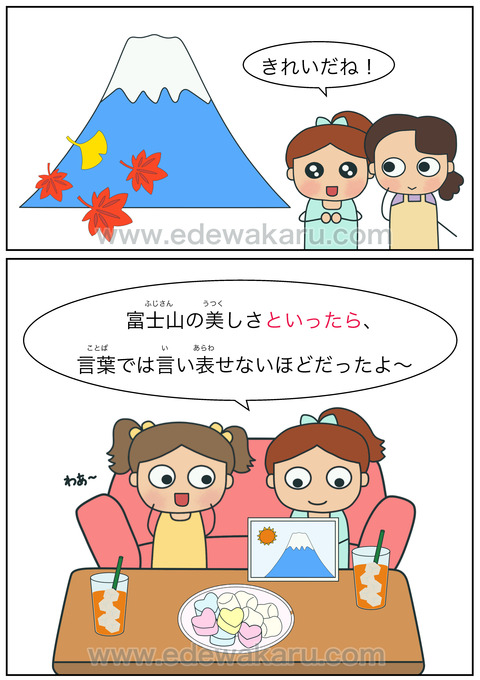
Meaning
…is very…
How to use it
Noun [dictionary form] + といったら
Explanation
“〜といったら” means “…is very…” and is a sentence pattern that emphasizes the great degree of something. It is used to strongly express feelings such as [surprise], [being moved], [criticism], or [disappointment]. In conversation, what comes after “〜といったら” may be omitted 😮
(Review: 〜ことがある)
[Example]
A: How was your trip?
B: The beauty of Mount Fuji—unbelievable!
“〜といったら” has several meanings. There are also several similar sentence patterns, so learn to distinguish them 😀
[Uses of “〜といったら”]
〜といったら (association)
〜といったら (emphasis)
〜といったら (AといったらA)
[Similar sentence patterns to “〜といったら”]
(Review: 〜といえば・〜というと)
(Review: 〜といえば〜が)
(Review: 〜といえば vs 〜というと)
(Review: 〜ったら (Nったら))
(Review: 〜ったら (Vったら))
(Review: 〜といったらありはしない・〜といったらありゃしない)
In context 5 examples
富士山の美しさといったら、言葉では言い表せないほどだったよ
→富士山は言葉では言い表せないほど、すごく美しかったよThe beauty of Mount Fuji was beyond words. →Mount Fuji was so beautiful that it was beyond words.
今日の忙しさといったら、目が回るほどだったよ
→今日は、すごく忙しくて目が回るほどだったよ(復習:目が回る)As for how busy I was today, it was enough to make my head spin. →I was so busy today that my head was spinning. (Review: 目が回る)
あの店のラーメンのおいしさといったら、3時間並んでも食べたいほどだ
→あの店のラーメンは3時間並んでも食べたいほど、すごくおいしいThe ramen at that shop is so delicious I’d wait in line for three hours to eat it. →The ramen at that shop is so delicious that I’d wait in line for three hours.
彼女の肌の白さといったら、まるで雪のようだ
→彼女の肌はすごく白くて、まるで雪のようだ(復習:まるで〜)(復習:〜ようだ(比況))Her skin is so white, it’s just like snow. →Her skin is so white, it’s just like snow. (Review: まるで〜) (Review: 〜ようだ (simile))
昨日の暑さといったら、オーブンの中にいるかのようだったよ
→昨日はオーブンの中にいるかのように、すごく暑かった(復習:〜かのようだ)As for yesterday’s heat, it was as if I were inside an oven. →Yesterday was so hot, it was as if I were inside an oven. (Review: 〜かのようだ)
Read the original source text
Meaning
〜は、すごく〜
How to use it
名詞[辞書形]+といったら
Explanation
「〜といったら」は「〜は、すごく〜」という意味で、程度がすごいことを強調する文型です。
【驚き】【感動】【非難】【失望】 などの気持ちを強く表す場合
に使われます。 また、会話で使われる場合は「〜といったら」の後ろは省略されることもあります😮
(復習:〜ことがある)
[例]
A:旅行はどうだった?
B:富士山の美しさ
といったら!
「〜といったら」にはいくつか意味があります。また、類似文型(るいじぶんけい)もいくつかありますので区別をして覚えておきましょう😀
【「〜といったら」の用法】
〜といったら(連想)
〜といったら(強調)
〜といったら(AといったらA)
【「〜といったら」類似文型】
(復習:〜といえば・〜というと)
(復習:〜といえば〜が)
(復習:〜といえばvs〜というと)
(復習:〜ったら(Nったら))
(復習:〜ったら(Vったら))
(復習:〜といったらありはしない・〜といったらありゃしない)
Usage 2
Read this source entry ↗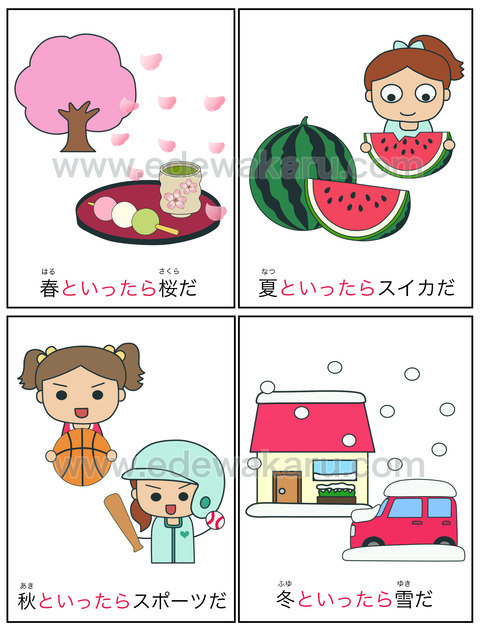
Meaning
When talking about…
How to use it
Noun [dictionary form] + といったら
Explanation
“Aといったら” is a sentence pattern meaning “when talking about A.” It is similar to “Aは,” which marks the topic, and is used to say something associated with A or to talk about A.
This “〜といったら” can be changed to “〜といえば・〜というと,” which mark the topic or subject 😮
(Review: 〜といえば・〜というと)
When talking about spring, it’s cherry blossoms.
= Speaking of spring, it’s cherry blossoms.
= When you say spring, it’s cherry blossoms.
“〜といったら,” “〜といえば,” and “〜というと” each have several meanings, and there are many cases where they cannot be substituted for one another 😨 Those taking the Japanese Language Proficiency Test should review them carefully.
[Uses of “〜といったら”]
〜といったら (association)
〜といったら (emphasis)
〜といったら (AといったらA)
[Similar sentence patterns to “〜といったら”]
(Review: 〜といえば・〜というと)
(Review: 〜といえば〜が)
(Review: 〜といえば vs 〜というと)
(Review: 〜ったら (Nったら))
(Review: 〜ったら (Vったら))
(Review: 〜といったらありはしない・〜といったらありゃしない)
In context 6 examples
春といったら桜だ
→春と聞いたら、桜を連想するSpeaking of spring, it’s cherry blossoms. →When you hear “spring,” you think of cherry blossoms.
夏といったらスイカだ
→夏と聞いたら、スイカを連想するSpeaking of summer, it’s watermelon. →When you hear “summer,” you think of watermelon.
秋といったらスポーツだ
→秋と聞いたら、スポーツを連想する(復習:〇〇の秋)Speaking of autumn, it’s sports. →When you hear “autumn,” you think of sports. (Review: 〇〇の秋)
冬といったら雪だ
→冬と聞いたら、雪を連想するSpeaking of winter, it’s snow. →When you hear “winter,” you think of snow.
日本食といったら、やっぱりお寿司だよね〜
→日本食と聞いたら、やっぱりお寿司を連想するよね〜Speaking of Japanese food, it’s sushi after all, right~ →When you hear “Japanese food,” you think of sushi after all, right~
北海道といったら、牛乳やチーズが有名だ
→北海道は牛乳やチーズが有名だSpeaking of Hokkaido, milk and cheese are famous. →Hokkaido is famous for milk and cheese.
Read the original source text
Meaning
〜について話すと
How to use it
名詞[辞書形]+といったら
Explanation
「Aといったら」は「Aについて話すと」という意味を表す文型です。
主題や話題を表す「Aは」に似ていて、Aと聞いて連想することを言ったり、Aについて話したりする時に使われます。
この「〜といったら」は主題・話題を表す「〜といえば・〜というと」にチェンジすることができます
😮
(復習:〜といえば・〜というと)
春
といったら
桜だ
=春
といえば
桜だ
=春
というと
桜だ
「〜といったら」「〜といえば」「〜というと」は、それぞれいくつかの意味があり、チェンジできない場合がたくさんあります😨日本語能力試験(にほんごのうりょくしけん)を受ける人はしっかりと復習をしておきましょう。
【「〜といったら」の用法】
〜といったら(連想)
〜といったら(強調)
〜といったら(AといったらA)
【「〜といったら」類似文型】
(復習:〜といえば・〜というと)
(復習:〜といえば〜が)
(復習:〜といえばvs〜というと)
(復習:〜ったら(Nったら))
(復習:〜ったら(Vったら))
(復習:〜といったらありはしない・〜といったらありゃしない)
Usage 3
Read this source entry ↗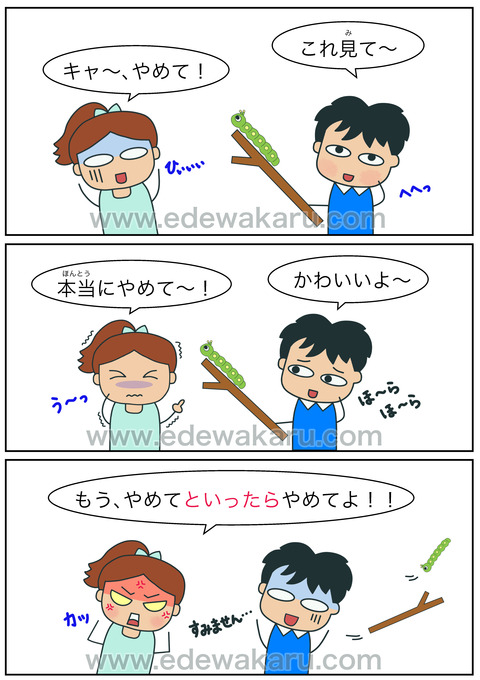
Meaning
I’m telling you to…, so why won’t you…?!
Absolutely…
Absolutely is…
How to use it
Verb [て-form] + といったら
Verb [dictionary form / ない-form] + といったら
Verb [imperative form] + といったら
い-adjective [−い] + といったら
な-adjective [−な] + といったら
In context 5 examples
やめてといったらやめてよ!
→やめてと言っているのに、どうしてやめてくれないの!I said stop, so stop! →I’m telling you to stop, so why won’t you stop?!
母:早く食べなさい!娘:嫌といったら嫌!
→絶対に嫌だ!Mother: Hurry up and eat! Daughter: I said no, so no! →Absolutely not!
父:大学を辞めることはならないぞ!息子:辞めるといったら辞めるんだ
→絶対にやめるんだ!(復習:〜ことはならない)Father: You must not quit university! Son: If I say I’m quitting, then I’m quitting! →I’m absolutely quitting! (Review: 〜ことはならない)
静かにしてといったら静かにしてよ!
→静かにしてと言っているのに、どうして静かにしてくれないの!I said be quiet, so be quiet! →I’m telling you to be quiet, so why won’t you be quiet?!
A:パーティーに行かないの?B:行かないといったら行かないの!
→絶対に行かない!A: Aren’t you going to the party? B: I said I’m not going, so I’m not going! →I’m absolutely not going!
Read the original source text
Meaning
〜と言っているのに、どうして〜しないんだ!
絶対に〜する
絶対に〜だ
How to use it
動詞[て形]+といったら
動詞[辞書形・ない形]+といったら
動詞[命令形]+といったら
い形容詞[ーい]+といったら
な形容詞[ーな]+といったら
日本語NET JLPT文法解説まとめ
Meaning
① “As for ~”
Used to bring up the degree of surprise or being moved.
② “Speaking of ~”
N1といったらN2: When you hear or see N1, N2 immediately comes to mind.
How to use it
N + といったら
Explanation
① Used when talking about the degree of surprise or being moved.
② When you hear or see N1, you immediately think of N2.
Read the original source text
Meaning
① 〜は
驚きや、感動した気持ちの程度を話題にするときに使う。
② 〜について話すと
N1といったらN2:N1と聞いたり、見たりすると、すぐにN2を連想する。
How to use it
N + といったら
Explanation
① Used when talking about the degree of surprise or being moved.
② When you hear or see N1, you immediately think of N2.
文法
Meaning
① As for ~
Used when talking about the degree of one’s surprise or how moved one feels.
② When talking about ~
N1といったらN2: When one hears or sees N1, N2 immediately comes to mind.
How to use it
N + といったら
Notes
When used to mean “when talking about ~,” it can be replaced with 「〜といえば」.
In context 8 examples
富士山の頂上から見た日の出の美しさといったら、今でも忘れられません。
The beauty of the sunrise I saw from the summit of Mount Fuji is something I still can’t forget.
このお店のハンバーグの美味しさといったら、言葉では表現できません。
The deliciousness of this restaurant’s hamburg steak is beyond words.
日本の朝の電車といったら、人が多すぎて動けないほどだ。
As for morning trains in Japan, they’re so crowded you can hardly move.
私の国の交通渋滞といったら、日本とは比べものにならないほどです。
As for the traffic jams in my country, they’re beyond comparison with Japan’s.
日本のコンビニといったら、トイレもあるし、ATMもあるし、本当に便利だ。
As for convenience stores in Japan, they have restrooms and ATMs, and are really convenient.
日本の夏といったら、やっぱり花火大会だよね。
When you think of summer in Japan, it has to be fireworks festivals.
日本の春といったら、やっぱり桜だよね。
When you think of spring in Japan, it has to be cherry blossoms.
日本のスポーツといったら、相撲や剣道が思い浮かぶ。
When you think of sports in Japan, sumo and kendo come to mind.
Read the original source text
Meaning
① 〜は
驚きや、感動した気持ちの程度を話題にするときに使う。
② 〜について話すと
N1といったらN2:N1と聞いたり、見たりすると、すぐにN2を連想する。
How to use it
N + といったら
Notes
「〜について話すと」の意味で使う場合は「〜といえば」で置き換え可能。
NINJAL 日本語文型データベース
Meaning
Used to take something mentioned in the context up as a new topic.
How to use it
Nといったら
Notes
After “~といったら,” comes a sentence that describes an association with “〜,” one that describes something else brought to mind by “〜,” or one that gives a representative example of “~.”
In context 6 examples
もうすぐ春だ。春といったら新しく何かが始まる季節というイメージだ。
Spring is just around the corner. Spring brings to mind a season when something new begins.
「母の名前はフジ子なんだ」「そう。ふじといったら日本のシンボルのあの富士山を思い出すね。いい名前だね」
“My mother’s name is Fujiko.” “I see. The name Fuji makes me think of Mount Fuji, that symbol of Japan. It’s a lovely name.”
友達がおいしいメロンパンを買ってきてくれた。メロンパンといったら、メロンパンが好物でよく食べていた祖母のことを思い出す。
A friend brought me some delicious melon bread. Speaking of melon bread, I think of my grandmother, who loved it and used to eat it often.
「紅葉の季節ですね。どこか行きたいなあ」「紅葉の名所といったらやっぱり日光ですかね」
“It’s the season for autumn leaves. I’d like to go somewhere.” “When it comes to famous places for autumn leaves, I guess Nikko is the one.”
「京都には、おいしいものがたくさんあるんでしょうね。京都のおいしい料理といったら何ですか」「季節ごとにおいしいものがありますよ」
“Kyoto must have lots of delicious food. What’s a tasty Kyoto dish?” “There are delicious things in every season.”
誰にでも忘れられない子どもの頃の思い出がありますよね。あなたは子どもの頃の思い出といったらまず何を思い浮かべますか。
Everyone has childhood memories they can never forget, don’t they? What’s the first thing that comes to mind when you think of your childhood memories?
Read the original source text
Meaning
文脈中にある~を新しい話題として取り上げるときに使います。
How to use it
Nといったら
Notes
「~といったら」の後には、「〜」について連想することを述べる文、「〜」から想起された別の内容について述べる文、「~」の代表的な例を示す文がきます。
IMABI
“When it Comes to…” I:というと, といえば, & といったら
Read this IMABI lesson ↗Explanation
“When it Comes to…” I: というと, といえば, & といったら
In this lesson, we will begin coverage on expressions that can roughly all translate to “when it comes to…” to some capacity. The expressions in this lesson all involve the verb 言う in its respective conditional forms. If you have a firm grasp of these forms, the nuance differences that you are to soon be introduced to will not be news to you.
~というと: When/in speaking of…
~というと is used to indicate what is representative or deeply associated with something, and it can even describe an inevitable correlation between something (as seen in Ex. 3). This pattern is quite objective in nature and is seen most frequently in the written language. In a literal sense, you can translate it as “if one were to speak…of,” but its translation can be flexible to more easily translated as “when/in/if speaking of…”
1. 日本にほんの古都ことというと、平安京へいあんきょう、奈良ならでしょう。
In speaking of the former capitals of Japan, they’re Heian-kyō and Nara.
2. イギリスと言いうと、いつも曇くもっているというイメージがあるかと思おもいます。
In speaking of England, I think you might have an image of it always being cloudy.
3. ずっと晴天せいてんが続つづいていたのにお祭まつりだと言いうと天気てんきが悪わるくなるのは気きのせいかな?
Is it just my imagination that the weather certainly gets bad whenever there’s a festival despite it being clear skies the whole time?
4. 5ご大新聞だいしんぶんと言いうと、読売よみうり・朝日あさひ・毎日まいにち・産経さんけい・東京とうきょうを指さすことが多おおい。
When speaking of the five major newspapers, the Yomiuri, Asahi, Mainichi, Sankei, and Tokyo are often referred to.
5. アメリカに根付ねづいた日本文化にほんぶんかというと、寿司すし・生いけ花ばな・アニメ・漫画まんが・禅ぜんなどがあります。
In speaking of Japanese culture that has taken root in America, there is sushi, ikebana, anime, manga, Zen, etc.
6. 天候てんこうというと「晴はれ」「雨あめ」など思おもい浮うかべますが、「波なみ」「風かぜ」も天候てんこうなんですね。
We’re reminded of “clear weather” and “rain” in speaking of the weather, but “waves” and “the wind” are also part of the weather, you know.
7. 政治せいじというと、不審ふしんなものの代名詞だいめいしのように思おもえます。
When speaking of politics, it would certainly seem to be a classic example of something suspicious.
8. 微生物びせいぶつというと、不潔ふけつなばい菌きんや病気びょうきを引ひき起おこす悪者わるものを連想れんそうする人ひとが多おおいかもしれない。
When speaking of microbes, there may be many people who associate them with filthy germs or bad guys that cause illness.
9. 肉眼にくがんで確認かくにんできる太陽系たいようけいの惑星わくせいというと、水星すいせい、金星きんせい、火星かせい、木星もくせい、土星どせいまでであり、それに地球ちきゅうを加くわえて6むっつです。
When speaking of the planets in the solar system that can be verified with the naked eye, there is Mercury, Venus, Mars, Jupiter, and Saturn, and when you add Earth to the mix, there are six.
10. 従来じゅうらい、企業きぎょうの社会的責任しゃかいてきせきにんというと、企業倫理きぎょうりんりや法令順守ほうれいじゅんしゅなどが中心ちゅうしんだった。
Conventionally, when speaking of societal responsibility to the company, company ethics, compliance, and such were at the center.
11. ワシントン州の有名な州立大学というと、ワシントン大学ですね。
In speaking of famous state universities in the State of Washington, there is Washington University.
12. 韓国かんこくドラマというと、不治ふじの病やまいや交通事故こうつうじこ、有あり得えない擦すれ違ちがいなどが頻出ひんしゅつする恋愛れんあいドラマを想像そうぞうするという人ひとが多おおいだろう。
When speaking of Korean dramas, there are probably many people who associate them with romance dramas which frequently feature incurable diseases, traffic accidents, impossible crossing of paths, and what not.
~はというと: As far as…goes
~はというと is very similar to ~というと, but it always intrinsically illustrates a stark contrast of some sort, whether implicitly or explicitly stated.
13. 西田にしださんは魚料理さかなりょうりが好すきで何なんでも食たべますが、肉料理にくりょうりはというとかなり好すき嫌きらいがあるらしいです。
Mr. Nishida loves fish-based dishes and will eat anything, but as far as meat dishes go, he seems to have considerable likes and dislikes.
14. 私わたしは理科系りかけいの科目かもくは得意とくいなんですが、文科系ぶんかけいの科目かもくはというと、全まったく苦手にがてなんです。
I am good at science courses, but as far as liberal arts go, I’m absolutely bad at them.
15. 父ちちも母ははものんびり過すごしていますが、私わたしはというと、毎日まいにちただ忙いそがしくて働はたらいています。
My father and my bother live leisurely, but I on the other hand am just busy at working every day.
16. 草食動物そうしょくどうぶつはというと、基本きほんは植物しょくぶつしか食たべません。
As far as herbivores go, they basically only eat plants.
17. 地球上ちきゅうじょうで最大さいだいの動物どうぶつはというと、南氷洋なんぴょうようのシロナガスクジラです。
As far as the largest animal on Earth goes, that would be the blue whale from the Antarctic Ocean.
18. 日本にほんのように、蕎麦そばを麺めんに加工かこうして食たべる国くにはというと、隣となりの中国ちゅうごくや朝鮮ちょうせんおよびブータンぐらいしかない。
As far as countries that manufacture buckwheat into noodles to eat like Japan go, there are only say neighboring China and Korea as well as Bhutan.
19. 世界せかいで最もっとも幅はばのある海峡かいきょうはというと、カナダのバフィン島とうとグリーンランドに挟はさまれたデービス海峡かいきょうです。
As far as the widest straight in the world goes, it would be the Davis Strait, which is sandwiched between Baffin Island and Greenland.
20. 日本政府にっぽんせいふはというと、菅官房長官すがかんぼうちょうかんは調査ちょうさに否定的ひていてきな見解けんかいを示しめしている。
In speaking of the Japanese government, Chief Secretary Suga has expressed negative views on investigation (of the matter).
21. アメリカ同時多発どうじたはつテロ事件じけんと言いうと、あの頃ころの中東ちゅうとうアジアの情勢悪化じょうせいあっかを思おもい出だします。
In speaking of the American Simultaneous Sequential Terrorist Event (9/11), I think of the worsening state of affairs in the Middle East at the time.
22. 私わたしは兄あにが大嫌だいきらいです。何故なぜかというと、とても自己中心的じこちゅうしんてきだからです。
I hate my older brother. The reason why is because he is extremely self-centered.
~といえば: Speaking of which…
When using ~といえば, a lot of enthusiasm is felt when bringing up something into conversation. It is seen a lot in conversation and can be very definitive as far as the emotional context of one’s statement is concerned.
23. 日本代表の漫画といえばナルトですよね。
Speaking of a manga that represents Japan, that would be Naruto, huh.
24. サンフランシスコで、一番有名いちばんゆうめいな観光名所かんこうめいしょといえば、ゴールデン・ゲート・ブリッジでしょう。
Speaking of the most famous tourist spot in San Francisco, that would be the Golden Gate Bridge.
25. 夏なつの食たべ物ものといえば、スイカ、アイス、素麺そうめんでしょう。
Speaking of summer foods, there’s watermelons, ice cream, and somen.
26. タイ料理りょうりといえば、駅前えきまえに新あたらしいレストランが出来できたの知しってる?
Speaking of Thai cuisine, did you know there’s a new restaurant in front of the station?
27.
A氏し: 市川いちかわさん、先日交通事故せんじつこうつうじこに遭あって入院にゅういんしたらしいですよ。
B氏し: え、そうなんですか。あ、入院にゅういんしたといえば、三上みかみさんが来週退院らいしゅうたいいんだそうですよ。
Person A: It seems that Mr. Ichikawa became hospitalized the other day due to getting in a traffic accident.
Person B: Wow, really? Oh, speaking of being put in the hospital, I hear that Mr. Mikami is to be released from the hospital next week.
28. 古典芸能こてんげいのうといえば、歌舞伎かぶきでしょう。
Speaking of classical theatre, there’s kabuki.
29. 車くるまと言いえば、君きみはトヨタ車しゃを買かったそうだね。
Speaking of cars, I hear you’ve bought yourself a Toyota?
30. リンカーンと言いえば奴隷制度どれいせいどを思おもい出だします。
In speaking of Lincoln, we think of the slavery system.
31. 動物どうぶつと言いえば、僕ぼくの犬いぬは話はなせるんだ。
Speaking of animals, my dog can talk.
32. レオナルドダヴィンチといえば、世界的せかいてきな芸術家げいじゅつかだ。
In speaking of Leonard da Vinci, he is as world-famous artist.
33. イギリスといえば、{紅茶こうちゃ・ロンドン・二階建にかいだてバス・ビートルズ・イギリス王室おうしつ・ハリーポッター}など思おもい浮うかべる人ひとが多おおいでしょう。
In speaking of England, there are surely many people who think of [tea/London/two-story buses/the Beatles/the British Royal Family/Harry Potter].
34. メキシコの代表的だいひょうてきな食たべ物ものといえば、タコスです。
In speaking of Mexico’s signature food, there’s the taco.
35. 今いまの若者わかものの流行りゅうこうといえば、男性だんせいの間あいだではひげが流行はやっていて、女性じょせいの間あいだでは涙袋なみだぶくろメイクが流行はやっている。
In speaking of trends among young people today, beards are trending among men and namidabukuro is trending among women.
Word Note: 涙袋メイク makes it look like you have the impression of tears under your eyes.
Spelling Note: ひげ in 漢字 may either be 髭, 髯, or 鬚. However, the first refers to beards around the mouth, the second refers to beards on the cheeks, and the third refers to beards on the chin. These respectively may be said/written as 口髭・髭, 頬髭・頬髯・髯, and 顎髭・顎鬚・鬚. You are not required to remember this.
~といったら: When it comes to…/speaking of…
In a literal sense, ~といったら means “were to say.”
36. 怖こわくないと言いったら嘘うそになる。
If I said I wasn’t scared, that’d be a lie.
37. フランス人じんに「アミは友達ともだちです」と言いったら混乱こんらんしそうですね。
If were to say “Ami is my friend” to a French person, they might get confused.
In similar contexts seen with ~といえば, however, it is used in much the same way to give example of something intrinsically tied to whatever is the focus of conversation. It is arguably the most common form in conversation. It’s not so ecstatic, but it’s just as assertive.
38. シアトルの景色けしきといったら、口くちで言いい表あらわせない程ほどです。
When it comes to the scenery of Seattle, it’s beyond expression.
39. 山田やまださんの中国語能力ちゅうごくごのうりょくといったら、中国人ちゅうごくじんがびっくりするほどだそうです。
Speaking of Mr. Yamada’s Chinese proficiency, I hear it even surprises Chinese people.
40. アメリカの元大統領もとだいとうりょうといったら、オバマですね。
Speaking of the former president of America, that’d be Obama, right?
41. 一昔前ひとむかしまえはお寿司すしといったら高級こうきゅうな食たべ物ものの代表だいひょうでした。
Long ago when speaking of sushi, it was representative of high class cuisine.
42. 東北とうほくで熊くまといったらツキノワグマです。
Speaking of bears in Tohoku, there’s the Asian black bear.
43. 冬ふゆといったら鍋料理なべりょうりですね。
When it comes to winter, it’s time for hot pot cooking.
44. 果物王国くだものおうこくといったらどこでしょうか。
Speaking of the king of fruit, where would that be?
45. 家具かぐといったらやっぱりイケアですね。
When it comes to furniture, you definitely go with IKEA.
In context 44 examples
日本にほんの古都ことというと、平安京へいあんきょう、奈良ならでしょう。
In speaking of the former capitals of Japan, they’re Heian-kyō and Nara.
イギリスと言いうと、いつも曇くもっているというイメージがあるかと思おもいます。
In speaking of England, I think you might have an image of it always being cloudy.
ずっと晴天せいてんが続つづいていたのにお祭まつりだと言いうと天気てんきが悪わるくなるのは気きのせいかな?
Is it just my imagination that the weather certainly gets bad whenever there’s a festival despite it being clear skies the whole time?
5ご大新聞だいしんぶんと言いうと、読売よみうり・朝日あさひ・毎日まいにち・産経さんけい・東京とうきょうを指さすことが多おおい。
When speaking of the five major newspapers, the Yomiuri, Asahi, Mainichi, Sankei, and Tokyo are often referred to.
アメリカに根付ねづいた日本文化にほんぶんかというと、寿司すし・生いけ花ばな・アニメ・漫画まんが・禅ぜんなどがあります。
In speaking of Japanese culture that has taken root in America, there is sushi, ikebana, anime, manga, Zen, etc.
天候てんこうというと「晴はれ」「雨あめ」など思おもい浮うかべますが、「波なみ」「風かぜ」も天候てんこうなんですね。
We’re reminded of “clear weather” and “rain” in speaking of the weather, but “waves” and “the wind” are also part of the weather, you know.
政治せいじというと、不審ふしんなものの代名詞だいめいしのように思おもえます。
When speaking of politics, it would certainly seem to be a classic example of something suspicious.
微生物びせいぶつというと、不潔ふけつなばい菌きんや病気びょうきを引ひき起おこす悪者わるものを連想れんそうする人ひとが多おおいかもしれない。
When speaking of microbes, there may be many people who associate them with filthy germs or bad guys that cause illness.
肉眼にくがんで確認かくにんできる太陽系たいようけいの惑星わくせいというと、水星すいせい、金星きんせい、火星かせい、木星もくせい、土星どせいまでであり、それに地球ちきゅうを加くわえて6むっつです。
When speaking of the planets in the solar system that can be verified with the naked eye, there is Mercury, Venus, Mars, Jupiter, and Saturn, and when you add Earth to the mix, there are six.
従来じゅうらい、企業きぎょうの社会的責任しゃかいてきせきにんというと、企業倫理きぎょうりんりや法令順守ほうれいじゅんしゅなどが中心ちゅうしんだった。
Conventionally, when speaking of societal responsibility to the company, company ethics, compliance, and such were at the center.
ワシントン州の有名な州立大学というと、ワシントン大学ですね。
In speaking of famous state universities in the State of Washington, there is Washington University.
韓国かんこくドラマというと、不治ふじの病やまいや交通事故こうつうじこ、有あり得えない擦すれ違ちがいなどが頻出ひんしゅつする恋愛れんあいドラマを想像そうぞうするという人ひとが多おおいだろう。
When speaking of Korean dramas, there are probably many people who associate them with romance dramas which frequently feature incurable diseases, traffic accidents, impossible crossing of paths, and what not.
西田にしださんは魚料理さかなりょうりが好すきで何なんでも食たべますが、肉料理にくりょうりはというとかなり好すき嫌きらいがあるらしいです。
Mr. Nishida loves fish-based dishes and will eat anything, but as far as meat dishes go, he seems to have considerable likes and dislikes.
私わたしは理科系りかけいの科目かもくは得意とくいなんですが、文科系ぶんかけいの科目かもくはというと、全まったく苦手にがてなんです。
I am good at science courses, but as far as liberal arts go, I’m absolutely bad at them.
父ちちも母ははものんびり過すごしていますが、私わたしはというと、毎日まいにちただ忙いそがしくて働はたらいています。
My father and my bother live leisurely, but I on the other hand am just busy at working every day.
草食動物そうしょくどうぶつはというと、基本きほんは植物しょくぶつしか食たべません。
As far as herbivores go, they basically only eat plants.
地球上ちきゅうじょうで最大さいだいの動物どうぶつはというと、南氷洋なんぴょうようのシロナガスクジラです。
As far as the largest animal on Earth goes, that would be the blue whale from the Antarctic Ocean.
日本にほんのように、蕎麦そばを麺めんに加工かこうして食たべる国くにはというと、隣となりの中国ちゅうごくや朝鮮ちょうせんおよびブータンぐらいしかない。
As far as countries that manufacture buckwheat into noodles to eat like Japan go, there are only say neighboring China and Korea as well as Bhutan.
世界せかいで最もっとも幅はばのある海峡かいきょうはというと、カナダのバフィン島とうとグリーンランドに挟はさまれたデービス海峡かいきょうです。
As far as the widest straight in the world goes, it would be the Davis Strait, which is sandwiched between Baffin Island and Greenland.
日本政府にっぽんせいふはというと、菅官房長官すがかんぼうちょうかんは調査ちょうさに否定的ひていてきな見解けんかいを示しめしている。
In speaking of the Japanese government, Chief Secretary Suga has expressed negative views on investigation (of the matter).
アメリカ同時多発どうじたはつテロ事件じけんと言いうと、あの頃ころの中東ちゅうとうアジアの情勢悪化じょうせいあっかを思おもい出だします。
In speaking of the American Simultaneous Sequential Terrorist Event (9/11), I think of the worsening state of affairs in the Middle East at the time.
私わたしは兄あにが大嫌だいきらいです。何故なぜかというと、とても自己中心的じこちゅうしんてきだからです。
I hate my older brother. The reason why is because he is extremely self-centered.
日本代表の漫画といえばナルトですよね。
Speaking of a manga that represents Japan, that would be Naruto, huh.
サンフランシスコで、一番有名いちばんゆうめいな観光名所かんこうめいしょといえば、ゴールデン・ゲート・ブリッジでしょう。
Speaking of the most famous tourist spot in San Francisco, that would be the Golden Gate Bridge.
夏なつの食たべ物ものといえば、スイカ、アイス、素麺そうめんでしょう。
Speaking of summer foods, there’s watermelons, ice cream, and somen.
タイ料理りょうりといえば、駅前えきまえに新あたらしいレストランが出来できたの知しってる?
Speaking of Thai cuisine, did you know there’s a new restaurant in front of the station?
古典芸能こてんげいのうといえば、歌舞伎かぶきでしょう。
Speaking of classical theatre, there’s kabuki.
車くるまと言いえば、君きみはトヨタ車しゃを買かったそうだね。
Speaking of cars, I hear you’ve bought yourself a Toyota?
リンカーンと言いえば奴隷制度どれいせいどを思おもい出だします。
In speaking of Lincoln, we think of the slavery system.
動物どうぶつと言いえば、僕ぼくの犬いぬは話はなせるんだ。
Speaking of animals, my dog can talk.
レオナルドダヴィンチといえば、世界的せかいてきな芸術家げいじゅつかだ。
In speaking of Leonard da Vinci, he is as world-famous artist.
イギリスといえば、{紅茶こうちゃ・ロンドン・二階建にかいだてバス・ビートルズ・イギリス王室おうしつ・ハリーポッター}など思おもい浮うかべる人ひとが多おおいでしょう。
In speaking of England, there are surely many people who think of [tea/London/two-story buses/the Beatles/the British Royal Family/Harry Potter].
メキシコの代表的だいひょうてきな食たべ物ものといえば、タコスです。
In speaking of Mexico’s signature food, there’s the taco.
今いまの若者わかものの流行りゅうこうといえば、男性だんせいの間あいだではひげが流行はやっていて、女性じょせいの間あいだでは涙袋なみだぶくろメイクが流行はやっている。
In speaking of trends among young people today, beards are trending among men and namidabukuro is trending among women.
怖こわくないと言いったら嘘うそになる。
If I said I wasn’t scared, that’d be a lie.
フランス人じんに「アミは友達ともだちです」と言いったら混乱こんらんしそうですね。
If were to say “Ami is my friend” to a French person, they might get confused.
シアトルの景色けしきといったら、口くちで言いい表あらわせない程ほどです。
When it comes to the scenery of Seattle, it’s beyond expression.
山田やまださんの中国語能力ちゅうごくごのうりょくといったら、中国人ちゅうごくじんがびっくりするほどだそうです。
Speaking of Mr. Yamada’s Chinese proficiency, I hear it even surprises Chinese people.
アメリカの元大統領もとだいとうりょうといったら、オバマですね。
Speaking of the former president of America, that’d be Obama, right?
一昔前ひとむかしまえはお寿司すしといったら高級こうきゅうな食たべ物ものの代表だいひょうでした。
Long ago when speaking of sushi, it was representative of high class cuisine.
東北とうほくで熊くまといったらツキノワグマです。
Speaking of bears in Tohoku, there’s the Asian black bear.
冬ふゆといったら鍋料理なべりょうりですね。
When it comes to winter, it’s time for hot pot cooking.
果物王国くだものおうこくといったらどこでしょうか。
Speaking of the king of fruit, where would that be?
家具かぐといったらやっぱりイケアですね。
When it comes to furniture, you definitely go with IKEA.
どんなときどう使う 日本語表現文型辞典
Meaning
when it comes to
How to use it
N + といったら
Explanation
~は
驚いたり、あきれたり、感動したりなどの感情を持って、程度を話題にするときに使う。
Expresses degree of surprise, disgust, amazement and other emotions about topic.
In context 4 examples
あの学生のまじめさといったら、教師の方が頭が下がる。
That student is so serious that even the teacher is impressed.
広いキャンパスや市民開放のプールなど、この大学の施設といったら驚くものばかりです。
The facilities at this university, such as its spacious campus and public swimming pool, are all astonishing.
山の中の一軒家にたった一人で泊まったんです。あのときの怖さといったら、今思い出してもゾッとします。
I stayed all alone in a house deep in the mountains. The fear I felt then still gives me chills when I think about it.
この夏の暑さといったらひどかった。観測史上最高だったそうだ。
The heat this summer was unbelievable. Apparently it was the highest ever recorded.
Read the original source text
Meaning
when it comes to
How to use it
N+といったら
Explanation
~は
驚いたり、あきれたり、感動したりなどの感情を持って、程度を話題にするときに使う。
Expresses degree of surprise, disgust, amazement and other emotions about topic.