絵でわかる日本語
Usage 1
Read this source entry ↗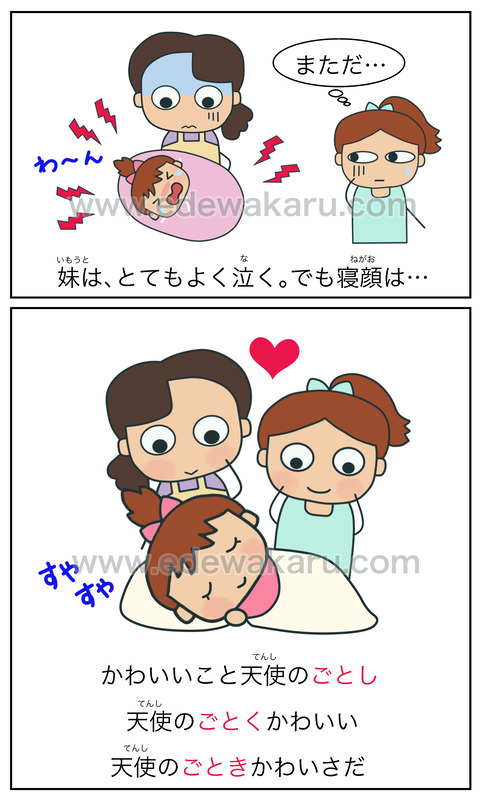
Meaning
As if it were 〜
As if 〜
Like 〜
How to use it
Noun [dictionary form] + の + ごとし
Noun [dictionary form] + の + ごとく
Noun [dictionary form] + の + ごとき + noun
Explanation
「〜ごとし・〜ごとく・〜ごとき」 is a sentence pattern meaning “as if 〜,” “as if 〜ly,” or “like 〜.” These are very formal expressions used in writing. In modern usage, they are most often found in [proverbs] and [idioms]. 😊 The uses of 「〜ごとし・〜ごとく・〜ごとき」 are the same as 「〜ようだ・〜ように・〜ような」. It’s helpful to remember 「〜ごとし = 〜ようだ」「〜ごとく = 〜ように」「〜ごとき = 〜ような」. 😉
(Review: まるで〜)
(Review: 〜として)
(Review: 〜ておく)
[Examples]
〜ごとし.
〜ごとく + adjective or verb
〜ごとき + noun
Also, 「〜ごとし・〜ごとく・〜ごとき」 are written in kanji as 「〜如し・〜如く・〜如き」.
This pattern is classical Japanese, so it is very rarely used in conversation. 😅 In everyday conversation, 「〜ようだ・〜ように・〜ような」 are used in most cases, but people taking N1 should learn this as one of the important patterns. 😀
In context 6 examples
かわいいこと天使のごとし
→かわいいことまるで天使のようだShe is as cute as an angel. → She is cute, just like an angel.
天使のごとくかわいい
→まるで天使のようにかわいいCute like an angel. → Cute as if she were an angel.
天使のごときかわいさだ
→まるで天使のようなかわいさだShe has angel-like cuteness. → She has cuteness like an angel.
彼は、風のごとく速く走ることができる
→彼は、まるで風のように速く走ることができるHe can run fast like the wind. → He can run as fast as the wind.
社長に、鬼のごとき顔で怒られた
→社長に、まるで鬼のような顔で怒られたThe president scolded me with a face like a demon’s. → The president scolded me with a face as if he were a demon.
【ことわざ】光陰矢のごとし
→月日は矢のように速く経つ*「月日が経つのは速い」という意味[Proverb] Time flies like an arrow. → The days and months pass quickly like an arrow. *This means “time passes quickly.”
Read the original source text
Meaning
まるで〜のようだ
まるで〜のように
まるで〜のような
How to use it
名詞[辞書形]+の+ごとし
名詞[辞書形]+の+ごとく
名詞[辞書形]+の+ごとき+名詞
Explanation
「〜ごとし・〜ごとく・〜ごとき」は「まるで〜ようだ・〜ように・〜ような」という意味の文型です。「〜ごとし・〜ごとく・〜ごとき」はとてもかたい言い方で、書き言葉として使われます。現代では多くの場合【ことわざ】や【慣用句】で使用されます😊「〜ごとし・〜ごとく・〜ごとき」の使い方は、「〜ようだ・〜ように・〜ような」と同じです。「〜ごとし=〜ようだ」「〜ごとく=〜ように」「〜ごとき=〜ような」と覚えておくといいと思います😉
(復習:まるで〜)
(復習:〜として)
(復習:〜ておく)
[例]
〜ごとし。
〜ごとく+形容詞・動詞
〜ごとき+名詞
また
「〜ごとし・〜ごとく・〜ごとき」は漢字で書くと「〜如し・〜如く・〜如き」となります。
この文型は古語ですので、会話で使われることはとても少ないです😅
日常会話(にちじょうかいわ)では「〜ようだ・〜ように・〜ような」が使われることがほとんどです
が、N1を受ける人は大切な文型の1つとしてしっかりと覚えておきましょう😀
Usage 2
Read this source entry ↗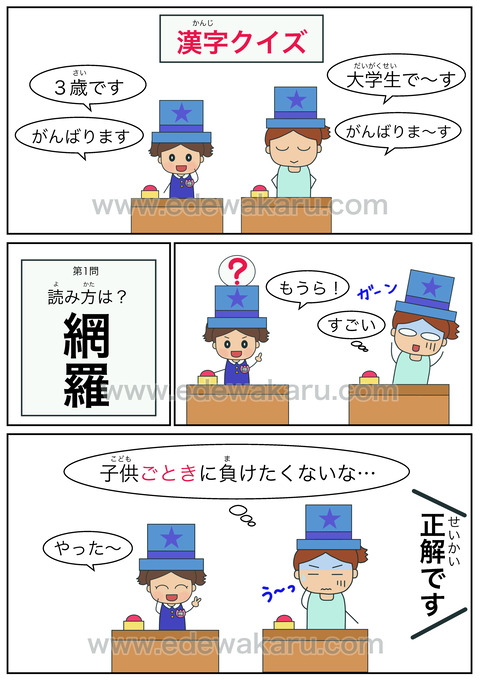
Meaning
〜 and the like
How to use it
Noun [dictionary form] + ごとき
Explanation
When 「〜ごとき」 is used with a noun referring to a person, it means “〜 and the like.” When used for another person, it expresses [disdain]; when used for oneself, it expresses [humility]. This is a usage unique to 「〜ごとき」, so it cannot be expressed using 「〜ごとし」 or 「〜ごとく」. 😮 Remember that “person-referring noun + ごとき” is almost always written in hiragana.
(Review: 〜など・〜なんか・〜なんて)
[Examples]
① I don’t want to lose to a mere child…
[Disdain toward “child”]
② There’s no way someone like him could understand.
[Disdain toward “him”]
③ As if I’d teach someone like Yamada!
[Disdain toward “Yamada”]
④ I can’t imagine that guy winning.
[Disdain toward “that guy”]
⑤ A: It’s nothing special, but please accept it.
B: For someone like me to receive something this lovely… Thank you.
[Humility]
“Person-referring noun + ごとき” is similar to the [disdain] and [humility] uses of 「〜など・〜なんか・〜なんて」, so review those forms thoroughly. 😀 Distinguish it from 「〜ごとし・〜ごとく・〜ごとき」, which means “as if 〜.”
(Review: 〜など・〜なんか・〜なんて)
(Review: 〜ごとし・〜ごとく・〜ごとき)
In context 5 examples
子供ごときに負けたくないな…
→子供などに負けたくないな…I don’t want to lose to a mere child… → I don’t want to lose to a child or the like…
彼ごときにわかるわけがない
→彼などにわかるわけがない(復習:〜わけがない)There’s no way someone like him could understand. → There’s no way someone like him could understand. (Review: 〜わけがない)
山田ごときに教えるものか!
→山田などに教えるものか!(復習:〜ものか)As if I’d teach someone like Yamada! → As if I’d teach Yamada or the like! (Review: 〜ものか)
あいつごときが優勝するとは思えないな
→あいつなどが優勝するとは思えないなI can’t imagine that guy winning. → I can’t imagine that guy or the like winning.
A:つまらないものですが、どうぞB:私ごときにこんなステキなものを…ありがとうございます
→私などにこんなステキなものを…ありがとうございます(復習:つまらないものですが…)A: It’s nothing special, but please accept it. B: For someone like me to receive something this lovely… Thank you. → For someone like me to receive something this lovely… Thank you. (Review: “It’s nothing special, but please accept it.”)
Read the original source text
Meaning
〜など
How to use it
名詞[辞書形]+ごとき
Explanation
「〜ごとき」が人を表す名詞と使われると「〜など」という意味になり、相手に使うと【軽視】、自分に使うと【謙遜】を表します。
これは「〜ごとき」にしかない用法ですので、「〜ごとし」や「〜ごとく」を使って表すことはできません
😮この「人を表す名詞+ごとき」は、ひらがなで書くことがほとんどだと覚えておきましょう。
(復習:〜など・〜なんか・〜なんて)
[例]
①子供
ごとき
に負けたくないな…
【「子供」を軽視】
②彼
ごとき
にわかるわけがない
【「彼」を軽視】
③山田
ごとき
に教えるものか!
【「山田」を軽視】
④あいつ
ごとき
が優勝するとは思えないな
【「あいつ」を軽視】
⑤A:つまらないものですが、どうぞ
B:私
ごとき
にこんなステキなものを…ありがとうございます
【謙遜】
「人を表す名詞+ごとき」は「〜など・〜なんか・〜なんて」の【軽視】【謙遜】の使い方と似ていますので、「〜など・〜なんか・〜なんて」をしっかりと復習しておきましょう😀 「まるで〜よう」を表す「〜ごとし・〜ごとく・〜ごとき」とは区別をして覚えておきましょう。
(復習:〜など・〜なんか・〜なんて)
(復習:〜ごとし・〜ごとく・〜ごとき)
毎日のんびり日本語教師
Usage 1
Read this source entry ↗Meaning
This is a figurative pattern.
In modern usage, it is often used in written language and is an archaic expression.
“如き” is the same as “~ような” and is followed by a noun.
“如く” is the same as “~ように” and is followed by a verb or adjective.
“如し” is the same as “~ようだ” and is used at the end of a sentence.
In general, in conversation, “~ようだ,” “みたいだ,” and so on are used.
How to use it
Verb dictionary form + が + 如き + noun
Verb dictionary form + が + 如く (continuative)
Verb dictionary form + が + 如し (sentence-final)
Verb dictionary form + かの + 如き + noun
Verb dictionary form + かの + 如く (continuative)
Verb dictionary form + かの + 如し (sentence-final)
Verb た-form + が + 如き + noun
Verb た-form + が + 如く (continuative)
Verb た-form + が + 如し (sentence-final)
Verb た-form + かの + 如き + noun
Verb た-form + かの + 如く (continuative)
Verb た-form + かの + 如し (sentence-final)
Noun + の + 如き + noun
Noun + の + 如く (continuative)
Noun + の + 如し (sentence-final)
Explanation
Like…
As…
Just as if…
Notes
The “ごとき” series
In context 8 examples
汗が滝のごとく流れ出す。(汗就像水龙头一样地流。)
Sweat pours out like a waterfall.
何事もないかのごとく振る舞った。
He acted as if nothing had happened.
至福の時間は夢の如く早く過ぎる。
Time spent in bliss passes by as quickly as a dream.
光陰矢の如し(光阴似箭)
Time flies like an arrow.
疾きこと風の如く、徐かなること林の如く、侵掠すること火の如く、動かざること山の如し(疾如風、徐如林、侵掠如火、不動如山)
Swift as the wind, calm as the forest, fierce as fire, immovable as the mountain.
過ぎたるは及ばざるが如し。
Too much is as bad as too little.
業火の如き猛攻。(像业火一样地猛攻。)
A fierce attack like a raging inferno.
疾風が如き速さで走り去る。
He runs off at a speed like a gale.
Read the original source text
Meaning
比喩の文型です。
現代では書き言葉として用いられることが多く、古語表現です。
「如き」は「~ような」と同じで、後ろは名詞に接続します。
「如く」は「~ように」と同じで、後ろは動詞や形容詞に接続します。
「如し」は「~ようだ」と同じで、文末に使われます。
一般に会話では「~ようだ」「みたいだ」等を使います。
How to use it
動辞形+が+如き+名詞
動辞形+が+如く(連用)
動辞形+が+如し(文末)
動辞形+かの+如き+名詞
動辞形+かの+如く(連用)
動辞形+かの+如し(文末)
動た形+が+如き+名詞
動た形+が+如く(連用)
動た形+が+如し(文末)
動た形+かの+如き+名詞
動た形+かの+如く(連用)
動た形+かの+如し(文末)
名詞+の+如き+名詞
名詞+の+如く(連用)
名詞+の+如し(文末)
Explanation
像…一样
如…
就好像…
Notes
「ごとき」シリーズ
Usage 2
Read this source entry ↗How to use it
Noun + ごとき (+ particle)
Explanation
Attaches to nouns referring to people or things and intensifies the disparaging tone toward the target.
When it attaches to a word referring to oneself, it expresses humility. Example (3).
Notes
The “ごとき” series
In context 13 examples
お前ごときが私に勝てるわけがない。
There’s no way someone like you could beat me.
なぜ1杯の水ごときに1000円も払わなければいけないのか。
Why do I have to pay as much as 1,000 yen for something as trivial as a glass of water?
神殿の中は私ごときが立ち入ってはいけない場所だ。
The temple interior is not a place for someone like me to enter.
ここ数日、口内炎ごときにこんなにも苦しめられている。
For the past few days, I’ve been suffering so much because of something as trivial as a canker sore.
AIごときに人類の未来は託せない。
Humanity’s future cannot be entrusted to something like AI.
俺の気持ちがお前ごときに分かるものか。
How could someone like you understand how I feel?
大人が小学生ごときにムキになるな。
Don’t get worked up over an elementary schooler when you’re an adult.
彼女とラーメン屋に来たんだけど、ラーメンごときですごい喜んでくれて私も嬉しくなった。
I came to a ramen shop with my girlfriend, and she was so delighted by something as simple as ramen that it made me happy too.
たかがゲームごときにムキになるな。(像游戏一样罢了不至于大动肝火。)
Don’t get worked up over something as trivial as a game.
皿洗いごときでお湯を無駄使いするな。
Don’t waste hot water on something as trivial as washing dishes.
こんな広い世界で自分ごときに何ができる?
What can someone like me do in such a vast world?
そんな事言われても俺ら一般市民ごときに何が出来るんだ。
Even if someone says that, what can ordinary citizens like us do?
そんな発想、私ごときにできませんよ!
I could never come up with an idea like that!
Read the original source text
How to use it
名詞+ごとき(+助詞)
Explanation
人や物を表す名詞につき、対象を貶す語気を強めます。
自分を表す語につくと謙遜の意味になります。例文(3)。
Notes
「ごとき」シリーズ
AIUEO JLPT Grammar
Meaning
This sentence pattern is used for metaphors, examples, or to emphasize certain qualities, states, or degrees of something. It can express specific attributes or features and sometimes carries a nuance of contempt or exaggeration.
How to use it
Verb dictionary form (+ が) + ごとき or ごとく or ごとし; verb ta form (+ が) + ごとき or ごとく or ごとし; noun の + ごとき or ごとく or ごとし
In context 5 examples
彼ごときが成功するとは思えない。
I can’t imagine someone like him succeeding.
彼女は天使のごとき笑顔を浮かべていた。
She had an angelic smile.
彼は疾風のごとく走った。
He ran like the wind.
この試合は命がけの戦いのごとし。
This match is like a life-and-death battle.
雪のごとく白い花が咲いていた。
White flowers were blooming, as white as snow.
Read the original source text
Meaning
This sentence pattern is used for metaphors, examples, or to emphasize certain qualities, states, or degrees of something. It can express specific attributes or features and sometimes carries a nuance of contempt or exaggeration.
How to use it
動詞辞書形 (+が)+ごときorごとくorごとし動詞た形 (+が)+ごときorごとくorごとし名詞の+ごときorごとくorごとし
Explanation · 日本語
この文型は、比喩や例示、または何かの性質、状態、程度を強調する表現で、ある事柄や物の特定の性質や特徴を表すときに使用され、時には軽蔑や誇張の意味を含むこともあります。
文法
Meaning
~ like
When ごとき is connected to a noun referring to a person, it is an expression that looks down on the other person. When speaking about oneself, it conveys humility.
How to use it
V(dictionary/past form)+ かのごとき + N
V(dictionary/past form)+ かのごとき(within a sentence)
V(dictionary/past form)+ かのごとし(at sentence end)
Nの + ごとき + N
Nの + ごとく(within a sentence)
Nの + ごとし(at sentence end)
Notes
An old-fashioned expression used in writing.
In context 6 examples
光陰矢の如し。(月日はあっという間にすぎるという意味のことわざ)
Time flies like an arrow. (A proverb meaning that the days and months pass in the blink of an eye.)
メロスは疾風の如く形場にと突入した。
Melos charged into the execution grounds like a gale.
私がこの子に「幸子」と名前を付けたのは、読んで字の如く、幸せな子になって欲しいと思ったから。
I named this child “Sachiko” because, just as the characters literally say, I wanted her to become a happy child.
いつものごとく、ジョンさんは遅刻してきた。
As usual, John arrived late.
お前ごときに、負けてたまるか。
As if I’d ever lose to the likes of you!
私ごときがこのような賞を頂けるなんて、大変光栄です。
I am deeply honored that someone as insignificant as me could receive such an award.
Read the original source text
Meaning
〜ように
「ごとき」が人を表す名詞と接続した場合、相手を軽視した表現になる。また、自分について言う場合は謙遜の意味を持つ。
How to use it
V(辞書形/タ形) + かのごとき + N
V(辞書形/タ形) + かのごとき(文中)
V(辞書形/タ形) + かのごとし(文末)
Nの + ごとき + N
Nの + ごとく(文中)
Nの + ごとし(文末)
Notes
書き言葉で古い表現
DoJG 日本語文法辞典(全集)
Meaning
Like; look like
How to use it
(i) Nounの | ごとし | |
| 魚のごとし | Someone/something is like (a) fish |
(iii) Vinformal nonpast{が/かの} | ごとし | |
| 夢見る{が/かの} | It is like dreaming/as if someone were dreaming |
(iii) Noun(か)の | ごとく | |
| 魚のごとく泳ぐ | Someone swims like a fish |
| 魚かのごとく泳ぐ | Someone swims as if he/she were a fish |
(iv) Noun(か)の | ごとき | |
| 夢のごとき人生 | Life like a dream |
| 夢かのごとき人生 | Life like a dream |
(v) {Vinformal nonpast/Nounである}{が/かの} | ごときNoun | |
| 山に登る{が/かの}ごとき人生 | Life like climbing a mountain |
| 夢である{が/かの}ごとき人生 | Life like a dream |
Explanation
An auxiliary adjective that indicates a resemblance of something/someone to something/someone or indicates how something/someone appears to speaker/writer.
In context 15 examples
人生は旅のごとし。
Life is like a journey.
その無謀な行為は火中に飛び込む{が/かの}ごとし。
Acting recklessly like that is like jumping into the fire.
彼女はモナリザのごとくいつも微笑んでいる。
She is like Mona Lisa, always smiling.
x氏は超人のごとき人だ。
Mr. X is like a superman.
彼女は僕のことを全然覚えていないかのごとき様子だった。
She looked as if she didn't remember me at all.
光陰矢のごとし。
Time flies like an arrow. (literally: Time is like an arrow.)
人生は航海のごとし。
Life is like a voyage.
東京人は万人走っているかのごとし。
Tokyoites all look as if they were always running.
日本の経済は、上述のごとく、今後しばらくは回復しない見込みである。
As stated above, the Japanese economy is not expected to recover for some time.
彼女は女王のごとく芸能界に君臨している。
She dominates the show business world as if she were a queen.
課長は当然のごとく女性の職員にお茶くみをさせている。
The section chief has female staff members serve tea as if it were in their job description (literally: as if it were a matter of course).
夢のごとき新婚生活の後に悲劇が訪れた。
Their dream-like, newly-wedded bliss was followed by tragedy.
彼は平社員なのに社長であるかのごとき言動をするのでみんなに嫌われている。
He is just a regular employee, but he talks and acts as if he were the president, so nobody likes him.
皮膚の色だけで差別するがごとき行為は絶対にあってはならぬ。
Behaviour such as discriminating against people merely on the basis of skin colour simply shouldn't exist.
子供が大人のような犯罪を犯すがごとき風潮は何が原因なのだろうか。
I wonder what causes trends such as children committing adult crimes.
どんなときどう使う 日本語表現文型辞典
Meaning
like; as
How to use it
Nの+ごとき (like; such as)
Explanation
~のような
1)やや古い感じがする書き言葉。 ❶ ~ ❸ は、事実はそうではないが、たとえて言えばそのように見えるという意味。 ❹ ❺ は例として示す言い方。
2)後に名詞がつくときは「Nのごとき」、それ以外は「Nのごとく」の形になる。
1)Somewhat old-fashioned written form. Nuance in sentences ❶ to ❸ is that though reality is different, simile holds true. In sentences ❹ and ❺ , ごとき is used to indicate examples.
2)Pattern is N のごとき when following nouns, and N のごとく in all other cases.
In context 5 examples
村で花のごとき美人に出会った。
I met a beauty like a flower in the village.
あの人は氷のごとく冷たい人だ。
That person is as cold as ice.
月日は矢のごとく過ぎさった。
The days passed like arrows.
彼のごとき優秀な人でも失敗することがある。
Even an outstanding person like him sometimes fails.
エジソンのごとき発明家はもうこの世に生まれないだろう。
An inventor like Edison probably will never be born into this world again.
Read the original source text
Meaning
like; as
How to use it
Nの+ごときW
Explanation
~のような
1)やや古い感じがする書き言葉。 ❶ ~ ❸ は、事実はそうではないが、たとえて言えばそのように見えるという意味。 ❹ ❺ は例として示す言い方。
2)後に名詞がつくときは「Nのごとき」、それ以外は「Nのごとく」の形になる。
1)Somewhat old-fashioned written form. Nuance in sentences ❶ to ❸ is that though reality is different, simile holds true. In sentences ❹ and ❺ , ごとき is used to indicate examples.
2)Pattern is N のごとき when following nouns, and N のごとく in all other cases.
くらべてわかる日本語表現文型辞典
Meaning
Meaning 1: B is like A; B is in the manner of A. B is like A. A is a metaphor or example that represents B.
Meaning 2: In the form 「A ごとき(に)B」. An indirect expression that points to A itself and looks down on A or expresses humility. “Someone/something like A (for B).”
How to use it
A ごとき B (A ごとく B/A がごとき B/A ごときに B/A ごとし)
Connection 1:
[Verb—dictionary form] + (が) + ごとき [Noun—∅]
[Verb—dictionary form] + (が) + ごとく [Verb]
[Noun—の] ごとき [Noun—∅]
[Noun—の] ごとく [Verb]
[Noun—の] ごとし
Connection 2:
[Noun—∅] ごとき (に)
In context 8 examples
彼は鬼のごとき顔で私をにらんだ。
He glared at me with a face like a demon's.
彼はまるで自分が社長のごとくふるまっている。
He acts as if he himself were the company president.
まるで眠るがごとき最期でした。
It was an end as if falling asleep.
光陰、矢のごとし。
Time flies like an arrow.
こんな問題ごとき、5分で解いてやる。
A problem like this? I'll solve it in five minutes.
おまえごときに負けるものか。
As if I'd lose to the likes of you!
あんな子どもごときに馬鹿にされてなるものか。
As if I'd let a kid like that make a fool of me!
このような大役は私ごときには無理です。
A major responsibility like this is too much for someone like me.
Read the original source text
Meaning
意味1:AようなB。AのようにB。BはAのようだ。AにはBを表す比喩や例がくる。
意味2:「Aごとき(に)B」の形で。あいまいな表現で、Aそのものを示し、Aを見下したり、謙遜したりする表現。Aなんか(に)B。
How to use it
AごときB(AごとくB/AがごときB/AごときにB/Aごとし)
接続1:
[動詞-る形]+(が)+ごとき[名詞-∅]
[動詞-る形]+(が)+ごとく[動詞]
[名詞-の]ごとき[名詞-∅]
[名詞-の]ごとく[動詞]
[名詞-の]ごとし
接続2:
[名詞-∅]ごとき(に)
日本語NET JLPT文法解説まとめ
Meaning
"like ~"
When 「ごとき」 is connected to a noun referring to a person, it becomes an expression that belittles the other party. When used to refer to oneself, it carries a sense of humility.
How to use it
V(dictionary/past form)+ かのごとき + N
V(dictionary/past form)+ かのごとき(within a sentence)
V(dictionary/past form)+ かのごとし(at sentence end)
Nの + ごとき + N
Nの + ごとく(within a sentence)
Nの + ごとし(at sentence end)
Explanation
"like"
When 'ごとき' is connected to a noun referring to a person, it becomes an expression that belittles the other party. When used to refer to oneself, it carries a sense of humility.
Old-fashioned expression used in written language
Old-fashioned expression in written language
In context 6 examples
光陰矢の如し。(月日はあっという間にすぎるという意味のことわざ)
Time flies like an arrow. (A proverb meaning that the days and months pass in the blink of an eye.)
メロスは疾風の如く刑場にと突入した。
Melos charged into the execution grounds like a gale.
私がこの子に「幸子」と名前を付けたのは、読んで字の如く、幸せな子になって欲しいと思ったから。
I named this child “Sachiko” because, just as the characters literally say, I wanted her to become a happy child.
いつものごとく、ジョンさんは遅刻してきた。
As usual, John arrived late.
お前ごときに、負けてたまるか。
As if I’d ever lose to the likes of you!
私ごときがこのような賞を頂けるなんて、大変光栄です。
I am deeply honored that someone as insignificant as me could receive such an award.
Read the original source text
Meaning
"〜ように"
「ごとき」が人を表す名詞と接続した場合、相手を軽視した表現になる。また、自分について言う場合は謙遜の意味を持つ。
How to use it
V(辞書形/タ形) + かのごとき + N
V(辞書形/タ形) + かのごとき(文中)
V(辞書形/タ形) + かのごとし(文末)
Nの + ごとき + N
Nの + ごとく(文中)
Nの + ごとし(文末)
Explanation
"like"
When 'ごとき' is connected to a noun referring to a person, it becomes an expression that belittles the other party. When used to refer to oneself, it carries a sense of humility.
書き言葉で古い表現
Old-fashioned expression in written language
NINJAL 日本語文型データベース
Usage 1
Meaning
[1] Used when expressing something by comparing it to something else, to make it easier to picture the form, nature, appearance, and so on of what follows.
[2] Used when the speaker looks down on the target and wants to criticize or disparage it. It can also convey humility or self-deprecation.
How to use it
Nのごとき
Nごとき
Notes
[2] The “〜” often refers to a person, a person’s name, or an expression indicating a role or position. It can also be attached to expressions about oneself, such as “私.”
In context 12 examples
日本は、野口英世のごとき優秀な科学者を生み出した。
Japan has produced excellent scientists such as Hideyo Noguchi.
好きなアイドルの太陽のごとき笑顔を見ていると、心が癒されます。
When I look at my favorite idol’s sun-like smile, my heart is soothed.
近代文学において、夏目漱石のごとき存在の影響力は計り知れない。
In modern literature, the influence of a figure such as Natsume Sōseki is immeasurable.
合唱コンクールの子供たちの歌声は、素晴らしかったです。その歌声は、まさに天使のごときものでした。
The children’s singing at the choir competition was wonderful. Their voices were truly angelic.
あの人は良くも悪くも力のある政治家だった。日本で彼女のごとき政治家はこれからはもう生まれないだろう。
For better or worse, that person was a powerful politician. A politician like her will probably never emerge in Japan again.
俺はプロサッカーチームのメンバーとして、ここまでやってきた。学校のサッカー部ごときに負けるもんか。
I’ve made it this far as a member of a professional soccer team. There’s no way I’m losing to some school soccer club.
たかがゲームごときで大人がけんかをしないでください。
Please don’t let adults fight over something as trivial as a game.
魔王「お前ごときが私を倒せると思っているのか」
Demon King: “Do you think someone like you can defeat me?”
「アルバイトごときが何を言っているのかと思われるかもしれませんが、そのやり方を見直してはどうかと思います」
“You may wonder what someone who’s just a part-time worker like me has to say, but I think you should reconsider that way of doing things.”
「生徒の親に「教師ごときがうちの子を叱るな」と言われてしまいました」
“A student’s parent said to me, ‘A mere teacher like you has no right to scold my child.’”
「俺たち平社員ごときが上に何を言っても無駄です。あきらめましょう」
“There’s no point in us mere rank-and-file employees saying anything to our superiors. Let’s give up.”
私ごときが意見するのもおこがましいのですが、ちょっとよろしいでしょうか。
It may be presumptuous of someone like me to offer an opinion, but may I say something?
Read the original source text
Meaning
[1] 後の文の形・性質・様子などがイメージしやすいように、何かにたとえて表現するときに使います。
[2] 話者が対象を低く見て、非難したり、けなしたりしたいときに使います。謙遜や自虐の意味になることもあります。
How to use it
Nのごとき
Nごとき
Notes
[2] 「~」には、人、人の名前、役割・立場を表す表現がくることが多いです。「私」など自分に関する表現にもつきます。
Usage 2
Meaning
This is used when expressing something by comparing it to something else so that the form, nature, or appearance of N is easy to picture.
How to use it
V plain form + かのごときN
i-A plain form + かのごときN
na-A plain form + かのごときN (however, “na-Aだ” → “na-A+であるかのごときN”)
N plain form + かのごときN (however, “Nだ” → “NであるかのごときN”)
In context 21 examples
何度聞いていても、新入部員たちは、毎回初めて聞くかのごとき表情で先輩からのアドバイスを聞きます。
No matter how many times they have heard it, the new club members listen to their seniors' advice each time with expressions as if they were hearing it for the first time.
営業部に異動して、あたかも入社1年目に戻ったかのごとき新鮮な心で仕事に取り組んでいます。
Since transferring to the sales department, I have been approaching my work with a fresh outlook, as if I had gone back to my first year at the company.
社内では、部長がすべての決定権を持っているかのごとき空気である。誰も部長には反対意見を言えない。
There is an atmosphere within the company as if the department head held all the decision-making power. No one can voice an opposing opinion to the department head.
応募者は、新人ばかりだったが、応募作品はどれもプロの作家が書いたかのごとき文章であった。
The applicants were all newcomers, but every submitted work was written in prose as if it had been written by a professional author.
「ジャーナリストでありながら報道の自由を否定するかのごとき発言をするとは! 撤回してください!」
“How can you make remarks that seem to deny freedom of the press while being a journalist! Retract them!”
何か問題が起きたとき、課長はさも自分だけが正しいかのごとき言い方で部下を責める。
Whenever a problem arises, the section chief blames subordinates in a way that makes it seem as if only he is right.
会社では、常に忙しいかのごときふるまいをして、仕事を頼まれないようにするのだ。それが仕事を増やさないコツである。
At work, you act as if you are always busy so that people won't ask you to do things. That's the trick to keeping your workload from growing.
どのようなテーマでも、さも興味深いかのごとき表情で語る評論家が、マスメディアによく出演している。
Critics who talk about any topic with expressions as if they find it fascinating often appear in the mass media.
大統領は予定通りに到着したが、相手国の首相は、大統領が遅刻したかのごとき不満げな表情を浮かべていた。
The president arrived as scheduled, but the prime minister of the other country wore a dissatisfied expression as if the president had been late.
プロの演奏家は、いともたやすいかのごとき所作で美しい音色を奏でる。しかし、実際に同じような音色を再現するのは極めて困難である。
Professional musicians produce beautiful tones with movements that seem effortless. However, reproducing the same kind of tone is extremely difficult in reality.
学生は教師の前では、真面目かのごときふるまいをするものだ。
Students tend to behave as if they are serious when they are in front of their teachers.
市は、このイベントがあたかも盛況だったかのごとき報告を出した。これは虚偽報告である。
The city issued a report that made it seem as if the event had been a success. This is a false report.
現代では、SNS上で、さも自分が幸せであるかのごとき投稿も簡単にできてしまう。
Nowadays, it's easy to post on social media as if you yourself were happy.
周りの人に自分の悩みを相談できない人が増えているようだ。そうした人たちは、心配をかけたくなくて、家族にもサポートが必要でないかのごときメッセージを送ってしまうのだとか。
It seems that more and more people are unable to talk to those around them about their worries. Apparently, such people don't want to make others worry, so they end up sending messages even to their families as if they don't need support.
避難生活を送った当時について語るとき、父は、まるで自分だけが自由でなかったかのごとき口ぶりである。
When talking about the time when we were living as evacuees, my father speaks as if he alone had not been free.
選挙の前だけ誠実であるかのごとき顔をしている政治家に国民は投票しない。国や国民のことをきちんと考えてくれる人に投票したいのだ。
People don't vote for politicians who put on a face of sincerity only before an election. They want to vote for someone who will properly consider the country and its people.
この政治家は、福祉政策に非常に詳しい。まるで学者かのごとき知識量である。
This politician knows a great deal about welfare policy. His knowledge is as extensive as that of a scholar.
責任を追及したが、A社の責任者は、自分たちは無関係だったかのごとき態度で説明を続けた。
When we pressed them to take responsibility, the person in charge at Company A continued explaining with an attitude as if they had nothing to do with it.
「今ではこのシステムはずいぶん古くなっているが、この論文ではさも最先端のシステムであるかのごとき説明がされている。どういうことだろうか」
“This system is quite outdated now, but this paper explains it as if it were state of the art. What could that mean?”
隣町は昨日の大雨の被害を受けた。しかし、この町は、あたかも平穏であったかのごとき様子である。
The neighboring town suffered damage from yesterday's heavy rain. This town, however, looks as if it had been peaceful.
その事件はフィクションなのだが、映画がヒットしたこともあって、世間ではまるで事実であったかのごとき受け止められ方をしている。
The incident is fictional, but since the movie was a hit, people are treating it as if it were real.
Read the original source text
Meaning
Nの形・性質・様子などがイメージしやすいように、何かにたとえて表現するときに使います。
How to use it
V普通形+かのごときN
i-A普通形+かのごときN
na-A普通形+かのごときN(ただし、「na-Aだ」→「na-A+であるかのごときN」)
N普通形+かのごときN(ただし、Nだ」→「NであるかのごときN」)