絵でわかる日本語
Usage 1
Read this source entry ↗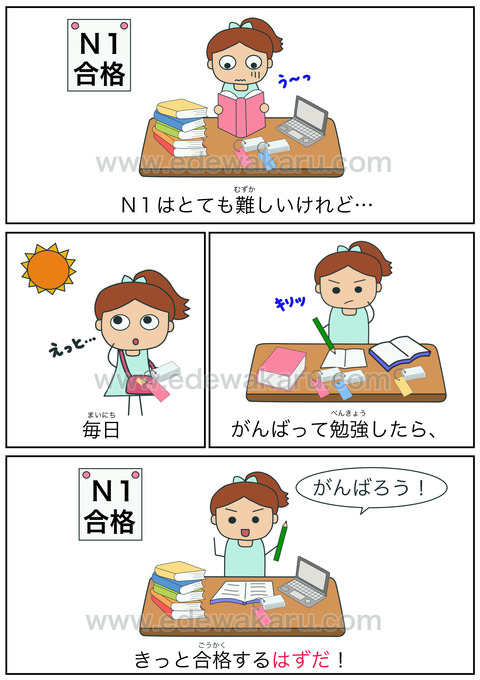
Meaning
I’m sure that…
There is a very high possibility that…
How to use it
Verb, adjective, or noun [plain form] + はずだ
* な-adjective [−な] + はずだ
* Noun [dictionary form] + のはずだ
Explanation
“〜はずだ” is a sentence pattern meaning “I’m sure that….” It is used when you have a reason to think “because…, I’m sure that…” or when you want to say “I’m sure that…” based on the situation, for example 😊
[Examples]
① If she studies hard every day, she is sure to pass N1.
[Reason/situation] She studies hard every day.
→ I’m sure she will pass N1.
② A: I heard she lived in America for 10 years.
B: Then she must be good at English.
[Reason/situation] She lived in America for 10 years.
→ Since she lived there for 10 years, I thought she must be good at English.
③ Since a major typhoon is approaching, school should be canceled.
[Reason/situation] A major typhoon is approaching.
→ Because it’s a major typhoon, I thought school would definitely be canceled.
④ She’s always late… She’ll surely be late again today.
[Reason/situation] She is always late.
→ Since she’s always late, I thought she would definitely be late again today.
⑤ A: Is he coming to the party today?
B: He said he was on a business trip to Tokyo, so he probably won’t come.
[Reason/situation] He said he was on a business trip to Tokyo.
→ I judged that since he said he was on a business trip, he definitely wouldn’t come to the party.
“〜はず” has several meanings, so be sure to learn to distinguish them 😀
[Patterns that use “はず”]
〜たはずなのに
〜はずがない
〜はずだ (judgment)
〜はずだ (plan)
〜はずだった
In context 5 examples
毎日がんばって勉強したら、きっとN1に合格するはずだ
If she studies hard every day, she is sure to pass N1.
A:彼女は、アメリカに10年住んでたそうよB:じゃあ、きっと英語が上手なはずだね(復習:〜てる・〜でる)(復習:〜そうだ(伝聞))(復習:〜ちゃ・〜じゃ)
A: I heard she lived in America for 10 years. B: Then she must be good at English. (Review: 〜てる・〜でる) (Review: 〜そうだ (hearsay)) (Review: 〜ちゃ・〜じゃ)
大きな台風が近づいているので、学校は休みになるはずだ
Since a major typhoon is approaching, school should be canceled.
彼女はいつも遅刻をしてくる…今日もきっと遅れてくるはずだ
She’s always late… She’ll surely be late again today.
A:彼は今日のパーティーに来るの?B:東京に出張だって言ってたから、来ないはずだよ(復習:〜って(引用))
A: Is he coming to the party today? B: He said he was on a business trip to Tokyo, so he probably won’t come. (Review: 〜って (quotation))
Read the original source text
Meaning
絶対に〜だと思う
〜の可能性は、とても高い
How to use it
動詞・形容詞・名詞[普通形]+はずだ
*な形容詞[ーな]+はずだ
*名詞[辞書形]+のはずだ
Explanation
「〜はずだ」は「絶対に〜だと思う」という意味を表す文型です。何か理由があって、
「〜だから、絶対に〜だ」
と思う時や、状況などから判断して「絶対に〜だ」と言いたい時に使用されます😊
[例]
①毎日がんばって勉強したら、きっとN1に合格する
はずだ
【理由・状況】毎日がんばって勉強する
→
絶対に
N1に合格する
と思う
②A:彼女は、アメリカに10年住んでたそうよ
B:じゃあ、きっと英語が上手な
はずだ
ね
【理由・状況】アメリカに10年住んでいた
→10年住んでいた
から、きっと
英語が上手だ
と思った
③大きな台風が近づいているので、学校は休みになる
はずだ
【理由・状況】大きな台風が近づいている
→大きな台風だ
から、絶対に
学校は休みになる
と思った
④彼女はいつも遅刻をしてくる…今日もきっと遅れてくる
はずだ
【理由・状況】彼女はいつも遅刻をする
→いつも遅刻する
から、
今日も絶対に遅れてくる
と思った
⑤A:彼は今日のパーティーに来るの?
B:東京に出張だって言ってたから、来ない
はずだ
よ
【理由・状況】東京に出張だと言っていた
→出張だと言っていた
から、絶対に
パーティーに来ない
と判断した
「〜はず」にはいくつか意味がありますので、区別して覚えておきましょう😀
【「はず」がつく文型】
〜たはずなのに
〜はずがない
〜はずだ(判断)
〜はずだ(予定)
〜はずだった
Usage 2
Read this source entry ↗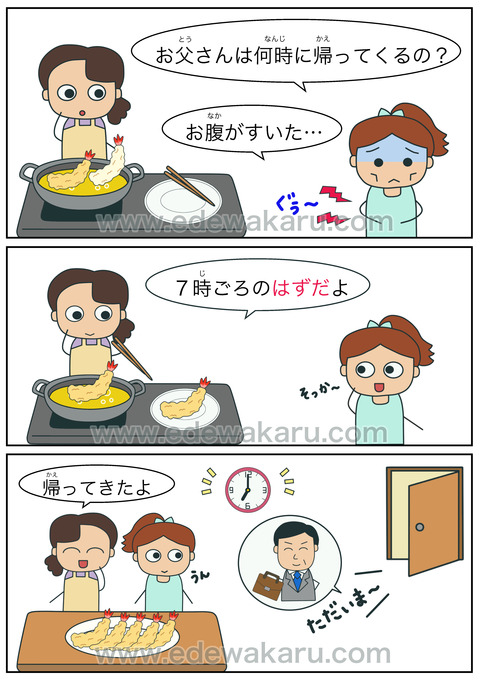
Meaning
Be scheduled to…
How to use it
Verb or noun [plain form] + はずだ
* Noun [dictionary form] + のはずだ
Explanation
“〜はずだ” is a sentence pattern expressing [a plan or schedule] and is used to mean “be scheduled to….” Take care: “〜はずだ” cannot be used for your own plans. To express your own plans, use “〜つもりだ” or “〜予定だ” 😊
❌ I am scheduled to study abroad in America next year.
⭕️ I intend to study abroad in America next year.
⭕️ I am planning to study abroad in America next year.
Remember that “〜はずだ” is also used for [the speaker’s judgment], in addition to meaning [a plan or schedule] 😉
(Review: 〜として)
[Patterns that use “はず”]
〜たはずなのに
〜はずがない
〜はずだ (judgment)
〜はずだ (plan)
〜はずだった
In context 4 examples
娘:お父さんは何時に帰ってくるの?母:7時ごろのはずだよ
→7時ごろの予定だよDaughter: What time is Dad coming home? Mother: He should be home around 7. →He’s scheduled to be home around 7.
バスは10時に来るはずだ
→バスは10時に来る予定だThe bus is supposed to come at 10. →The bus is scheduled to come at 10.
A:映画は9時からだよね?B:10時からのはずだよ
→10時からの予定だよ(復習:〜よね?)A: The movie starts at 9, right? B: It should start at 10. →It’s scheduled to start at 10. (Review: 〜よね?)
A:彼女は今年アメリカから帰ってくるんだっけ?B:うん、そのはずだよ
→うん、その予定だよ(復習:〜中)(復習:〜っけ)A: Was she coming back from America this year? B: Yes, that’s the plan. (Review: 〜中) (Review: 〜っけ)
Read the original source text
Meaning
〜予定だ
How to use it
動詞・名詞[普通形]+はずだ
*名詞[辞書形]+のはずだ
Explanation
「〜はずだ」は[予定]を表す文型で、「〜予定だ」という意味で使われます。「〜はずだ」は自分の予定について使うことができませんので注意しましょう。自分の予定を表す場合には
「〜つもりだ」「〜予定だ」
を使いましょう😊
❌私は、来年アメリカに留学する
はずだ
⭕️私は、来年アメリカに留学する
つもりだ
⭕️私は、来年アメリカに留学する
予定だ
「〜はずだ」には【予定】の意味以外に、【話者の判断】としても使われますので一緒に覚えておきましょう😉
(復習:〜として)
【「はず」がつく文型】
〜たはずなのに
〜はずがない
〜はずだ(判断)
〜はずだ(予定)
〜はずだった
どんなときどう使う 日本語表現文型辞典
Usage 1
Meaning
(inevitable result) must surely
How to use it
〔Plain form〕(Na-adjective な / Na-adjective である / Noun の / Noun である) + はずだ
Explanation
はずだ〈必然的帰結〉
1)客観的な理由があって(例えば計算などをして)、推量にかなり確信があるときに使う。その理由から考えて、当然のことだと推量するときの言い方。 ❹ のように、予定を表すときにも使う。
2)話す人の意志的な行為の予測には使わない。
1)Used when objective reason (for example, by calculation), and extreme confidence in surmise. Conjecture seems natural considering reasons. Also describes plans, as in sentence ❹ .
2)Not used with speaker's volitional actions or predictions.
In context 4 examples
田中さんはもう会社を出たはずですよ。5時の新幹線に乗ると言っていたから。
Tanaka should have left the company already. He said he was taking the 5 o’clock Shinkansen.
スポーツ大会の写真は山中君に頼みましょう。写真学校の学生だから上手なはずですよ。
Let’s ask Yamanaka to take the photos at the sports festival. He’s a photography school student, so he should be good at it.
あのうちのおじょうさんも、10年前に7歳だったのだから、もう高校生のはずだ。
That family’s daughter was seven ten years ago, so she should be in high school by now.
リーさんは3時に家を出たそうですから、ここには4時前に着くはずです。
I hear Mr. Lee left home at three, so he should arrive here before four.
Read the original source text
Meaning
(inevitable result) must surely
How to use it
〔普通形〕(ナAな・ナAである/Nの・Nである)+はずだ
Explanation
はずだ〈必然的帰結〉
1)客観的な理由があって(例えば計算などをして)、推量にかなり確信があるときに使う。その理由から考えて、当然のことだと推量するときの言い方。 ❹ のように、予定を表すときにも使う。
2)話す人の意志的な行為の予測には使わない。
1)Used when objective reason (for example, by calculation), and extreme confidence in surmise. Conjecture seems natural considering reasons. Also describes plans, as in sentence ❹ .
2)Not used with speaker's volitional actions or predictions.
Usage 2
Meaning
(natural) should be
How to use it
〔Plain form〕(Na-adjective な / Na-adjective である / Noun の / Noun である) + はずだ
Explanation
はずだ〈当然〉
~のは当然だ
事実や状況から「それは当然だ」と言いたいときに使う。
Considering some fact or situation, something is natural.
In context 3 examples
A:わあ、おいしいワインね。B:おいしいはずですよ。高いワインなんですから。
A: What delicious wine. B: It should be delicious. It’s expensive wine, after all.
寒いはずです。雪が降ってきました。
No wonder it’s cold. It’s started snowing.
A:タンさんは日本語が上手だね。B:日本に10年も住んでいるんだから、上手なはずだよ。
A: Tan is good at Japanese, isn’t he? B: He’s lived in Japan for ten years, so he should be good.
Read the original source text
Meaning
(natural) should be
How to use it
〔普通形〕(ナAな・ナAである/Nの・Nである)+はずだ
Explanation
はずだ〈当然〉
~のは当然だ
事実や状況から「それは当然だ」と言いたいときに使う。
Considering some fact or situation, something is natural.
日本語NET JLPT文法解説まとめ
Meaning
Given a reason, one believes that something is definitely the case.
How to use it
V (plain form) + はずだ
いA (plain form) + はずだ
なA (plain form) + はずだ ※なAな + はずだ / なAである + はずだ
N (plain form) + はずだ ※Nの + はずだ / Nである + はずだ
Explanation
must / be supposed to be the case
When talking about a plan in the past, use 「〜はずだった」.
In context 15 examples
高いし、人が多いし、このレストランの料理は美味しいはずです。
This restaurant must have delicious food, since it's expensive and crowded.
今日は日曜日だから、銀行は閉まっているはずだ。
Since it's Sunday today, the bank should be closed.
田中さんは東京大学を卒業したから、頭がいいはずです。
Since Mr. Tanaka graduated from the University of Tokyo, he must be smart.
トムさんは20年も日本に住んでいるから、日本が上手なはずです。
Tom has lived in Japan for 20 years, so he must be good at Japanese.
彼はお金持ちですから、車をたくさん持っているはずです。
He's rich, so he must own a lot of cars.
佐藤さんはお酒が嫌いだといっていましたから、ビールを飲まないはずです。
Mr. Sato said he doesn't like alcohol, so he shouldn't drink beer.
黒田さんは毎日ジョギングをしていますから、 ジョギングが好きなはずです。
Mr. Kuroda jogs every day, so he must like jogging.
山田さんは毎日買い物していますから、お金がたくさんあるはずです。
Mr. Yamada goes shopping every day, so he must have a lot of money.
太郎くんは17歳ですから、お酒を飲まないはずです。
Taro is 17, so he shouldn't drink alcohol.
リーさんと1時間前に電話したから、そろそろ着くはずです。
I spoke with Lee on the phone an hour ago, so he should arrive soon.
トムさんなら、JLPT N1に絶対合格できるはずだ。
Tom should definitely be able to pass the JLPT N1.
ちゃんと考えた?マークさんなら答えはわかるはずだよ。
Did you think it through? Mark should know the answer.
確か、田中さんは帰国子女だから、英語がペラペラなはずですよ。
If I remember correctly, Mr. Tanaka is a returnee from abroad, so he must be fluent in English.
確か、ジェシカさんは抹茶のチョコレートが好きなはずだから、お土産はこれにしよう。
If I remember correctly, Jessica likes matcha chocolate, so let's get her this as a souvenir.
昨日、面接を受けるはずだったが、台風のせいで延期になってしまった。
I was supposed to have an interview yesterday, but it ended up being postponed because of the typhoon.
Read the original source text
Meaning
理由があって、絶対に〜だと思う。
How to use it
V(普通形)+ はずだ
イA(普通形)+ はずだ
ナA(普通形) + はずだ ※ ナAな + はずだ / ナAである + はずだ
N(普通形)+はずだ ※ Nの + はずだ / Nである + はずだ
Explanation
must / be supposed to be the case
過去の計画について述べる時は「〜はずだった」
毎日のんびり日本語教師
How to use it
Noun + のはずだ
I-adjective plain form + はずだ
Na-adjective stem + な/である + はずだ
Verb plain form + はずだ
Explanation
This grammar expresses a subjective judgment inferred from circumstances, common sense, experience, and so on.
The speaker thinks the possibility is high, but does not fully understand the situation, so they do not know whether the inference is certain.
It can also be used when one finds a convincing reason for an incomprehensible event and understands it. In this usage, it cannot attach to nouns. Examples (9) and (10).
Notes
The 「はず」 series
In context 10 examples
何度もしてあげたし、ちゃんと理解できているはずだ。
I've done it for you many times, so you should understand it properly.
完璧な人なんていないはずだ。
There can't be such a thing as a perfect person.
火のない所に煙は立たぬと言うし、きっと理由があるはずだ。
They say there's no smoke without fire, so there must be a reason.
小学校の頃にサッカーやっていたので、リフティングは今でもできるはずです。
I played soccer in elementary school, so I should still be able to juggle the ball.
再会のシーンで涙を流したのは私だけではないはずだ。
I can't be the only one who cried during the reunion scene.
このチームは実力者揃いだし、どんな相手でも負けることはないはずだ。
This team is full of talented players, so they shouldn't lose to anyone.
良い写真が撮れたはずだ。あとでパソコンで見てみよう。(应该拍了好照片。以后用电脑看看吧。)
I should have gotten some good photos. I'll check them on my computer later. (I should have taken some good photos. I'll look at them on the computer later.)
A駅からB駅までは20分で行けたはずだよ。(从A站到B站20分钟应该能到。)
It should have taken 20 minutes to get from A Station to B Station. (It should take 20 minutes from A Station to B Station.)
今日は-5度か。それは寒いはずだ。
It's minus 5 degrees today? No wonder it's cold.
子どもたちの成長を振り返るとあっという間だった。自分も年を取ったはずだ。
Looking back at the children's growth, it all happened in the blink of an eye. I must have gotten older too.
Read the original source text
How to use it
名詞+のはずだ
い形容詞普通形+はずだ
な形容詞語幹+な/である+はずだ
動詞普通形+はずだ
Explanation
状況や常識、経験等から推測した主観的な判断を述べる文法です。
話者はその可能性が高いと思っていますが、話者自身も状況を完全に把握しているわけではないので推測が確かかどうかは分かりません。
また、不可解な出来事に対して納得できる理由を見つけ、それ理解したときにも使えます。この用法では名詞に接続できません。例文(9)(10)
Notes
「はず」シリーズ
Bunpro Grammar Reference
Meaning
Bound to (be), Expected to (be), Should be (able)
How to use it
Verb + はず + だ
[い]Adjective + はず + だ
[な]Adjective + な + はず + だ
Noun + の + はず + だ
Verb + はず + です
[い]Adjective + はず + です
[な]Adjective + な + はず + です
Noun + の + はず + です
Nuance
A phrase that expresses when the speaker thinks that (A) is bound to be true.
Explanation
はず, coming from the kanji 筈, is a word in Japanese that is very similar to 'bound' in English. This means that it expresses something that the speaker is 'quite sure is true', but cannot confirm. The most common translations of はず are 'bound to be (A)', and 'should be (A)'.
As はず is a noun, it may be used in any place that a noun would usually be used. It will often be followed by だ, or です.
今日は雨が降るはずだ。
It is supposed to rain today. (But I am not 100% sure if it will)
新幹線で行った方が速いはずだ。
It is bound to be faster if we go by shinkansen. (But I am not 100% sure if it will)
彼は魚が嫌いだから寿司は嫌いなはずだ。
He does not like fish, so he is sure to dislike sushi. (But I am not 100% sure if he will)
頼んだのはコーヒーのはずだったけどお茶が来た。
I was sure that I ordered coffee, but tea came. (But I am not 100% sure if I did)
Caution
Despite はず sometimes being translated as 'should', this is only when you think that something 'should be true', and cannot be used when making suggestions/giving advice. Due to this, 'bound' is the more accurate translation of 筈, in almost all situations.
Fun Fact
The だ (or です) in はずだ may be omitted. This usually makes はず sound a little less certain, like 'bound to be (A)... probably'. In the same way, speakers may sometimes add はず to the end of their sentences in a similar way to 多分, in order to show that they are not 100% certain about whether what they just said is accurate or not.
ハリーも今日のパーティーに行く…はず。
Harry will go to the party today… Probably.
出かける前に家の中の電気は全部消した… はず。
I turned off all the lights in my house before I left… I'm pretty sure.
In context 18 examples
- 彼は借りたペンを返す筈だ。
He is bound to return the pen he borrowed. (expected to)
- 頼んだのはコーヒーのはずだったけどお茶が来た。
I was sure that I ordered coffee, but tea came. (But I am not 100% sure if I did)
- 今日は雨が降るはずだ。
It is supposed to rain today. (But I am not 100% sure if it will)
- 新幹線で行った方が速いはずだ。
It is bound to be faster if we go by shinkansen. (But I am not 100% sure if it will)
- 彼は魚が嫌いだから寿司は嫌いなはずだ。
He does not like fish, so he is sure to dislike sushi. (But I am not 100% sure if he will)
- 夏だから、暑い筈だ。
Because it is summer, it is expected to be hot. (bound to be)
- ここから富士山が見える筈だ。
One should be able to see Mt. Fuji from here. (bound to)
- この港には船がある筈だ。
There are bound to be boats in this harbor. (expected to be)
- 脱出した犯人が見つかる筈だ。
The escaped convict is bound to be found. (expected to be)
- 降りるのは次の駅の筈です。
The next station is bound to be the one we get off at. (expected to be)
- お兄ちゃんはこのプレゼントが好きな筈だ。
My older brother is bound to like this present. (expected to)
- 約束の筈だったのに、破ったの?
It was supposed to be a promise, but you broke it? (expected to be)
- こんな薄い氷の上では歩けない筈だ。
You should not be able to walk on this thin ice. (bound to・expected to)
- 妻は夜七時までに、帰ってくる筈だ。
My wife is expected to return home by seven o'clock. (bound to)
- 今日お母さんが家に居るから、迎えに来てくれる筈だ。
My mom is home today, so she should be able to come pick us up. (bound to・expected to)
- ちゃんと用意した筈だったのに、歯ブラシ持って来るのを忘れた。
I should have been fully prepared, but I forgot to bring a toothbrush. (expected to)
- ハリーも今日のパーティーに行く…はず。
Harry will go to the party today… Probably.
- 出かける前に家の中の電気は全部消した… はず。
I turned off all the lights in my house before I left… I'm pretty sure.
文法
Meaning
Given a reason, one believes that something is definitely the case.
How to use it
V (plain form) + はずだ
いA (plain form) + はずだ
なA (plain form) + はずだ ※なAな + はずだ / なAである + はずだ
N (plain form) + はずだ ※Nの + はずだ / Nである + はずだ
Notes
When talking about plans in the past, use 「〜はずだった」.
In context 15 examples
高いし、人が多いし、このレストランの料理は美味しいはずです。
This restaurant must have delicious food, since it's expensive and crowded.
今日は日曜日だから、銀行は閉まっているはずだ。
Since it's Sunday today, the bank should be closed.
田中さんは東京大学を卒業したから、頭がいいはずです。
Since Mr. Tanaka graduated from the University of Tokyo, he must be smart.
トムさんは20年も日本に住んでいるから、日本が上手なはずです。
Tom has lived in Japan for 20 years, so he must be good at Japanese.
彼はお金持ちですから、車をたくさん持っているはずです。
He's rich, so he must own a lot of cars.
佐藤さんはお酒が嫌いだといっていましたから 、ビールを飲まないはずです。
Since Mr. Sato said he hates alcohol, he shouldn’t drink beer.
黒田さんは毎日ジョギングをしていますから、 ジョギングが好きなはずです。
Mr. Kuroda jogs every day, so he must like jogging.
山田さんは毎日買い物していますから、お金がたくさんあるはずです。
Mr. Yamada goes shopping every day, so he must have a lot of money.
太郎くんは17歳ですから、お酒を飲まないはずです。
Taro is 17, so he shouldn't drink alcohol.
リーさんと1時間前に電話したから、そろそろ着くはずです。
I spoke with Lee on the phone an hour ago, so he should arrive soon.
トムさんなら、JLPT N1に絶対合格できるはずだ。
Tom should definitely be able to pass the JLPT N1.
ちゃんと考えた?マークさんなら答えはわかるはずだよ。
Did you think it through? Mark should know the answer.
確か、田中さんは帰国子女だから、英語がペラペラなはずですよ。
If I remember correctly, Mr. Tanaka is a returnee from abroad, so he must be fluent in English.
確か、ジェシカさんは抹茶のチョコレートが好きなはずだから、お土産はこれにしよう。
If I remember correctly, Jessica likes matcha chocolate, so let's get her this as a souvenir.
昨日、面接を受けるはずだったが、台風のせいで延期になってしまった。
I was supposed to have an interview yesterday, but it ended up being postponed because of the typhoon.
Read the original source text
Meaning
理由があって、絶対に〜だと思う。
How to use it
V(普通形)+ はずだ
イA(普通形)+ はずだ
ナA(普通形) + はずだ ※ ナAな + はずだ / ナAである + はずだ
N(普通形)+はずだ ※ Nの + はずだ / Nである + はずだ
Notes
過去の計画について述べる時は「〜はずだった」
NINJAL 日本語文型データベース
Meaning
[1] Used when the speaker makes a confident judgment, prediction, or statement of plans at that point in time, based on objective, concrete grounds.
[2] Used when saying that, given the circumstances, a fact is only natural or understandable.
How to use it
V普通形+はずだ
i-A普通形+はずだ
na-A普通形+はずだ(ただし、「na-Aだ」→「na-Aな+はずだ」)
N普通形+はずだ(ただし、「Nだ」→「Nの+はずだ」)
i-A普通形+はずだ
Notes
[1] Not used for judgments or guesses about the speaker’s own intentional actions.
“〜はず” is treated as a noun and used in forms such as “〜はずだった,” “〜はずで,” and “〜はずの.”
In context 42 examples
「あれ? 今日は上田さんは?」「欠席の連絡はないから来るはずだよ」
“Oh? Where’s Ueda today?” “There’s no notice that he’ll be absent, so he should be coming.”
「計算ミスはないはずです。3度も確かめましたから」
“There shouldn’t be any calculation errors. I checked three times.”
「お客様からはご予約を受けておりませんが……」「え! 1週間前に確かに予約したはずですよ」
“We don’t have a reservation for you...” “What! I definitely made a reservation a week ago.”
変だなあ。美幸は確か2年前は僕のことを知らなかったはずだ。どうして前から知っていたような言い方をしたんだろう。
That’s strange. I’m sure Miyuki didn’t know me two years ago. I wonder why she spoke as if she’d known me for a long time.
私が行くはずだった観光地で、昨日大地震があったそうだ。
Apparently, there was a major earthquake yesterday at the tourist destination where I was supposed to go.
午前中に届くはずの荷物がまだ届いていない。
The package that was supposed to arrive in the morning still hasn't arrived.
井本さんはエンジニアですから、機械には強いはずです。
Since Mr. Imoto is an engineer, he should be good with machinery.
このレストランはテレビでも紹介された店だから、きっとおいしいはずです。
This restaurant was featured on TV, so it should be delicious.
「この説明書の通りにやれば、棚の組み立てはそんなに難しくないはずだよ。自分でやってみて」
“If you follow the instructions in this manual, assembling the shelf shouldn’t be that difficult. Try doing it yourself.”
あれ、英語の成績はBか。毎回の小テストはそんなに悪くなかったはずだけど……。
Huh, I got a B in English. I thought my quizzes hadn’t been that bad each time, though...
僕の記憶では、子どもの頃住んでいた家はそんなに狭くなかったはずだ。
As I remember it, the house I lived in as a child shouldn’t have been that small.
イワシは今年よく捕れているらしいから安いはずだけど、その安いはずのイワシが、今日はなぜかすごく高かった。
Apparently sardines are being caught in abundance this year, so they should be cheap, but for some reason the sardines that should be cheap were really expensive today.
マキさんは美術学校出身だし、デッサンはきっと上手なはず。
Maki went to art school, and she should be good at drawing.
「日本語の学習にはいい参考書が必要なはずです。本気で勉強するなら、これをさしあげましょうか」
“You should have a good reference book for studying Japanese. If you’re serious about studying, shall I give you this one?”
課長はお酒は嫌いではないはずだ。お世話になったお礼にお酒を贈ろう。
The section chief shouldn’t dislike alcohol. Let’s give him some as thanks for all his help.
ミチコは猫が苦手だったはずなのに、どういうわけか、今では3匹も飼っている。
Michiko was supposed to be afraid of cats, but for some reason she now has as many as three.
グループ旅行の中止は1か月前に連絡しました。それほど急ではなかったはずなのに、どうして今になってみんなから文句を言われるのかわかりません。
We notified everyone a month ago that the group trip was canceled. It shouldn’t have been that sudden, so I don’t understand why everyone is complaining now.
井村さんは確かお子さんが3人のはずです。前にそう言っていました。
I’m pretty sure Mr. Imura has three children. He said so before.
村田君、遅いなあ、約束の時間は5時のはずだ。手帳にちゃんとそう書いてある。
Murata, you’re late. We were supposed to meet at five. It’s written right here in my planner.
あの人はまだ30歳ではないはずだ。7年前に会ったとき二十歳だったんだから。
That person can’t be as young as 30. They were twenty when I met them seven years ago.
「家があったのは確かこの辺りだったはず。ほら、ここに門の跡が残っている」
“I’m sure the house was somewhere around here. Look, the remains of the gate are still here.”
「小林先生は当時まだこの学校の校長ではなかったはずです。職員名簿を見ればわかりますが」
“Professor Kobayashi shouldn’t have been the principal of this school yet at that time. You can tell by looking at the staff list.”
天気予報では快晴のはずの今日の天気だったが、今回は当たらなかった。朝から小雨が降っている。
Today’s weather was supposed to be clear according to the forecast, but they got it wrong this time. It’s been drizzling since morning.
あ、雪が降っている。道理で冷えるはずだ。
Oh, it’s snowing. No wonder it’s so cold.
「わあ、子どもが大勢! あ、今日は夏休みの初日か。プールが混んでいるはずだよね」
“Wow, there are so many children! Oh, today’s the first day of summer vacation. No wonder the pool is crowded.”
あれ、この問題文、数字が1つ抜けている。これじゃ解けないはずだ。
Huh, one of the numbers is missing from this problem. No wonder it can’t be solved.
「田中さん、入院したんだって」「え、そうなんだ。道理で、この前のゼミにも出て来なかったはずだ」
“I heard Tanaka was hospitalized.” “Oh, really? No wonder they didn’t come to the seminar the other day.”
「ただいま。お姉ちゃん、傘、借りてた」「あ、その傘、あんたが持っていってたの。道理で探しても見つからなかったはずだ」
“I’m home. Sis, I borrowed your umbrella.” “Oh, so you took that umbrella. No wonder I couldn’t find it even after looking for it.”
「寒いねえ」「寒いはずですよ。窓が開いていますから」
“It’s cold, isn’t it?” “It’s bound to be cold. The window is open.”
あれ、熱がある。道理で体がだるいはずだ。
Huh, I have a fever. No wonder I feel so sluggish.
「林先生の受賞祝賀会、出席者、少ないらしい。会費が2万円もするんじゃ、みんな参加したくないはずだよね」
“Apparently, not many people are attending Professor Hayashi’s award celebration. With the fee costing as much as 20,000 yen, no wonder people don’t want to go.”
あ、この映画、アカデミー賞、とってるんだ。道理でよかったはずだ。
Oh, this movie won an Academy Award. No wonder it was so good.
「昨日のテニスの試合、見た? 期待の山田選手、風邪をひいていたんだって」「それじゃあ、調子がよくなかったはずだ」
“Did you see yesterday’s tennis match? I heard the much-anticipated player Yamada had a cold.” “That explains why they weren’t playing well.”
「美香は音楽学校を出ているんだよ」「そうか、ピアノが上手なはずだよね」
“Mika graduated from music school.” “Oh, no wonder she’s good at piano.”
「私、モデルのアルバイトをしているの」「なるほど道理でおしゃれなはずだ」
“I work part-time as a model.” “I see. No wonder you’re so stylish.”
「あの人、10歳の時までロシアに住んでいたそうですよ」「そうだったんですか。それじゃ、ロシア語がぺらぺらなはずですよね」
“I heard that person lived in Russia until they were ten.” “Oh, really? Then no wonder they’re fluent in Russian.”
「あのドラマ、続編があるんだよ」「あ、そうなんだ。道理で最終回の終わり方が中途半端だったはずだ」
“That drama is getting a sequel.” “Oh, I see. No wonder the ending of the finale felt so abrupt.”
「昨日のテスト問題、佐藤先生が作ったんだって」「やっぱりね。簡単じゃなかったはずだよ」
“I heard Professor Sato wrote yesterday’s test.” “I knew it. No wonder it wasn’t easy.”
「今日は祝日だよ」「道理で、病院がどこも休みのはずだ」
“Today’s a public holiday.” “No wonder all the hospitals are closed.”
夫「あの子、あんまりいい成績じゃない。大丈夫かな」妻「いい成績じゃなかったはずだよ。あんなに遊んでばかりいるんだから」
Husband: “That kid’s grades aren’t very good. I wonder if they’ll be okay.” Wife: “They weren’t going to be good. They’re always out having fun.”
「リーさん、一時帰国したんだって。道理でこのところ欠席だったはずだ」
“I heard Lee went back to their home country for a while. No wonder they’ve been absent lately.”
ああ、消費税は別か。道理で値札に書いてあった金額じゃなかったはずだ。
Oh, sales tax is extra. No wonder it wasn’t the amount shown on the price tag.
Read the original source text
Meaning
[1] 話し手が客観的・具体的な根拠をもとに、その時点での確信的な判断や予測、予定などを言うときに使います。
[2] 状況から考えて~という事実は当然だ・納得できると言いたいときに使います。
How to use it
V普通形+はずだ
i-A普通形+はずだ
na-A普通形+はずだ(ただし、「na-Aだ」→「na-Aな+はずだ」)
N普通形+はずだ(ただし、「Nだ」→「Nの+はずだ」)
i-A普通形+はずだ
Notes
[1] 話し手自身の意志的な行為の判断・推量には使いません。
「〜はず」を名詞として扱い、「〜はずだった・〜はずで・〜はずの」のような形で使います。
IMABI
Should: ~はずだ
Read this IMABI lesson ↗Explanation
~はずだ
In this lesson we will learn about the grammatical pattern ~はずだ, which translates into English as “should” as in “ought to be the case.”
~はずだ
The pattern ~はずだ indicates what the speaker believes ought to be the case, with this supposition based on the speaker’s personal judgment/assessment. This pattern combines with all predicate types as follows:
Nouns 本気{の・である}はず
形容詞 いいはず
形容動詞 簡単なはず
Verbs 着くはず
The word はず derives from a noun which literally means “nock (of an arrow),” and it is through grammaticalization that it inherited the meaning of “should/bound/must (be).” As such, we ought to expect either a 連体形 or the particle の to serve as the modifying phrase before it.
1. 田中さんという男は顔見知りのはずだ。
That Mr. Tanaka is supposed to be an acquaintance.
2. 彼女は3時に着くはずだった。
She was supposed to arrive at three.
3. ヨーグルトは腸ちょうにいいはずですよ。
Yogurt is supposed to be good for your intestines.
4. 「あのレストランはいつも込んでますね」「ええ、でも、お昼前に行けば{込んでいない・人が少ない・空いている}はずですよ。
“That restaurant is always crowded.” “Yes, but if you go before noun, it shouldn’t be crowded.”
5. 「井上さんは来るでしょうか」「ええ、さっき出かけると電話がありましたから、そろそろ{来る・着く}はずです」
“Is Inoue coming?” “Yes, I got a call a while ago when we left, and (he/she) should be (coming/getting) here soon.”
6. いつもならもっといいはずなのに・・・
It ought to be better if (things) were how (they) usually are…
7. ここが宝のありかのはずだ。
This is the whereabouts the treasure is supposed to be.
8. もう8時までに宿題をやったはずだよ。
You’re supposed to have already finished your homework by 8 o’clock.
9. 手紙はもう届いているはずだ。
The letter is supposed to have already arrived.
10. 嘘をついたはずがありません。
(He) couldn’t have told a lie.
11. 生きているということは、体温たいおんは35度から36度の間で一定いっていしているはずです.
By living, your body temperature should be stabilized between 35 to 36 degrees.
In context 11 examples
田中さんという男は顔見知りのはずだ。
That Mr. Tanaka is supposed to be an acquaintance.
彼女は3時に着くはずだった。
She was supposed to arrive at three.
ヨーグルトは腸ちょうにいいはずですよ。
Yogurt is supposed to be good for your intestines.
「あのレストランはいつも込んでますね」「ええ、でも、お昼前に行けば{込んでいない・人が少ない・空いている}はずですよ。
“That restaurant is always crowded.” “Yes, but if you go before noun, it shouldn’t be crowded.”
「井上さんは来るでしょうか」「ええ、さっき出かけると電話がありましたから、そろそろ{来る・着く}はずです」
“Is Inoue coming?” “Yes, I got a call a while ago when we left, and (he/she) should be (coming/getting) here soon.”
いつもならもっといいはずなのに・・・
It ought to be better if (things) were how (they) usually are…
ここが宝のありかのはずだ。
This is the whereabouts the treasure is supposed to be.
もう8時までに宿題をやったはずだよ。
You’re supposed to have already finished your homework by 8 o’clock.
手紙はもう届いているはずだ。
The letter is supposed to have already arrived.
嘘をついたはずがありません。
(He) couldn’t have told a lie.
生きているということは、体温たいおんは35度から36度の間で一定いっていしているはずです.
By living, your body temperature should be stabilized between 35 to 36 degrees.