くらべてわかる日本語表現文型辞典
Meaning
Meaning 1: Makes an objective judgment A about a certain situation or state.
Meaning 2: States A about the name or content of an object X, thereby explaining it.
How to use it
(X は) Aというものだ (Aってものだ)
Connection 1:
[Verb—る-form] というものだ
[Verb—ない-form] ないというものだ
[Noun—∅] というものだ
Connection 2:
[Sentence] というものだ
Explanation
[Contrast 2]
“XはAものだ”
The addition of “~という” makes the sentence objective. Both expressions are used to name or explain content, but X in “XはAというものだ” cannot be something that does not need particular explanation.
○時計は時刻を報せるものだ。 — A clock is something that tells the time.
×時計は時刻を報せるというものだ。 — A clock is something that tells the time. [Using “報せるというものだ”]
Also, A in “XはAものだ” can be any part of speech.
○時計は時刻を知るためのものだ。 — A clock is something for telling the time.
×時計は時刻を知るためのというものだ。 — A clock is something for telling the time. [Using “ためのというものだ”]
“Aということだ” (Meaning 3, p. 153)
“(Xということは)Aということだ” states the meaning of the word X using A.
○NHKとはNihonHosoKyokai(日本放送協会)ということだ。 — NHK means Nihon Hoso Kyokai (Japan Broadcasting Corporation).
×NHKとはNihonHosoKyokai(日本放送協会)というものだ。 — NHK means Nihon Hoso Kyokai (Japan Broadcasting Corporation). [Using “というものだ”]
In context 8 examples
温泉に入り、酒を飲み、これぞ極楽というものだ。
Soaking in a hot spring and drinking sake—this is what you call paradise.
労働時間は同じなのに、男性社員より女性社員のほうが給料が少ない。これじゃあまりに不公平というものだ。
The working hours are the same, yet female employees are paid less than male employees. That’s just too unfair.
貧しくても家族が健康に暮らせれば、それが幸せってものだ。
Even if you’re poor, if your family can live in good health, that’s what you call happiness.
危機管理意識のあるなしで、会社の姿勢が変わるってものだ。
A company’s stance changes depending on whether it has a sense of crisis management or not—that’s how it is.
これはエアー・バッグというものだ。
This is what’s called an airbag.
エアー・バッグは車に乗る人を衝撃から守るというものだ。
An airbag is something that protects people in a car from impact.
固定金利は預け入れ時の金利で利息がつくというものです。
A fixed interest rate means that interest accrues at the rate in effect when the money is deposited.
ワンセグは携帯電話などでデジタル放送が見られるというものだ。
One-Seg is a service that lets you watch digital broadcasts on mobile phones and similar devices.
Read the original source text
Meaning
意味1:ある状況・状態について、Aという客観的判断を下す。
意味2:Xという物の名称や内容についてAで述べ、説明する。
How to use it
(Xは)Aというものだ(Aってものだ)
接続1:
[動詞-る形]というものだ
[動詞-ない形]ないというものだ
[名詞-∅]というものだ
接続2:
[文]というものだ
Explanation
【対比2】
「XはAものだ」
「~という」がつくことによって、文に客観性が生まれる。ともに名称や内容説明に使う表現だが、「XはAというものだ」のXには、取り立てて説明する必要がないものはこない。
○時計は時刻を報せるものだ。
×時計は時刻を報せるというものだ。
また、「XはAものだ」のAはどんな品詞でも可能。
○時計は時刻を知るためのものだ。
×時計は時刻を知るためのというものだ。
「Aということだ」(意味3 P.153)
「(Xということは)Aということだ」はXという言葉の意味をAで述べる。
○NHKとはNihonHosoKyokai(日本放送協会)ということだ。
×NHKとはNihonHosoKyokai(日本放送協会)というものだ。
日本語文型辞典
Meaning
V-dictionary form + というものだ. Explanation: Used to describe the function or content of something. Example sentences: ① This research aims to double production within ten years. ② The time capsule made this time is intended to send a message from the twentieth century to people 200 years from now. ③ The terms of the deal presented by the other party were that they would be given 30 percent of the profits.
Read the original source text
Meaning
基本情報V-るというものだ説明あるものの機能や内容の説明をするのに用いる。例文① この研究は、生産量を10年のうちに2倍にするというものだ。② 今回作られたタイムカプセルは200年先の人々に20世紀からのメッセージを送るというものだ。③ 先方から提示された取引の条件は、利益の30パーセントを渡すというものだった。
絵でわかる日本語
Usage 1
Read this source entry ↗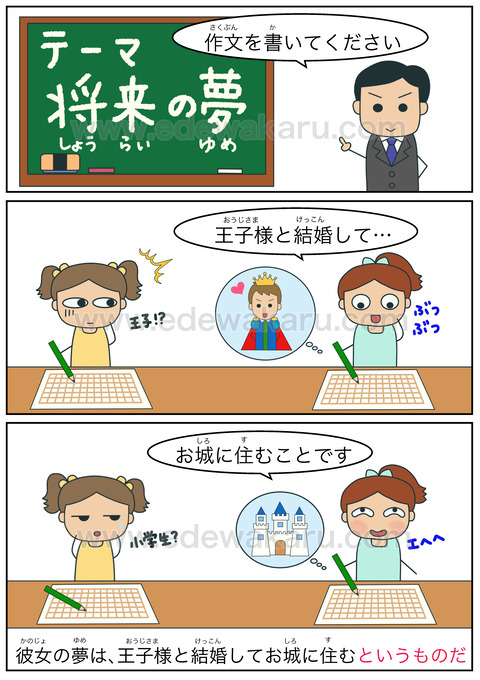
Meaning
Explaining the content of something
How to use it
Verb [dictionary form] + というものだ
Noun [dictionary form] + というものだ
Explanation
“〜というものだ” is a sentence pattern that explains the [content] or [function] of something. It is used to explain the content of something or describe its function.
[Examples]
①彼女の夢は、王子様と結婚してお城に住む
というものだ
[The content of her dream] To marry a prince and live in a castle.
②困った時に助けてくれるのが、本当の友達というものだ
[Description of a true friend] Someone who helps you when you’re in trouble.
③山田くんの今年の抱負は、1年間で100万円貯める
というものだ
そうだ
[The content of his resolution] To save ¥1,000,000 in one year.
④あの会社に就職するための条件は、N1に合格している
というものだった
[The condition] Having passed N1.
⑤我が社の目標は、コストを下げず品質の良いものを提供するというものです
[The content of our goal] To provide high-quality products without lowering costs.
“〜というものだ” also means “I really think ~.” There are also many patterns containing “という” or “もの,” so be sure to review them. 😉
[Related articles]
[List of patterns containing “もの” and “という”]
In context 5 examples
彼女の夢は、王子様と結婚してお城に住むというものだ
Her dream is to marry a prince and live in a castle.
困った時に助けてくれるのが、本当の友達というものだ
A true friend is someone who helps you when you’re in trouble.
山田くんの今年の抱負は、1年間で100万円貯めるというものだそうだ
Apparently, Yamada’s resolution for this year is to save ¥1,000,000 in one year.
あの会社に就職するための条件は、N1に合格しているというものだった
The requirement for getting a job at that company was having passed N1.
我が社の目標は、コストを下げず品質の良いものを提供するというものです
Our company’s goal is to provide high-quality products without lowering costs.
Read the original source text
Meaning
ものの内容の説明
How to use it
動詞[辞書形]+というものだ
名詞[辞書形]+というものだ
Explanation
「〜というものだ」は、ものの[内容]や[機能]を説明する文型です。 何かについての内容を説明したり、ものの機能を言う時に使われます。
[例]
①彼女の夢は、王子様と結婚してお城に住む
というものだ
【彼女の夢の内容】王子様と結婚してお城に住む
②困った時に助けてくれるのが、本当の友達というものだ
【本当の友達の説明】困った時に助けてくれる人
③山田くんの今年の抱負は、1年間で100万円貯める
というものだ
そうだ
【抱負の内容】1年で100万円貯める
④あの会社に就職するための条件は、N1に合格している
というものだった
【条件の内容】N1に合格している
⑤我が社の目標は、コストを下げず品質の良いものを提供するというものです
【目標の内容】コストを下げず品質の良いものを提供する
「〜というものだ」には「本当に〜だと思う」という意味もあります。また「という」や「もの」がつく文型はたくさんありますので、復習しておきましょう😉
【関連記事】
【「もの」がつく文型・「という」がつく文型リスト】
Usage 2
Read this source entry ↗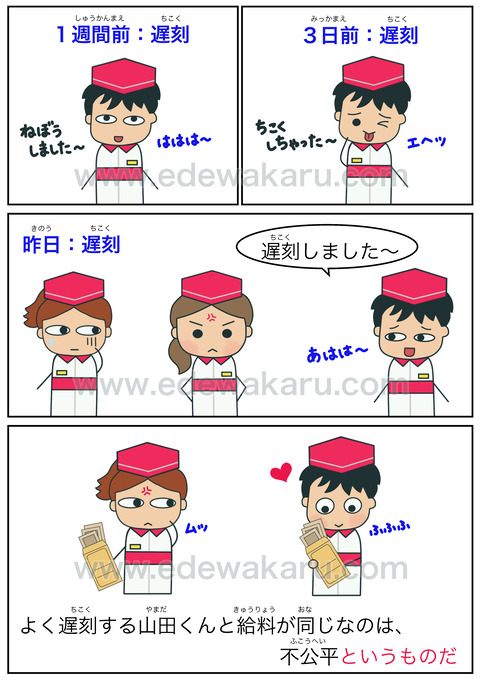
Meaning
I really think ~.
If you think about it normally, ~.
How to use it
Verb, adjective, or noun [dictionary form] + というものだ
Explanation
“〜というものだ” is a sentence pattern meaning “I really think ~” or “If you think about it normally, ~.” It strongly expresses what the speaker thinks or their opinion.
“〜というものではない” is a different sentence pattern; it is not the negative form of this pattern.
Be sure to learn the distinction.
[For those with time]
In “〜というものだ,” “という” can be changed to its colloquial form “って.” Also, “もの” can be changed to “もん.”
[Examples]
不公平というものだ
=不公平ってものだ
=不公平
ってもん
だ
=不公平というもんだ
“〜というものだ” also has a usage for explaining content. There are also many patterns containing “もの” or “という,” so be sure to review them.
[List of patterns containing “〇〇”]
In context 5 examples
よく遅刻する山田くんと給料が同じなのは不公平というものだ
→本当に不公平だと思うIt’s only fair to say it’s unfair that Yamada, who is often late, gets the same salary as me. →I really think it’s unfair.
5分で英語の単語を100個覚えるなんて、無理というものだ
→普通に考えたら無理だIt’s impossible, by any reasonable standard, to memorize 100 English words in five minutes. →If you think about it normally, it’s impossible.
友達が困っていたら助けるのは当然というものだ
→普通に考えれば、助けるのが当然だIf a friend is in trouble, it’s only natural to help them. →If you think about it normally, helping them is only natural.
食べ放題に行って、全然食べないのはお金の無駄というものだ
→本当にお金の無駄だと思うGoing to an all-you-can-eat restaurant and hardly eating anything is a waste of money. →I really think it’s a waste of money.
あんなに喜んでくれるなんて、プレゼントしたかいがあったというものだ
→本当にプレゼントしたかいがあったと思うFor them to be that happy means it was truly worth giving them a present. →I really think giving them a present was worthwhile.
Read the original source text
Meaning
本当に〜だと思う
普通に考えれば〜だ
How to use it
動詞・形容詞・名詞[辞書形]+というものだ
Explanation
「〜というものだ」は「本当に〜だと思う」「普通に考えれば〜だ」という意味の文型です。これは話者が思ったことや、話者の考えを強く表す文型です。
「〜というものではない」は別の文型で、この文型の否定形ではありません。
区別をして覚えておきましょう。
【余裕がある人へ】
「〜というものだ」の「という」は口語形の「って」にチェンジすることができます。また「もの」は「もん」にすることもできます。
[例]
不公平というものだ
=不公平ってものだ
=不公平
ってもん
だ
=不公平というもんだ
「〜というものだ」には、内容を説明する用法もあります。また「もの」や「という」がつく文型はたくさんありますので、復習をしておきましょう。
【「〇〇」がつく文型リスト】
毎日のんびり日本語教師
How to use it
Verb plain form + というものだ
い-adjective plain form + というものだ
な-adjective stem + というものだ
Noun + というものだ
Explanation
Used to evaluate or definitively describe facts, the essence or characteristics of things, or to make a statement about them.
Colloquial forms include 「というもんだ」「っていうものだ」「っていうもんだ」「ってもんだ」.
Notes
Related grammar: [N2 Grammar] ~というものではない/というものでもない
In context 8 examples
何でも話し合える、それが友達というものだ。
Being able to talk about anything—that’s what friendship is.
何が起こるかわからない。それが人生ってもんだよ。(人生就是充满了各种未知数。)
You never know what might happen. That’s just life. (Life is full of unknowns.)
相手を蔑むようなことをしてはいけない。それが勝者のマナーというものだ。
You shouldn’t do things that look down on others. That’s what good sportsmanship is.
責任をとるのが上司というものだ。(会承担负责的才叫上司。)
A boss is someone who takes responsibility. (Someone who takes responsibility is what you call a boss.)
続けるなら続ける。逃げるなら逃げる。それが覚悟ってもんだ。
If you’re going to continue, continue. If you’re going to run away, run away. That’s what it means to be resolved.
組織の一員として、決まったことには従うのが賢明というものだ。
As a member of an organization, it is only sensible to follow what has been decided.
何か分からないけど好き。それが運命の出会いというものだ。
I don’t know what it is, but I like it. That’s what you call a fateful encounter.
今年は全国大会出場に向けた最後のチャンス。部活にも熱が入るというものだ。(今年是参加全国大赛的最后机会。 所以在社团活动上也很努力。)
This is our last chance this year to qualify for the national tournament. Naturally, we’re putting more effort into club activities, too. (This year is our last chance to compete in the national tournament, so we’re working hard at club activities, too.)
Read the original source text
How to use it
動詞普通形+というものだ
イ形容詞普通形+というものだ
ナ形容詞語幹+というものだ
名詞+というものだ
Explanation
事実、物事の本質や特徴など評価したり、断定的に述べたり、それについてを行うときに用います。
口語形は「というもんだ」「っていうものだ」「っていうもんだ」「ってもんだ」などがあります。
Notes
関連文法:【N2文法】~というものではない/というものでもない
日本語文型辞典 英語版
Meaning
【というものだ】[V-るというものだ]
Used to explain the function or content of a certain thing.
In context 3 examples
この研究は、生産量を 10 年のうちに2倍にするというものだ。
The purpose of this research is to double the volume of production within ten years.
今回作られたタイムカプセルは200 年先の人々に 20 世紀からのメッセージを送るというものだ。
The time capsule we have assembled on this occasion is for giving people two hundred years in the future a message from the twentieth century.
先方から提示された取引の条件は、利益の 30 パーセントを渡すというものだった。
The transaction conditions the other party wants are to hand over 30 % of the profits.
AIUEO JLPT Grammar
Meaning
This sentence pattern expresses the speaker’s subjective judgment or emotion, using it to define or describe the nature or characteristic of something. It is used to definitively assert that something is exactly a certain way, often accompanied by emotion or critique.
How to use it
Verb + と + いうものだ; adjective + と + いうものだ; na-adjective + と + いうものだ; noun + と + いうものだ
In context 5 examples
この寒さで外に出ろというのは、無理というものだ。
Telling someone to go outside in this cold is unreasonable.
彼は忙しいのに、そんなにたくさんの仕事を頼むのは酷というものだ。
He is busy, so it's unfair to ask him to do so much work.
何も説明せずに理解しろというのは無茶というものだった。
Expecting someone to understand without any explanation is unreasonable.
こんなに長い間待たされるのは、さすがに忍耐の限界というものだ。
Being made to wait this long is truly testing the limits of my patience.
人を見かけで判断するのは誤りというものです。
Judging people by their appearance is simply wrong.
Read the original source text
Meaning
This sentence pattern expresses the speaker’s subjective judgment or emotion, using it to define or describe the nature or characteristic of something. It is used to definitively assert that something is exactly a certain way, often accompanied by emotion or critique.
How to use it
動詞と+いうものだ形容詞と+いうものだ形容動詞と+いうものだ名詞と+いうものだ
Explanation · 日本語
この文型は、話し手の主観的な判断や感情を用いて、物事の本質や特性を表現する表現です。特定の行動や状況について「まさに〜だ」と断定するときに使われ、感慨や批評を伴うこともあります。
Bunpro Grammar Reference
Meaning
Speaker's impression, Criticism or conclusion
How to use it
Phrase + というものだ
Phrase + というものです
Nuance
A strong phrase that draws a conclusion about or criticizes the thing which can be called (A).
Explanation
というものだ is a fairly strong expression in Japanese that indicates that the speaker has the impression that (A) is the way it is, based on their objective judgment. This is usually translated as 'my impression of (A) is that'. However, the more literal translation is closer to '(A) is just a thing that'. This emphasizes that the speaker has high certainty that what they are saying (based on their experience) is the true nature of (A) in most cases.
というものだ is constructed of という, the noun 物 'thing', and だ. It will be seen at the end of phrases that the speaker or writer is making a judgment about.
何があってもお互い助け合うのが友達というものだ。
Helping each other no matter what is just what friends do.
先輩が着く10分前に着く。それがマナーというものだ。
Arriving 10 minutes before your senpai arrives. That is just manners.
どんなに疲れていても諦めない。それがアスリートというものだ。
Not giving up no matter how tired you are. That is my impression of an athlete.
As this grammar pattern is quite direct, it is often used when criticizing something. However, this is not always the case, so will need to be judged based on context.
Caution
In casual conversation, という may be shortened simply to って, without any change in meaning.
何があっても泣かない。それが男ってものだ!
Not crying no matter what. That is my impression of a man!
In context 16 examples
- その言い分はわがままというものだ。
My impression is that your complaint is selfish.
- どんなに疲れていても諦めない。それがアスリートというものだ。
Not giving up no matter how tired you are. That is my impression of an athlete.
- 何があってもお互い助け合うのが友達というものだ。
Helping each other no matter what is just what friends do.
- 先輩が着く10分前に着く。それがマナーというものだ。
Arriving 10 minutes before your senpai arrives. That is just manners.
- あなたの好き嫌いは食わず嫌いというものだ。
My impression is that your likes and dislikes are prejudiced (dislike without trying).
- 嘘はつかない。それがジャーナリストというものだ。
Not telling lies. That is my impression of what a journalist is.
- 楽しくないと意味がない。それがサークルというものだ。
If it isn't fun, it is pointless. That is my impression of club sports.
- 彼はいつも結果を出す。あれが実力というものだ。
He always gets results. That is my impression of competency.
- すぐには忘れられないのが失恋というものだ。
Being unable to instantly forget about it is my impression of a broken heart.
- 誰よりも汗をかく。それが主役というものだ。
To sweat more than everyone else. That is my impression of what being a leading role is.
- 時には残酷な結果になることもある。それが勝負というものだ。
Sometimes encountering a terrible outcome. That is my impression of a contest (victory or defeat).
- 彼が知らない真実を話すことが、親切というものだ。
My impression is that it is kind to talk to him about truths he does not know.
- 毎日少しずつしか進まない。それが撮影というものだ。
I can only progress a little each day. That is my impression of what photography is.
- どんな困難にも立ち向かおうとするのが職人というものだ。
My impression of a craftsman is someone who stands and faces any hardship.
- 嫌な仕事もあるが、給料は安定しているのがサラリーマンというものだ。
My impression of being a salaryman is that you have a job that you hate, but your salary is steady.
- 何があっても泣かない。それが男ってものだ!
Not crying no matter what. That is my impression of a man!
Read the original source text
Meaning
Speaker's impression, Criticism or conclusion
How to use it
Phrase + というものだ
Phrase + というものです
Nuance
A strong phrase that draws a conclusion about or criticizes the thing which can be called (A).
Explanation
というものだ is a fairly strong expression in Japanese that indicates that the speaker has the impression that (A) is the way it is, based on their objective judgment. This is usually translated as 'my impression of (A) is that'. However, the more literal translation is closer to '(A) is just a thing that'. This emphasizes that the speaker has high certainty that what they are saying (based on their experience) is the true nature of (A) in most cases.
というものだ is constructed of という, the noun 物 'thing', and だ. It will be seen at the end of phrases that the speaker or writer is making a judgment about.
何があってもお互い助け合うのが友達というものだ。
Helping each other no matter what is just what friends do.
先輩が着く10分前に着く。それがマナーというものだ。
Arriving 10 minutes before your senpai arrives. That is just manners.
どんなに疲れていても諦めない。それがアスリートというものだ。
Not giving up no matter how tired you are. That is my impression of an athlete.
As this grammar pattern is quite direct, it is often used when criticizing something. However, this is not always the case, so will need to be judged based on context.
Caution
In casual conversation, という may be shortened simply to って, without any change in meaning.
何があっても泣かない。それが男ってものだ!
Not crying no matter what. That is my impression of a man!
Nuance · 日本語
(A)と呼べるものについて批判をしたり、結論を出したりする時に使われる強い表現。
Explanation · 日本語
「というものだ」は、話し手が客観的な判断に基づいて「ふつうに考えると (A) だ」と言いたいときに使う強調表現です。この表現は話し手が自分の経験をもとに、ほとんどの場合で (A) であることは確かだと強調したいときに使われます。
「というものだ」は「という」、名詞「物」、そして「だ」で構成されており、話し手や書き手の判断を表す文や節の最後に置かれます。
何があってもお互い助け合うのが友達というものだ。
Helping each other no matter what is just what friends do.
先輩が着く10分前に着く。それがマナーというものだ。
Arriving 10 minutes before your senpai arrives. That is just manners.
どんなに疲れていても諦めない。それがアスリートというものだ。
Not giving up no matter how tired you are. That is my impression of an athlete.
これはとても直接的な表現のため、批判に使われることが多いです。ただし、そうでない場合もあるので、文脈からニュアンスを判断する必要があります。
注意点
砕けた会話では「という」が「って」に短縮されることもありますが、意味は変わりません。
何があっても泣かない。それが男ってものだ!
Not crying no matter what. That is my impression of a man!
どんなときどう使う 日本語表現文型辞典
Meaning
feel from the heart
How to use it
〔Plain form〕 (ナ-adjective / Noun) + というものだ
Explanation
本当に~だと思う
1)話者がある事実を見て、それについて感想・批判を断定的に言うときに使う。
2)過去形や否定形はない。いつも「というものだ」の形で使う。
2)No past or negative forms. Always in form というものだ.
1)Speaker gives impressions, criticisms, or conclusive remarks about some issue.
In context 4 examples
親が子どもの遊びまでうるさく言う……。あれでは子どもがかわいそうというものだ。
Parents nagging their children even about their play… That’s just pitiful for the children.
あの議員は公費で夫人と私的な海外旅行をした。それはずうずうしいというものだ。
That legislator took a private trip abroad with his wife using public funds. That’s shameless, to say the least.
困ったときには助けるのが真の友情というものでしょう。
Helping someone when they’re in trouble—that’s what true friendship is, wouldn’t you say?
長い間の研究がようやく認められた。努力のかいがあったというものだ。
After many years, the research was finally recognized. That makes all the effort worthwhile.
Read the original source text
Meaning
feel from the heart
How to use it
〔普通形〕(ナA/N)+というものだ
Explanation
本当に~だと思う
1)話者がある事実を見て、それについて感想・批判を断定的に言うときに使う。
2)過去形や否定形はない。いつも「というものだ」の形で使う。
2)No past or negative forms. Always in form というものだ.
1)Speaker gives impressions, criticisms, or conclusive remarks about some issue.