Bunpro Grammar Reference
Meaning
Based on, In accordance with
How to use it
Noun + に基づいて
Noun + に基づいた + Noun
Nuance
An expression showing that something is based on (A), by expressing the foundation to which it adheres.
Explanation
In order to say that one thing is 'based on' another in Japanese, the expression に基づいて will be used. This is a combination of the case marking particle に, the う - Verb, 基づく 'to originate from', and the conjunction particle て. This expression regularly highlights some kind of judgement/conclusion that the speaker has made, using (A) as their base.
To use に基づいて, put the noun (or noun phrase) that you would like to identify as a 'basis' before に基づいて, and then express your judgment/conclusion in part (B) of the sentence.
クライアントの指示に基づいて、編集をしておきました。
I have edited this based on the client's instructions. (Edited in advance, assuming that would be the client's wishes)
以前成功した計画に基づいて、新しい計画を立てようと思っています。
I am thinking of making a new plan based on the previous successful plan.
Alternatively, the past form of 基づく may be used when connected directly to a second noun. (A) に基づいた (B) directly expresses that (B) is based on (A).
私は実話に基づいた映画が好きです。
I like movies based on true stories.
来週までに、アンケートに基づいたグラフを作成してください。
By next week, please make a graph based on these surveys.
Fun Fact
The kanji 基 is fairly accurately translated as 'foundation', and is regularly used to highlight things that 'stem' from something. Due to this, に基づいて may also be used to identify things that are 'produced from (A)', 'created from (A)', or 'invented based on (A)'.
あの国の法律は宗教に基づいて作られている。
That country's law is founded on religion.
先月貰った資料に基づいて、このレポートを書きました。
I wrote this paper based on the documents you gave me last month.
この小説は歴史的実話に基づいて書かれている。
This novel is written based on true historical events.
In context 19 examples
- 信用に基づいて、お金を貸す。
I lend money based on trust.
- 以前成功した計画に基づいて、新しい計画を立てようと思っています。
I am thinking of making a new plan based on the previous successful plan.
- 私は実話に基づいた映画が好きです。
I like movies based on true stories.
- 来週までに、アンケートに基づいたグラフを作成してください。
By next week, please make a graph based on these surveys.
- クライアントの指示に基づいて、編集をしておきました。
I have edited this based on the client's instructions. (Edited in advance, assuming that would be the client's wishes)
- 法律に基づいて、判断させていただきます。
I will make my judgment based on the law.
- ちゃんと計画に基づいて、動いてください。
Please proceed in accordance with the plan.
- あなたの意見に基づいて、変更を加えました。
I implemented a modification based on your opinion.
- 間違った前提に基づいているから、当然結果も間違っている。
The results are incorrect because (the experiment) is being based on incorrect assumptions.
- 長年の観察に基づいて、この結論に至った。
I came to this conclusion based on many years of observation.
- 実話に基づいたドラマには説得力がある。
Dramas based on true stories are very convincing.
- 教授の理論に基づいて、研究を続けてみます。
I will try to continue the research according to the professor's theory.
- 分析結果に基づいて、評価しました。
I made an appraisal based on the results of the analysis.
- 今までの経験に基づいて、今後の計画をたてようと思う。
I will make future plans based on my experiences.
- 個人的な意見に基づいて、書かれた文章。
An essay based on my personal opinion.
- 歴史的事実に基づいて、作られた映画。
A movie based on actual historical events.
- あの国の法律は宗教に基づいて作られている。
That country's law is founded on religion.
- 先月貰った資料に基づいて、このレポートを書きました。
I wrote this paper based on the documents you gave me last month.
- この小説は歴史的実話に基づいて書かれている。
This novel is written based on true historical events.
どんなときどう使う 日本語表現文型辞典
Meaning
based on
How to use it
N + に基づいて
Explanation
~を基本にして
1)「~を考え方の基本にしてあることをする」と言いたいときに使う。精神的に離れずに( ❶ )、または、拠りどころとして( ❷ ❸ )というニュアンスで使う。
2)後に名詞が来るときは ❸ ❹ のように「に基づくN・に基づいたN」という形になる。
2)When followed by a noun, becomes に基づくN, に基づいた N, as in sentences ❸ and ❹ .
1)Some action is based on certain idea. Nuance of not being psychologically separate from something, as in sentence ❶ , or to be dependent on something, as in sentences ❷ and ❸ .
In context 4 examples
この学校ではキリスト教精神に基づいて教育が行われています。
At this school, education is carried out on the basis of Christian principles.
この小説は歴史的事実に基づいて書かれたものです。
This novel was written based on historical facts.
公職選挙法に基づく公正な選挙が行われるべきだ。
Fair elections based on the Public Offices Election Act should be held.
これは単なる推測ではなく、たくさんの実験データに基づいた事実である。
This is not mere speculation; it is a fact based on a large amount of experimental data.
Read the original source text
Meaning
based on
How to use it
N+に基づいて
Explanation
~を基本にして
1)「~を考え方の基本にしてあることをする」と言いたいときに使う。精神的に離れずに( ❶ )、または、拠りどころとして( ❷ ❸ )というニュアンスで使う。
2)後に名詞が来るときは ❸ ❹ のように「に基づくN・に基づいたN」という形になる。
2)When followed by a noun, becomes に基づくN, に基づいた N, as in sentences ❸ and ❹ .
1)Some action is based on certain idea. Nuance of not being psychologically separate from something, as in sentence ❶ , or to be dependent on something, as in sentences ❷ and ❸ .
日本語文型辞典 英語版
Meaning
【にもとづいて】[Nにもとづいて]
Means “founded on something” or “on the basis of something.” Can be used as a predicate, as shown in
(4)
. When it modifies a noun, it takes the form ...にもとづいたN, as shown in
(5)
. The form ...にもとづいてのN may also be used.
In context 5 examples
実際にあった話に基づいて小説を書いた。
I wrote a novel based on a true story.
計画表に基づいて行動する。
She proceeds according to the schedule.
過去の経験に基づいて判断を下す。
He makes judgments based on past experience.
この小説は実際にあったことに基づいている。
This novel is based on something that actually happened.
長年の経験に基づいた判断だから、信頼できる。
Because her judgment is based on many years of experience, I can rely on it.
IMABI
Based on
Read this IMABI lesson ↗Explanation
Based on: に基づいて、を踏まえて, をもとにして, に沿って, に即して, & に則って
These phrases are definitely very similar to each other, but as you will see during the compare and contrast sections of this lesson, there are important differences to keep in mind.
~に基づいて
~に基づいて means “based on.” Its attribute form may either be ~に基づいての or ~に基づいた. Broadly speaking, there are two main usages of Xに基づいてY. The first is “without deterring from a standard/criterion/norm/rule/law X, one carries out/executes an action Y.” The other, which is found primarily in the written language, is “having A as a basis/foundation/modal/example/pattern/reference, one does/makes a decision B.”
1. 事実に基づいた記述きじゅつをする。
Describe on the basis of reality.
2. 彼女の議論は確かに証拠しょうこに基もとづいていなかった。
Her argument was certainly not on the basis of evidence.
3. 明らかなことに基づいた議論の余地よちのない事実。
Unarguable facts based on obvious things.
4. このマニュアルに基づいて操作します。
I will operate it based on this manual.
5. 規則に基づいて処理する。
To process according to regulations.
6. さっきの例文に基づいた、もっと複雑なものです。
These are more complicated ones based off of the previous example sentences.
7. 証拠に基づいて、加害者かがいしゃに死刑しけいを言い渡わたした。
In line with the evidence, the assailant was sentenced to death.
Variant Note: ~に基づいて may also be ~に基づき in stiffer writing.
Grammar Note: For the attribute form, ~に基づいての must only be used when what it precedes is a standard of some sort. If it is not, you must use ~に基づいた instead.
を踏まえて
The 一段 verb 踏まえる means “to be based on”. So, ~を踏まえて means “on the basis of” just like ~に基づいて. It can also be seen as ~を踏まえ in the written language. Its attribute form may either be ~を踏まえての or ~を踏まえた. As its original literal meaning is “to tread on” in a defensive posture, it is used after words that can show a basis/foundation/precedent for something. Again, it cannot follow material for reference as a standard. Rather, it must follow an extant basis. This pattern is usually seen in the written language and finds itself in news reports all the time.
8. 自分の経験を踏まえてこういう。
To say such based on one’s own experience.
9. これまでの状況を踏まえて得た最終結論です。
This is the last argument gotten based on the conditions up to now.
10. 報告を{踏まえた・踏まえての}処理
Processing based on the report
Translation Note: 踏まえる may also mean “to tread”.
11. 両足で大地を{踏まえて・踏んで}立って!
Tread on the ground with both your legs and stand!
~をもとにして
~をもとにして is used to show that one bases off of the good qualities of something. It does not necessarily have to be 100% congruent with the full truth in the circumstances. It shows willful change, and it is usually shortened in the spoken language to ~をもとに. When this pattern happens to be used as an attribute, it becomes ~をもとにした.
12. 私は親譲おやゆずりの財産をもとにして富とみを作りました。
I built my wealth on the fortune from my father.
13. 嘘うそをもとにして行おこなう。
To act upon a lie.
14. 事実を基にして書かれた劇だ。
It is a play written on the basis of the truth.
漢字 Note: Although this pattern is used both in the spoken and written language, when もと is written in 漢字, you have the options 基, 本, 素, 原, 源, 元, and 下. Thus, the meaning of this expression can be further refined. The first refers to a standard. The second refers to the foundation of something. The third refers to the subject matter. The fourth refers to raw materials. The fifth refers to a source. The sixth refers to the original way. The seventh refers to being under an influence. However, most natives cannot distinguish this well, and this is only knowledge relevant for when reading through literature.
~に沿って & More
~に沿って
~に沿って is used in a physical or cause and effect sense. It can also be seen as ~に沿い is stiff writing, but even here it is considerably rare. The attribute forms ~に沿った and ~に沿っての are slightly different. The former can be used when A fits nicely with B, but there can be some deviance. However, there can be no such deviance with the latter.
15. 時勢じせいに沿って生きる。
To live in consonance of the times.
16. 土手に沿って、苔こけが生えている。
Moss is growing along the embankment.
17. 事実に沿って、話しをしてくださいますか。
Could you please talk along the facts (of the case)?
18. 湖に{〇 沿った・X 沿っての}公園を歩きました。
I walked through the park that’s alongside the lake.
19. 事業計画に{沿った・沿っての}実施状況じっしじょうきょう
The status of implementation along the business plan
20. 僕は川に沿って歩いた。
I walked along the river.
Variant Note: ~に沿って may be replaced by the suffixes ~沿ぞい and ~伝づたい in the physical sense.
21. 軒のきづたいに倉庫そうこの裏に廻って行った。
Along the eaves, I went around the back of the storehouse.
22. 川伝いに走り回る。
To run around along the river.
23. 湖畔こはん沿いの道路を歩く。
To walk through the street alongside the lake shore.
24. 流れに沿うてやがて広野に出ると、頂上ちょうじょうは面白く切り刻きざんだようで、そこからゆるやかに美しい斜線しゃせんが遠い裾すそまで伸びている山の端はに月が色づいた。野末のずえにただ一つの眺めである、その山の全まったき姿を、淡い夕映えの空がくっきりと濃深縹色ふかはなだいろに描き出した。
Along the stream, when we at last entered the wide, the moon changed colors in the edge of the mountain, which had a gently beautiful slant with the peak interestingly cutting it that stretched to the far base of the mountain. The light sunset sky sharply drew the perfect view of the mountain for the single view at the corner of the field a light yet deep indigo.
From 雪国 by 川端康成.
漢字 Note: The spellings 添う・副う exist. The first is seen with the sense of “addition” and the latter is seen with the sense of “expectation/satisfaction”.
25. 身に添った悲しみ
The sadness on oneself
26. 花が期待に副って見事に咲いたよ。
The flowers bloomed splendidly to my expectations.
~に即して
~に即して is reserved to writing and often very stiff. If used in the spoken language, it is very formal or official sounding. It is frequently used to show that something is based on/along things. In even more formal writing, it can be seen as ~に即し.
27. 時代に即した教育
Education according to the times
28. 事実に即したドラマ
A drama in accordance with the facts
29. 法律に即した判断
A decision in accordance with the law
30. 理念に即した行動
Actions in accordance to an ideal
Spelling Note: As for spelling そくして, when the situation is based off of a given fact or observation you use 即して. However, if the situation is based on rules you use 則して, following the meanings of the 漢字 in question. There is a tendency to only use the former.
31. 前例に則して処理する。
To process according to precedent.
Attribute Note: The attribute forms available depends on the spelling. If 即して, you can only use に即した. If 則して, you can use either ~に則しての or ~に則した. Although with ~に即して one can’t feel any sense of excess or deviance, with ~に則して you can. Thus, the differences in possible attribute forms arise. It’s opposite to that of ~に沿って’s attribute forms, so be careful.
~にのっとって
~に則って is from the て形 of 則る, which is used to show that one protects some sort of tradition/rule set up in the past. This part of the meaning comes from an old verb のる in combination with 採る. This のり can still be found in many words written as 法: 御法 (humble law), 内法 (inside measure), etc. This is why 則る can also, but rarely, be seen written as 法る. It is no surprise that these two concepts are found in the word 法則 (law; rule).
Whether this pattern is used in the spoken language or not is debatable, but it is very literary/rather stiff written speech modal. It can be used in official situations and in technical terms in relation to rules/costumes. It can also be seen as ~に則り, and the attribute form can be seen as ~に則っての or ~に則った without any restriction.
32. 遺言状に則って、遺産相続がなされます。
Inheritance will be carried out according to the will.
33. 憲法に則り、最高裁判所の判断が示される。
The Supreme Court’s decision will be presented in accordance with the Constitution.
34. 仕来りに{則った・則っての}儀式
A ceremony that is in accordance with tradition
Points of Confusion
Although this section is not meant to exhaustively nitpick things, by the end of this section you will certainly have a better understanding of the differences between these phrases taught. Note that only those that truly seem synonymous will be addressed here.
35a. これまでの経験に基づいて、これからも頑張りたいと思う。X
35b. これまでの経験を元にして、これからも頑張りたいと思う。〇
If you paid any attention to the kind of words and situations above with ~に基づいて, you should have noticed that they are all in the same vein in regards to the basis of something in regards to fact or circumstances. The problem with the first sentence, though, will lead us into a serious issue: what are the differences between ~に基づいて, ~をもとにして, ~に沿って, ~に即して, and ~に則って.
1. ~に基づいて, ~に基いて being a less common spelling, shows that an action or circumstance is taking place based on fundamentals, matter at hand, or in combination with some sort of proof.
36. 判決に{基づいて・基づき}、刑が執行される。
The verdict will be carried out according to the punishment.
37. 人は法に基づいて裁かれる。
People are judged according/based on the law.
Usage Note: This pattern is often used after words like 事実, 証拠, 経験, 規則, 情報, etc. Words that often follow this pattern include 判断する, 行動する, 決める, 作る, 裁く, 言い渡す, 下す, 等.
2. ~をもとにして, on the other hand, shows a meaning of “basing on fundamentals or matter at hand, while one capitalizes/utilizes on it or while one utilizes a certain part…”. The orientation of the expressions, thus, are quite different.
38. 資料を基にする。
To base it on the materials.
39. 人の噂をもとにして判断してはいけないよ。
I mustn’t judge something based on people’s rumors!
40. これまでの経験をもとにして、頑張りたいと思う。
I wish to try hard based on my experience up to now.
Usage Note: This pattern is often used after words like データ, 情報, 事件, 話, 噂, 等. Words that often follow this pattern include 頑張る, 書く, 作る, 対処する, 等.
3. ~に沿って, like the above two, all share the feature of being based on the matter at hand or fundamentals of something, but the peculiar part about this is that the meaning of “without there being a physical distance” is included.
41. 道に沿って花が植えられている。
Flowers are planted along the street.
42. 塀にそって進んでくれ。(Vulgar command)
Move forward along the wall!
43. 川に沿って歩きなさい。
Walk along the river.
44. 私の考えにそってやってほしい。
I would like for it to be done along my ideas.
Usage Note: This pattern is often used after words like 道路, 道, 川, 壁, 歩道, 考え, 意向, 等. Words that often follow this pattern include 行く, 歩く, する, やる, 進む, 等.
Without getting into the other two remaining patterns, there are still times when all three structures appear to work. However, there will always be nuance differences based on the lines outlined above.
45. 事実{に基づいて・をもとにして・にそって}作ってある。
It was created and based on facts.
Nuances differences still exist. The first sounds purely factual. The second sounds like it was based on fact but not entirely. The third sounds like it was closely aligned with the facts. In more complex sentences, these differences can be large enough for ungrammaticality calls if violated.
46. 取材{〇 に基づいて・〇 をもとにして・X にそって}書かれている。
It is written based on collected data.
Grammar Note: ~にそって is bad because collected data could be conflicting. If this were known not to be the case, the unnaturalness would go away. Contextual environment and what kind of word(s) you’re using a pattern with help you put things together within grammatical restrictions.
47. その図面{〇 に基づいて・X をもと(にして)・X にそって}、配線工事をお願いします。
Please do the wiring work according to the blueprint.
48. この判例{に基づいて・をもと(にして)}裁判での闘い方を考えてみよう。
Let’s try to consider the ways of fighting in the trial based on this judicial precedent.
49. 高校で得た経験に基づいて頑張りたい。X → をもとにして
I will try hard based on experience I got from high school.
50. 過去の経験に基づいて判断した。〇
I judged based on past experience.
~に即して・に則って
Besides getting the reading wrong for the last one, which is ~にのっとって, the latter is often attached to words concerning standards/norms. Experiences are personal, so using it with such expressions would be unnatural. On the other hand, ~に即して also has the same meaning of “being based on/following”, just not with the particular restraint as ~に則って. If the spelling of the first is changed to ~に則して, it can have a meaning of showing something is done along rules/laws.
51. 伝統に{則って・即して・基づいて}行われている。
It is being done according to tradition.
52. 不法入国者は法律に則して強制送還される。
Illegal immigrants will be forcefully repatriated according to the law.
In context 56 examples
事実に基づいた記述きじゅつをする。
Describe on the basis of reality.
彼女の議論は確かに証拠しょうこに基もとづいていなかった。
Her argument was certainly not on the basis of evidence.
明らかなことに基づいた議論の余地よちのない事実。
Unarguable facts based on obvious things.
このマニュアルに基づいて操作します。
I will operate it based on this manual.
規則に基づいて処理する。
To process according to regulations.
さっきの例文に基づいた、もっと複雑なものです。
These are more complicated ones based off of the previous example sentences.
証拠に基づいて、加害者かがいしゃに死刑しけいを言い渡わたした。
In line with the evidence, the assailant was sentenced to death.
自分の経験を踏まえてこういう。
To say such based on one’s own experience.
これまでの状況を踏まえて得た最終結論です。
This is the last argument gotten based on the conditions up to now.
報告を{踏まえた・踏まえての}処理
Processing based on the report
両足で大地を{踏まえて・踏んで}立って!
Tread on the ground with both your legs and stand!
私は親譲おやゆずりの財産をもとにして富とみを作りました。
I built my wealth on the fortune from my father.
嘘うそをもとにして行おこなう。
To act upon a lie.
事実を基にして書かれた劇だ。
It is a play written on the basis of the truth.
時勢じせいに沿って生きる。
To live in consonance of the times.
土手に沿って、苔こけが生えている。
Moss is growing along the embankment.
事実に沿って、話しをしてくださいますか。
Could you please talk along the facts (of the case)?
湖に{〇 沿った・X 沿っての}公園を歩きました。
I walked through the park that’s alongside the lake.
事業計画に{沿った・沿っての}実施状況じっしじょうきょう
The status of implementation along the business plan
僕は川に沿って歩いた。
I walked along the river.
軒のきづたいに倉庫そうこの裏に廻って行った。
Along the eaves, I went around the back of the storehouse.
川伝いに走り回る。
To run around along the river.
湖畔こはん沿いの道路を歩く。
To walk through the street alongside the lake shore.
流れに沿うてやがて広野に出ると、頂上ちょうじょうは面白く切り刻きざんだようで、そこからゆるやかに美しい斜線しゃせんが遠い裾すそまで伸びている山の端はに月が色づいた。野末のずえにただ一つの眺めである、その山の全まったき姿を、淡い夕映えの空がくっきりと濃深縹色ふかはなだいろに描き出した。
Along the stream, when we at last entered the wide, the moon changed colors in the edge of the mountain, which had a gently beautiful slant with the peak interestingly cutting it that stretched to the far base of the mountain. The light sunset sky sharply drew the perfect view of the mountain for the single view at the corner of the field a light yet deep indigo.
身に添った悲しみ
The sadness on oneself
花が期待に副って見事に咲いたよ。
The flowers bloomed splendidly to my expectations.
時代に即した教育
Education according to the times
事実に即したドラマ
A drama in accordance with the facts
法律に即した判断
A decision in accordance with the law
理念に即した行動
Actions in accordance to an ideal
前例に則して処理する。
To process according to precedent.
遺言状に則って、遺産相続がなされます。
Inheritance will be carried out according to the will.
憲法に則り、最高裁判所の判断が示される。
The Supreme Court’s decision will be presented in accordance with the Constitution.
仕来りに{則った・則っての}儀式
A ceremony that is in accordance with tradition
これまでの経験に基づいて、これからも頑張りたいと思う。X
Based on my experience so far, I want to keep doing my best from now on. X
これまでの経験を元にして、これからも頑張りたいと思う。〇
Taking my experience so far as a basis, I want to keep doing my best from now on. 〇
~に基づいて, ~に基いて being a less common spelling, shows that an action or circumstance is taking place based on fundamentals, matter at hand, or in combination with some sort of proof.
The verdict will be carried out according to the punishment.
判決に{基づいて・基づき}、刑が執行される。
The verdict will be carried out according to the punishment.
人は法に基づいて裁かれる。
People are judged according/based on the law.
~をもとにして, on the other hand, shows a meaning of “basing on fundamentals or matter at hand, while one capitalizes/utilizes on it or while one utilizes a certain part…”. The orientation of the expressions, thus, are quite different.
To base it on the materials.
資料を基にする。
To base it on the materials.
人の噂をもとにして判断してはいけないよ。
I mustn’t judge something based on people’s rumors!
これまでの経験をもとにして、頑張りたいと思う。
I wish to try hard based on my experience up to now.
~に沿って, like the above two, all share the feature of being based on the matter at hand or fundamentals of something, but the peculiar part about this is that the meaning of “without there being a physical distance” is included.
Flowers are planted along the street.
道に沿って花が植えられている。
Flowers are planted along the street.
塀にそって進んでくれ。(Vulgar command)
Move forward along the wall!
川に沿って歩きなさい。
Walk along the river.
私の考えにそってやってほしい。
I would like for it to be done along my ideas.
事実{に基づいて・をもとにして・にそって}作ってある。
It was created and based on facts.
取材{〇 に基づいて・〇 をもとにして・X にそって}書かれている。
It is written based on collected data.
その図面{〇 に基づいて・X をもと(にして)・X にそって}、配線工事をお願いします。
Please do the wiring work according to the blueprint.
この判例{に基づいて・をもと(にして)}裁判での闘い方を考えてみよう。
Let’s try to consider the ways of fighting in the trial based on this judicial precedent.
高校で得た経験に基づいて頑張りたい。X → をもとにして
I will try hard based on experience I got from high school.
過去の経験に基づいて判断した。〇
I judged based on past experience.
伝統に{則って・即して・基づいて}行われている。
It is being done according to tradition.
不法入国者は法律に則して強制送還される。
Illegal immigrants will be forcefully repatriated according to the law.
Read the original source text
Explanation
Based on: に基づいて、を踏まえて, をもとにして, に沿って, に即して, & に則って
These phrases are definitely very similar to each other, but as you will see during the compare and contrast sections of this lesson, there are important differences to keep in mind.
~に基づいて
~に基づいて means “based on.” Its attribute form may either be ~に基づいての or ~に基づいた. Broadly speaking, there are two main usages of Xに基づいてY. The first is “without deterring from a standard/criterion/norm/rule/law X, one carries out/executes an action Y.” The other, which is found primarily in the written language, is “having A as a basis/foundation/modal/example/pattern/reference, one does/makes a decision B.”
1. 事実に基づいた記述きじゅつをする。
Describe on the basis of reality.
2. 彼女の議論は確かに証拠しょうこに基もとづいていなかった。
Her argument was certainly not on the basis of evidence.
3. 明らかなことに基づいた議論の余地よちのない事実。
Unarguable facts based on obvious things.
4. このマニュアルに基づいて操作します。
I will operate it based on this manual.
5. 規則に基づいて処理する。
To process according to regulations.
6. さっきの例文に基づいた、もっと複雑なものです。
These are more complicated ones based off of the previous example sentences.
7. 証拠に基づいて、加害者かがいしゃに死刑しけいを言い渡わたした。
In line with the evidence, the assailant was sentenced to death.
Variant Note: ~に基づいて may also be ~に基づき in stiffer writing.
Grammar Note: For the attribute form, ~に基づいての must only be used when what it precedes is a standard of some sort. If it is not, you must use ~に基づいた instead.
を踏まえて
The 一段 verb 踏まえる means “to be based on”. So, ~を踏まえて means “on the basis of” just like ~に基づいて. It can also be seen as ~を踏まえ in the written language. Its attribute form may either be ~を踏まえての or ~を踏まえた. As its original literal meaning is “to tread on” in a defensive posture, it is used after words that can show a basis/foundation/precedent for something. Again, it cannot follow material for reference as a standard. Rather, it must follow an extant basis. This pattern is usually seen in the written language and finds itself in news reports all the time.
8. 自分の経験を踏まえてこういう。
To say such based on one’s own experience.
9. これまでの状況を踏まえて得た最終結論です。
This is the last argument gotten based on the conditions up to now.
10. 報告を{踏まえた・踏まえての}処理
Processing based on the report
Translation Note: 踏まえる may also mean “to tread”.
11. 両足で大地を{踏まえて・踏んで}立って!
Tread on the ground with both your legs and stand!
~をもとにして
~をもとにして is used to show that one bases off of the good qualities of something. It does not necessarily have to be 100% congruent with the full truth in the circumstances. It shows willful change, and it is usually shortened in the spoken language to ~をもとに. When this pattern happens to be used as an attribute, it becomes ~をもとにした.
12. 私は親譲おやゆずりの財産をもとにして富とみを作りました。
I built my wealth on the fortune from my father.
13. 嘘うそをもとにして行おこなう。
To act upon a lie.
14. 事実を基にして書かれた劇だ。
It is a play written on the basis of the truth.
漢字 Note: Although this pattern is used both in the spoken and written language, when もと is written in 漢字, you have the options 基, 本, 素, 原, 源, 元, and 下. Thus, the meaning of this expression can be further refined. The first refers to a standard. The second refers to the foundation of something. The third refers to the subject matter. The fourth refers to raw materials. The fifth refers to a source. The sixth refers to the original way. The seventh refers to being under an influence. However, most natives cannot distinguish this well, and this is only knowledge relevant for when reading through literature.
~に沿って & More
~に沿って
~に沿って is used in a physical or cause and effect sense. It can also be seen as ~に沿い is stiff writing, but even here it is considerably rare. The attribute forms ~に沿った and ~に沿っての are slightly different. The former can be used when A fits nicely with B, but there can be some deviance. However, there can be no such deviance with the latter.
15. 時勢じせいに沿って生きる。
To live in consonance of the times.
16. 土手に沿って、苔こけが生えている。
Moss is growing along the embankment.
17. 事実に沿って、話しをしてくださいますか。
Could you please talk along the facts (of the case)?
18. 湖に{〇 沿った・X 沿っての}公園を歩きました。
I walked through the park that’s alongside the lake.
19. 事業計画に{沿った・沿っての}実施状況じっしじょうきょう
The status of implementation along the business plan
20. 僕は川に沿って歩いた。
I walked along the river.
Variant Note: ~に沿って may be replaced by the suffixes ~沿ぞい and ~伝づたい in the physical sense.
21. 軒のきづたいに倉庫そうこの裏に廻って行った。
Along the eaves, I went around the back of the storehouse.
22. 川伝いに走り回る。
To run around along the river.
23. 湖畔こはん沿いの道路を歩く。
To walk through the street alongside the lake shore.
24. 流れに沿うてやがて広野に出ると、頂上ちょうじょうは面白く切り刻きざんだようで、そこからゆるやかに美しい斜線しゃせんが遠い裾すそまで伸びている山の端はに月が色づいた。野末のずえにただ一つの眺めである、その山の全まったき姿を、淡い夕映えの空がくっきりと濃深縹色ふかはなだいろに描き出した。
Along the stream, when we at last entered the wide, the moon changed colors in the edge of the mountain, which had a gently beautiful slant with the peak interestingly cutting it that stretched to the far base of the mountain. The light sunset sky sharply drew the perfect view of the mountain for the single view at the corner of the field a light yet deep indigo.
From 雪国 by 川端康成.
漢字 Note: The spellings 添う・副う exist. The first is seen with the sense of “addition” and the latter is seen with the sense of “expectation/satisfaction”.
25. 身に添った悲しみ
The sadness on oneself
26. 花が期待に副って見事に咲いたよ。
The flowers bloomed splendidly to my expectations.
~に即して
~に即して is reserved to writing and often very stiff. If used in the spoken language, it is very formal or official sounding. It is frequently used to show that something is based on/along things. In even more formal writing, it can be seen as ~に即し.
27. 時代に即した教育
Education according to the times
28. 事実に即したドラマ
A drama in accordance with the facts
29. 法律に即した判断
A decision in accordance with the law
30. 理念に即した行動
Actions in accordance to an ideal
Spelling Note: As for spelling そくして, when the situation is based off of a given fact or observation you use 即して. However, if the situation is based on rules you use 則して, following the meanings of the 漢字 in question. There is a tendency to only use the former.
31. 前例に則して処理する。
To process according to precedent.
Attribute Note: The attribute forms available depends on the spelling. If 即して, you can only use に即した. If 則して, you can use either ~に則しての or ~に則した. Although with ~に即して one can’t feel any sense of excess or deviance, with ~に則して you can. Thus, the differences in possible attribute forms arise. It’s opposite to that of ~に沿って’s attribute forms, so be careful.
~にのっとって
~に則って is from the て形 of 則る, which is used to show that one protects some sort of tradition/rule set up in the past. This part of the meaning comes from an old verb のる in combination with 採る. This のり can still be found in many words written as 法: 御法 (humble law), 内法 (inside measure), etc. This is why 則る can also, but rarely, be seen written as 法る. It is no surprise that these two concepts are found in the word 法則 (law; rule).
Whether this pattern is used in the spoken language or not is debatable, but it is very literary/rather stiff written speech modal. It can be used in official situations and in technical terms in relation to rules/costumes. It can also be seen as ~に則り, and the attribute form can be seen as ~に則っての or ~に則った without any restriction.
32. 遺言状に則って、遺産相続がなされます。
Inheritance will be carried out according to the will.
33. 憲法に則り、最高裁判所の判断が示される。
The Supreme Court’s decision will be presented in accordance with the Constitution.
34. 仕来りに{則った・則っての}儀式
A ceremony that is in accordance with tradition
Points of Confusion
Although this section is not meant to exhaustively nitpick things, by the end of this section you will certainly have a better understanding of the differences between these phrases taught. Note that only those that truly seem synonymous will be addressed here.
35a. これまでの経験に基づいて、これからも頑張りたいと思う。X
35b. これまでの経験を元にして、これからも頑張りたいと思う。〇
If you paid any attention to the kind of words and situations above with ~に基づいて, you should have noticed that they are all in the same vein in regards to the basis of something in regards to fact or circumstances. The problem with the first sentence, though, will lead us into a serious issue: what are the differences between ~に基づいて, ~をもとにして, ~に沿って, ~に即して, and ~に則って.
1. ~に基づいて, ~に基いて being a less common spelling, shows that an action or circumstance is taking place based on fundamentals, matter at hand, or in combination with some sort of proof.
36. 判決に{基づいて・基づき}、刑が執行される。
The verdict will be carried out according to the punishment.
37. 人は法に基づいて裁かれる。
People are judged according/based on the law.
Usage Note: This pattern is often used after words like 事実, 証拠, 経験, 規則, 情報, etc. Words that often follow this pattern include 判断する, 行動する, 決める, 作る, 裁く, 言い渡す, 下す, 等.
2. ~をもとにして, on the other hand, shows a meaning of “basing on fundamentals or matter at hand, while one capitalizes/utilizes on it or while one utilizes a certain part…”. The orientation of the expressions, thus, are quite different.
38. 資料を基にする。
To base it on the materials.
39. 人の噂をもとにして判断してはいけないよ。
I mustn’t judge something based on people’s rumors!
40. これまでの経験をもとにして、頑張りたいと思う。
I wish to try hard based on my experience up to now.
Usage Note: This pattern is often used after words like データ, 情報, 事件, 話, 噂, 等. Words that often follow this pattern include 頑張る, 書く, 作る, 対処する, 等.
3. ~に沿って, like the above two, all share the feature of being based on the matter at hand or fundamentals of something, but the peculiar part about this is that the meaning of “without there being a physical distance” is included.
41. 道に沿って花が植えられている。
Flowers are planted along the street.
42. 塀にそって進んでくれ。(Vulgar command)
Move forward along the wall!
43. 川に沿って歩きなさい。
Walk along the river.
44. 私の考えにそってやってほしい。
I would like for it to be done along my ideas.
Usage Note: This pattern is often used after words like 道路, 道, 川, 壁, 歩道, 考え, 意向, 等. Words that often follow this pattern include 行く, 歩く, する, やる, 進む, 等.
Without getting into the other two remaining patterns, there are still times when all three structures appear to work. However, there will always be nuance differences based on the lines outlined above.
45. 事実{に基づいて・をもとにして・にそって}作ってある。
It was created and based on facts.
Nuances differences still exist. The first sounds purely factual. The second sounds like it was based on fact but not entirely. The third sounds like it was closely aligned with the facts. In more complex sentences, these differences can be large enough for ungrammaticality calls if violated.
46. 取材{〇 に基づいて・〇 をもとにして・X にそって}書かれている。
It is written based on collected data.
Grammar Note: ~にそって is bad because collected data could be conflicting. If this were known not to be the case, the unnaturalness would go away. Contextual environment and what kind of word(s) you’re using a pattern with help you put things together within grammatical restrictions.
47. その図面{〇 に基づいて・X をもと(にして)・X にそって}、配線工事をお願いします。
Please do the wiring work according to the blueprint.
48. この判例{に基づいて・をもと(にして)}裁判での闘い方を考えてみよう。
Let’s try to consider the ways of fighting in the trial based on this judicial precedent.
49. 高校で得た経験に基づいて頑張りたい。X → をもとにして
I will try hard based on experience I got from high school.
50. 過去の経験に基づいて判断した。〇
I judged based on past experience.
~に即して・に則って
Besides getting the reading wrong for the last one, which is ~にのっとって, the latter is often attached to words concerning standards/norms. Experiences are personal, so using it with such expressions would be unnatural. On the other hand, ~に即して also has the same meaning of “being based on/following”, just not with the particular restraint as ~に則って. If the spelling of the first is changed to ~に則して, it can have a meaning of showing something is done along rules/laws.
51. 伝統に{則って・即して・基づいて}行われている。
It is being done according to tradition.
52. 不法入国者は法律に則して強制送還される。
Illegal immigrants will be forcefully repatriated according to the law.
DoJG 日本語文法辞典(全集)
Meaning
Based upon
How to use it
(i) Noun | に基づいて/基づく | |
| 調査に基づいて | Based on a survey |
(ii) Noun | に{基づく/基づいた}Noun | |
| 調査に{基づく/基づいた}報告 | A report based on a survey |
Explanation
に基づいて/基づく With something as a basis.
In context 7 examples
事実に基づいてお話しします。
I will give you the facts. (literally: I will talk on the basis of facts.)
これは五百年前の史料に基づく研究だ。
This is a study based on historical documents from 500 years ago.
この製品はアメリカ製だがすべてJISに基づいて設計されている。
Although this product is made in America, the design is based entirely on the Japanese Industrial Standards (literally: is designed based entirely on).
このビルはある有名な建築家の設計に基づいて建てられた。
This building was (built) based on a famous architect's design.
この報告は去年行われたアンケート調査に基づいて書かれたものである。
This report was (written) based on a (questionnaire) survey conducted last year.
野村氏の講演は氏の二十年間の教育経験に基づく話で、極めて示唆に富むものであった。
Mr. Nomura's lecture was based on his 20-year teaching experience (literally: was a talk based on) and was full of suggestions.
これは一つの仮説に基づいた議論です。
This is a discussion based on a hypothesis.
絵でわかる日本語
Meaning
do something using ... as a criterion
do something using ... as a basis
How to use it
Noun [dictionary form] + に基づいて
Explanation
“Aに基づいてB” is a grammar pattern meaning “do B using A as a criterion” or “do B based on A as evidence.” It indicates that A serves as a [criterion], [basis], [foundation], or [grounds]. When a noun follows, the forms are 〜に基づく + noun and 〜に基づいた + noun.
[Examples]
He wrote a novel based on facts.
He wrote a novel based on facts.
There are several patterns that express [grounds], so be sure to distinguish them.
[Related patterns]
In context 5 examples
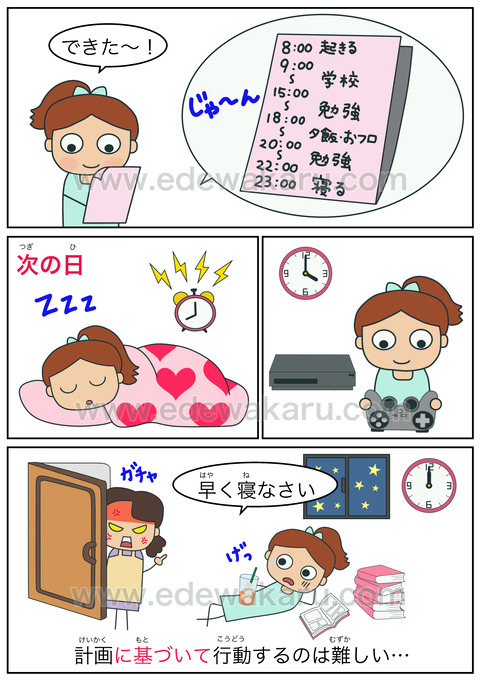
計画に基づいて行動するのは難しい…
→計画を基準にして行動するのは難しい…It’s difficult to act according to the plan… →It’s difficult to act using the plan as a criterion…
試験結果に基づいて、クラス分けをする
→試験結果を基準にして、クラス分けをするWe divide students into classes based on their test results. →We divide students into classes using their test results as a criterion.
この小説は事実に基づいて書かれたらしい
→事実を基礎にして書かれたらしいI hear this novel was written based on facts. →I hear it was written using facts as its foundation.
自分の経験に基づいて判断した
→自分の経験を基準にして判断したI made a judgment based on my own experience. →I made a judgment using my own experience as the criterion.
お客さんの意見に基づいて、新しい商品を作った
→お客さんの意見を基準にして、新しい商品を作ったWe made a new product based on our customers’ opinions. →We made a new product using our customers’ opinions as the basis.
Read the original source text
Meaning
〜を基準にして〜する
〜を基本にして〜する
How to use it
名詞[辞書形]+に基づいて
Explanation
「Aに基づいてB」は「Aを基準にしてBする」「Aを根拠にしてBする」という意味の文型です。「A」が
[基準][基本][基礎][根拠]
となることを表します。後ろに名詞がくる場合は
「〜に基づく+名詞」「〜に基づいた+名詞」
になります。
[例]
彼は、事実
に基づく
小説を書いた
彼は、事実に
基づいた
小説を書いた
[根拠]を表す文型はいくつかありますので、区別しておきましょう。
【関連文型】
日本語文型辞典
Meaning
Basic information
Nにもとづいて
Means “based on that” or “on the grounds of that.” As in ④, it can also be used as the predicate of a sentence. When modifying a noun, it takes the form 「…にもとづいたN」, as in ⑤. The form 「…にもとづいてのN」 is also possible.
Examples
① I wrote a novel based on a true story.
② Act according to the schedule.
③ Make a judgment based on past experience.
④ This novel is based on actual events.
⑤ It is a judgment based on many years of experience, so it can be trusted.
Read the original source text
Meaning
基本情報Nにもとづいて説明「それをもとにして」「それを根拠にして」の意味を表す。④のように文の述語として用いることもできる。また、名詞を修飾するときは⑤のように「…にもとづいたN」の形になる。「…にもとづいてのN」となることもある。例文① 実際にあった話に基づいて小説を書いた。② 計画表に基づいて行動する。③ 過去の経験に基づいて判断を下す。④ この小説は実際にあったことに基づいている。⑤ 長年の経験に基づいた判断だから、信頼できる。
くらべてわかる日本語表現文型辞典
Meaning
B is based on A as its standard, criterion, or foundation.
How to use it
A ni motozuite B (A ni motozuki B)
[Noun - ∅] ni motozuite
Explanation
【Contrast 1】
“A ni yotte B” (Meaning 2, p. 264)
When A in “A ni yotte B” is the source of information, it cannot be replaced with “A ni motozuite B.” It can be replaced when A is the basis.
○我々は報道によってニュースを知る。 — We learn the news through media reports.
×我々は報道に基づいてニュースを知る。 — We learn the news based on media reports.
○この資料に基づいて、話を進めていきます。(資料通りではないが資料にそって) — We will proceed with the discussion based on these materials. (Not exactly according to the materials, but in line with them.)
○この資料によって、話を進めていきます。(資料を使って、資料通りに) — We will proceed with the discussion using these materials. (Using the materials and following them.)
In context 4 examples
電車運賃は乗車キロ数に基づいて算出されます。
Train fares are calculated based on the number of kilometers traveled.
この小説は事実に基づいて書かれている。
This novel is written based on facts.
成績に基づき、奨学金の授与が可能かどうか検討されます。
Based on their grades, it will be considered whether a scholarship can be awarded.
今回行った調査データに基づいて、道路の整備計画をたてた。
The road improvement plan was drawn up based on the data from the survey conducted this time.
Read the original source text
Meaning
Aを基本・基準・基礎としてB。
How to use it
Aに基づいてB(Aに基づきB)
[名詞-∅]に基づいて
Explanation
【対比1】
「AによってB」(意味2 P.264)
「AによってB」のAが情報源の場合は「Aに基づいてB」へ置き換えられない。Aが根拠となる場合は置き換え可能。
○我々は報道によってニュースを知る。
×我々は報道に基づいてニュースを知る。
○この資料に基づいて、話を進めていきます。(資料通りではないが資料にそって)
○この資料によって、話を進めていきます。(資料を使って、資料通りに)
毎日のんびり日本語教師
How to use it
Noun + に基づいて/に基づき
Noun + に基づく/に基づいた + noun
Explanation
This grammar pattern is used to state something on the basis of some kind of evidence or grounds.
「に基づいて/に基づき」 is used within a sentence, while 「に基づく/に基づいた」 is followed by a noun.
Notes
Nothing in particular.
In context 8 examples
コメンテーターなのに、発言が事実に基づいていない。
Even though he is a commentator, his remarks are not based on facts.
自分の経験に基づいて判断する。
Make a judgment based on your own experience.
綿密な計画に基づいて行動する。(根据周密的计划行动。)
Act based on a detailed plan. (Act according to a detailed plan.)
民主主義とは、国民の意見に基づき政治が行われること。
Democracy is when politics is conducted based on the opinions of the people.
この映画は実話に基づいて制作されました。
This movie was produced based on a true story.
「経験」に基づいた言葉だからこそ重みがある。
Words based on “experience” carry weight precisely because of that.
この本は科学的根拠に基づいて解説されている良書だ。
This is a good book that explains things based on scientific evidence.
地震の規模はM5.5程度、最大震度4程度と推定されています。この情報は気象庁の予報に基づく推定です。
The earthquake is estimated to have been around magnitude 5.5, with a maximum intensity of around 4. This estimate is based on the Japan Meteorological Agency’s forecast.
Read the original source text
How to use it
名詞+に基づいて/に基づき
名詞+に基づく/に基づいた+名詞
Explanation
何らかを根拠にして述べる文法です。
「に基づいて/に基づき」は文中で、「に基づく/に基づいた」の後ろには名詞が接続されます。
Notes
特になし
NINJAL 日本語文型データベース
Usage 1
Meaning
Indicates a basis or standard for doing something, or a foundation for thinking about something.
How to use it
Nに基づいて
Notes
“~” is preceded by a word referring to a basis or foundation, such as “facts,” “experience,” “law,” or “plan.”
In context 5 examples
本校では創立者の教育理念に基づいて個性を伸ばす教育を行っております。
At our school, we provide an education that nurtures individuality based on the founder’s educational philosophy.
この報道番組は、独自の取材に基づいて制作されている。
This news program is produced based on its own independent reporting.
A社の家具は、人間工学に基づいてデザインされている。
Company A’s furniture is designed based on ergonomics.
この漫画は、史実に基づいて描かれているので、歴史の勉強にもなる。
This manga is based on historical facts, so it is also educational for learning history.
先輩が自分の経験に基づいて話してくれたことは、就職活動にとても役に立った。
What my senior colleague told me based on their own experience was very helpful in my job search.
Read the original source text
Meaning
何かをするときの基盤・基準、何かを考えるときの拠りどころを表します。
How to use it
Nに基づいて
Notes
「〜」には「事実・経験・法律・計画」など、基盤・拠りどころを表す言葉がきます。
Usage 2
Meaning
This describes something serving as a basis or standard for doing something, or as a foundation for thinking about something.
How to use it
N1に基づいたN2
Notes
“~” is preceded by a word referring to a basis or foundation, such as “facts,” “experience,” “law,” or “plan.” This form modifies a noun in “~に基づいて・~に基づき.”
In context 4 examples
昨日の試合の判定は、正式なルールに基づいた公正なものとは言えなかった。
Yesterday’s match ruling could not be called fair and based on the official rules.
本日の審議会では、審議委員の専門的知識に基づいた厳しい指摘があり、それについて活発な議論がなされた。
At today’s council meeting, there were severe criticisms based on the committee members’ expert knowledge, and lively discussion was held on them.
それぞれの自治体の創意工夫に基づいた地域づくりが、もっと尊重されるべきだ。
Community development based on the creativity and ingenuity of each municipality should be more highly respected.
中田先生は「共に歩む」という信念に基づいた精神療法で、生きづらさを抱えた多くの人たちに寄り添ってきた。
Through psychotherapy based on the belief that we should “walk alongside one another,” Professor Nakata has supported many people who struggle to get by.
Read the original source text
Meaning
ある物事が、何かをするときのの基盤・基準、何かを考えるときの拠りどころであることを表します。
How to use it
N1に基づいたN2
Notes
「~」には、「事実・経験・法律・計画」など基盤・拠りどころを表す言葉がきます。「~に基づいて・~に基づき」の名詞を説明する形です。