絵でわかる日本語
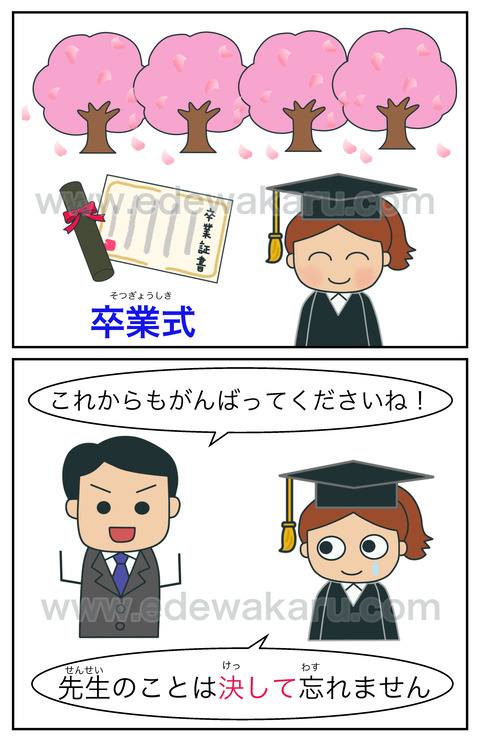
Explanation
「決して〜ない」 is a sentence pattern used to mean “absolutely not 〜” or “no matter what happens, 〜,” emphasizing a [strong intention] or [prohibition]. It is always followed by a negative form and used in the form 「決して〜ない」.
Because it is used for emphasis, the sentence still works even without 「決して」 😮
[Examples]
I will never forget my teacher. [Emphasizes “will not forget”]
I will not forget my teacher.
Make sure you don’t be late tomorrow! [Emphasizes “make sure you’re not late”]
Make sure you’re not late tomorrow!
*「〜ように」 is short for 「〜ようにしてください」
「決して〜ない」 is used for strong intention or prohibition, so learn some expressions it commonly appears with 😉
・決して〜ないでください
・決して〜するな
・決して〜てはいけない
・〜てはならない
・決して〜てはだめだ
・決して〜べからず
(Review: 〜べからず・〜べからざる)
Also, 「決して」 has two pronunciations, 「けっして」 and 「けして」, but the meaning is the same 😮
Different people say either 「けっして」 or 「けして」, so learn both. (Review: 〜によって (distinction))
This pattern is also used very often in conversation, so learn it well enough to use it skillfully 😊
Read the original source text
Explanation
「決して〜ない」は「絶対に〜ない」「どんなことがあっても〜」という意味で【強い意志】や【禁止】の意味を強調するために使われる文型です。後ろには必ず否定形がきて「決して〜ない」という形で使用されます。
強調の意味で使われるので「決して」がなくても文(文)は成立します
😮
[例]
先生のことは
決して
忘れません【
「忘れない」というのを強調】
先生のことは忘れません
明日は
決して
遅刻しないように!【
「遅刻しないように」というのを強調】
明日は遅刻しないように!
*「〜ように」は「〜ようにしてください」の省略形(しょうりゃくけい)
「決して〜ない」は強い意志や禁止に使われますので、一緒によく使うものをいくつか覚えておきましょう😉
・決して
〜ないでください
・決して
〜するな
・決して
〜てはいけない
・
〜てはならない
・決して
〜てはだめだ
・決して
〜べからず
(復習:〜べからず・〜べからざる)
また
「決して」は「けっして」「けして」というように2つ読み方がありますが、意味は同じです。😮
人によって「けっして」という人と「けして」という人に分かれますのでどちらも覚えておきましょう。(復習:〜によって(区別))
会話でもとてもよく使う文型ですので、うまく使えるようにしっかりと覚えておきましょう😊
日本語文型辞典
Meaning
Basic information: It is often used with negative forms or expressions of prohibition to strengthen their meaning or express firm resolve.
Examples:
① I will never forget you.
② Listen. Even if a stranger invites you to go with them, you must never go along.
③ I’m warning you for your own good. Never say such foolish things in front of people.
④ If I offended you, I apologize. I never intended to say anything rude.
Read the original source text
Meaning
基本情報説明否定形や禁止の表現とともに使うことが多く、それらの意味を強めたり、強い意志・決意を表したりする。例文① あなたのことはけっしてわすれません。② いいかい。知らない人においでとさそわれても、けっしてついて行ってはいけないよ。③ きみのために忠告しておく。人前でそんなばかなことは決して言うな。④ 気をわるくされたのならあやまります。失礼なことを言うつもりは決してなかったのです。
日本語文型辞典 英語版
Meaning
Often used with negative forms and expressions of prohibition. Emphasizes the meaning of negation or prohibition and/or shows a strong sense of intention or resolution.
In context 4 examples
あなたのことはけっしてわすれません。
I will never forget you.
いいかい。知らない人においでとさそわれても、けっしてついて行ってはいけないよ。
Listen. Even if a stranger invites you to go with him, you must never follow him.
きみのために忠告しておく。人前でそんなばかなことは決して言うな。
I will give you a piece of advice. Never say such a foolish thing in front of others.
気をわるくされたのならあやまります。失礼なことを言うつもりは決してなかったのです。
I apologize if I hurt your feelings. I never had the slightest intention of saying anything rude.