日本語文型辞典 英語版
Meaning
Attaches to a clause and is used to predict or guarantee a future event with certainty. は is sometimes inserted, as in
(2)
. A somewhat old-fashioned expression.
In context 3 examples
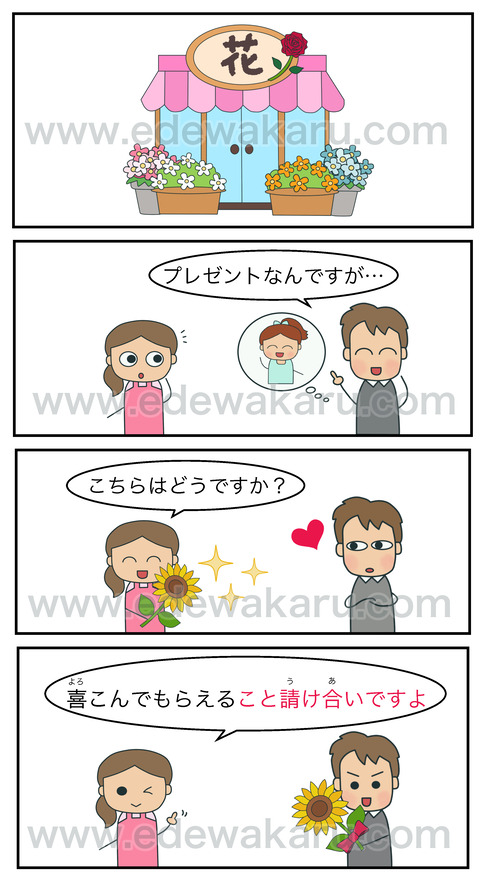
こんどあの人のところに行くときは花を持って行くといい。よろこんでもらえること請け合いだよ。
Next time you visit that person, you should take some flowers. That will make her happy, I guarantee.
あんなやり方をしていたのでは、失敗することはうけあいだ。
With that way of doing things, failure is a certainty.
この計画に彼を参加させるには、成功したら手にはいるばく大な金のことを話せばいい。乗ってくることうけあいだ。
If you want to get him involved in this project, you should talk about all the money he stands to make if it succeeds. I promise you he'll come on board.
絵でわかる日本語
日本語文型辞典
Meaning
Basic information: Attached to a clause, it is used to confidently predict or guarantee a future event. As in ②, は may be inserted. This is a somewhat old-fashioned expression.
Examples:
① Next time you go to that person’s place, take some flowers. I guarantee they’ll be pleased.
② If you keep doing things that way, failure is practically guaranteed.
③ To get him to join this plan, just tell him about the enormous amount of money he’ll get if it succeeds. He’s sure to be interested.
Read the original source text
Meaning
基本情報説明節に付いて、未来のできごとを確信をもって予想したり保証したりするのに用いる。②のように「は」がはいることもある。やや古めかしい表現。例文① こんどあの人のところに行くときは花を持って行くといい。よろこんでもらえること請け合いだよ。② あんなやり方をしていたのでは、失敗することはうけあいだ。③ この計画に彼を参加させるには、成功したら手にはいるばく大な金のことを話せばいい。乗ってくることうけあいだ。