Bunpro Grammar Reference
Meaning
Probably, Perhaps, (Most) likely, (I) fear that
How to use it
おそらく + Phrase
Nuance
A formal structure used to highlight the unfortunate likelihood of (A). I fear that (A)
Explanation
恐らく is an adverb which originally stems from the conjugation of the yodan verb, 恐る 'to fear'. In most cases, 恐らく is simply used as a formal way to say 'probably', or 'perhaps', and is usually partnered with other structures of conjecture such as だろう, かもしれない, etc.
As 恐らく behaves adverbially, it will most often appear at the beginning of sentences before a statement of conjecture is made.
妻は今夜会社の人たちと飲み会に行くと言っていたので、おそらく11時ごろぐらいまでは帰ってこないと思います。
My wife said she was going to a drinking party tonight with some people from work, so she probably won't be home until around 11:00 or so.
あいつの不自然な行動からして、おそらくあいつが犯人だろう!
Judging by that guy's unnatural behavior, he's probably the culprit!
おそらく明日は雨なので、明日予定していたピクニックは中止しましょう。
Perhaps it may rain tomorrow, so let's cancel the picnic we had planned for tomorrow.
Although 恐らく can, and often does, carry the meaning of 'I fear that (A)', it isn't necessarily always used in relation to negative things. In the case of this particular grammar pattern, the main nuance that 'I fear that (A)' conveys is modesty on behalf of the speaker in that they fear their assumption may be right, given the available information.
Fun-fact
Yodan, or 四段活用 verbs are a type of classical-Japanese verb that have primarily been replaced by godan (う-Verbs) in modern day Japanese.
In context 15 examples
- 恐らく彼はここにいないだろう。
He most likely isn't here.
- 妻は今夜会社の人たちと飲み会に行くと言っていたので、おそらく11時ごろぐらいまでは帰ってこないと思います。
My wife said she was going to a drinking party tonight with some people from work, so she probably won't be home until around 11:00 or so.
- おそらく明日は雨なので、明日予定していたピクニックは中止しましょう。
Perhaps it may rain tomorrow, so let's cancel the picnic we had planned for tomorrow.
- あいつの不自然な行動からして、おそらくあいつが犯人だろう!
Judging by that guy's unnatural behavior, he's probably the culprit!
- 恐らく明日雨が降る。
Perhaps it will rain tomorrow. (I fear that...)
- 彼だったら、恐らくこんなことできっこないでしょう。
If it's him, he most likely won't be able to do it. (I fear that...)
- 「くそ、恐らくあなたの結婚式には行けないじゃないか。」
'Dang it, I think I probably won't be able to go to your wedding.' (I fear that...)
- 道路に沿って行けば恐らくガソリンスタンドが見つかるでしょう。
If you go along the road, you will most likely see the gas station.
- 私の兄は恐らく11月頃アメリカから帰ってくるでしょう。
My older brother will probably return home from the US around November.
- 凶器は怪我から察するに恐らくナイフのようなものでしょう。
The murder weapon was, judging from the injuries, most likely something resembling to a knife.
- 彼は何か言いたそうに私をみた。恐らく何か重要なことでしょう。
It seemed to me that he was about to say something. Most likely something important. (I fear that...)
- 問題の原因を特定するために最もすべきことは、恐らくその機械の分解と分析だろう。
Probably, the most effective action to identify the cause of the problem would be the decomposition and analysis of the machine.
- 妊婦:「赤ちゃんの性別はなんですか?」医者:「恐らく女の子です。でもまだわかりません。」
Pregnant woman: 'Is it a baby boy or girl?' Doctor: 'Probably a baby girl. However, I am not sure yet.'
- 名探偵:「この人の背の高さを鑑みると恐らく彼女が殺人犯だろう!」
Great detective: 'Taking this person's height into account, she is most likely our killer.'
- 代表者が「大統領は恐らく再選をねらうまい」と言っていた。
The representative was saying that 'the president will most likely not aim for re-election'.
Read the original source text
Meaning
Probably, Perhaps, (Most) likely, (I) fear that
How to use it
おそらく + Phrase
Nuance
A formal structure used to highlight the unfortunate likelihood of (A). I fear that (A)
Explanation
恐らく is an adverb which originally stems from the conjugation of the yodan verb, 恐る 'to fear'. In most cases, 恐らく is simply used as a formal way to say 'probably', or 'perhaps', and is usually partnered with other structures of conjecture such as だろう, かもしれない, etc.
As 恐らく behaves adverbially, it will most often appear at the beginning of sentences before a statement of conjecture is made.
妻は今夜会社の人たちと飲み会に行くと言っていたので、おそらく11時ごろぐらいまでは帰ってこないと思います。
My wife said she was going to a drinking party tonight with some people from work, so she probably won't be home until around 11:00 or so.
あいつの不自然な行動からして、おそらくあいつが犯人だろう!
Judging by that guy's unnatural behavior, he's probably the culprit!
おそらく明日は雨なので、明日予定していたピクニックは中止しましょう。
Perhaps it may rain tomorrow, so let's cancel the picnic we had planned for tomorrow.
Although 恐らく can, and often does, carry the meaning of 'I fear that (A)', it isn't necessarily always used in relation to negative things. In the case of this particular grammar pattern, the main nuance that 'I fear that (A)' conveys is modesty on behalf of the speaker in that they fear their assumption may be right, given the available information.
Fun-fact
Yodan, or 四段活用 verbs are a type of classical-Japanese verb that have primarily been replaced by godan (う-Verbs) in modern day Japanese.
Nuance · 日本語
(A)という不幸な可能性を強調する丁寧な表現。(A)が心配。
Explanation · 日本語
「恐らく」は四段動詞「恐る」からできた副詞です。ほとんどの場合、「恐らく」は「だろう」や「かもしれない」のような推量を表す表現と結びつき、「たぶん」や「もしかすると」というような意味をより丁寧に表します。
「恐らく」は副詞として機能するため、推量を述べる文の最初に使われることが多いです。
妻は今夜会社の人たちと飲み会に行くと言っていたので、おそらく11時ごろぐらいまでは帰ってこないと思います。
My wife said she was going to a drinking party tonight with some people from work, so she probably won't be home until around 11:00 or so.
あいつの不自然な行動からして、おそらくあいつが犯人だろう!
Judging by that guy's unnatural behavior, he's probably the culprit!
おそらく明日は雨なので、明日予定していたピクニックは中止しましょう。
Perhaps it may rain tomorrow, so let's cancel the picnic we had planned for tomorrow.
「恐らく」は「(A) であること心配している」というようなニュアンスで使われることもありますが、必ずしも悪い内容を指すとは限りません。この「恐らく」が持つ「心配」のニュアンスには、が(え)られた情報をもとに推測を述べるとき、その推測が当たっているかもしれないという話し手の遠慮や謙遜の気持ちが含まれているためです。
豆知識
四段動詞は、日本語の古文における動詞の一種です。現代の日本語では、そのほとんどが五段動詞に置き換えられています。
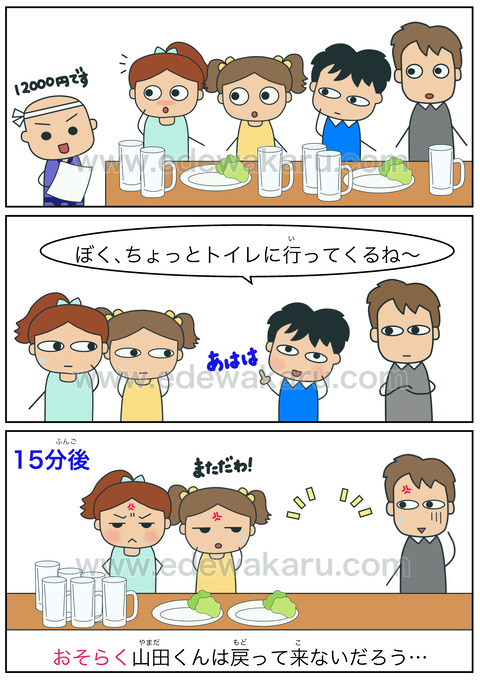
絵でわかる日本語
日本語文型辞典
Meaning
Basic information: Explanation: Accompanied by an expression of conjecture such as “…だろう” or “…にちがいない,” it expresses the speaker's conjecture. Used when the speaker considers it quite certain. As in ④, it can also be said as おそらくは. Formal expression. In casual speech, たぶん or きっと are more commonly used. Examples: ① He probably knows about it. ② The opposing team has probably investigated every detail about us. ③ Typhoon No. 12 is expected to make landfall in southern Kii Peninsula early tomorrow morning. ④ The prime minister is probably involved in this incident as well.
Read the original source text
Meaning
基本情報説明後ろに「…だろう」「…にちがいない」などの推量を表す表現を伴って、話し手の推量を表す。かなり確実だと思っている場合に使う。④のように「おそらくは」とも言う。かたい表現。くだけた話しことばでは「たぶん」「きっと」の方が多く用いられる。例文① おそらく彼はそのことを知っているだろう。② 相手チームはおそらくこちらのことを何から何まで詳しく調べているだろう。③ 台風12号は、おそらく明日未明には紀伊半島南部に上陸するものと思われます。④ おそらくは首相も今回の事件に関わっているにちがいない。
日本語文型辞典 英語版
Meaning
Combined with sentence-final suppositional expressions such as ...だろう or ...にちがいない, おそらく expresses the speaker’s supposition. It is used when a supposition is highly certain. It is also used in the form おそらくは, as in
(4)
. It is a formal expression, and たぶんand きっと are used more often in casual conversation.
In context 4 examples
おそらく彼はそのことを知っているだろう。
Probably he knows that.
相手チームはおそらくこちらのことを何から何まで詳しく調べているだろう。
I suppose the opposing team will have researched us in detail.
台風 12 号は、おそらく明日未明には紀伊半島南部に上陸するものと思われます。
Typhoon No.12 is expected to make landfall on the southern Kii Peninsula before dawn tomorrow.
おそらくは首相も今回の事件に関わっているにちがいない。
I’d say the prime minister also has to be involved in this affair.