どんなときどう使う 日本語表現文型辞典
Meaning
just the thing; the best
How to use it
Vる・Vない/N + に限る
Explanation
~が一番いい
1)話者が主観的に「~が一番いい」と思って、そう主張するときに使う。
2)客観的な判断を言うときは使わない。
◆ × 医者:この病気を治すには、手術に限りますよ。
1)Asserts a speaker's subjective opinion that something is best.
2)Not used for objective evaluations.
In context 4 examples
1日の仕事を終えたあとは、冷えたビールに限りますよ。
After finishing a day’s work, nothing beats a cold beer.
自分が悪いと思ったら、素直に謝ってしまうに限る。
If you think you’re in the wrong, it’s best to apologize sincerely.
子どもの育て方で問題を抱えているときは、育児書に頼ったり一人で悩んだりしていないで、とにかく経験者の意見を聞いてみるに限る。
When you’re having problems raising a child, instead of relying on parenting books or worrying alone, it’s best to ask someone with experience for their opinion.
太りたくなければ、とにかくカロリーの高いものを食べないに限る。
If you don’t want to gain weight, it’s best not to eat high-calorie foods.
Read the original source text
Meaning
just the thing; the best
How to use it
Vる・Vない/N+に限る
Explanation
~が一番いい
1)話者が主観的に「~が一番いい」と思って、そう主張するときに使う。
2)客観的な判断を言うときは使わない。
◆ × 医者:この病気を治すには、手術に限りますよ。
1)Asserts a speaker's subjective opinion that something is best.
2)Not used for objective evaluations.
絵でわかる日本語
Usage 1
Read this source entry ↗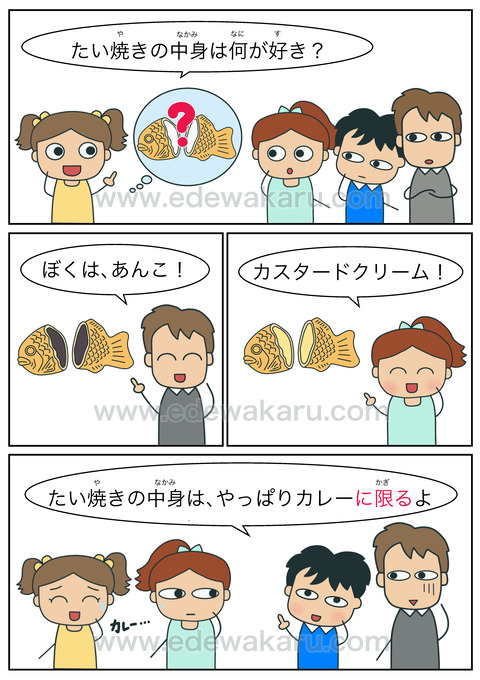
Meaning
~ is the best
How to use it
Verb [dictionary form] + に限る
Verb [ない-form] + に限る
い-adjective [minus ーい] + に限る
な-adjective [minus ーな] + のに限る
Noun [dictionary form] + に限る
Explanation
“〜に限る” is a sentence pattern meaning “~ is the best” 😊 It expresses [the speaker’s opinion or judgment], and is used when you want to say “I think ~ is the best.” It is often used together with “〜なら,” “〜たら,” and “やっぱり.”
“〜に限る” also has a usage expressing [limitation], so let’s learn that too.
In context 6 examples
たい焼きの中身は、やっぱりあんこに限るよ!
→たい焼きの中身は、やっぱりあんこが一番いいよ!The best filling for taiyaki is, as always, red bean paste! →The best filling for taiyaki is, as always, red bean paste!
かぜをひいた時は、薬を飲んで寝るに限る
→かぜをひいた時は、薬を飲んで寝るのが一番いいWhen you catch a cold, the best thing is to take medicine and sleep. →When you catch a cold, it’s best to take medicine and sleep.
暑い日は、アイスを食べるに限る
→暑い日は、アイスを食べるのが一番いいOn hot days, the best thing is to eat ice cream. →On hot days, it’s best to eat ice cream.
飛行機のチケットは安いに限る
→飛行機のチケットは安いのが一番いいAirplane tickets are best when they’re cheap. →Airplane tickets are best when they’re cheap.
スマホを買うなら、やっぱりiphoneに限るわ
→スマホを買うなら、やっぱりiphoneが一番いいIf you’re buying a smartphone, as always, an iPhone is the best. →If you’re buying a smartphone, an iPhone is the best.
休みの日は、家でごろごろするに限る
→休みの日は、家でごろごろするのが一番いいOn days off, the best thing is to laze around at home. →On days off, it’s best to laze around at home.
Read the original source text
Meaning
〜が一番いい
How to use it
動詞[辞書形]+に限る
動詞[ない形]+に限る
い形容詞[ーい]+に限る
な形容詞[ーな]+のに限る
名詞[辞書形]+に限る
Explanation
「〜に限る」は「〜が一番いい」という意味の文型です
😊これは、【話者の考えや判断】を表す文型で「私は〜が一番いいと思う」と言いたい時に使います。「〜なら」や「〜たら」「やっぱり」とよく一緒に使用されます。
「〜に限る」には【限定】を表す用法もありますので、一緒に覚えておきましょう。
Usage 2
Read this source entry ↗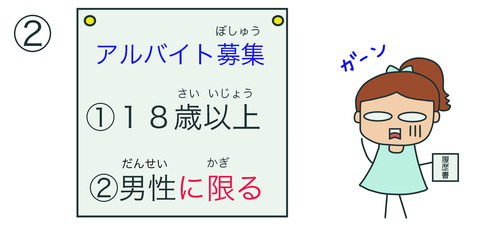
Meaning
Limit it to …
How to use it
Noun [dictionary form] + に限る
Explanation
“〜に限る” means “only 〜” and expresses limitation. It is used with the dictionary form of a noun.
“〜に限る” also means “〜 is best,” so remember that meaning as well. There are many sentence patterns that use “限る,” so review them too.
[The “限る” series]
〜限り (limit)
〜限り
〜限りだ
〜限りで・N限りのN (limitation)
〜限りでは (scope)
限りなく〜に近い
〜とは限らない
〜ない限り
〜に限ったことではない
〜に限らず (〜も)
〜に限る
〜を限りに
In context 4 examples
アルバイト募集!ただし、18歳以上に限る
→アルバイト募集!ただし、18歳以上に限定するPart-time workers wanted! However, applicants must be at least 18. →Part-time workers wanted! However, applicants are limited to those aged 18 and over.
アルバイト募集!ただし、男性に限る
→アルバイト募集!ただし、男性に限定するPart-time workers wanted! However, men only. →Part-time workers wanted! However, applicants are limited to men.
持ってきてもいいお金は1人1万円に限る
→持ってきてもいいお金は1人1万円に限定するEach person may bring no more than 10,000 yen. →The amount each person may bring is limited to 10,000 yen.
クーポンを持っているお客様に限り、半額になります
→クーポンを持っているお客様限定で、半額になりますCustomers with a coupon get half off. →Half off exclusively for customers with a coupon.
Read the original source text
Meaning
〜に限定する
How to use it
名詞[辞書形]+に限る
Explanation
「〜に限る」は「〜だけだ」という意味で、【限定】を表します😊名詞の「辞書形」と一緒に使います。
「〜に限る」には「〜が一番だ」という意味もありますので、一緒に覚えておきましょう。また、「限る」がつく文型はたくさんありますので復習をしておきましょう。
【「限る」シリーズ】
〜限り(限界)
〜限り
〜限りだ
〜限りで・N限りのN(限定)
〜限りでは(範囲)
限りなく〜に近い
〜とは限らない
〜ない限り
〜に限ったことではない
〜に限らず(〜も)
〜に限る
〜を限りに
毎日のんびり日本語教師
Meaning
~ is the best
How to use it
Verb dictionary form + に限る
Verb ない-form + ないに限る
な-adjective stem + なのに限る
い-adjective + のに限る
Noun + に限る
Explanation
Used when stating what one thinks is the best based on a subjective judgment or impression.
Because it is used to express one’s own opinion, it cannot be used for objective opinions.
It often pairs with 「やっぱり」 in the preceding clause.
Notes
Example:
When it comes to cars, Toyota is the best.
There are many other companies, but among them, I think Toyota is the best. This grammar pattern is used to express a personal opinion.
Another grammar pattern with a similar meaning is 「~と言えば」.
Example 2:
When it comes to mountains in Japan, it’s Mount Fuji.
「~と言えば」 is a grammar pattern for stating the representative thing that first comes to mind because it is highly associated with the topic. This does not necessarily express a personal opinion. When people hear “mountains in Japan,” many think of Mount Fuji.
The 「限る」 series
In context 8 examples
暑い夏の仕事終わりはやっぱりビールに限る。(炎热的夏天里工作完了以后果然只想喝啤酒。)
After work on a hot summer day, beer is the best, after all. (On a hot summer day, after work, all I want is a beer.)
映画は家で見るより映画館で見るに限る。
Movies are best watched in a theater rather than at home.
かき氷はいちご味に限る。
For shaved ice, strawberry flavor is the best.
寒い時には風呂に限る。(冷的时候最好泡澡。)
When it’s cold, a bath is the best. (When it’s cold, taking a bath is best.)
風邪のときは寝るに限る。(感冒的时候最好睡觉。)
When you have a cold, sleeping is best. (When you have a cold, it’s best to sleep.)
カレーは日中に作って半日寝かせるに限る。
Curry is best when made during the day and left to sit for half a day.
音楽はライブに限る。
Music is best live.
言葉と投資は慎重に限る。
When it comes to words and investing, caution is best.
Read the original source text
Meaning
~のが一番いい
How to use it
動辞形+に限る
動ない形+ないに限る
な形容詞語幹+なのに限る
い形容詞+のに限る
名詞+に限る
Explanation
主観的な判断や印象によって最も良いと思うものを述べるときに使います。
自分の意見を述べる場合に使うので、客観的な意見には使えません。
前項に「やっぱり」がよく呼応します。
Notes
例文:
車はトヨタに限る。
他にも色んな会社がありますが、その中でもトヨタが一番良いと思っています。あくまで個人的な意見を述べる文法です。
似たような意味の文法に「~と言えば」もあります。
例文2:
日本の山と言えば富士山だ。
「~と言えば」は関連性の高い一番初めに想起する代表的なものを述べる文法です。こちらは個人的意見とは限りません。「日本の山」と言われれば、多くの人は「富士山」と考えるからです。
「限る」シリーズ
NINJAL 日本語文型データベース
Meaning
Expresses the speaker's personal evaluation that ~ is the best.
How to use it
V-dictionary form に限る / Vない に限る
N に限る
Notes
Do not use it in the past tense or negative form. It is also not used in the te-form.
The topic is often indicated with “〜なら・〜は,” and the like.
In context 10 examples
ストレスがたまったときは、カラオケで大声を出すに限る。
When you're stressed, belting out a song at karaoke is the best.
日本語がうまくなりたかったら、日本人の友達を作るに限るでしょう。
If you want to get better at Japanese, making Japanese friends is probably the best thing to do.
何をやってもうまくいかない日はさっさと寝てしまうに限ります。
On days when nothing goes right, it's best to just go to bed.
暑い日はどこへも出かけないに限る。
On hot days, it's best not to go anywhere.
妻の機嫌が悪い。こういう時は話しかけないに限る。
My wife is in a bad mood. At times like this, it's best not to talk to her.
疲れを取りたいなら、温泉に限る。
If you want to relieve your fatigue, nothing beats a hot spring.
音楽を聴くなら、絶対ライブに限るでしょう。
If you're going to listen to music, live music is definitely the best.
「ワインといえばフランス産に限る」などと言う人もいるが、日本産のワインもなかなかのものだ。
Some people say things like, “When it comes to wine, French wine is the best,” but Japanese wine is pretty good too.
「動物園でパンダを見たかったら、平日に限りますよ。週末は人がいっぱいでなかなかゆっくり見られませんからね」
“If you want to see pandas at the zoo, weekdays are best. It's so crowded on weekends that you can hardly take your time looking at them.”
取り扱い説明書は簡単なのに限ります。
Instruction manuals are best when they're simple.
Read the original source text
Meaning
〜がいちばんいいという話し手の個人的評価を表します。
How to use it
Vるに限る/Vないに限る
Nに限る
Notes
過去形や否定形にはしません。また、テ形にもしません。
主題を「〜なら・〜は」などで示すことが多いです。