AIUEO JLPT Grammar
Meaning
This sentence pattern expresses adding another matter to a certain topic, often used to supplement information or elements, and it carries a meaning of parallel or addition.
How to use it
Noun に + 加えて
In context 5 examples
彼は英語に加えて、フランス語も話せる。
In addition to English, he can also speak French.
雨に加えて、風も強くなってきた。
In addition to the rain, the wind is also getting stronger.
健康的な食事に加えて、定期的な運動も重要です。
Regular exercise is important in addition to a healthy diet.
彼は仕事のスキルに加え、コミュニケーション能力も優れている。
In addition to his work skills, he also has excellent communication abilities.
この家は家賃が高い。それに加えて、管理費も高い。
The rent for this house is expensive. On top of that, the maintenance fees are also high.
Read the original source text
Meaning
This sentence pattern expresses adding another matter to a certain topic, often used to supplement information or elements, and it carries a meaning of parallel or addition.
How to use it
名詞に+加えて
Explanation · 日本語
この文型は、ある事柄にさらに別の事柄を追加することを表す表現で、並列や追加の意味を持ち、特に情報や要素を補足するときによく使われます。
文法
Meaning
Not only ~, but also more.
How to use it
N + に加えて
Notes
① Used when adding another similar matter to something.
② A somewhat formal expression.
In context 5 examples
今学期から初級クラスに加えて、中級クラスでも教えるようになった。
Starting this semester, I’ll be teaching intermediate classes in addition to beginner classes.
このシステムを使うには初期費用500円に加えて、月利用料として毎月1,000円がかかります。
To use this system, there is an initial fee of 500 yen, plus a monthly usage fee of 1,000 yen.
来年度は、今あるシステムのバージョンアップに作業に加えて、新しいシステムの開発もスタートするので、忙しい1年になりそうです。
Next year, in addition to the work of upgrading the current system, we’ll also start developing a new system, so it looks like it’ll be a busy year.
来週開催予定の製品発表会では、新しいハードウェアに加えて、ソフトウェアのバージョンアップに関する発表も期待されている。
At the product launch scheduled for next week, in addition to the new hardware, announcements about software upgrades are also expected.
久保田さんは専門的な知識に加えて、経験も豊富な方なので、とても頼りになります。
Mr. Kubota has both specialized knowledge and extensive experience, so he’s very dependable.
Read the original source text
Meaning
〜だけでなく、さらに
How to use it
Nに + 加えて
Notes
①ある事柄に対して、類似する別の事柄を追加するときに使う。
②少し硬い表現
Bunpro Grammar Reference
Meaning
Not only...but also, In addition, Not to mention
How to use it
Noun + に加え(て)
Nuance
A formal grammar point expressing that in addition to (A), (B).
Explanation
にくわえて is a formal grammar pattern in Japanese that is a combination of に, and the て-form of the る-Verb 加える 'to add', or 'to append'. Often, this structure will be translated as 'in addition to (A), (B)', or 'not only (A), but also (B).
Being that it is a formal phrase, に加えて will also often appear in its formal-conjunctive form に加え.
To use にくわえて, simply place it directly after the noun that you would like to highlight as being the base information, before discussing what exactly is 'in addition' to that base in the following clause.
今日は暑さに加えて湿度も高くなる恐れがあるので外に出る方は熱中症に気をつけてください。
Today, in addition to the heat, there is a threat of high humidity, so please be careful of heat stroke if you are planning to leave the house.
今学期から文法に加えて漢字も教えることになった。
Starting this semester, in addition to grammar, I will also be teaching Kanji.
彼は空手に加えて、剣道もできるそうだ。
I heard that he does kendo in addition to karate.
Both the kanji and hiragana forms of this structure are fairly common, so it will be beneficial to remember both.
Caution
にくわえて is frequently used when (B) is something that is in addition to (A) in respect to magnifying what was already true of (A). This just means that it will often be used to highlight something being brought about by (B) that would not be possible with just (A) by itself. This increase may be either positive or negative.
今年の母の日には母に花束に加えて心を込めて書いた手紙を渡すつもりだ。
This Mother's Day, I plan to give my mother a heartfelt letter in addition to a bouquet of flowers.
今年になってから電気代に加えてガス料金までもが高くなった。
This year, in addition to the electricity bill, even the gas bill has increased.
In context 17 examples
- 白髪に加えてシワまで増えてきた。もう年だな。
My gray hair, not to mention my wrinkles, have increased. Boy am I old.
- 今日は暑さに加えて湿度も高くなる恐れがあるので外に出る方は熱中症に気をつけてください。
Today, in addition to the heat, there is a threat of high humidity, so please be careful of heat stroke if you are planning to leave the house.
- 彼は空手に加えて、剣道もできるそうだ。
I heard that he does kendo in addition to karate.
- 今学期から文法に加えて漢字も教えることになった。
Starting this semester, in addition to grammar, I will also be teaching Kanji.
- 性能に加えて価格まで負けているようではどうにもならない。
Nothing can be done about the inferior value, not to mention ability.
- 彼の別荘にはテニスコートに加えてサッカーコートまであるんですよ。
His vacation home not only has a tennis court, but also a soccer pitch.
- 内科に加えて外科にもかかることになるなんて思いもしなかった。
I never thought I’d have to see a surgeon on top of a physician.
- 中指に加えて薬指まで骨折してしまいました。
In addition to the middle finger, I also broke my ring finger.
- 熱に加えて吐き気まである。多分風邪だな。
In addition to a fever, I have nausea. It is most likely a cold.
- 箸に加えて茶碗まで高級だ。彼は金持ちだ。
His chopsticks, not to mention his rice bowls, are high grade. He is rich.
- 女房に加えて母親まで僕のスピーチを聞きに来て、少し恥ずかしい。
My wife, in addition to my mother, have come to listen to my speech. I am a little embarrassed.
- 定休日に加えて臨時休業が多いから、あの店はいつやっているのかよく分からない。
Since there are a lot of temporary business closures in addition to regular holidays, I can never know for sure when that store is open.
- スウェーデンは天然資源の豊かさに加えて、立派な教育体制によって産業が発達している国でもある。
Sweden, in addition to being rich in natural resources, is also a country of developed industries. This is due to their fine educational system.
- スマホという最近の携帯電話は、電話の機能に加え、パソコンのように多くの他の用途がある。
In addition to having the ability to make phone calls, newer mobile phones (smartphones) have many functions similar to personal computers.
- 人が天才と呼ばれるには物事の詳細な部分を見る能力に加え、物事の全体をつかむ能力も必要である。
For a person to be called genius, it is necessary for them to have the ability to grasp what they see as a whole, in addition to every little detail.
- 今年の母の日には母に花束に加えて心を込めて書いた手紙を渡すつもりだ。
This Mother's Day, I plan to give my mother a heartfelt letter in addition to a bouquet of flowers.
- 今年になってから電気代に加えてガス料金までもが高くなった。
This year, in addition to the electricity bill, even the gas bill has increased.
Read the original source text
Meaning
Not only...but also, In addition, Not to mention
How to use it
Noun + に加え(て)
Nuance
A formal grammar point expressing that in addition to (A), (B).
Explanation
にくわえて is a formal grammar pattern in Japanese that is a combination of に, and the て-form of the る-Verb 加える 'to add', or 'to append'. Often, this structure will be translated as 'in addition to (A), (B)', or 'not only (A), but also (B).
Being that it is a formal phrase, に加えて will also often appear in its formal-conjunctive form に加え.
To use にくわえて, simply place it directly after the noun that you would like to highlight as being the base information, before discussing what exactly is 'in addition' to that base in the following clause.
今日は暑さに加えて湿度も高くなる恐れがあるので外に出る方は熱中症に気をつけてください。
Today, in addition to the heat, there is a threat of high humidity, so please be careful of heat stroke if you are planning to leave the house.
今学期から文法に加えて漢字も教えることになった。
Starting this semester, in addition to grammar, I will also be teaching Kanji.
彼は空手に加えて、剣道もできるそうだ。
I heard that he does kendo in addition to karate.
Both the kanji and hiragana forms of this structure are fairly common, so it will be beneficial to remember both.
Caution
にくわえて is frequently used when (B) is something that is in addition to (A) in respect to magnifying what was already true of (A). This just means that it will often be used to highlight something being brought about by (B) that would not be possible with just (A) by itself. This increase may be either positive or negative.
今年の母の日には母に花束に加えて心を込めて書いた手紙を渡すつもりだ。
This Mother's Day, I plan to give my mother a heartfelt letter in addition to a bouquet of flowers.
今年になってから電気代に加えてガス料金までもが高くなった。
This year, in addition to the electricity bill, even the gas bill has increased.
Nuance · 日本語
(A)だけではなく(B)を付け足すということを表す表現。
Explanation · 日本語
「に加えて」は「に」と一段動詞「加える」のテ形を合わせた硬い表現です。「(A) 、さらに (B)」や「(A) だけでなく (B) も」といった意味で使われます。
「に加えて」だけでも十分に硬い表現ですが、よりフォーマルな場面では、連用形の「に加え」が使われることもあります。
使い方としては、まず基本となる情報を指す名詞 (A) を置き、その後に「に加えて」を続け、追加の情報 (B) を置きます。
今日は暑さに加えて湿度も高くなる恐れがあるので外に出る方は熱中症に気をつけてください。
Today, in addition to the heat, there is a threat of high humidity, so please be careful of heat stroke if you are planning to leave the house.
今学期から文法に加えて漢字も教えることになった。
Starting this semester, in addition to grammar, I will also be teaching Kanji.
彼は空手に加えて、剣道もできるそうだ。
I heard that he does kendo in addition to karate.
漢字とひらがなの両方がよく使われるので、どちらにも慣れておくといいでしょう。
注意点
「に加えて」は、(A) だけでは目立たないことが、(B) が加わることでより明確になる、ということを表します。そのため、(A) がすでにそうであるところに、(B) が加わることで、その程度がもっと強くなるという文脈でよく使われます。これは良い意味でも悪い意味でも使えます。
今年の母の日には母に花束に加えて心を込めて書いた手紙を渡すつもりだ。
This Mother's Day, I plan to give my mother a heartfelt letter in addition to a bouquet of flowers.
今年になってから電気代に加えてガス料金までもが高くなった。
This year, in addition to the electricity bill, even the gas bill has increased.
どんなときどう使う 日本語表現文型辞典
Meaning
in addition to
How to use it
N + に加えてW
Explanation
~と、さらに
1)「今まであったものに類似の別のものが加わる」と言いたいときに使う。
2)やや硬い表現。
1)Something from some similar category will be added to something else that already exists.
2)Somewhat formal.
In context 3 examples
台風が近づくにつれ、大雨に加えて風も強くなってきた。
As the typhoon approached, the wind grew stronger in addition to the heavy rain.
今学期から日本語の授業に加えて、英語と数学の授業も始まります。
Starting this semester, we’ll have classes in English and mathematics in addition to Japanese.
今年から家のローンに加えて、子どもの学費を払わなければならないので、大変だ。
Starting this year, we have to pay our child’s tuition in addition to the home loan, so it’s tough.
Read the original source text
Meaning
in addition to
How to use it
N+に加えてW
Explanation
~と、さらに
1)「今まであったものに類似の別のものが加わる」と言いたいときに使う。
2)やや硬い表現。
1)Something from some similar category will be added to something else that already exists.
2)Somewhat formal.
絵でわかる日本語
Usage 1
Read this source entry ↗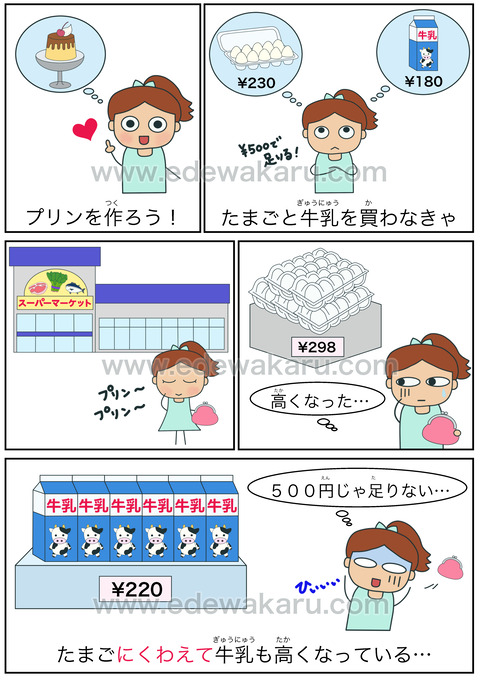
Meaning
~ and, in addition, ~
Not only ~, but also ~
How to use it
Noun [dictionary form]+に加えて
Explanation
「〜にくわえて」 is a sentence pattern meaning “~ and, in addition, ~.” It is used to add similar things together.
In most cases, it is used in written language 😮 You can also omit 「て」 and say 「〜にくわえ」, but that is a more formal expression than 「〜にくわえて」.
[Examples]
Along with eggs, butter has also become more expensive.
She can apparently speak French in addition to English.
It is also often written in kanji as 「〜に加えて」, so it may help to remember that 😊
In context 5 examples
たまごにくわえて牛乳も高くなっている…
→たまごも高くなっているし、それに牛乳も高くなっている…(復習:〜に加えて)Along with eggs, milk has also become more expensive… → Eggs have become more expensive, and milk has too… (Review: 〜に加えて)
彼女は英語にくわえてフランス語も話せるそうだ
→彼女は英語も話せるし、それにフランス語も話せるそうだI hear she can speak French in addition to English. → I hear she can speak English, and French as well.
今日は雨にくわえて風も強いね…
→今日は雨だけでなく、さらに風も強いね…It’s not only raining today; the wind is strong too… → It’s not only raining today; the wind is strong too…
今月はテストにくわえてレポートも出さなければいけないので忙しい
→今月はテストだけでなく、レポートも出さなければいけないので忙しいI’m busy this month because, in addition to tests, I also have to submit a report. → I’m busy this month because I have to submit not only tests but also a report.
頭痛にくわえて熱も出てきた…どうもカゼをひいたようだ
→頭痛だけでなく、熱も出てきた(復習:〜てくる(発生・開始))(復習:どうも(不確か))(復習:〜ようだ(五感推量))On top of the headache, I’ve started running a fever… I seem to have caught a cold. → I’ve started running a fever in addition to the headache. (Review: 〜てくる (onset・beginning)) (Review: どうも (uncertain)) (Review: 〜ようだ (sensory conjecture))
Read the original source text
Meaning
〜し、それに〜
〜だけでなく、さらに〜も
How to use it
名詞[辞書形]+に加えて
Explanation
「〜にくわえて」は「〜し、さらに〜」という意味を表す文型です。この文型は似ていることをプラスして言う時に使われます。
ほとんどの場合は書き言葉として使用されます
😮また、「て」を省略して「〜にくわえ」ということもできますが、「〜にくわえて」よりもかたい言い方になります。
[例]
たまご
にくわえ、バターも高くなった
彼女は英語
にくわえ、フランス語も話せるそうだ
漢字で
「〜に加えて」
と書かれる場合もよくありますので、覚えておくといいと思います😊
Usage 2
Read this source entry ↗Meaning
~ and, in addition, ~
Not only ~, but also ~
How to use it
Noun [dictionary form]+に加えて
Explanation
「〜にくわえて」 is a sentence pattern meaning “~ and, in addition, ~.” It is used to add similar things together.
In most cases, it is used in written language 😮 You can also omit 「て」 and say 「〜にくわえ」, but that is a more formal expression than 「〜にくわえて」.
[Examples]
Along with eggs, butter has also become more expensive.
She can apparently speak French in addition to English.
It is also often written in kanji as 「〜に加えて」, so it may help to remember that 😊
Read the original source text
Meaning
〜し、それに〜
〜だけでなく、さらに〜も
How to use it
名詞[辞書形]+に加えて
Explanation
「〜にくわえて」は「〜し、さらに〜」という意味を表す文型です。この文型は似ていることをプラスして言う時に使われます。
ほとんどの場合は書き言葉として使用されます
😮また、「て」を省略して「〜にくわえ」ということもできますが、「〜にくわえて」よりもかたい言い方になります。
[例]
たまご
にくわえ、バターも高くなった
彼女は英語
にくわえ、フランス語も話せるそうだ
漢字で
「〜に加えて」
と書かれる場合もよくありますので、覚えておくといいと思います😊
日本語文型辞典
Meaning
N にくわえて
It means that something does not end there, but something else is added as well. It is somewhat written in style.
Examples:
1. In addition to the strong wind, the rain has also gotten worse.
2. In addition to their daily homework, the students had to submit a report every week.
3. Along with the birth of their child, their work also went well, and they spend each day filled with happiness.
4. The local industry continues to struggle, pressed by an influx of inexpensive foreign products in addition to sluggish domestic demand.
Read the original source text
Meaning
基本情報Nにくわえて説明あることがらがそれだけで終わらず、さらに別のものごとが付け加わるという意味を表す。やや書きことば的。例文① 激しい風にくわえて、雨もひどくなってきた。② 学生たちは毎日の宿題にくわえて毎週レポートを出さなければならなかった。③ ふたりは、子供の誕生に加えて、仕事も順調に進み、幸せで一杯の毎日を送っている。④ その地場産業は、国内需要の低迷に加えて安価な外国製品の流入に押されて、苦しい状態が続いている。
日本語文型辞典 英語版
Meaning
【にくわえて】[Nにくわえて]
Expresses the meaning that some thing/state/event is not completed by itself but is complemented by another thing/state/event. A slightly formal, written expression.
In context 4 examples
激しい風にくわえて、雨もひどくなってきた。
In addition to strong winds, it started to rain more heavily.
学生たちは毎日の宿題にくわえて毎週レポートを出さなければならなかった。
In addition to their daily assignments, the students had to submit a paper every week.
ふたりは、子供の誕生に加えて、仕事も順調に進み、幸せで一杯の毎日を送っている。
In addition to the birth of a baby, their jobs are going smoothly, so the couple’s days are filled with happiness.
その地場産業は、国内需要の低迷に加えて安価な外国製品の流入に押されて、苦しい状態が続いている。
Besides suffering from the decreased domestic demand, the local industry has been faced with difficulties because of the inflow of inexpensive foreign products.
くらべてわかる日本語表現文型辞典
Meaning
Not only A, but also B. B is added to A, producing a greater result or effect.
How to use it
AにくわえてB (AにくわえB)
[Noun—∅] にくわえて
Explanation
【Contrast 1】
“AだけでなくB”
“AだけでなくB” focuses on the accumulation of both A and B, whereas “AにくわえてB” views B as being added to A.
○彼女は花嫁修業として、料理だけでなくお茶やお花も習っている。 — As part of her preparation for married life, she is learning not only cooking but also tea ceremony and flower arranging.
○彼女は花嫁修業として、料理にくわえお茶やお花も習っている。 — As part of her preparation for married life, she is learning cooking, with tea ceremony and flower arranging added as well.
“AうえにB” (Meaning 1, p. 38)
“AうえにB” means that A alone is already enough, and on top of that there is B as well; “AにくわえてB” means that A and B are added together to produce a greater result or effect.
○ただいま、一日会員にくわえ、半日会員も募集中です。 — We are currently recruiting half-day members in addition to full-day members.
×ただいま、一日会員のうえに、半日会員も募集中です。 — We are currently recruiting half-day members on top of full-day members.
In context 4 examples
あの会社は社長の放漫経営にくわえて、商品偽装も発覚した。
In addition to the president’s reckless management, product tampering was discovered at that company.
日常のストレスにくわえ、隣の工場からの騒音でイライラしていた。
Besides everyday stress, the noise from the neighboring factory was making me irritable.
兄にくわえ、弟も家業を手伝うようになった。
In addition to my older brother, my younger brother also started helping with the family business.
犯人は身の代金の要求にくわえ、投獄されている仲間の釈放を求めた。
In addition to demanding ransom, the criminal demanded the release of his accomplices who were in prison.
Read the original source text
Meaning
AだけでなくB。AにBがプラスされ大きな結果・効果を生む。
How to use it
AにくわえてB(AにくわえB)
[名詞-∅]にくわえて
Explanation
【対比1】
「AだけでなくB」
「AだけでなくB」はAもBもという積み重ねに視点があるが、「AにくわえてB」はAにBがプラスされたという視点がある。
○彼女は花嫁修業として、料理だけでなくお茶やお花も習っている。
○彼女は花嫁修業として、料理にくわえお茶やお花も習っている。
「AうえにB」(意味1 P.38)
「AうえにB」はAだけでも十分なのに、まだBも…という意味であり、「AにくわえてB」はA,Bがプラスされ大きな結果・効果を生むという意味である。
○ただいま、一日会員にくわえ、半日会員も募集中です。
×ただいま、一日会員のうえに、半日会員も募集中です。
日本語NET JLPT文法解説まとめ
Meaning
Not only ~, but also more.
How to use it
N + に加えて
Explanation
in addition to
① Used when adding another similar matter to an existing one.
② A somewhat formal expression.
Read the original source text
Meaning
〜だけでなく、さらに
How to use it
Nに + 加えて
Explanation
in addition to
①ある事柄に対して、類似する別の事柄を追加するときに使う。
②少し硬い表現
毎日のんびり日本語教師
How to use it
Noun + に加えて
Explanation
This sentence pattern expresses addition.
It is often used in the form 「~に加えて、~も」.
Notes
Nothing in particular.
In context 8 examples
目標を達成するには自分で行動する事に加え、他人のサポートも必要です。
To achieve a goal, you need to take action yourself, in addition to receiving support from others.
彼女はその美貌に加えて何ともいえない妖艶さがある。
In addition to her beauty, she has an indescribable bewitching quality.
今年は心理学の勉強に加え、陶芸もやってみたい。
This year, in addition to studying psychology, I’d also like to try pottery.
栄養面で優れた食事に加え、適切な食べ方で食事を摂ることも大切だ。
In addition to eating a nutritionally excellent diet, it is also important to eat properly.
飲み会のあと、二日酔いに加え腰痛も悪化した。
After the drinking party, my back pain worsened in addition to my hangover.
貧血の症状に加え蕁麻疹まで出てつらい。
It’s miserable to have hives on top of the symptoms of anemia.
大量に捨てられたゴミに加え、何十台もの無断駐輪。この辺りは身勝手な人が多いようだ。
In addition to the large amount of trash dumped here, dozens of bicycles have been parked illegally. There seem to be a lot of selfish people around here.
声も低くて顔もカッコよくて、それに加え色気もあるところが最高。
His voice is low, his face is handsome, and on top of that he’s sexy—that’s the best.
Read the original source text
How to use it
名詞+に加えて
Explanation
累加(添加)の文型です。
「~に加えて、~も」の形で使われることが多いです。
Notes
特になし
NINJAL 日本語文型データベース
Meaning
Used when you want to say that something similar is added to what was already there.
How to use it
Nに加えて
Notes
The particle も is often added to the item in the clause after “~に加えて” that you want to emphasize.
In context 7 examples
台風が近づくにつれて、雨に加えて風も強くなってきた。
As the typhoon draws closer, the wind has grown stronger in addition to the rain.
頭痛に加えて、高熱も続いているので、しばらく会社に行けそうにありません。
In addition to a headache, I’ve had a persistent high fever, so I don’t think I’ll be able to go to work for a while.
今月は、テストに加えてレポートも出さなければならないから、非常に忙しい。
I’m extremely busy this month because I have to submit a report in addition to taking a test.
「このエリアは、交通利便性に加えて、買い物などの生活利便性も高いので、暮らしやすいと思います」
“In addition to convenient transportation, this area is also convenient for everyday life, with places to shop and so on, so I think it’s a nice place to live.”
キャスター「ここ数年物価高に加えて、電気代やガス代の高騰が人々の家計を圧迫しています」
News anchor: “In recent years, in addition to rising prices, soaring electricity and gas bills have been squeezing household budgets.”
この学校の入試では、学力を身に着けていることに加えて、ボランティア活動などの学外活動に取り組んできたかが重視されます。
For admission to this school, in addition to having acquired academic skills, importance is also placed on whether applicants have engaged in extracurricular activities such as volunteer work.
春は気温の変化などで体調を崩しやすい時期であるのに加えて、就職や入学で生活の変化が起こる時期でもあります。
Spring is a time when people are prone to becoming ill due to changes in temperature and the like, and it is also a time when life changes because of starting a job or entering school.
Read the original source text
Meaning
それまであったものに、似た別のものが付け加わると言いたいときに使います。
How to use it
Nに加えて
Notes
「~に加えて」の後の文の強調したい事柄に「も」をつけて示すことが多いです。
IMABI
Addition
Read this IMABI lesson ↗Explanation
Addition: ~に加えて, ~にとどまらず, ~もさることながら, ~はおろか, ~はもちろん, ~はもとより, ~ともあれ
When a speaker feels obligated to mention yet another thing into the mix, that is usually done so with negative connotation, and it is this that will be the theme of this lesson.
~に加えて
The transitive verb 加える roughly translates to “to add,” but it may also be translated as “to count (someone) in,” “to deal (damage),” “or even “to gather (speed).”
1. 料理に胡椒こしょうは一つまみも加える必要はない。
There is no need to add a pinch of pepper to a dish.
2. お茶に砂糖を加える。
To mix sugar in the tea.
3. 圧力を加える。
To add pressure.
咥える should not, however, be confused with the homophonous transitive verb 咥える・銜える, which means “to put in one’s mouth,” although they are etymologically tied.
4. 子供は指を銜くわえる嫌いがある。
Children have the tendency to have their fingers in their mouth.
Perhaps the most important use of this verb is its appearance in the phrase ~に加えて meaning “in addition to.” It is used a lot in enumerating negative situations.
5. 彼女は日本語に加えて、英語もあまり分からないみたいだね。
In addition to Japanese, it looks like she barely understands English.
6. イギリスに加えて、フランスもドイツも多文化主義の非を鳴らしています。
In addition to England, France and Germany are also denouncing multiculturalism.
7. そのことに加えて、彼は自分の名前を忘れたよ!
In addition to that, he also forgot his own name!
8. 5日のニューヨーク株式市場かぶしきしじょうは、東京市場で株価が大幅おおはばに値下がりしたことに加えて、アメリカが景気を下支したざさえするために行っている量的緩和りょうてきかんわの縮小しゅくしょう時期など、アメリカの金融きんゆう政策に対する不安から幅広い銘柄めいがらに売り注文が広がりました。
As for the New York Stock Exchange on the fifth, selling orders have spread in a wide range of brands from worries towards American financial policies such as the quantitative easing curtailment period America is carrying out in order to backup the economy in addition to the large drop in prices due to the Tokyo Exchange.
From NHK.
~にとどまらず
The speech modal ~にとどまらず attaches to nouns which can be perceived as some sort of parameter/level/stage with which the following clause indicates an extension of said parameter.
10. マスメディアによる情報というものは、今や一国にとどまらず、世界中に伝わる。
Information by the media doesn’t stay in one country now; it travels the world.
11. 農作物は、台風に襲われた直後にとどまらず、一年中その影響を受ける。
Crops don’t just receive the effects directly after being hit by a typhoon; they feel the impact throughout the year.
12. 彼女は成功にとどまらず、社会貢献に尽力した。
She not only stopped at success, but she also labored as a contribution to society.
Though ~にとどまらず usually attaches itself to nouns, it can on occasion follow the 連体形 of verbs, but in doing so, it is not used with static verbs, as such verbs do not agree with the concept of extending parameters.
13. 一人の人間の明るさは、場を明るくするにとどまらず、周囲の人々に心身の活力をも与えるものである。
The brightness of a person not only brightens up the area, but also it gives energy to the hearts and minds of the surrounding people.
14. 更に執刀した岡山大学病院の大藤剛宏医師は手術後の記者会見で「中葉を使った移植は男の子1人を助けるにとどまらず、これまで助けることができなかった子どもたちに光が当たるという意義がある」と話しました。
In addition, Dc. Oto Takahiro of Okayama University Hospital who did the surgery in a press conference afterwards said that “the transplant using the middle lobe [of the lung] does not just save this one boy, but it gives light to other children that have not been able to be helped till now”.
From the NHK article 『生体肺移植の男児 容体安定』 on 2013年7月2日
When used with adjectives/adjectival noun predicates, the nature of the situation must be in some state of transition to account for an extension of the parameter being described to remain grammatical. So, although adjectival expressions may literally be static by definition, they can be implemented in dynamic circumstances.
As this pattern follows the 連体形, but because it is also generally restricted to rather stiff written language, we can expect it to follow the である-連体形 for adjectival nouns, but as for adjectives1, we find that the particle だけ (only) is placed in between the adjective (though still in the 連体形) and ~に留まらず.
15. あの法令は単に違憲であるにとどまらず、ネットのおかげで実効性も失われて久しい。
That ordinance is not only simply unconstitutional, but thanks to the Internet, it has lost its effectiveness for quite some time.
16. 健康に良いだけにとどまらず、シジミは旨味成分もたくさん含まれています。
Freshwater clams are not just good for your health, but they also contain lots of umami components.
Though not grammatically necessary and in some sense redundant, the particle だけ can generally be seen used with this pattern in general, resulting in ~だけにとどまらず.
17. 弊社は社会貢献だけにとどまらず、様々な活動を展開しております。
Our company is not limiting itself to just contributing to society but is expanding its reach into all sorts of activities.
Orthography Note: Though not typically written in Kanji, its Kanji spelled is ~に留まらず.
~もさることながら
The pattern ~もさることながら follows nouns deemed to obviously be of a certain quality (most often positive), and that the following clause adds to the worth/validity of said statement. This, in turn, is translated into English as “it goes without saying that…”
18. 中華料理ちゅうかりょうりは味あじもさることながら、健康けんこうにいいですよ。
It goes without saying that Chinese food is tasty, but it’s also good for you.
19. 彼女は人柄もさることながら、その頭の働きの良さで周囲の人をぐいぐいと引っ張っていくんですよ。
Her personality goes without saying, and her great mind pulls those around towards her.
Orthography Note: The full Kanji spelling of this pattern is 然る事乍ら.
Grammar Note: 然る is an old-fashioned 連体詞 derived from the Classical Japanese verb 然り, which has the meaning of “to be said/some thing” in a very vague sense, and if it were directly translated into something in Modern Japanese, it would be closest to そういう or とある, which results in it directly equating to “such.” Given how affirming the noun-predicate is, we see that the particle ながら attaches itself to state that the two clauses of the sentence are concurrently in agreeance to that effect.
~はもちろん・もとより・おろか
~はもちろん(のこと)is used when juxtaposing two predicates as being “as matter of fact.” The first clause which it attaches to must be a nominal(ized) phrase, but what follows after it is typically a verbal/adjectival which affirms the first predicate.
In the examples that follow, we can see how the literal meaning of もちろん, that being “of course,” can be taken literally here. To truly understand how this pattern works regarding nuance, though, let’s posit that the first clause is X and the second clause is Y. In the mind of the speaker, X is mentioned first as it has the highest relevance or the highest recognition of being obvious, whereas Y adds to what is obvious or fully expected given knowledge of the situation. Y may at times be far more impressive than Y, but the reason why X is mentioned first is because it has the most relevance.
Speech Style Note: While ~はもちろん is largely used in the written language, whenever it is utilized in the spoken language, it is often rendered as ~もちろんのこと, which grammatically allows for said dependent clause to more clearly function as a noun-predicate that is more parallel in structure to predicate Y.
20. 彼は英語はもちろん、スペイン語も韓国語もできます。
Not to mention English, he can also speak Spanish and Korean.
21 あの子は書くのはもちろん、読むこともできない。
That kid can’t even read, let alone write.
22. 彼は、母語はもちろん(のこと)、他にも7つの言語も話せますよ。
Not only his native language, but he can also speak seven other languages.
23. 彼は修士を得るのはもちろん、入学さえできない。
He can’t even enter college, let alone receive a master’s degree.
Now, whenever Y is not something that cannot be deemed obvious given the situation at hand, ~はもちろん becomes ungrammatical, and it would need to be replaced with something broader such as ~だけでなく.
24. この米には、もみ{だけでなく 〇・はもちろん X}、砂まで入ってるのよ。
Not only is there husks in this rice, there’s even sand in it.
While it may be intrinsically obvious that someone who excels in his main language does indeed have mastery in other languages like in Ex. 22, there is nothing intrinsic about rice being contaminated with all sorts of things.
~はもとより
The nuance spin that ~はもとより provides is that it quality X is “principally” so. Meaning, based on principle, X is that standard which is both most pertinent and obvious in nature, and then Y builds onto that execution of standard. Just as with ~はもちろん(のこと), X is a nominal(ized) phrase, while Y is usually a verbal/adjectival predicate which expands on that notion.
25. 彼女は料理はもとより食器も洗ってくれます。
She not only cooks, but she also washes the dishes.
26. 彼は英語はもとより、スペイン語も韓国語もできます。
Not to mention English, he can also speak Spanish and Korean.
27. 低賃金、劣悪な労働条件、一方的な首切りなどの経済・労働問題はもとより、各種の人道的問題までも引き起こしている。
They are not only suffering from low wages, cases of poor working condition, and economic and labor problems such as one-sided layoffs, they are also troubled to the extent of various forms of discrimination.
28. 地方ごとに、味はもとより、料理の仕方も違ってきますね。
With each region, not to mention flavor, but even cooking methods differ, don’t they?
~はおろか
The word おろか indicates that the noun in the dependent clause X is negligible in how bad Y is obviously true.
29. 一ドルはおろか一セントも持ってないよ。
I don’t have a cent, let alone a dollar!
30. 父はおろか、僕の犬でさえ反対したようだ。
Not to mention my father, even my dog seemed to object.
31. 僕はバイオリンはおろか、ギターも弾けないんだ。
I can’t even play the guitar, much less a violet.
32. あの子は話すのはおろか、足も動かせません。
That child can’t even move her legs, let alone speak.
漢字 Notes: The Kanji spellings of these phrases are as follows:
①おろか → 疎か
②もちろん → 勿論
③もとより →【元・固・素】より.
~ともあれ
~ともあれ is an adverbial phrase that means “never mind/putting aside.” It is also seen in 何はともあれ meaning “in any case.” Grammatically speaking, あれ is the 已然形 of the existential verb ある, which means that as a whole, this adverbial phrase pinpoints the noun in said dependent clause X is already obviously an established issue, but that Y is the ‘real’ problem at hand.
33. 中国語はともあれ、問題は日本語の勉強なんだぞ。
Never mind Chinese, the problem is my Japanese studies!
34. 何はともあれ、後でしよう。
In any case, let’s do (this) later.
In older language, the き-連体形 of adjectives does become valid with this grammar structure.
i. 良き素材で醸されたお酒は香味や余韻の良きにとどまらず、飲み手にはその格に相応しい陶酔感をもたらします。
Sake brewed with excellent ingredients not only has superb flavor and aftertaste, as it provides a level of intoxication befitting of its worth to the consumer. ↩︎
In context 32 examples
料理に胡椒こしょうは一つまみも加える必要はない。
There is no need to add a pinch of pepper to a dish.
お茶に砂糖を加える。
To mix sugar in the tea.
圧力を加える。
To add pressure.
子供は指を銜くわえる嫌いがある。
Children have the tendency to have their fingers in their mouth.
彼女は日本語に加えて、英語もあまり分からないみたいだね。
In addition to Japanese, it looks like she barely understands English.
イギリスに加えて、フランスもドイツも多文化主義の非を鳴らしています。
In addition to England, France and Germany are also denouncing multiculturalism.
そのことに加えて、彼は自分の名前を忘れたよ!
In addition to that, he also forgot his own name!
5日のニューヨーク株式市場かぶしきしじょうは、東京市場で株価が大幅おおはばに値下がりしたことに加えて、アメリカが景気を下支したざさえするために行っている量的緩和りょうてきかんわの縮小しゅくしょう時期など、アメリカの金融きんゆう政策に対する不安から幅広い銘柄めいがらに売り注文が広がりました。
As for the New York Stock Exchange on the fifth, selling orders have spread in a wide range of brands from worries towards American financial policies such as the quantitative easing curtailment period America is carrying out in order to backup the economy in addition to the large drop in prices due to the Tokyo Exchange.
マスメディアによる情報というものは、今や一国にとどまらず、世界中に伝わる。
Information by the media doesn’t stay in one country now; it travels the world.
農作物は、台風に襲われた直後にとどまらず、一年中その影響を受ける。
Crops don’t just receive the effects directly after being hit by a typhoon; they feel the impact throughout the year.
彼女は成功にとどまらず、社会貢献に尽力した。
She not only stopped at success, but she also labored as a contribution to society.
一人の人間の明るさは、場を明るくするにとどまらず、周囲の人々に心身の活力をも与えるものである。
The brightness of a person not only brightens up the area, but also it gives energy to the hearts and minds of the surrounding people.
更に執刀した岡山大学病院の大藤剛宏医師は手術後の記者会見で「中葉を使った移植は男の子1人を助けるにとどまらず、これまで助けることができなかった子どもたちに光が当たるという意義がある」と話しました。
In addition, Dc. Oto Takahiro of Okayama University Hospital who did the surgery in a press conference afterwards said that “the transplant using the middle lobe [of the lung] does not just save this one boy, but it gives light to other children that have not been able to be helped till now”.
あの法令は単に違憲であるにとどまらず、ネットのおかげで実効性も失われて久しい。
That ordinance is not only simply unconstitutional, but thanks to the Internet, it has lost its effectiveness for quite some time.
健康に良いだけにとどまらず、シジミは旨味成分もたくさん含まれています。
Freshwater clams are not just good for your health, but they also contain lots of umami components.
弊社は社会貢献だけにとどまらず、様々な活動を展開しております。
Our company is not limiting itself to just contributing to society but is expanding its reach into all sorts of activities.
中華料理ちゅうかりょうりは味あじもさることながら、健康けんこうにいいですよ。
It goes without saying that Chinese food is tasty, but it’s also good for you.
彼女は人柄もさることながら、その頭の働きの良さで周囲の人をぐいぐいと引っ張っていくんですよ。
Her personality goes without saying, and her great mind pulls those around towards her.
彼は英語はもちろん、スペイン語も韓国語もできます。
Not to mention English, he can also speak Spanish and Korean.
彼は、母語はもちろん(のこと)、他にも7つの言語も話せますよ。
Not only his native language, but he can also speak seven other languages.
彼は修士を得るのはもちろん、入学さえできない。
He can’t even enter college, let alone receive a master’s degree.
この米には、もみ{だけでなく 〇・はもちろん X}、砂まで入ってるのよ。
Not only is there husks in this rice, there’s even sand in it.
彼女は料理はもとより食器も洗ってくれます。
She not only cooks, but she also washes the dishes.
彼は英語はもとより、スペイン語も韓国語もできます。
Not to mention English, he can also speak Spanish and Korean.
低賃金、劣悪な労働条件、一方的な首切りなどの経済・労働問題はもとより、各種の人道的問題までも引き起こしている。
They are not only suffering from low wages, cases of poor working condition, and economic and labor problems such as one-sided layoffs, they are also troubled to the extent of various forms of discrimination.
地方ごとに、味はもとより、料理の仕方も違ってきますね。
With each region, not to mention flavor, but even cooking methods differ, don’t they?
一ドルはおろか一セントも持ってないよ。
I don’t have a cent, let alone a dollar!
父はおろか、僕の犬でさえ反対したようだ。
Not to mention my father, even my dog seemed to object.
僕はバイオリンはおろか、ギターも弾けないんだ。
I can’t even play the guitar, much less a violet.
あの子は話すのはおろか、足も動かせません。
That child can’t even move her legs, let alone speak.
中国語はともあれ、問題は日本語の勉強なんだぞ。
Never mind Chinese, the problem is my Japanese studies!
何はともあれ、後でしよう。
In any case, let’s do (this) later.