くらべてわかる日本語表現文型辞典
Meaning
Meaning 1: States as a general principle that one must not do A.
Meaning 2: States objectively that A is not the case.
Meaning 3: A is so awful that one cannot do it.
How to use it
Aものではない (Aもんじゃない)
Connections 1 and 2:
[Verb—dictionary form] ものではない
[i-adjective—い] ものではない
[na-adjective—な] ものではない
Connection 3:
[Verb—potential た form] ものではない
Explanation
[Contrast 3]
“Aものか (Aたものか)” (Meaning 2, p. 304)
They are interchangeable. “Aものか” sounds somewhat stronger in tone.
Notes
[Note 3]
・“捨てたものじゃない” is an idiom meaning that something is not so bad.
○おしゃれした妻を見ると、まんざら捨てたものじゃないなと思う。 — When I see my wife dressed up, I think she's not so bad after all.
In context 12 examples
親友を裏切るものではない。
You mustn't betray your best friend.
子どもの頃から嘘をつくものではないと教えられた。
I was taught from childhood that you mustn't tell lies.
親に対してそんな口を利くものではありません。
You mustn't speak to your parents like that.
そんなにあの人ばかり責めるものではない。
You shouldn't blame that person so much.
駐車場内の盗難や事故に関し、当社は一切の責任を負うものではない。
Our company assumes no responsibility whatsoever for theft or accidents within the parking lot.
法律といえども、普遍的なものではない。
Even laws are not universal.
添乗員という仕事は人が考えるほど楽なもんじゃないよ。
Working as a tour conductor isn't as easy as people think.
彼は簡単そうに言うが、実際は口で言うほど易しいものではない。
He makes it sound easy, but it's not as easy as it sounds.
どれもこれもひどい作品で、見られたものではない。
Every single one is a terrible work; they're impossible to watch.
昨日の料理は塩辛くて食べられたもんじゃなかったわ。
Yesterday's food was so salty it was impossible to eat.
叔母が古いコートをくれたが、流行遅れで着られたものではない。
My aunt gave me an old coat, but it was so out of fashion that I couldn't possibly wear it.
こんな隙間風が入ってくるような家、住めたものじゃないよ。
A house with drafts coming in through gaps like this is impossible to live in.
Read the original source text
Meaning
意味1:Aをしてはいけないということを一般論的に述べる。
意味2:Aないと、客観的に述べる。
意味3:とてもひどくてAできない。
How to use it
Aものではない(Aもんじゃない)
接続1,2:
[動詞-る形]ものではない
[イ形-い]ものではない
[ナ形-な]ものではない
接続3:
[動詞-可能のた形]ものではない
Explanation
【対比3】
「Aものか(Aたものか)」(意味2 P.304)
置き換え可能。「Aものか」のほうが多少、語気が強い感じがする。
Notes
【注意3】
・「捨てたものじゃない」は、それ程ひどくないという意味の慣用表現。
○おしゃれした妻を見ると、まんざら捨てたものじゃないなと思う。
DoJG 日本語文法辞典(全集)
Meaning
Shouldn’t; not possibly; naturally cannot; cannot bear
How to use it
(i) Vinformal nonpast | ものではない | |
| 食べるものではない | One shouldn’t eat something |
(ii) Vpotential informal past | ものではない | |
| 食べられたものではない | One could not possibly eat something |
(iii) Vpotential informal nonpast | ものではない | |
| 食べられるものではない | One naturally cannot eat something |
Explanation
A sentence-final phrase indicating that one shouldn’t do something, one could not possibly do something, or one naturally cannot do something.
In context 11 examples
夜遅く人に電話をかけるものではない。
You shouldn't call people late at night.
彼の演奏は聴けたものではない。
We cannot bear listening to his performance (literally: His performance isn't something we could possibly listen to).
そんな時間のかかる仕事は引き受けられるものではない。
That kind of time-consuming work isn't something I can accept.
日本では先生と話す時に帽子をかぶったまま話すものではない。
In Japan, one shouldn't wear a hat while speaking to one's teacher.
日本では人のうちに訪ねて行く時には手ぶらで行くものではありません。
In Japan, you shouldn't visit someone's house without bringing something with you.
未成年者は酒を飲むもんじゃない。
Minors shouldn't drink.
女性に年齢を聞くものではない。
You shouldn't ask a woman her age.
こんなつまらない小説、読めたもんじゃない。
I could not possibly read such a boring novel!
私のかいた絵なんか、あなたに見せられたものではありません。
There's no way I could possibly show you the paintings I've done.
辞書などはそう簡単に書けるものではない。
It is natural that dictionaries can't be written so easily.
現在の補助金の額で十分な研究ができるものではない。
We cannot possibly do thorough research with the current amount of research funds.
日本語文型辞典
Meaning
Follows a verb expressing a person's action and means “you shouldn't ….” Used when giving advice.
Follows a verb expressing possibility, such as 「できる」 or 「分かる」, and is used to emphasize a feeling of denial that it is “impossible.” Generally used in spoken language; the casual form is 「もんじゃない」. Used for negatively evaluated matters.
How to use it
V-るものではない
V-たものではない
In context 6 examples
人の悪口を言うものではない。
You shouldn't speak ill of people.
男は人前で泣くものではありません。
A man shouldn't cry in front of other people.
動物をいじめるものではない。
You shouldn't bully animals.
こんなすっぱいみかん、食べられたもんじゃない。
These mandarins are so sour they're impossible to eat.
こんな下手な写真など、人に見せられたものではない。
These photographs are so bad I couldn't possibly show them to anyone.
あいつにまかせたら何をしでかすか分かったものではない。
If you leave that guy in charge, you never know what he'll do.
Read the original source text
Meaning
人の行為を表す動詞を受け、「…すべきではない」という意味を表す。忠告を与えるような場合に使う。
「できる」「分かる」のような可能を表す動詞を受け、それが「不可能だ」という否定の気持ちを強調するのに用いる。話しことばで使われるのが普通で、くだけた言い方では「もんじゃない」となる。マイナス評価のことがらに使う。
How to use it
V-るものではない
V-たものではない
絵でわかる日本語
Usage 1
Read this source entry ↗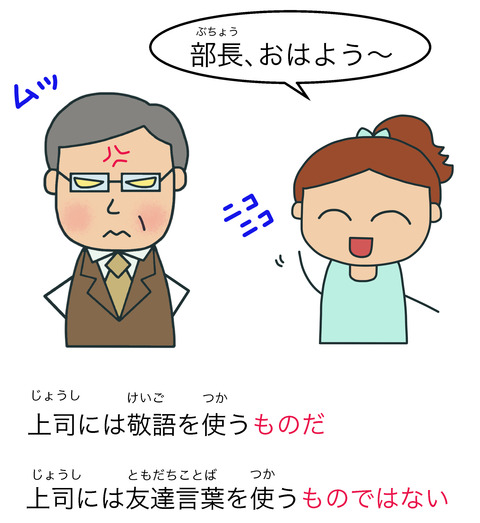
Meaning
(Judging by common sense) It is natural that one does 〜 / One should do 〜
(Judging by common sense) It is natural that one does not do 〜 / One should not do 〜
How to use it
Verb [dictionary form] + ものだ
Verb [dictionary form] + ものではない
Explanation
Today’s “〜ものだ・〜ものではない” expresses [what is natural / an obligation] and is used to mean “(judging by common sense) it is natural that one does 〜 / it is natural that one does not do 〜.” 😊 It is used with almost the same meaning as “〜べきだ・〜べきではない,” which you learned at N3, so it’s good to remember them together 😉
[Additional explanation]
There are many patterns in the “もの” series, but the form used in most of them is fixed, as in “〜ものなら,” “〜もので・〜ものだから,” and “〜たいものだ.” Today’s “〜ものだ・〜ものではない,” however, has exactly the same form as “〜ものだ (feeling/emotion)” and “〜ものだ (inherent property / general way of thinking).” So you need reading comprehension skills to determine which “〜ものだ” is being used. Be careful 😀
[Summary of the “もの” series that require reading comprehension]
① 〜ものだ →
(obligation / what is natural) It is natural, judging by common sense, to do 〜
[The negative form is “〜ものではない”]
② 〜ものだ →
(feeling / exclamation) It really is 〜!
③ 〜ものだ →
Inherent property / general way of thinking [The negative form is “〜ないものだ”]
The forms of the other patterns in the “もの” series are always fixed, so there should be no problem once you’ve memorized them well 😉
[The “もの” series]
〜たいものだ・〜てほしいものだ
〜たものだ
〜たものではない
〜というもの (Nというもの)
〜ないものだろうか
〜ないものは〜ない
〜もの・〜んだもの
〜ものか
〜ものがある
〜ものだ (feeling/emotion)
〜ものだ (inherent property / general way of thinking)
〜ものだ・〜ものではない
〜もので・〜ものだから
〜ものと思っていた
〜ものなら
〜ものの
〜ものを
〜ようものなら
In context 4 examples
上司には敬語を使うものだ
→上司には敬語を使うのが当然だ/ 敬語を使うべきだOne should use honorific language with one’s boss. →It is natural to use honorific language with one’s boss / One should use honorific language.
上司には友達言葉を使うものではない
→上司には友達言葉を使わないのが当然だ/ 友達言葉を使うべきではないOne should not use casual, familiar language with one’s boss. →It is natural not to use casual, familiar language with one’s boss / One should not use casual, familiar language.
学生はしっかり勉強するものだぞ!
→学生はしっかり勉強するのが当然だぞ / しっかり勉強するべきだぞStudents should study hard, you know! →It’s natural for students to study hard / They should study hard.
悪口は言うものではない
→悪口は言わないのが当然だ/言うべきではないOne should not speak ill of others. →It is natural not to speak ill of others / One shouldn’t.
Read the original source text
Meaning
(常識からみて)〜するのが当然だ / 〜するべきだ
(常識からみて)〜しないのが当然だ / 〜するべきではない
How to use it
動詞[原形]+ものだ
動詞[原形]+ものではない
Explanation
今回の「〜ものだ・〜ものではない」は
【当然・義務】 を表すもので、「(常識からみて)〜するのが当然だ・〜しないのが当然だ」という意味で使用されます
😊N3にある「〜べきだ・〜べきではない」とほとんど同じ意味で使われますので、セットで覚えているといいですね😉
【補足説明】
「もの」シリーズはとてもたくさんありますが、ほとんどの文型は「〜ものなら」「〜もので・〜ものだから」「〜たいものだ」というように、使用する形が決まっています。ですが今回の「〜ものだ・〜ものではない」は「〜ものだ(感慨)」「〜ものだ(本来の性質・一般的な考え方)」と形が完全に同じです。ですから、どの「〜ものだ」なのか判断するには読解力が必要となりますので気をつけてくださいね😀
[読解が必要な「もの」シリーズまとめ]
①〜ものだ→
(義務・当然)常識からみて〜するのが当然だ
【
否定形は「〜ものではない」】
② 〜ものだ→
(感慨・感嘆)本当に〜だなぁ
③〜ものだ→
本来の性質・一般的な考え方【否定形は「〜ないものだ」】
その他の「もの」シリーズはいつも形が決まっていますので、しっかり覚えてしまえば問題はないでしょう😉
【「もの」シリーズ】
〜たいものだ・〜てほしいものだ
〜たものだ
〜たものではない
〜というもの(Nというもの)
〜ないものだろうか
〜ないものは〜ない
〜もの・〜んだもの
〜ものか
〜ものがある
〜ものだ(感慨)
〜ものだ(本来の性質・一般的な考え方)
〜ものだ・〜ものではない
〜もので・〜ものだから
〜ものと思っていた
〜ものなら
〜ものの
〜ものを
〜ようものなら
Usage 2
Read this source entry ↗Meaning
(Judging by common sense) It is natural that one does 〜 / One should do 〜
(Judging by common sense) It is natural that one does not do 〜 / One should not do 〜
How to use it
Verb [dictionary form] + ものだ
Verb [dictionary form] + ものではない
Explanation
Today’s “〜ものだ・〜ものではない” expresses [what is natural / an obligation] and is used to mean “(judging by common sense) it is natural that one does 〜 / it is natural that one does not do 〜.” 😊 It is used with almost the same meaning as “〜べきだ・〜べきではない,” which you learned at N3, so it’s good to remember them together 😉
[Additional explanation]
There are many patterns in the “もの” series, but the form used in most of them is fixed, as in “〜ものなら,” “〜もので・〜ものだから,” and “〜たいものだ.” Today’s “〜ものだ・〜ものではない,” however, has exactly the same form as “〜ものだ (feeling/emotion)” and “〜ものだ (inherent property / general way of thinking).” So you need reading comprehension skills to determine which “〜ものだ” is being used. Be careful 😀
[Summary of the “もの” series that require reading comprehension]
① 〜ものだ →
(obligation / what is natural) It is natural, judging by common sense, to do 〜
[The negative form is “〜ものではない”]
② 〜ものだ →
(feeling / exclamation) It really is 〜!
③ 〜ものだ →
Inherent property / general way of thinking [The negative form is “〜ないものだ”]
The forms of the other patterns in the “もの” series are always fixed, so there should be no problem once you’ve memorized them well 😉
[The “もの” series]
〜たいものだ・〜てほしいものだ
〜たものだ
〜たものではない
〜というもの (Nというもの)
〜ないものだろうか
〜ないものは〜ない
〜もの・〜んだもの
〜ものか
〜ものがある
〜ものだ (feeling/emotion)
〜ものだ (inherent property / general way of thinking)
〜ものだ・〜ものではない
〜もので・〜ものだから
〜ものと思っていた
〜ものなら
〜ものの
〜ものを
〜ようものなら
Read the original source text
Meaning
(常識からみて)〜するのが当然だ / 〜するべきだ
(常識からみて)〜しないのが当然だ / 〜するべきではない
How to use it
動詞[原形]+ものだ
動詞[原形]+ものではない
Explanation
今回の「〜ものだ・〜ものではない」は
【当然・義務】 を表すもので、「(常識からみて)〜するのが当然だ・〜しないのが当然だ」という意味で使用されます
😊N3にある「〜べきだ・〜べきではない」とほとんど同じ意味で使われますので、セットで覚えているといいですね😉
【補足説明】
「もの」シリーズはとてもたくさんありますが、ほとんどの文型は「〜ものなら」「〜もので・〜ものだから」「〜たいものだ」というように、使用する形が決まっています。ですが今回の「〜ものだ・〜ものではない」は「〜ものだ(感慨)」「〜ものだ(本来の性質・一般的な考え方)」と形が完全に同じです。ですから、どの「〜ものだ」なのか判断するには読解力が必要となりますので気をつけてくださいね😀
[読解が必要な「もの」シリーズまとめ]
①〜ものだ→
(義務・当然)常識からみて〜するのが当然だ
【
否定形は「〜ものではない」】
② 〜ものだ→
(感慨・感嘆)本当に〜だなぁ
③〜ものだ→
本来の性質・一般的な考え方【否定形は「〜ないものだ」】
その他の「もの」シリーズはいつも形が決まっていますので、しっかり覚えてしまえば問題はないでしょう😉
【「もの」シリーズ】
〜たいものだ・〜てほしいものだ
〜たものだ
〜たものではない
〜というもの(Nというもの)
〜ないものだろうか
〜ないものは〜ない
〜もの・〜んだもの
〜ものか
〜ものがある
〜ものだ(感慨)
〜ものだ(本来の性質・一般的な考え方)
〜ものだ・〜ものではない
〜もので・〜ものだから
〜ものと思っていた
〜ものなら
〜ものの
〜ものを
〜ようものなら
どんなときどう使う 日本語表現文型辞典
Meaning
certainly shouldn't
How to use it
Vる + ものではない
Explanation
~するのは常識に反する
1)個人の意見ではなく、道徳的、社会的な常識によって「そうするのは社会的常識や道徳に反しますよ」と訓戒したり、説教したりするときの表現。
2)話し言葉では ❸ のように「もんじゃない」となる。
2)Often becomes もんじゃない in spoken language, as in sentence ❸ .
1)Moralizes or exhorts that speaker's opinion to do something is not personal but is against moral and social common sense.
In context 3 examples
無駄づかいをするものではない。お金は大切にしなさい。
You shouldn't waste money. Be careful with it.
電車の中では、ものを食べたり飲んだりするものではありません。
You shouldn't eat or drink things on the train.
弱いものいじめをするもんじゃないよ。
You shouldn't bully people who are weaker than you.
Read the original source text
Meaning
certainly shouldn't
How to use it
Vる+ものではない
Explanation
~するのは常識に反する
1)個人の意見ではなく、道徳的、社会的な常識によって「そうするのは社会的常識や道徳に反しますよ」と訓戒したり、説教したりするときの表現。
2)話し言葉では ❸ のように「もんじゃない」となる。
2)Often becomes もんじゃない in spoken language, as in sentence ❸ .
1)Moralizes or exhorts that speaker's opinion to do something is not personal but is against moral and social common sense.
毎日のんびり日本語教師
How to use it
Verb dictionary form + ものではない
Explanation
When attached to a verb describing a person’s action, it expresses advice or a warning that one should not do that.
This grammar can be used when rules for behavior are objectively determined by social conventions, truths about things, and so on.
The colloquial form is「~もんじゃない」.
Notes
Related grammar: 「ものだ」—The difference between「ことだ」and「ものだ」
Similar grammar: 「【N0 grammar】~たものではない」
Similar grammar: 「【N0 grammar】~たものでもない」
Similar grammar: 「【N0 grammar】~ないものでもない」
In context 8 examples
人のことに首を突っ込むものではない。(不要去干涉别人的事。)
You shouldn’t meddle in other people’s affairs. (Don’t stick your nose into other people’s business.)
お金は貯まるもので、貯めるものではない。
Money accumulates; it’s not something you save up.
人は外見で判断するものではない。(人不能凭外表判断。)
You shouldn’t judge people by their appearance. (You can’t judge people by their appearance.)
父には、男は泣くものではないと教えられた。
My father taught me that men shouldn’t cry.
少しくらい咎められても、自分の意見はすぐに曲げるものではない。
Even if you’re criticized a little, you shouldn’t immediately back down from your opinion.
体調不良を引き起こすので、徹夜はするものではない。
You shouldn’t stay up all night because it causes poor health.
人の言葉を信じるものではない。
You shouldn’t believe what other people say.
言葉には気をつけるべきだ。衝動的に発するものではない。
You should be careful with your words. You shouldn’t say things impulsively.
Read the original source text
How to use it
動辞形+ものではない
Explanation
人の行為を表す動詞について、そうするべきではないという忠告やアドバイスを表します。
社会常識や物事の真理等によって行動規範が客観的に決まっている場合にこの文法を使うことができます。
口語は「~もんじゃない」です。
Notes
関連文法「ものだ」-「ことだ」と「ものだ」の違い
似ている文法「【N0文法】~たものではない」
似ている文法「【N0文法】~たものでもない」
似ている文法「【N0文法】~ないものでもない」
日本語文型辞典 英語版
Meaning
Taking a verb that expresses people’s actions, means “ought/should not....” Used in cases where advice or a warning is being given.
Taking a verb which shows possibility such as できる(can do) and わかる(can understand), used to emphasize the feeling that something is not a possibility. Usually used in speech. Becomes もんじゃないin casual speech. Used in giving a negative assessment of a thing.
How to use it
1. one should not V-る
2. one cannot V-た; too ... to V-た
In context 6 examples
人の悪口を言うものではない。
You shouldn’t badmouth people.
男は人前で泣くものではありません。
Men shouldn’t cry in public.
動物をいじめるものではない。
You shouldn’t be unkind to the animals.
こんなすっぱいみかん、食べられたもんじゃない。
Such a sour mandarin orange is inedible.
こんな下手な写真など、人に見せられたものではない。
I couldn’t possibly show such an awful photograph to people.
あいつにまかせたら何をしでかすか分かったものではない。
If you leave it to him, you never know what blunders he will make!
Read the original source text
Meaning
Taking a verb that expresses people’s actions, means “ought/should not....” Used in cases where advice or a warning is being given.
Taking a verb which shows possibility such as できる(can do) and わかる(can understand), used to emphasize the feeling that something is not a possibility. Usually used in speech. Becomes もんじゃないin casual speech. Used in giving a negative assessment of a thing.
How to use it
1. V-るものではない
2. V-たものではない
AIUEO JLPT Grammar
Meaning
This sentence pattern expresses general advice, warnings, or actions that should be avoided as a matter of common sense. It is often used when the speaker wants to convey that the listener should refrain from doing something.
How to use it
Verb dictionary form + ものではない
In context 5 examples
他人の悪口を言うものではない。
You should not speak ill of others.
食べ物を粗末にするものではない。
You should not waste food.
信頼を裏切るものではありません。
You should not betray trust.
他人の成功を妬むものではないですよ。
You should not envy others’ success.
授業中は遊ぶものではない。
There is no playing during class.
Read the original source text
Meaning
This sentence pattern expresses general advice, warnings, or actions that should be avoided as a matter of common sense. It is often used when the speaker wants to convey that the listener should refrain from doing something.
How to use it
動詞辞書形+ものではない
Explanation · 日本語
この文型は、一般的な助言や忠告、または常識的に避けるべき行動を述べる際に使われる表現です。話し手が相手に何かを控えるべきだと伝えるときによく用います。