絵でわかる日本語
日本語文型辞典
Meaning
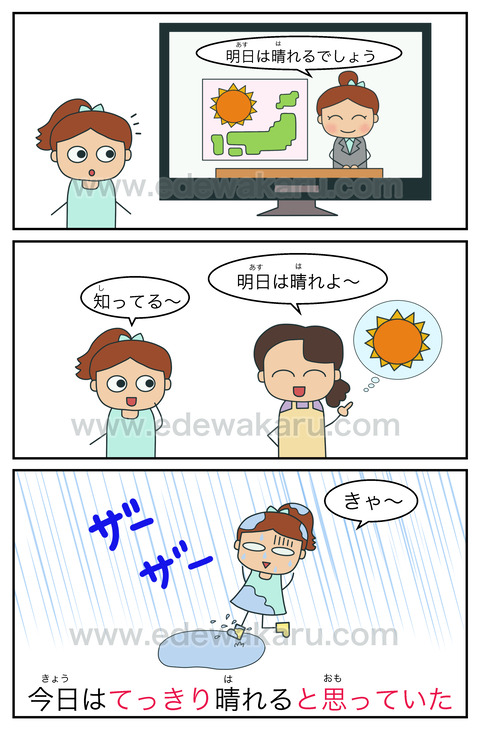
基本情報説明何らかの根拠、きっかけから推量したことを本当のことだと信じこんでしまったときに、それをあとから解説するのに用いる。「てっきり」は思い込みの深さを強調する。実際には事実ではないことが多い。過去の思いこみにしか使えない。例文① 彼女がいろいろな結婚式場のパンフレットを持っているので、これはてっきり結婚するんだと思ってしまったんです。② 人が倒れていたので、てっきり事故だと思って駅員に知らせたんです。③ 窓ガラスが割れていたので、これはてっきり泥棒だと思ったんです。④ てっきり怒られるものと思っていたが、反対にほめられたので、驚いた。例文(誤) てっきり帰ったと思っています。例文(正) てっきり帰ったと思いました。
日本語文型辞典 英語版
Meaning
Used to explain, after the fact, that the speaker believed something was really true, based on an assumption s/he had made on the grounds of a piece of evidence or reason. てっきり emphasizes the strength of the conviction. Often the assumption is actually mistaken. Can only be used for assumptions made in the past.
(×)てっきり帰ったと思っています。
I feel sure you had gone home.
(○)てっきり帰ったと思いました。
I felt sure you had gone home.
In context 4 examples
彼女がいろいろな結婚式場のパンフレットを持っているので、これはてっきり結婚するんだと思ってしまったんです。
She had all sorts of brochures of places for wedding receptions, so I was convinced she was going to get married.
人が倒れていたので、てっきり事故だと思って駅員に知らせたんです。
I saw someone lying on the floor and was sure there had been an accident, so I went to tell the station staff.
窓ガラスが割れていたので、これはてっきり泥棒だと思ったんです。
I saw the broken window and was sure there had been a robber.
てっきり怒られるものと思っていたが、反対にほめられたので、驚いた。
I expected him to be angry at me, so I was surprised to be praised instead.