AIUEO JLPT Grammar
Meaning
This sentence pattern expresses thinking about something from a specific perspective or position. It is used when imagining someone else’s feelings or opinions.
How to use it
名詞に+したら名詞に+すれば
Explanation · 日本語
この文型は、特定の立場や視点から物事を考えることを表す表現です。話し手が他人の気持ちや意見を想像するときに使われます。
In context 5 examples
親にしたら、子供の安全が一番大切だ。
From a parent’s perspective, a child’s safety is the most important.
先生にすれば、学生が真剣に勉強してくれるのが一番嬉しいことです。
For a teacher, the best thing is when students study seriously.
私にすれば、そんな話は信じられない。
For me, I can’t believe such a story.
会社にしたら、社員のモチベーションを上げることが重要です。
For the company, raising employee motivation is important.
彼らにすれば、この決定は理解に苦しむものだった。
For them, this decision was hard to understand.
文法
Meaning
~の立場に立って考えると
How to use it
N + にしたら / にすれば / にしてみたら / にしてみれば
In context 4 examples
私にしてみたら、あなたの言うことは言い訳にしか聞こえない。
日本人にすれば簡単な漢字でも、外国人にしてみたらとても難しいことかもしれない
部長にすれば、部下のことを思って厳しく叱っているつもりだろうが、正直もう少し優しくしてほしいものだ。
海外で一人暮らしなんて、両親にしてみたら心配なんじゃないの。
Bunpro Grammar Reference
Meaning
From the point of view of
How to use it
Noun + にしたら(1)
(1) にすれば
Nuance
A hypothetical phrase that indicates that if you go off the point of view of (A), then (B).
Explanation
When に is combined with the hypothetical forms of する (すれば, or したら), it forms a structure used in Japanese for conveying that the speaker is making an opinion about (A), from its point of view. This is frequently translated as 'from the point of view of (A)', or 'from the standpoint of (A)'. Literally, it means something close to 'if we go off (A)', and just highlights that the speaker is choosing a particular aspect of (A) to discuss as a possibility.
In many cases, the (B) part of にしたら or にすれば expressions will be an opinion about what the speaker expects to be true for (A).
にしたら and にすれば are structures that will be used after nouns that identify people or organizations, from which the speaker will then make an assumption about them/it.
お客様にしたら、値段が安い方がいいだろう。
From the point of view of the customer, a lower price is probably better.
納豆が嫌いな人にしたら、納豆はただ臭いだけに違いない。
From the point of view of a person that does not like natto, natto must just stink (natto is something that stinks and nothing more).
子供が何歳になろうとも、親にすればいつまでも子供に見える。
From the parent's point of view, their children look like kids no matter how old they are.
日本人にすれば普通なことでも、海外の方が見たら驚く事がたくさんあるらしい。
It seems that there are many things that are ordinary from the point of view of Japanese people that are surprising to people from other countries.
Although almost identical in meaning, にすれば will be the preferred choice in formal sentences.
Caution
にしたら and にすれば are hypothetical grammar structures that make some sort of assumption about (A), they will not be used in regard to oneself, and one's own opinions. This can be thought of as a function of にする itself, in that you can't 'go off' yourself hypothetically, as you already are yourself, and already know your own thoughts.
私にしたら、それは高すぎます。
Going off of me, that is too expensive. (Unnatural Japanese)
彼にしたら、それは高すぎるそうです。
Going off of him, apparently that is too expensive. (Natural Japanese)
Nuance · 日本語
(A)の視点からすると、(B)だということを示す仮定表現。
Explanation · 日本語
「に」が「する」の仮定形(「すれば」や「したら」)と結びつくと、話し手が (A) の立場に立って「(A) にとってはどうか」と推測するときの表現です。これは「(A) の視点から見ると」や「(A) の立場から考えると」というような意味で使われます。
多くの場合、「にしたら」や「にすれば」の (B) の部分には、話し手が (A) にとってそうだろうと考えている意見が入ります。
「にしたら」と「にすれば」は人や組織を表す名詞の後に置かれ、その後にその人や組織に関する話し手の推測が述べられます。
お客様にしたら、値段が安い方がいいだろう。
From the point of view of the customer, a lower price is probably better.
納豆が嫌いな人にしたら、納豆はただ臭いだけに違いない。
From the point of view of a person that does not like natto, natto must just stink (natto is something that stinks and nothing more).
子供が何歳になろうとも、親にすればいつまでも子供に見える。
From the parent's point of view, their children look like kids no matter how old they are.
日本人にすれば普通なことでも、海外の方が見たら驚く事がたくさんあるらしい。
It seems that there are many things that are ordinary from the point of view of Japanese people that are surprising to people from other countries.
意味の違いはほとんどありませんが、フォーマルな場面ではより丁寧な印象を与える「にすれば」の方が好んで使われます。
注意点
「にしたら」と「にすれば」は仮定を表す文型であり、他者について述べるときに使われるので、自分自身や自分について述べる場合には使われません。これは「にする」という表現の性質によるもので、すでにわかっている自分の意見を仮定の話として話す必要がないためです。
私にしたら、それは高すぎます。
Going off of me, that is too expensive. (Unnatural Japanese)
彼にしたら、それは高すぎるそうです。
Going off of him, apparently that is too expensive. (Natural Japanese)
In context 18 examples
- 妻にしたら、私はもっと家事をしなくてはいけない。
From the perspective of my wife, I have to help more with the house work.
- 日本人にすれば普通なことでも、海外の方が見たら驚く事がたくさんあるらしい。
It seems that there are many things that are ordinary from the point of view of Japanese people that are surprising to people from other countries.
- 子供が何歳になろうとも、親にすればいつまでも子供に見える。
From the parent's point of view, their children look like kids no matter how old they are.
- お客様にしたら、値段が安い方がいいだろう。
From the point of view of the customer, a lower price is probably better.
- 納豆が嫌いな人にしたら、納豆はただ臭いだけに違いない。
From the point of view of a person that does not like natto, natto must just stink (natto is something that stinks and nothing more).
- 赤ちゃんは可愛いが、親にしたら苦労もあるだろう。
Babies are cute, but from a parent's point of view there are hardships as well.
- 大人にしたら、童話は少し物足りない。
From the point of view of an adult, fairy-tales are somewhat unsatisfactory.
- 床屋さんにしたら、散髪はアートのようなものなのかもしれない。
From the perspective of a barber, cutting hair is probably something like art.
- あの人にしたら、僕の成功が憎らしくてたまらないのだろう。
From the point of view of that person, I imagine that he hates my success...
- 女房にしたら、今の生活に不満があるらしい。
From the point of view of my wife, it seems like she is dissatisfied with our current lifestyle.
- 学生にしたら、テストは簡単ならば、簡単なほどいい。
From the student's point of view, the easier the test is, the better.
- 先輩にしたら、僕の意見は「生意気だ」と感じるのかもしれない。
From the perspective of my senpai, he probably feels like my opinions are brazen.
- 翻訳者にしたら、あの東北訛りはかなり厄介だと思います。
From the point of view of a translator, I think that the Tohoku accent is rather troublesome.
- 社長にしたら、的確なアドバイスをしてくれる秘書がいると助かる。
From the perspective of the CEO, it is helpful to have a secretary that gives accurate advice.
- 地域住民にしたら、連続放火事件が心配で夜も眠れない。
From the point of view of the local residents, the series of arson incidents have them worried and they cannot sleep at night.
- 主婦にしたら、あの店は手頃な値段でいい品物が置いてあるから救世主のようなものだ。
From the point of view of a housewife, since that store has nice goods at a reasonable price, it is like a lifesaver.
- 私にしたら、それは高すぎます。
Going off of me, that is too expensive. (Unnatural Japanese)
- 彼にしたら、それは高すぎるそうです。
Going off of him, apparently that is too expensive. (Natural Japanese)
どんなときどう使う 日本語表現文型辞典
Meaning
even for
How to use it
N+にしたら
Explanation
~の立場に立ってみれば
1)話者がその人の立場になってその人の気持ちを代弁するときに使う。話者以外の人を表す名詞につくことが多い。
2) ❸ の「にすれば」も意味・用法は同じである。
2)In sentence ❸ , にすれば has same meaning and usage.
1)Speaker empathizes with feelings of others. Often appends to nouns describing someone other than speaker.
In context 3 examples
住民側からは夜になっても工事の音がうるさいと文句が出たが、建築する側にしたら、少しでも早く工事を完成させたいのである。
わたしは今度学校の寮を出て、アパートに住むことにしました。両親にしたら心配かもしれませんが。
姉にすればわたしにいろいろ不満があるようだけれど、わたしからも姉には言いたいことがたくさんある。
絵でわかる日本語
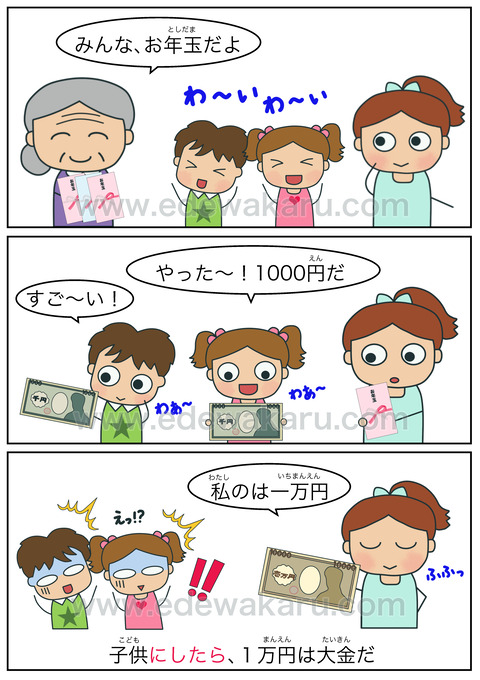
Meaning
〜の立場に立てば〜だろう
〜の立場で考えると〜だろう
How to use it
名詞[辞書形]+にしたら
名詞[辞書形]+にすれば
Explanation
「Aにしたら・Aにすれば」は「Aの立場に立てば〜だろう」「Aの立場に立って考えると〜だろう」という意味の文型です。
「A」には、人を表す名詞が入り、その人の立場から見た考えを推測して言う場合に使われます。他人の立場に立って、その人の考えを推測するという文型ですので、ほとんどの場合は「A」に自分自身を表すものには使いません。
[例]
❌私
にしたら、1万円は大金だ
⭕️彼ら
にしたら、1万円は大金だ
「〜にしたら・〜にすれば」 に似ている文型を復習しておきましょう😊
【類似文型】
In context 5 examples
子供にしたら、1万円は大金だ
→子供の立場で考えると、1万円は大金だろう小学生(しょうがくせい)にしたら、夏休みは長いほうがいいに決まっている
→小学生の立場に立って考えると、夏休みは長いほうがいいに決まっている日本語学習者(がくしゅうしゃ)にしたら、「あげる・もらう・くれる」を使い分けるのは難しいだろう
→日本語学習者の立場で考えると、「あげる・もらう・くれる」の使い分けは難しいだろう妹:お父さんもお母さんも私が留学するのに反対なんだって…姉:そっか…。親にしたら、娘が海外に住むのは心配なんだと思うよ
→親の立場に立って考えると、娘が海外に住むのは心配なんだと思うよ太りやすい人にしたら、いくら食べても太らないなんて、うらやましい限りだと思う
→太りやすい人の立場に立って考えると、いくら食べても太らないなんて、うらやましい限りだと思う
日本語文型辞典
Meaning
基本情報Nにしたら説明人を表す名詞を受けて、「その人の立場に立てば」という意味を表す。他人の立場にたってその人の考えなどを推測するという意味を表すのに用いる。話し手自身の立場について用いることはできない。例文① せっかくの申し出を断ってしまったのだから、彼にしたら、自分の親切が踏みにじられたと感じていることだろう。② 母親は子供のためを思って厳しくしつけようとしたのでしょうが、子供にしたら自分が嫌われていると思いこんでしまったのです。③ 学生の語学力を高めるには必要な訓練なのだが、学生にしたら退屈きわまりない授業だと思うにちがいない。④ 私にしたら親切のつもりだったのですが、言い方がきつかったのか彼はすっかり怒ってしまいました。例文(誤) 私にしたらたいへん嬉しく思います。例文(正) 私としてはたいへん嬉しく思います。
日本語文型辞典 英語版
Meaning
【にしたら】[Nにしたら]
With a noun expressing a person, expresses the meaning of “from the viewpoint of this person.” Used to mean that the speaker speculates on someone’s thought from his/her point of view. Cannot be used to refer to the speaker’s viewpoint.
(×)私にしたらたいへん嬉しく思います。
From my point of view, I’m very pleased.
(○)私としてはたいへん嬉しく思います。
As for me, I am very pleased.
In context 4 examples
せっかくの申し出を断ってしまったのだから、彼にしたら、自分の親切が踏みにじられたと感じていることだろう。
Since we declined his generous offer, I think he feels that we have trampled on his kindness.
母親は子供のためを思って厳しくしつけようとしたのでしょうが、子供にしたら自分が嫌われていると思いこんでしまったのです。
I think the mother tried to strictly discipline her child for his sake, but from the child’s point of view, he assumed that his mother disliked him.
学生の語学力を高めるには必要な訓練なのだが、学生にしたら退屈きわまりない授業だと思うにちがいない。
This is necessary training to develop the students’ language ability, but for the students themselves, I’m sure they think this is an extremely boring lecture.
私にしたら親切のつもりだったのですが、言い方がきつかったのか彼はすっかり怒ってしまいました。
From my side it was meant to be kind, but I phrased it harshly and he went into a rage.
日本語NET JLPT文法解説まとめ
Meaning
~の立場に立って考えると
How to use it
N + にしたら / にすれば / にしてみたら / にしてみれば
Explanation
considering from the perspective of 〜
In context 4 examples
私にしてみたら、あなたの言うことは言い訳にしか聞こえない。
日本人にすれば簡単な漢字でも、外国人にしてみたらとても難しいことかもしれない
部長にすれば、部下のことを思って厳しく叱っているつもりだろうが、正直もう少し優しくしてほしいものだ。
海外で一人暮らしなんて、両親にしてみたら心配なんじゃないの。
毎日のんびり日本語教師
How to use it
人物を表す名詞+にしたら
人物を表す名詞+にすれば
人物を表す名詞+にしても
Explanation
人物を表す名詞について、その人物から見た考え方を推測して述べる文法です。
話者自身を表す語には原則接続できません。
似ている文型「【N1文法】~にしてみたら/にしてみれば/にしてみても」なら自分自身を表す語に接続できます。
✕私にしたら
✕私にすれば
✕私にしても
〇私としては
〇私にとっては
〇私からみて
〇私にしてみれば
Notes
関連文法「【N1文法】~にしてみたら/にしてみれば/にしてみても」
In context 8 examples
彼女にしたら初めての子供だろうし、育児で悩むのもしょうがないことだ。
彼にしたら些細なことでも、私にとっては違う。
私は友達として一緒に遊びに行ったつもりだったけど、あの時のお出かけは彼にしたらデートだったらしい。
ネットでの出会いに嫌悪感を感じる人も多いが、彼女にすればネットも正当な出会いの場の一つのようだ。
教師にしても学生にしても、卒業式は最も特別な行事だ。
こちらのミスは相手にしたら嬉しいことだ。
ホラーは苦手だけど、慣れてる君にすれば怖いものはないね。
学校まで大人なら歩いて10分だけど、子どもにしたら30分くらいかかってもおかしくない。
NINJAL 日本語文型データベース
Meaning
〜の人の立場に立って、その人の気持ちを推測して言うときに使います。
How to use it
Nにしたら
Notes
「~」にはふつう第三者を表す言葉がきます。「〜にしたら」の後には、「〜だろう」などの推量を表す文がくることが多いです。
In context 3 examples
私は一人でいるのが好きで、友達もほとんどいない。親にしたらそんな私が心配だろう。
うちの子は中学高校時代、成績はよかったが、校則を破ったり先生に反抗したりした。先生にしたら、これは頭の痛い問題だったに違いない。
私は飼い犬のピエロに毎日いろいろなドレスを着せています。でも、ピエロにしたら迷惑なことかもしれません。