くらべてわかる日本語表現文型辞典
Meaning
意味1:Aの事実に対する話し手の驚き、あきれ、感心などの気持ちを表す。
意味2:相手や自分自身にAの意味や価値を問いかける。
How to use it
Aとは
接続1:
[文]とは
接続2:
[名詞-∅]とは
Notes
【注意1,2】
・「Aとは」は、下の文の( )内を省略した表現である。
○こんな簡単なことにだれも気づかなかったと(いうの)は(驚いた)。
○彼が我々に伝えておきたかったことと(いうの)は(何だろう)。
In context 8 examples
二十歳にもなって、こんなこともわからないとは。
上司に喧嘩を売るとは。君も思い切ったことをするね。
これだけ食べて2500円だとは。安いねえ。
あいつが裏切ったとはな。人はわからんものだ。
君にとって、人生の目的とは。
教えてください神様。喜びとは。幸せとは。
彼女がだれにも明かしたことがない秘密とは。なんとか知りたい。
三大栄養素とは。
DoJG 日本語文法辞典(全集)
Meaning
(not think/expect/etc.) that; (be surprised/be glad/regret/etc.) that
How to use it
(i) {V/Adjectiveい}informal | とは | |
| {来る/来た}とは(驚いた) | (I’m surprised that) someone will come/came |
| {高い/高かった}とは | (I’m surprised that) something is/was expensive |
(ii) {Adjectiveなstem/ Noun} | {∅/だ/だった}とは | |
| 上手{∅/だ/だった}とは(驚いた) | (I’m surprised that) someone is/was good at something |
| 医者{∅/だ/だった}とは(驚いた) | (I’m surprised that) someone is/was a doctor |
Explanation
A compound particle marking an event, action or state that the speaker/writer does not expect and that causes him/her to feel some emotion
In context 15 examples
彼が自分のベンチャー会社を立ち上げるとは思いもしなかった。
I never thought that he would launch his own venture business.
あんないい店がなくなったとは残念だ。
It is too bad that such a nice shop is gone.
子供が生まれた途端にがんの宣告を受けるとは何という悲劇だ。
What a tragedy it is for her to be told that she had cancer right after she'd had her baby.
こんな便利なサイトがあったとは!
I'm surprised that there is such a convenient website. (b) How great to have such a convenient website! (c) Who would have thought there would be such a convenient website!
お父さんがそんなにお悪いとは知りませんでした。
I didn't know that your father was that ill.
こんなに早く自分の家が持てるとは思いもしなかった。
I never thought I could have my own house this soon.
ハリケーンのためにガソリンがこんなに上がるとは想像すらしなかった。
I would never have imagined that gas prices would go up this much because of a hurricane.
一つのテレビドラマが日韓交流にこれほど影響を与えるとは誰が予測し得たであろう。
Who could have predicted that a TV drama would have this much influence on cultural exchange and travel between Japan and Korea?
蒸したてのお芋がこんなにおいしいとは驚きました。
I'm surprised that fresh steamed potatoes taste this good.
まだ知り合って一週間にもならない私にお金を借りに来るとは驚きだ。
I was shocked that he came to borrow money from me less than a week after we first got acquainted.
こんなにおいしくて、ボリュームがあって、たったの500円とはありがたい。
It's great (literally: I'm thankful) that this (dish) tastes so good, there's a lot of it, and it costs only 500 yen.
大勢の人が家をなくして困っているというのに、それを利用して金をもうけるとはけしからん。
It is inexcusable that while many people have lost their houses and are suffering, some take advantage of this to make money.
バッハの最高傑作の演奏をDVDで見られるとは何という幸せでしょう!
How happy I am to be able to watch a performance of Bach's best work on DVD!
自分たちで嘘を広めておいて、それを既成事実にしようとは何たることだ!
What a (shameful) thing it is to spread lies and try to convince people that they are true (literally: make them an established fact).
日本語文型辞典
Meaning
名詞を受けて、その意味や性質・内容がどのようなものかを述べる場合に用いる。「とは…ものだ」のような形でその本質的な特徴を述べたり、…とは…のことだ/意味だ」「…とは…ということだ/意味だ」のような形で、語句の意味や内容について定義づけを行うような場合に用いる。書きことば的な言い方で、話しことばでは「Nというのは」の方が一般的。
相手の発言や書かれた情報などの言語表現を受けて、その真意を確かめたり、それに対する話し手の評価を述べたりする時に用いる。驚き、感嘆、怒りなどの気持ちを伴うことが多い。「とは」は「というのは」で置きかえられることが多いが、④の「とは何事だ」のような定型的な言い方では置きかえられない。
予想外の状況に接した時の驚き、感嘆を表す。くだけた話しことばでは「…なんて」の形もよく使われる。次のように後ろの部分を省略することもある。
How to use it
…とは【定義づけ】
…とは【引用】
…とは【驚き】
In context 14 examples
パソコンとは、個人で使える小型のコンピュータのことだ。
蓮華とは蓮の花のことだ。
21世紀の日本で求められる福祉の形態とはどのようなものだろうか。
「普遍的」とは、どんな場合にも広く一般的に当てはまるという意味だ。
私にとって家族とは一体何なのだろうか。
A:森山さん、会社退職するそうですよ。
B:えっ、退職するとは、結婚するということですか。≪書き置きを見て≫「お世話になりました」とは、もう帰ってこないということだろうか。
A:このお話、なかったことにしてください。
B:「なかったことにする」とはどういうことですか?親に向かって「バカヤロー」とは何事だ。
一人で5種目も優勝とは、まったく驚いた。
全員そろって授業をサボるとはあきれた学生達だ。
人を2時間も待たせておいて「すみません」の一言もないとはまったく非常識な奴だ。
タクシーの中に忘れた現金が、もどってくるとは思いもよらないことでした。
(例) あの人がこんな嘘をつくとは。
ベテラン登山家の彼が遭難するとは。
こともあろうに、結婚式の日がこんなひどい土砂降りになろうとは。
絵でわかる日本語
Usage 1
Read this source entry ↗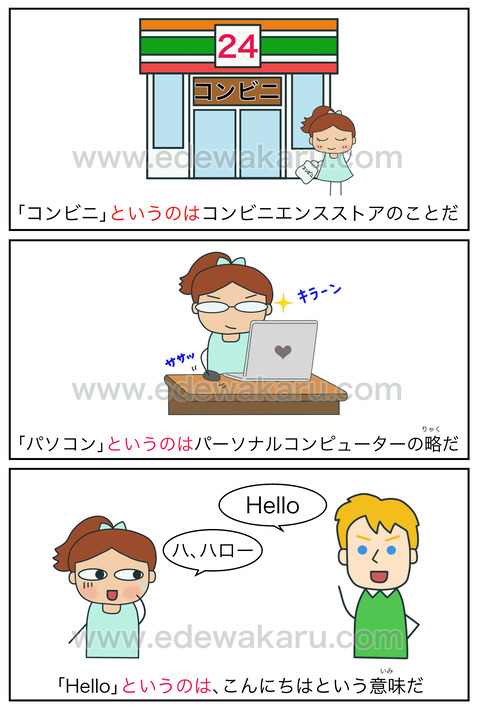
Meaning
説明・定義を表す
How to use it
動詞・形容詞・名詞[普通形]+というのは
動詞・形容詞・名詞[普通形]+とは
Explanation
「〜というのは」意味や内容の説明・定義を表す文型です。「〜というのは」の後ろには「〜のことだ」「〜という意味だ」など、よく使われる表現がいくつかありますので、一緒に覚えておきましょう😊
[「〜というのは」と一緒によく使う表現]
・
〜というのは+〜のことだ
・
〜というのは+〜という意味だ
・
〜というのは+〜の略だ
また定義・説明を表す場合は、「〜というのは」は「〜とは」にチェンジすることができます
😮日常会話(にちじょうかいわ)では「〜というのは」の方がよく使われます。
【驚き・信じられないという気持ち】を表すN1の「〜とは」と区別して覚えておきましょう。
(復習:〜とは(驚き))
[例]
①「コンビニ」
というのは
コンビニエンスストアのことだ
=「コンビニ」
とは
コンビニエンスストアのことだ
②「パソコン」
というのは
パーソナルコンピューターの略だ
=「パソコン」
とは
パーソナルコンピューターの略だ
「〜というのは」は口語形の「〜って」を使って表すこともできます
😊(復習:〜って(主題・定義))
[例]
「コンビニ」
って
コンビニエンスストアのことだ
「コンビニ」
っていうのは
コンビニエンスストアのことだ
「コンビニ」
ってのは
コンビニエンスストアのことだ
上の例は全部同じ意味です😄
この文型は言葉の意味を説明したりする時にとてもよく使いますので、しっかりと覚えておきましょう😉
In context 4 examples
「コンビニ」というのはコンビニエンスストアのことだ
→「コンビニ」はコンビニエンスストアのことだ「パソコン」というのはパーソナルコンピューターの略だ
→「パソコン」はパーソナルコンピューターの略だ「Hello」というのは「こんにちは」という意味だ
→「Hello」は「こんにちは」という意味だA:「マック」って何? (復習:〜って(主題・定義))B:「マック」というのは「マクドナルド」のことだよ
→「マック」は「マクドナルド」のことだよ
Usage 2
Read this source entry ↗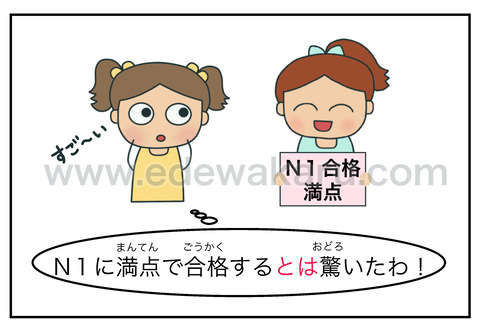
Meaning
驚き・信じられない気持ちを表す
How to use it
動詞・形容詞・名詞[普通形]+とは
*な形容詞・名詞の現在肯定形につく場合は「ーだ+とは」となる(例:きれいだとは・学生だとは)
Explanation
「〜とは」は意外なことや予想しなかったことが起き、驚きや信じられない気持ちを表す表現です。
感情を表す「〜なんて」にチェンジすることができます
😊また、例文④のように
「〜とは」の後ろは省略することも可能です
😮
[例]
N1に満点で合格する
とは
息子が私にうそをつく
とは
口語形の時に説明しましたが、「〜とは」には「定義・引用」の意味もあります(口語形「〜って」)。ですが、
N1の「〜とは」は口語形の「〜って」にはチェンジできませんので注意してください
😌
In context 4 examples
N1に満点で合格するとは驚いたわ!
→N1に満点で合格するなんて驚いたわ!あの真面目な山田くんが遅刻するとは信じられない
→あの真面目な山田くんが遅刻するなんて信じられない息子が私にうそをつくとはショックだわ
→息子が私にうそをつくなんてショックだわまさかあの人が失敗するとは…
→まさかあの人が失敗するなんて…
どんなときどう使う 日本語表現文型辞典
Usage 1
Meaning
the fact that
How to use it
〔普通形〕+とは
Explanation
とは〈驚き〉
~という事実は/~ということは
1)「~とは…」の形で、予想していなかった「~」という事実を見たり聞いたりしたときの驚きや感慨を言うときの表現。「~」で知ったことについて言い、「…」で驚きなどを表現する。
2) ❷ は倒置の言い方。
3)話し言葉では ❸ のように「なんて」と言う。
3)Spoken form is なんて, as in sentence ❸ .
1)Disbelief or deep emotion about unexpected fact seen or heard.Fact precedes pattern; expression of surprise follows.
2)Sentence ❷ is inverted.
In context 3 examples
いつもはおとなしい田中さんがはっきりと反対の意見を言うとは意外でした。
驚きました。先生がわたしの誕生日を覚えていてくださったとは。
14歳の少女がオリンピックで優勝するなんて誰も予想しなかった。
Usage 2
Meaning
is defined as
How to use it
N+とはW
Explanation
とは〈定義〉
~は
1)ある語句の意味や定義を言うときに使う。「~とは…ことだ、…ものだ、…という意味だ」という形を取ることが多い。「というのは」と同じ意味・用法だが、「とは」の方が書き言葉的である。
2)くだけた会話では ❹ のように「って」になる。
1)For meaning or definition of phrases. Often found in patterns ~とは…ことだ (N is), ものだ(is), という意味だ (has the meaning). Same meaning and usage as というのは, but とは is written form.
2)In informal speech become って, as in sentence ❹ .
In context 4 examples
水蒸気とは気体の状態に変わった水のことである。
季語とは季節を表す言葉で、俳句の中で必ず使われるものです。
赤字とは収入より支出が多いことです。
ねえ、エンゲル係数って何?
日本語NET JLPT文法解説まとめ
Meaning
〜は・・・という意味だ。
How to use it
N + とは
Explanation
"〜 means …."
カジュアルな表現は「〜って」
In context 6 examples
熱帯夜とは最低気温が25度以上の夜のことだ。
LCCとは「Low Cost Career」の略でジェットスターやPeachなど、値段が安い飛行機のことです。
ググるとはグーグルで意味や方法などを調べることだ。
コストとは何かをしたり、作ったりするときに必要なお金のことです。
彼にとって友達とは一体何なのだろうか。
タピるとはタピオカミルクティーを飲んだり、タピオカを食べたりすることだ。
毎日のんびり日本語教師
How to use it
名詞+とは
名詞+というのは
名詞+というものは
Explanation
名詞に接続して、それがどのようなものであるかをします。
口語形は「~というのは」「~というものは」です。
Notes
関連文法:【N3文法】~など/なんか/なんて
In context 8 examples
独身者とは、妻を見つけないことに成功した男である。
奇数とは、2で割り切れない整数のこと。(奇数是不能被2整除的整数。)
自由とは勝ち取るものであって、与えられるものではない。
幸せとは何でしょうか。
決断とは、一種の賭けである。
酒池肉林とは、非常に贅沢な酒宴のこと。
人間の欲望とは際限のないものだ。
才能とは、自分を信じることだ。用法② 引用
日本語文型辞典 英語版
Meaning
とは is used after a noun to describe the meaning, characteristics, or content of the noun. In the patternとは...ものだ, it is used to express the essential features of the noun, and in the patterns ...とは...のことだ/意味だ and ...とは...ということだ/意味だ, it is used to define the meaning or content of a word or phrase. Used mainly in written language. In spoken Japanese, Nというのは is more common.
B:えっ、退職するとは、結婚するということですか。
Oh, does that mean she’s getting married?
B:「なかったことにする」とはどう言うことですか?
What do you mean, “This didn’t happen”?
Used in response to a verbal utterance, written information, or some other linguistic input, to indicate the speaker’s evaluation of the utterance/information or to confirm its real intention. Often accompanied by feelings such as surprise, amazement, or anger. というのは is often used instead of とは. However, とは cannot be replaced by というのは in fixed expressions such as とは何事だ (see
(4)
above).
とは expresses the speaker’s surprise and amazement when s/he encounters an unexpected situation. In casual speech, なんて is often used instead of とは. As shown below, the clause following とは (or なんて) may be omitted.
(例)あの人がこんな嘘をつくとは。
(What a surprise that) s/he would tell such a lie!
(例)ベテラン登山家の彼が遭難するとは。
To think that an experienced climber like him should go missing in the mountains!
(例)こともあろうに、結婚式の日がこんなひどい土砂降りになろうとは。
(I never imagined there would be) a downpour like this on my wedding day, of all days!
How to use it
1. ...とは〈definition〉
2. ...とは〈quotation〉
3. ...とは〈surprise〉
In context 13 examples
パソコンとは、個人で使える小型のコンピューターのことだ。
A pasokon (personal computer) is a small-sized computer for individual use.
蓮華とは蓮の花のことだ。
A renge (Chinese milk vetch) is a lotus flower.
21世紀の日本で求められる福祉の形態とはどのようなものだろうか。
What will be the form of social welfare system required by Japanese society in the 21st century?
「普遍的」とは、どんな場合にも広く一般的に当てはまるという意味だ。
“Universal” means that something applies broadly and generally, in all cases.
私にとって家族とは一体何なのだろうか。
What exactly does “family” mean to me?
A:森山さん、会社退職するそうですよ。
I’ve heard that Moriyama-san’s leaving the company, you know.
《書き置きを見て》「お世話になりました」とは、もう帰ってこないということだろうか。
《looking at a note》“Thank you for all you’ve done for me...” I wonder if this means she won’t be coming back.
A:このお話、なかったことにしてください。
Let’s just say this didn’t happen.
親に向かって「バカヤロー」とは何事だ。
What makes you think you can call your parents “stupid idiots”?
一人で5種目も優勝とはまったく驚いた。
It is absolutely amazing that you won five different events on your own.
全員そろって授業をサボるとはあきれた学生達だ。
What an appalling group of students, all of them cutting class together!
人を2時間も待たせておいて「すみません」の一言もないとはまったく非常識な奴だ。
Someone who keeps you waiting for two hours and then doesn’t offer a word of apology is an absolute boor.
タクシーの中に忘れた現金がもどってくるとは思いもよらないことでした。
I never expected that the cash I had left in the taxi would be returned to me!
AIUEO JLPT Grammar
Usage 1
Meaning
This sentence pattern is used when explaining or defining what a noun refers to or its meaning. 「〜とは」is a more formal expression, often used in writing or formal situations, whereas 「〜というのは」is more colloquial and softer in nuance.
How to use it
名詞+とは名詞と+いうのは
Explanation · 日本語
この文型は、名詞に接続して使われ、その名詞が何を指しているのか、あるいはその意味や定義を説明するときに使われる表現です。「〜とは」はやや硬い表現で、書面や公式な場面でよく使われます。一方、「〜というのは」は口語でもよく使われ、少し柔らかいニュアンスを持ちます。この表現は、話し手が何かを説明したり、定義したりするときに一般的です。
In context 5 examples
人生とは、予測できない出来事の連続である。
Life is a series of unpredictable events.
幸福というのは、自分が満足することから始まる。
Happiness starts with being satisfied with yourself.
不動産業界というのは、魑魅魍魎の世界なんですよ。
The real estate industry is a chaotic industry.
友情とは、お互いを理解し合うことだ。
Friendship is about understanding each other.
子どもへの教育というのは社会全体が担う責任です。
Educating children is a responsibility that the entire society bears.
Usage 2
Meaning
This sentence pattern is used to express surprise or disbelief. It is used when something unexpected or unbelievable happens, emphasizing the speaker’s astonishment.
How to use it
動詞+とはorなんて形容詞辞書形+とはorなんて形容動詞+とはorなんて名詞+とはorなんて
Explanation · 日本語
この文型は、驚きや予想外の出来事に対して使われる表現です。話し手が予想していなかったことや、信じられないことが起きたときに、驚きや意外さを強調するために使われます。
In context 5 examples
彼が優勝するとは思わなかった。
I never thought he would win.
こんなに早く問題が解決するなんて信じられない。
I can’t believe the problem was solved so quickly.
彼女がそんなことを言うとは意外だった。
I was surprised that she said such a thing.
彼の作品がこんなに素晴らしいとは予想外だった。
I didn’t expect his work to be this amazing.
荷物がそんなに早く届くなんて、予想していませんでした。
I didn't expect the package to arrive so quickly.
文法
Meaning
〜は〜という意味だ。
How to use it
N + とは
Notes
カジュアルな表現は「〜って」
In context 6 examples
熱帯夜とは最低気温が25度以上の夜のことだ。
LCCとは「Low Cost Career」の略でジェットスターやPeachなど、値段が安い飛行機のことです。
ググるとはグーグルで意味や方法などを調べることだ。
コストとは何かをしたり、作ったりするときに必要なお金のことです。
彼にとって友達とは一体何なのだろうか。
タピるとはタピオカミルクティーを飲んだり、タピオカを食べたりすることだ。
Bunpro Grammar Reference
Meaning
That..., (Surprised) that..., (Never expected) that..., (Shocked) that...
How to use it
Verb + (など)+ とは
Noun + (だ(1))+ (など)+ とは
[い]Adjective + (など)+ とは
[な]Adjective + (だ(1))+ (など)+ とは
(1) だった
Nuance
An expression used to emphasize surprise or shock. One never expected that the general situation of (A) could happen.
Explanation
とは is an emphatic structure that is regularly seen at the end of sentences, and will imply that the statement before it is shocking, appalling, or unexpected. In English, it translates very similarly as 'to think that (A)' in that it expresses a strong emotional response without expressly saying what that exact response is.
とは is a combination of the case-marking particle と in its quotation use, and the adverbial particle は. In this way, it is just marking the whole statement of (A) as what is being highlighted as the topic, without actually stating anything else about it.
まさかこんな場所でなつみちゃんに会うとは!元気にしてた?
I would have never expected to see you at a place like this! How have you been?
こんな安く家が買えるとは思わなかったよ。
I did not think that I would have been able to buy a house this cheap.
君があんなに速く走れるとは...なんで今まで黙っていたんだい?
I had no idea that you could run that fast… Why did you keep this from us?
とは may sometimes be seen following など or similar structures, and in these cases will just imply that 'something like (A)' is what is shocking.
こんな簡単なことで失敗するなどとは思っていなかったが、あいつに任せた俺が悪い。
I was not expecting him to fail at something so simple, but it was my fault for leaving it to him.
まさか彼が私の知らないところでそんなひどいことを言っていたなどとは...
I had no idea that he was saying such horrible things behind my back…
Caution
Although it is common for とは to come at the end of a sentence with the actual feeling word omitted, the speaker may expressly state their reaction afterwards.
高橋さんがもう結婚していたとは驚いた。
I was surprised to hear that Mr. Takahashi was already married.
Nuance · 日本語
驚きやショックを強調する表現。(A)が起こるということは誰も予想していなかった。
Explanation · 日本語
「とは」は、文末でよく使われる強調表現で、直前の内容が話し手にとって衝撃的・意外・予想外であることを示します。「とは」を使うことで、具体的な感情を言わなくても、話し手が強い気持ちを抱いていることを表現することができます。
「とは」は、引用の格助詞「と」と主題を示す副助詞「は」の組み合わせです。この表現は、(A) について特に何か言わなくても、それを主題として取り上げ、強調する働きを持ちます。
まさかこんな場所でなつみちゃんに会うとは!元気にしてた?
I would have never expected to see you at a place like this! How have you been?
こんな安く家が買えるとは思わなかったよ。
I did not think that I would have been able to buy a house this cheap.
君があんなに速く走れるとは...なんで今まで黙っていたんだい?
I had no idea that you could run that fast… Why did you keep this from us?
「とは」は、「など」のような言葉の後に置かれることもあります。 この場合も、話し手が「(A) など」に対して強い驚きや衝撃を感じていることを表しています。
こんな簡単なことで失敗するなどとは思っていなかったが、あいつに任せた俺が悪い。
I was not expecting him to fail at something so simple, but it was my fault for leaving it to him.
まさか彼が私の知らないところでそんなひどいことを言っていたなどとは...
I had no idea that he was saying such horrible things behind my back…
注意点
「とは」は、感情を表す語が省かれた文の最後で使われるのが一般的ですが、「とは」の後で話し手が自分の感情をはっきりと述べることもあります。
高橋さんがもう結婚していたとは驚いた。
I was surprised to hear that Mr. Takahashi was already married.
In context 18 examples
- こんなところでキアヌ・リーブスに出会ったとはねぇ!
I (never expected) that I would come across Keanu Reeves in a place like this!
- まさかこんな場所でなつみちゃんに会うとは!元気にしてた?
I would have never expected to see you at a place like this! How have you been?
- こんな安く家が買えるとは思わなかったよ。
I did not think that I would have been able to buy a house this cheap.
- 君があんなに速く走れるとは...なんで今まで黙っていたんだい?
I had no idea that you could run that fast… Why did you keep this from us?
- こんな簡単なことで失敗するなどとは思っていなかったが、あいつに任せた俺が悪い。
I was not expecting him to fail at something so simple, but it was my fault for leaving it to him.
- まさか彼が私の知らないところでそんなひどいことを言っていたなどとは...
I had no idea that he was saying such horrible things behind my back…
- 「一戸建てに住むってこれほどまでに大変だったとは驚きだよ。」
'I'm shocked that living in a single family home would be this hard!'
- まさか二ヶ月で10キロも痩せるとは!このダイエットは効果的だ!
I (never expected) that I would lose 10kg in two months! This diet is super effective!
- メアリーさんとたけしさんが去年もう一度新婚旅行に行ったとは驚いた。
I was surprised that Mary-san and Takeshi-san went on another honeymoon last year.
- 病弱で内気だった田中さんがボクシングチャンピオンになるとは夢にも思わなかったよ!
I would never have even dreamed that sickly and reserved Tanaka-san would become a boxing champion. (never expected)
- 「ついこの間彼と話したばかりなのに、今日が彼の葬式だとは信じられないよ。」
'It's unbelievable that I spoke with him just recently, and yet today is his funeral.' (never expected)
- 「中古のいいパソコンが安く買えると知っていたけどこんなに安いとは思ってもみなかった。」
'I knew that you could buy a good, second hand computer cheaply, but I never expected that it would be this cheap!'
- 少し前までヨチヨチ歩きをしていた甥っ子が今年の四月から小学校に入学するとは…!
My nephew, who was tottering along until just a while ago, I cannot believe that they are entering primary school from April this year! (never expected)
- 優勝間違いなしと世間で言われていた体操選手が演技の序盤で基本的なミスをするとは…。
That such a world renowned, undeniably excellent gymnastics competitor would make such a basic mistake from the outset of their performance, I am shocked.
- 地球温暖化による気候変動が問題になっている事は知っていましたが、桜が咲いた後に雪が降るとは…!
I knew that climate change was becoming a problem due to global warming, but I never expected that snow would fall after the cherry blossoms bloomed!
- あの真面目な生徒が実は芸能活動をしていたとは、担任の先生を務める僕にとって意外でした。
I'm shocked that that serious student was actually doing performing arts, as their homeroom teacher, it was unexpected.
- まさかあんなに勉強をサボっていた涼太が先日受けた日本語能力試験に満点で合格するとは驚いたよ!
Unbelievable, I am shocked that Ryota, who neglects studying so much, would pass the JLPT with a perfect score yesterday.
- 高橋さんがもう結婚していたとは驚いた。
I was surprised to hear that Mr. Takahashi was already married.
IMABI
と Combination Particles I: となく & とは
Read this IMABI lesson ↗Explanation
と Combination Particles I: となく & とは
となく
となく shows the inability to clearly decide something. It may also show a befitting uncertain amount with counter expressions. 何となく is a common phrase with it that means “somehow or another” or “vaguely”.
1. どことなく似ている。
They somehow look alike.
2. なんとなく覚えてる。
I vaguely remember.
3. 幾度いくどとなく試みる。
To try out countless times.
4. 何度か試みる。
To try it several times.
Word Note: 幾度 is just like 何度も(何度も), しばしば, 何度も繰り返して, and 再三(再四).
5a. 何人となく辞めた。Countless people quit.
5b. 何人か(が)辞めた。Several people quit.
6. 何百{となく・も}
By the hundreds
7. あいつは何回となくチャンスがあったよ。
That guy’s had who knows how many times a chance.
8. この取扱説明書はそれとなく静電気の危険性についても触れている。
This instruction manual also touches upon the dangers of static electricity, albeit indirectly.
“…となく…となく” shows a sense of extent to all of a certain thing.
9a. 彼らは昼となく夜となく働いた。
9b. 彼らは昼夜となく働いた。
9c. 彼らは昼夜関係なく働いた。
They worked without day or night.
10a. 老人となく若人わこうどとなく男となく女となくあらゆる人が泣いた。
10b. 老人だけでなく若人、男と女が泣き出した。
Not only the old, not only the young, not only men and women, but all kinds of people cried.
Somehow
There are other expressions like なんとなく. However, like with everything in Japanese, there are going to be differences. The expressions in question are なんか, なんだか, and なんとか(して).
なんか is equivalent to など. Or, the slang version of 何か used as an adverb to show a feeling of obscurity.
なんだか may just be the same as 何であるか・何か in an embedded sentence. Or, it is interchangeable with なんとなく・なぜか to show vagueness/uncertainty in reason.
なんとか(して) = なんらかの方法で
どことなく = なんとかして. Can’t seem to show where.
11. 宿題なんか要らないよ。
I don’t need something like homework.
12. 何だか変だね。
Isn’t it strange for some reason?
13. 何だか妙だ。
It’s odd for some reason.
14. 何かの拍子ひょうしで
By some chance
15. なんかキモい。(Slang)
I feel bad.
16. なんとかしてそこへ辿たどり着きます。
I’ll get there somehow.
17. なんとかしてくれ!
Do something about it!
18. なんとかなるさ。
Things’ll work out.
19. 僕はなんとなく悲しい。
I’m sad somehow or another.
とは
とは may show surprise meaning “to think that…” as a final particle. It may also be used to in defining a word.
20. ブラックホールとは、一体どんなものなのでしょうか。
What kind of thing is a black hole exactly?
21. 方言とは何でしょうか。
What is a dialect?
22. 小川さんとは、小学校の時からの友だちです。
I’ve been friends with Ogawa since elementary school.
23. もう今年も12月とは。
To think that it’s already December this year too!
24. 標準語とは20世紀初頭に誰でも分かる標準的な日本語を定めるために、当時の東京下町弁に基づいて文法的によく通じる新方言として人工的に生み出されてしまったものなんです。
Hyojungo is a grammatically sound “new dialect” artificially created in the beginning of the 20th century to make Standard Japanese for everyone to understand based on Tokyo Shitamachi Dialect of the time
In context 28 examples
どことなく似ている。
They somehow look alike.
なんとなく覚えてる。
I vaguely remember.
幾度いくどとなく試みる。
To try out countless times.
何度か試みる。
To try it several times.
何人となく辞めた。Countless people quit.
By the hundreds
何人か(が)辞めた。Several people quit.
By the hundreds
何百{となく・も}
By the hundreds
あいつは何回となくチャンスがあったよ。
That guy’s had who knows how many times a chance.
この取扱説明書はそれとなく静電気の危険性についても触れている。
This instruction manual also touches upon the dangers of static electricity, albeit indirectly.
彼らは昼となく夜となく働いた。
They worked without day or night.
彼らは昼夜となく働いた。
They worked without day or night.
彼らは昼夜関係なく働いた。
They worked without day or night.
老人となく若人わこうどとなく男となく女となくあらゆる人が泣いた。
Not only the old, not only the young, not only men and women, but all kinds of people cried.
老人だけでなく若人、男と女が泣き出した。
Not only the old, not only the young, not only men and women, but all kinds of people cried.
宿題なんか要らないよ。
I don’t need something like homework.
何だか変だね。
Isn’t it strange for some reason?
何だか妙だ。
It’s odd for some reason.
何かの拍子ひょうしで
By some chance
なんかキモい。(Slang)
I feel bad.
なんとかしてそこへ辿たどり着きます。
I’ll get there somehow.
なんとかしてくれ!
Do something about it!
なんとかなるさ。
Things’ll work out.
僕はなんとなく悲しい。
I’m sad somehow or another.
ブラックホールとは、一体どんなものなのでしょうか。
What kind of thing is a black hole exactly?
方言とは何でしょうか。
What is a dialect?
小川さんとは、小学校の時からの友だちです。
I’ve been friends with Ogawa since elementary school.
もう今年も12月とは。
To think that it’s already December this year too!
標準語とは20世紀初頭に誰でも分かる標準的な日本語を定めるために、当時の東京下町弁に基づいて文法的によく通じる新方言として人工的に生み出されてしまったものなんです。
Hyojungo is a grammatically sound “new dialect” artificially created in the beginning of the 20th century to make Standard Japanese for everyone to understand based on Tokyo Shitamachi Dialect of the time