文法
Meaning
〜しないで
「〜ないで」と同じ意味だが、「〜ずに」の方が少し硬い。
How to use it
V(ない形)ない + ずに
(例)
行かない → 行かずに
飲まない → 飲まずに
※「する」は「せずに」となる。
In context 14 examples
今朝、朝ごはんを食べずに学校に来ました。
傘を持たずに、出かけてしまった。
私は普段、コーヒーに砂糖を入れずに飲みます。
宿題をせずに学校に行ったら先生に怒られました。
昨日、お風呂に入らずに寝てしまった。
友達にもらった本を読まずに売ってしまった。
明日は試験なので、今晩は寝ないで勉強します。
誰にも習わずに自分で日本語を勉強しました。
体調が悪い時は、無理せずに休んでください。
わからないことがあれば、遠慮せずに聞いてください。
田中さんはみんなを待たずに、先に帰ってしまった。
授業の後、トムさんは何も言わずに一人で帰っていった。
苦労せずに日本語が上手になる方法なんてありませんよ。
年末セールの広告を見て来てみたが、欲しいものがなかったので、何も買わずに店を出た。
Bunpro Grammar Reference
Meaning
Without doing
How to use it
Verb[な̶い̶]+ ず(に)
Exceptions:
する → せず(に)
Nuance
A somewhat old-fashioned way to express that something will be done, without doing (A).
Explanation
Although it is not considered to be one of the primary 18 auxiliary verbs that are used in modern Japanese, ず is a classical auxiliary verb that has the same role as ぬ, and ない. This role is negating the verb that it is attached to. ずに is simply the addition of the case marking particle に to ず. Together, they mean 'without doing', in a similar way to ないで.
To use ずに, attach it to the indeterminate form of the verb that you wish to express as 'without doing (A)'. This is the same form used with ない.
朝ご飯を食べずに仕事に行ったから、仕事中に倒れた。
Because I went to work without eating breakfast, I fainted in the middle of my job.
水を飲まずに運動をしていたから、頭が痛い。
Because I exercised without drinking water, I have a headache.
ずに is quite a bit more formal than ないで, but still frequently used in modern Japanese. Especially as part of set phrases, like ずにすむ (which we will learn about in another lesson).
Caution
When used with a する verb, する will become せずに, not しずに. Both せ and し are indeterminate forms of する. し, the more common form that is used in east Japan appears with ない.
勉強せずにテストを受けたから、テストの点数が低かった。
Because I took the test without studying, I got a low score.
あんまり無理をせずに頑張ってくださいね。
Please do your best without trying too hard.
Nuance · 日本語
少し古い言い方で、(A)をしないで何かが行われるということ。
Explanation · 日本語
「ず」は「ぬ」や「ない」と同じように動詞を否定形に変える、古典の助動詞です。(古典の助動詞なので、現代の基本的な助動詞18種類の中には入っていません。)「ずに」は、この助動詞「ず」に格助詞の「に」を付けた形です。二つを合わせると、「ないで」と同じ意味を表します。
「ずに」は、「ない」と同じように、否定したい動詞の未然形に付けて使われます。
朝ご飯を食べずに仕事に行ったから、仕事中に倒れた。
Because I went to work without eating breakfast, I fainted in the middle of my job.
水を飲まずに運動をしていたから、頭が痛い。
Because I exercised without drinking water, I have a headache.
「ずに」は「ないで」よりもフォーマルな表現です。また、現代では特に「ずに済む」のような決まった表現の中で使われています。(「ずに済む」は、別のレッスンで学びます)。
注意点
「ず」がスル動詞に付くときは、「しずに」ではなく、「せずに」という形になります。「せ」も「し」も「する」の未然形ではありますが、「し」(東日本でよく使われる)は「ない」と合わせるときに使われます。
勉強せずにテストを受けたから、テストの点数が低かった。
Because I took the test without studying, I got a low score.
あんまり無理をせずに頑張ってくださいね。
Please do your best without trying too hard.
In context 16 examples
- 忘れずに届けてくれてありがとうございます。
Thank you for notifying me (without forgetting).
- 朝ご飯を食べずに仕事に行ったから、仕事中に倒れた。
Because I went to work without eating breakfast, I fainted in the middle of my job.
- 水を飲まずに運動をしていたから、頭が痛い。
Because I exercised without drinking water, I have a headache.
- 何も知らずにあんなこと言ってごめんなさい。
Sorry for saying those things without knowing the full story.
- 悩まずに生きるなんて不可能なのかもしれない。
It might not be possible to live without worrying.
- 値段を見ずに買ったら大変なことになった。
I bought it without checking the price and now I am in a bind.
- 彼は朝ごはんを食べずに仕事に行きました。
He left for work without eating breakfast.
- 休まず、一日中ゲームをやり続けた。
Without taking a break, I continued to play video games throughout the day.
- 試合に一回も負けず、優勝した。
Without losing a single game, they won the championship.
- 肩の力を抜いて、力まずにスウィングした方がいいですよ。
You'd better relax your shoulder and swing without straining yourself.
- ラーメン屋でラーメンを注文せずにチャーハンだけ食べました。
At a ramen restaurant, I just had fried rice without ordering any ramen.
- 諦めずに続ければ、日本語もっと上手になりますよ。
If you keep on (studying) without giving up, your Japanese will get better.
- 分からずに操作すると故障の原因になるのでやめてください。
Please do not operate (the machine) without understanding (the machine), as it could be damaged as a result of improper use.
- 気を緩めず、次の試合も頑張ってください。
Without losing focus, please try your best in the next match, too.
- 勉強せずにテストを受けたから、テストの点数が低かった。
Because I took the test without studying, I got a low score.
- あんまり無理をせずに頑張ってくださいね。
Please do your best without trying too hard.
どんなときどう使う 日本語表現文型辞典
Meaning
without
How to use it
Vない+ずに 例外 しない→せずに
Explanation
~ないで
1)「Vずに」の「Vず」は「ない形」の古い形。「Vないで」と同じような使い方をする。
2) ❶ ❷ はどんな状態で動作をしたかを表す。 ❸ ❹ は「代わりに・対比」の意味を表している。
1)The Vず of Vずに is an old form of ない. Used in the same way as Vないで.
2)Sentences ❶ and ❷ show in what state action was taken. Sentences ❸ and ❹ express meaning of "instead of" and "contrast".
In context 4 examples
切手をはらずに手紙をポストに入れてしまいました。
暑いので、子どもはふとんをかけずに寝ています。
今年の夏休みは山へ行かずに、海へ行くことにしました。
山田さんはパソコン教室に参加せずに、自分で勉強してみると言っています。
絵でわかる日本語
Meaning
〜ないで〜する
〜ない状態で〜する
How to use it
動詞[ない形]+ずに
Explanation
「〜ずに」は「〜ないで〜する」「〜ない状態で〜する」という意味を表す文型です。「〜ないで」よりもかたい言い方ですので、書き言葉として使われます😊また例文⑤のように、「〜する」に使う場合は、「〜せずに」となります😮
(復習:〜として)
[例]
❌勉強をし
ずに
テストを受けたら、0点だった
⭕️勉強をせ
ずに
テストを受けたら、0点だった
初級で勉強した「〜ないで」と一緒に覚えておきましょう😀
In context 5 examples
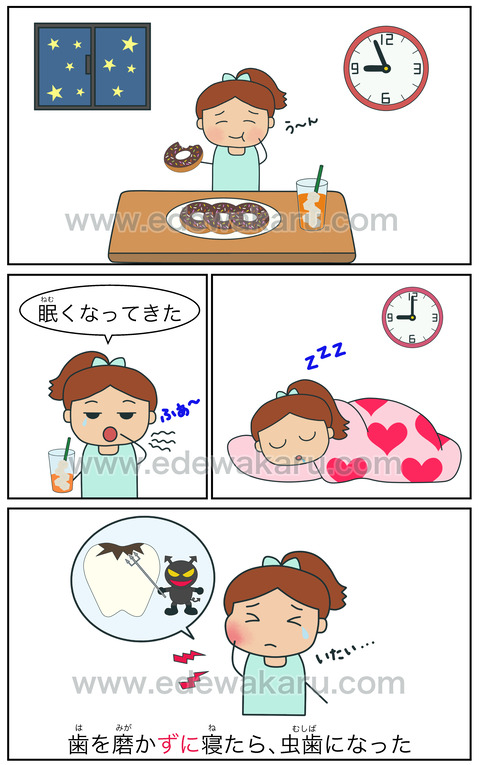
歯を磨かずに寝たら、虫歯になった
→歯を磨かないで寝たら、虫歯になった朝ごはんを食べずに学校に行った
→朝ごはんを食べないで学校に行ったエアコンを切らずに出かけてしまった
→エアコンを切らないで出かけてしまった(復習:エアコン)(復習:〜てしまう(残念・後悔))A:また日本語能力試験(にほんごのうりょくしけん)に合格できなかったの…B:あきらめずにがんばって!
→あきらめないでがんばって!勉強をせずにテストを受けたら、0点だった
→勉強をしないでテストを受けたら、0点だった
日本語文型辞典
Meaning
基本情報V-ずに説明後ろに動詞の文を伴って、「…しない状態で…する」という意味を表す。書きことば。話しことばでは「…ないで」となる。例文① よくかまずに食べると胃を悪くしますよ。② 切手を貼らずに手紙を出してしまった。③ きのうはさいふを持たずに家を出て、昼ご飯も食べられなかった。④ ワープロの説明をよく読まずに使っている人は多いようだ。⑤ あきらめずに最後までがんばってください。⑥ 両親を事故で亡くしたあと、彼はだれの援助も受けずに大学を出た。
日本語文型辞典 英語版
Meaning
【ずに】[V-ずに]
Followed by another verb clause (V2) and means “without doing something (V1), do something else (V2).” Written language. In spoken language, it becomes ...ないで.
In context 6 examples
よくかまずに食べると胃を悪くしますよ。
You’ll upset your stomach if you eat without chewing well.
切手を貼らずに手紙を出してしまった。
I sent the letter without putting any stamps on it!
きのうはさいふを持たずに家を出て、昼ご飯も食べられなかった。
I left home without my wallet yesterday, so I couldn’t even have lunch.
パソコンの説明をよく読まずに使っている人は多いようだ。
Apparently there are a lot of people who use a personal computer without reading the manual carefully.
あきらめずに最後までがんばってください。
See it through to the end, without giving up!
両親を事故で亡くしたあと、彼はだれの援助も受けずに大学を出た。
After losing his parents in an accident, he finished college without receiving support from anyone.
日本語NET JLPT文法解説まとめ
Meaning
〜しないで
「〜ないで」と同じ意味だが、「〜ずに」の方が少し硬い。
How to use it
V(ない形)ない + ずに
(例)
行かない → 行かずに
飲まない → 飲まずに
※「する」は「せずに」となる。
Explanation
"without doing "
It means the same as “~ないで,” but “~ずに” is a little more formal style.
In context 14 examples
今朝、朝ごはんを食べずに学校に来ました。
傘を持たずに、出かけてしまった。
私は普段、コーヒーに砂糖を入れずに飲みます。
宿題をせずに学校に行ったら先生に怒られました。
昨日、お風呂に入らずに寝てしまった。
友達にもらった本を読まずに売ってしまった。
明日は試験なので、今晩は寝ないで勉強します。
誰にも習わずに自分で日本語を勉強しました。
体調が悪い時は、無理せずに休んでください。
わからないことがあれば、遠慮せずに聞いてください。
田中さんはみんなを待たずに、先に帰ってしまった。
授業の後、トムさんは何も言わずに一人で帰っていった。
苦労せずに日本語が上手になる方法なんてありませんよ。
年末セールの広告を見て来てみたが、欲しいものがなかったので、何も買わずに店を出た。
NINJAL 日本語文型データベース
Meaning
[1] ある動作を行うときの状態や状況を表します。〜しない状態で、あることをすると言いたいときに使います。
[2] 〜するのではなく、代わりにあることをすると言いたいときに使います。ふつう考えられる行為の代わりの行為をすることに注意を向けたいときに使います。
How to use it
Notes
[1] 「〜ずに」の前後の文の主語は同じです。
[2] 「〜ずに」の前後の文の主語は同じです。「〜」にはふつうだったら考えられる行為がきます。
In context 10 examples
家を出るとき、窓を閉めずに出掛けてしまいました。
ラクダは、砂漠でもまったく水を飲まずに2週間生きることができます。
「お願いです。何も聞かずに100万円貸してください」
妹は、親や兄弟に一言も相談せずに結婚を決めた。
多くの車は、シートベルトをせずに運転しようとすると警告音が鳴るようになっている。
連休だったのに、旅行にも行かずにずっと家にいました。
弟は受験生だが、勉強せずに遊んでばかりいる。
レポートは紙で出さずに、メールに添付して出してください。
妹が悪いことをしたのに、母は妹を叱らずに姉である私を叱った。
薬剤師「この薬は、症状が良くなっても途中でやめずに最後まで飲んでください」
Yokubi — The Common Grammar Guide (https://yoku.bi)
Explanation
We briefly discussed the difference between なくて and ないで in [Lesson 11](../../Section1/Part1/Lesson11.md). Let's dig a bit deeper into it.
When we make a verb or い adjective into the なくて form, this behaves like a usual て conjunctive form ("do X, and…"). It is common in this usage to imply some cause \-\> effect sequence ("I didn't do X, and that is why Y happened") although not strictly required.
We can also make the negative with ないで instead, however in contrast with なくて, this usage often implies a manner or state in which the following action is being done. You can think of the statement before ないで to become an "adverb" to the statement after it.
There is another way we can use なくて and ないで, and that is using the verb forms 〜ず and 〜ずに. ず is an archaic conjugation of the negative auxiliary verb ぬ, but you don't really need to know this. Just remember that 〜ず is almost a 1:1 replacement to なくて (or in some cases なく), and 〜ずに is a replacement of ないで. In **some** cases, 〜ず alone (without に) can also be used as ないで (Yay, Japanese!).
ず and ずに are more formal and stiff-sounding than their なくて and ないで counterparts and are mostly used in literary stuff. However you will still hear plenty of ずに in spoken language too and they show up a lot in common phrases and expressions.
In context 1 examples
何も食べずに眠ってしまった。
He fell asleep without eating anything