絵でわかる日本語
日本語文型辞典 英語版
Meaning
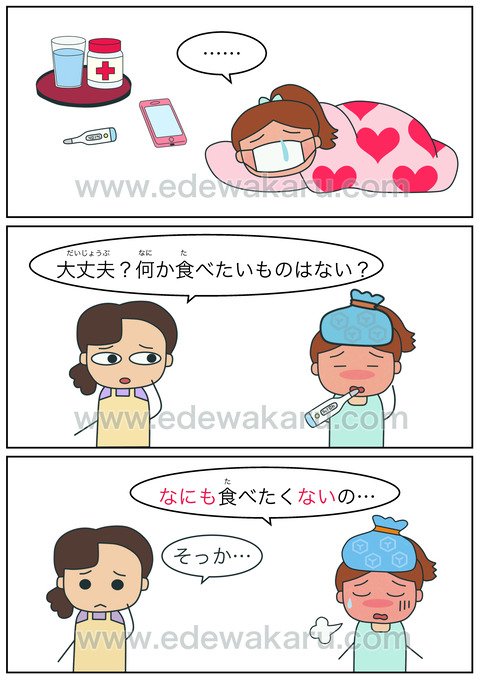
Followed by an expression of negation or denial and means “not...at all” or “nothing...at all.” Used to talk about things, events, and animals other than human beings. For people, the pattern だれも...ない is used (no one...at all), and for places, it becomesどこも...ない (nowhere...at all).
b. なにも...ない
When なにも is followed by expressions such as (そこまで)...しなくてもいい and (そう)...する必要がない, it conveys the feeling “even though there is no particular need to do X.” This pattern is often used to chide or criticize the addressee when s/he is overdoing something or taking it too far.
c. なにも...わけではない
B:何を言ってるの。私は何もあなたが嫌いで反対しているわけではないのよ。あなたのことを気にかけているから、反対しているんじゃないの。
What are you talking about? It’s not because I don’t like you that I’m against what you’re doing. Don’t you know I’m against it because I’m concerned about you?
The speaker uses なにも...わけではない to refute the addressee’s perception of the speaker’s behavior. In some cases, the speaker responds to something the addressee has just said, as in
(4)
. However, in most cases the speaker uses なにも...わけではない to refute an inference s/he has made about what the addressee is thinking.
...もなにも attaches to nouns and means “the thing that is specified, as well as all other similar things.” It is followed by expressions of loss or negation, such as 失う (lose), 忘れる (forget), or 分からない (not know).
b. ...もなにも[A/V もなにも]
B:約束するもなにも、私はそんなことを言った覚えもないですよ。
Promise? I don’t remember saying anything of the kind.
B:痛いもなにも、一瞬死ぬんじゃないかと思ったくらいだ。
It wasn’t just painful—it was so bad that for a moment I thought I was going to die.
B:驚いたもなにも、彼のことは死んだと思っていたんですから。
I was more than surprised, because I thought he had died.
The speaker uses ...もなにも in response to something the addressee has just said, to deny it strongly or to emphasize that it involves a greater degree of something than the addressee thinks it does. Usually used in spoken Japanese.
なにもかも is used to talk about things or events and means that something applies to everything, without limitation. Similar to 全部 (all/the whole) and すべて (everything).For people, the expression だれもかれも (everyone) is used, and for places, it becomes どこもかも/どこもかしこも (everywhere).
How to use it
1. なにもa. なにも...ない
2. ...もなにもa. Nもなにも
3. なにもかも
In context 25 examples
外は暗くてなにも見えない。
It’s dark outside, so I can’t see anything.
かばんの中にはなにも入っていなかった。
There was nothing in the bag.
そのことについて、私は何も知りませんでした。
I didn’t know anything about that at all.
作業は順調に進み、心配していたようなことは何も起こりませんでした。
The work went smoothly, and none of the things we had worried about ever happened.
なにもみんなの前でそんなに恥ずかしい話をしなくてもいいでしょう。
You don’t have to tell such an embarrassing story in front of all of them!
団体旅行で添乗員もいるのだから、なにもそんなに心配する必要はありませんよ。
It’s a group tour and there’s a guide, so there’s no need to be so concerned.
彼らも悪気があって言ったことじゃないんだから、何もそんなに怒ることはないじゃないですか。
They didn’t mean to offend you by what they said, so there’s no reason for you to get so angry.
ちょっと注意されただけなのに、何もそんなに気にすることはないですよ。
There’s no reason for you to be so upset over just one little piece of advice.
何もそこまで懇切丁寧に指導してあげる必要はありませんよ。彼らはもう十分に訓練を受けている人たちなんですから。
You don’t have to give them such meticulous guidance, you know. They’ve already had sufficient training.
何も試合直前になって延期したいと言ってくることはないだろうに。
I can’t see any reason for them to ask us to postpone the game just before it starts.
私はなにも、あなたがやっていることを非難しているわけではないんです。ただちょっと注意したほうがいいと思って忠告しているんじゃないですか。
I don’t mean at all to criticize what you’re doing. I’m just giving you a piece of advice because I think you should be a little more careful.
私は何もこの仕事がやりたくないわけではないのです。今は他の仕事があるので、少し時間がほしいとお願いしているだけなのです。
It’s not that I don’t want to do this job. I’m just asking you to give me a little more time, because right now I have other work to do.
あなたは私が邪魔をしていると思っているようですが、何も私は邪魔をしているわけではないのです。手順を踏んで慎重に話を進めようとしているだけなんです。
You seem to think that I’m trying to stand in your way, but that is not my intention at all. I just want to move the discussion forward carefully, one step at a time.
A:お母さんは私のことが嫌いなんでしょう。
I know you don’t like me, Mom.
戦争で、家もなにも全てを失ってしまった。
I lost my house and everything else in the war.
事故のショックで、自分の名前も何も、すっかり忘れてしまいました。
In the shock of the accident, I forgot everything, even my own name.
ペンも何も持っていなかったので、メモが取れませんでした。
Since I didn’t have a pen or anything else to write with, I couldn’t take notes.
住所も何も書いていないのでどこに連絡すればいいのか分からない。
I have no idea who to contact, because there’s no address or any other written information.
A:高田さん、あなた必ずやるって約束してくれたじゃないですか。
Takada-san, didn’t you promise that you would be sure to do this?
A:怪我をしたときは痛かったでしょう。
I suppose it was painful when you got injured.
A:彼に会ってずいぶん驚いていましたね。
You were really surprised to see him, weren’t you.
嫌なことは何もかも忘れて楽しみましょう。
Let’s forget about all the bad things and enjoy ourselves.
何もかも、あなたの言うとおりにします。
I’ll do whatever you say, about everything.
あの人なら何もかも任せておいて大丈夫です。
It’s fine to leave everything to her.
戦争で何もかもすっかり失ってしまった。
I lost absolutely everything in the war.
日本語文型辞典
Meaning
a. なにも…ない
後ろに否定を表す表現を伴って、「まったく…ない」「全然…ない」という意味を表す。ものやことがらや人間以外の動物に関して用いられる。人の場合には「だれも…ない」、場所の場合には「どこも…ない」となる。
b. なにも…ない
後ろに「(そこまで)…しなくてもいい」「(そう)…する必要がない」などの表現が続き、「特にそうする必要はないのに」という気持ちを表す。相手がやりすぎていることをたしなめたり非難したりする場合に用いられることが多い。
c. なにも…わけではない
自分の行動に関して相手がどう考えているかを受けとめて、その考えが実は正しくないと否定するのに用いる。④のように相手の直前の発話を受ける場合もあるが、多くの場合は相手の考えを推量してそれを否定するのに用いる。
a. Nもなにも
名詞の後に付き、「そこで表されているものやそれに類するものすべて」の意を表す。後ろには「失う」「忘れる」「分からない」などの消滅や否定を表す表現が続く。
b. …もなにも
相手の言ったことを受けて、それを強く否定したり、相手が考えている以上であると強調したりする場合に用いる。話しことばに用いるのが普通。
ものやことがらに関して用いられ、何と限定することなくすべてにわたることを表す。全部。すべて。人に関する場合は「だれもかれも」、場所に関する場合は「どこもかも/どこもかしこも」となる。
How to use it
なにも
…もなにも
A/V もなにも
なにもかも
In context 25 examples
外は暗くてなにも見えない。
かばんの中にはなにも入っていなかった。
そのことについて、私は何も知りませんでした。
作業は順調に進み、心配していたようなことは何も起こりませんでした。
なにも、みんなの前で、そんなに恥ずかしい話をしなくてもいいでしょう。
団体旅行で添乗員もいるのだから、なにもそんなに心配する必要はありませんよ。
彼らも悪気があって言ったことじゃないんだから、何もそんなに怒ることはないじゃないですか。
ちょっと注意されただけなのに、何もそんなに気にすることはないですよ。
何もそこまで懇切丁寧に指導してあげる必要はありませんよ。彼らはもう十分に訓練を受けている人たちなんですから。
何も試合直前になって延期したいと言ってくることはないだろうに。
私はなにも、あなたがやっていることを非難しているわけではないんです。ただちょっと注意したほうがいいと思って忠告しているんじゃないですか。
私は何もこの仕事がやりたくないわけではないのです。今は他の仕事があるので、少し時間がほしいとお願いしているだけなのです。
あなたは私が邪魔をしていると思っているようですが、何も私は邪魔をしているわけではないのです。手順を踏んで慎重に話を進めようとしているだけなんです。
A:お母さんは私のことが嫌いなんでしょう。
B:何を言ってるの。私は何もあなたが嫌いで反対しているわけではないのよ。あなたのことを気にかけているから、反対しているんじゃないの。戦争で、家もなにも全てを失ってしまった。
事故のショックで、自分の名前も何も、すっかり忘れてしまいました。
ペンも何も持っていなかったので、メモが取れませんでした。
住所も何も書いていないので、どこに連絡すればいいのか分からない。
A:高田さん、あなた必ずやるって約束してくれたじゃないですか。
B:約束するもなにも、私はそんなことを言った覚えもないですよ。A:怪我をしたときは痛かったでしょう。
B:痛いもなにも、一瞬死ぬんじゃないかと思ったくらいだ。A:彼に会ってずいぶん驚いていましたね。
B:驚いたもなにも、彼のことは死んだと思っていたんですから。嫌なことは何もかも忘れて楽しみましょう。
何もかも、あなたの言うとおりにします。
あの人なら何もかも任せておいて大丈夫です。
戦争で何もかもすっかり失ってしまった。