くらべてわかる日本語表現文型辞典
Meaning
意味1:XはAであり、またB。Xについての二つの異なる面を説明する。
意味2:Bが起こった時点やかかった時間Aを強調する表現。
意味3:AだからBだ。AでもBだとAを強調する。
意味4:Bの状況・状態をAで強調する表現。
How to use it
Notes
【注意1】
・古風な言い回しや格言、広告宣伝コピーなどに多く見られる。
【注意3】
・AとBの組合せは、Aの能力や性格に非常に合致している。AだからこそBであるといえる。また、AでもB、AでさえBという表現。
In context 16 examples
彼は流通界の実力者にして、歌人である。
バラは高貴にして、華麗な花である。
この地方は夏清涼にして、冬温暖と、住むに穏やかな土地柄だ。
知識を教えるだけでは、教師にして、教師にあらずと言えるだろう。
交通事故で、一瞬にして家族を失ってしまった。
30歳にして、初めて恋に落ちた。
今にして思えば、あの時あそこへ行かなければよかったのだ。
志半ばにして、命を落としてしまった。
現場を見た人にして、はじめて語れることばであろう。
有能なリーダーの彼にして、なお解決できない問題が山積みだ。
研究熱心な彼にして、初めて成し遂げた快挙だ。
あの親にしてこの子ありだ。
生まれながらにして、家庭環境に恵まれていた。
不幸にして、交通事故で家族を失ってしまった。
事故に巻き込まれたが、幸いにして命だけは助かった。
キャンセル待ちでやっと乗った飛行機が、不運にして墜落したそうだ。
DoJG 日本語文法辞典(全集)
Usage 1
Meaning
In; at; over; while
How to use it
(i) Number+Counter | にして | |
| 三歳にして | When someone is three years old |
| 大学四年にして恋を知る | Someone falls in love for the first time when he/she is a senior in college |
(ii) Noun | にして | |
| 一昼夜にして | Something changes in 24 hours (literally: one day and one night) |
(iii) Vますながら | にして | |
| 生まれながらにして | When someone is born |
Explanation
にして (1) A compound particle that indicates a period of time/stage (in life) at which some surprising action or state takes place.
In context 13 examples
過度の恐怖や心労が一夜にして白髪をつくる。
Excessive fear and worry will make your hair turn grey overnight.
彼女は45歳にして初めて子供ができた。
She had her first child at the age of 45.
外国に居ながらにして日本からの生のテレビ放送が見られるようになった。
We can now watch live TV broadcasts from Japan while in a foreign country.
空襲で東京の町は一夜にして焼け野原になってしまった。
An air raid turned the city of Tokyo into a burnt field overnight.
この本は発売1週間にして売れ行きが目に見えて落ち込み始めた。
The sales of this book began to decline visibly a week after it went on sale.
美男美女のカップルの子にふさわしく、その女の子は生後1か月にして目鼻立ちがはっきりしていた。
As expected of a child born of a handsome couple, the baby girl developed striking features one month after her birth.
ケプラーは若年にして地位と収入の安定を獲得し、生涯天文学の研究に打ち込む機会をも与えられたのだった。
Kepler obtained a secure position and income at a young age, and was given the opportunity to devote his entire life to astronomy research.
彼はなんと気の早いことに、高校1年にして大学受験日記をつけ始めた。
He's in such a hurry! He started to keep a journal for college entrance examinations while still a freshman in high school.
今年受験2回目にして日本語能力試験1級に合格した。
This year, on my second try, I passed Level 1 of the Japanese Language Proficiency Test.
今にして思えば懐かしいが、若い頃は小さなことでもくよくよ悩んでいたねえ。
When I think about it now it makes me smile, but when I was young I worried about every little thing under the sun.
人間は生まれながらにして健康に生きていこうとする力を持っているそうだ。
I have heard that people are born with the ability to live in good health.
ローマは一日にして成らず。
Rome was not built in a day.
四十にして惑わず。五十にして天命を知る。(『論語』)
At the age of 40 one doesn't doubt, and at 50 one knows heaven's will. (The Analects of Confucius)
Usage 2
Meaning
And; both ~ and ~
How to use it
(i) Number+Counter | にして | |
| 三歳にして | When someone is three years old |
| 大学四年にして恋を知る | Someone falls in love for the first time when he/she is a senior in college |
(ii) Noun | にして | |
| 一昼夜にして | Something changes in 24 hours (literally: one day and one night) |
(iii) Vますながら | にして | |
| 生まれながらにして | When someone is born |
Explanation
にして (2) A conjunction meaning "and" that is used to combine two noun phrases or な-adjectives.
In context 13 examples
彼女は頭脳明晰にして端麗な秘書である。
She is a bright and also beautiful secretary.
彼は偉大な学者にして優れた教育者でもあった。
He was both a distinguished scholar and an excellent educator.
あの男の性格は粗野にして猛々しい。
(The character of) That man is boorish and fierce.
首相の容体は不安定にして、予断を許さない。
The Prime Minister's condition is unstable and unpredictable.
その政治家は志操堅固にして、高潔清廉な人だった。
The politician was a man of principle, purity and nobility.
これほど巧妙にして完璧な犯罪はないでしょう。
No crime could be as ingenious and perfect as this one.
彼女の絵は緻密にして軽やかな筆づかいで圧倒的な支持を集めた。
Her paintings have become phenomenally popular (literally: gathered overwhelming support) for their elaborate and light-hearted brush strokes.
あの文法辞典は詳細にして明解な説明が施されている。
That grammar dictionary has clear, detailed explanations.
これは堅牢にして素朴な民芸品であります。
This is a solid and simple (example of) folk art.
この監督の映画はすべて陰鬱にして物悲しい。
All of this director's films are gloomy and sad.
あの政治家の言動は非常識にして、絶えず批判されている。
The way that politician speaks and acts defies common sense, and he is criticized endlessly.
栄太は内心頑固にして決して人に使われる男ではない。
Eita is (a man who is) stubborn of spirit, and is never taken advantage of by others.
彼は優秀な研究者にして熱烈な教育者でもある。
He is a superb researcher and a fervent educator.
日本語文型辞典
Meaning
「そこに至って」の意味。ある段階に到達して初めて何かが起こったことを表すのに用いられる。「Nにしてようやく」「Nにして初めて」のように用いられることが多い。
「Nでありなおかつ」の意味。①のように「Nでありながら」と逆接的に後ろに続けるものと、②のように単に並列的に並べるものがある。書きことばに用いる。
特定の名詞や副詞に付いて、ことがらの状況を述べるのに用いる。①や②のように後に続くことがらが好運なことであるかどうかといった話し手の評価を述べる場合ヒ、③~⑤のようにことがらのあり方や起こり方を述べる場合がある。
How to use it
Nにして【段階】
Nにして【並立】
…にして
In context 10 examples
この歳にして初めて人生のなんたるかが分かった。
40にしてようやく子宝に恵まれた(=子供が生まれた)。
長年苦労を共にした妻にして初めて理解できることである。
教師にして学問のなんであるかを知らない。
彼は科学者にして優秀な政治家でもある。
幸いにして大事にいたらずにすんだ。
不幸にして、重い病にかかってしまった。
その事故で一瞬にして家族全員を失った。
生まれながらにして体の弱い子供だった。
その小舟は、たちまちにして波に飲まれて沈んでいった。
絵でわかる日本語
Usage 1
Read this source entry ↗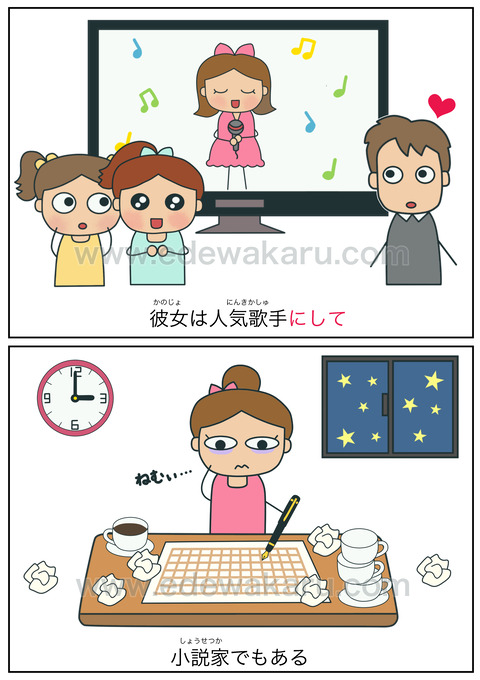
Meaning
〜でもあり、そして〜でもある
〜であるけれども、しかし
How to use it
名詞[辞書形]+にして
Explanation
「AにしてB」は「Aであり、そしてBでもある」「Aであるけれども、しかしB」という意味の文型です。2つの身分を並べていう時は「〜で、そして〜」という意味になります。また、後ろに逆接的(ぎゃくせつてき)なことがくる場合は「〜だけれども、しかし〜」という意味で使われます。かたい言い方で、書き言葉として使用されます。
「〜にして」には、他にも用法がありますので一緒に覚えておきましょう😊
In context 4 examples
彼女は人気歌手にして小説家でもある
→彼女は人気歌手であり、そして小説家である彼はサラリーマンにして世界的に有名な画家でもある
→彼はサラリーマンで、そして世界的に有名な画家でもある彼女は女優にして、3児の母である
→彼女は女優でもあり、そして3児の母でもある教師にして、教育とは何かいまいちわからない…
→教師であるけれども、教育とは何かいまいちわからない…
Usage 2
Read this source entry ↗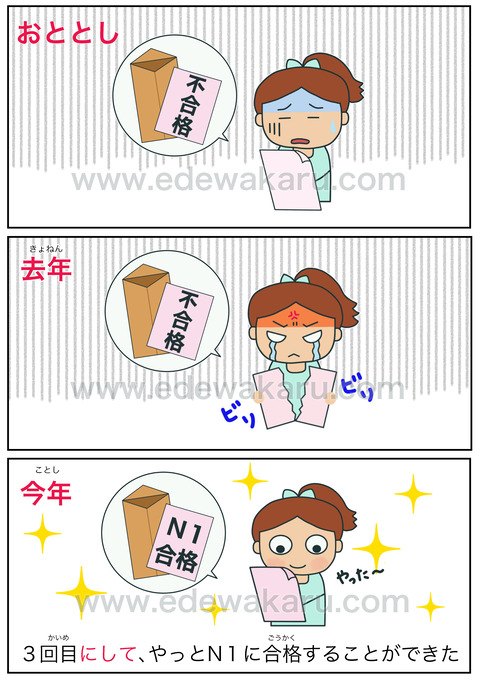
Meaning
〜で
〜になって
How to use it
名詞[辞書形]+にして
Explanation
「Aにして」は「Aで」「Aになって」という意味の文型です。「A」の段階になって、はじめて何かが起こったと強調して言いたい時に使われます。「A」には
[時間][回数][年齢]
などが入ります。多くの場合、驚きの気持ちを込めて使用されます。
[「〜にして」とよく使われる表現]
・〜にして+
やっと
・〜にして+
ようやく
・〜にして+
初めて
「〜にして」には、他にも用法がありますので一緒に覚えておきましょう。
In context 5 examples
3回目にして、やっとN1に合格することができた
→3回目で、やっとN1に合格することができたあの子は9歳にして大学に合格したそうだ
→9歳で大学に合格したそうだA:彼女は、45歳にして孫が生まれたらしいよ!B:すご〜い!若いおばあちゃんだね
→45歳で孫が生まれたらしいよ!昔お母さんが言っていたことが、今にしてようやくわかった
→今になってようやくわかったあの二人が結婚30年目にして離婚するとは想像すらしなかった
→結婚30年目で離婚するとは想像すらしなかった
Usage 3
Read this source entry ↗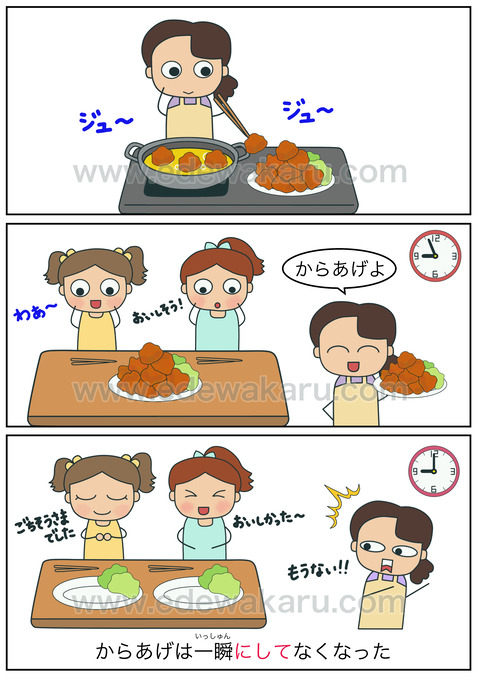
Meaning
〜で
〜ことに
How to use it
名詞[辞書形]+にして
Explanation
「〜にして」は「〜で」「〜ことに」という意味の文型です。これは決まった単語と一緒に使われる慣用的表現(かんようてきひょうげん)で、驚きの気持ちを表します。N1の文型「〜ながら(様態)」ともよく一緒に使われます。
[「〜にして」とよく使われる単語]
・
一晩
にして
・
一夜
にして
・
一瞬
にして
・
幸い
にして
・
不幸
にして
・
生まれながら
にして(N1「〜ながら」)
・
生きながら
にして(N1「〜ながら」)
・
いながら
にして(N1「〜ながら」)
「〜にして」には、いくつかの用法がありますので復習をしておきましょう。
In context 5 examples
からあげは一瞬にしてなくなった
→一瞬でなくなったかぜをひいたが、薬を飲んだら一晩にして治った
→一晩で治った仕事でミスをしたが、幸いにして大きな問題にはならなかった
→幸いなことに大きな問題にならなかった彼は事故に遭い、不幸にして亡くなってしまった
→不幸なことになくなってしまった彼女は生まれながらにして音楽の才能があった
→生まれつき音楽の才能があった
どんなときどう使う 日本語表現文型辞典
Meaning
for; considering
How to use it
N+にして
Explanation
にして〈程度強調〉
~だから/~でも
「~にして…」の形で「~まで程度が高くなって可能」または「~ほど程度が進んだNでさえ不可能」ということを言いたいときに使う。「…」では可能、不可能という意味の言葉を使うことが多い。
Something is possible because of high level preceding にして, or impossible, even though N has progressed to level before にして. Often expressions meaning something is possible or impossible follow.
In context 3 examples
人間80歳にしてはじめてわかることもある。
こんな細かい手仕事はあの人にしてはじめてやれることだ。
この芝居は人間国宝の彼にして「難しい」と言わせるほど、演じにくいものである。
日本語NET JLPT文法解説まとめ
Meaning
〜で / 〜になって
強調表現で、程度に関して驚きやすごいという気持ちがある。
How to use it
N + にして
In context 5 examples
彼はカジノで大勝ちして、一晩にして大金を手にした。
木村さんは18歳にして、社長になった。
JLPT N1に3回目にして合格できた。
35歳にしてようやく子宝に恵まれた。
頼んでいた仕事を彼は一日にして全て終わらせてしまった。
毎日のんびり日本語教師
How to use it
時間、回数を表す名詞+にして
Explanation
ある段階に達したときを表します後件には物事の実現、成立、発見、理解などが述べられます。
主に時間や年齢、回数などを表す名詞に接続されます。
後件には「ようやく」「やっと」「初めて」などの語が呼応することがあります。
Notes
特になし
In context 8 examples
この難関試験に、3回目にしてようやく合格した。
40歳にしてようやく父親になった。(到了40岁才当上了父亲。)
この歳にして初めて人生とは何かが分かった。
あれだけの量の仕事を1日にして終わらせたとは凄すぎる。
光を放ち、一瞬にして消えてしまった。
あの時の言葉の本当の意味が、今にしてようやく分かった。
還暦にして初めての孫が生まれた。
20社目にして念願の内定をもらえた。(到了第二十家公司,拿到了心愿的内定。)用法② 二面性
日本語文型辞典 英語版
Meaning
Means “to come to such a level.” Used to express that some event happens only after it comes to a certain stage. Often used in a phrase such as Nにしてようやく or Nにして初めて.
Means “not only N but also....” There are two uses in this expression. One is to mean “even though it is N” contradictory as shown in
(1)
, and the other is to simply juxtapose two items as shown in
(2)
. A formal, written expression.
With a particular type of a noun or an adverb, used to state some situation. There are two uses in this expression: one is to state the speaker’s evaluation of whether the following state/event is fortunate or not, as shown in
(1)
and
(2)
, and the other is to state what some state is like or how some event happens, as shown in
(3)
-
(5)
.
How to use it
1. Nにして〈stage〉
2. Nにして〈juxtaposition〉
3. ...にして
In context 10 examples
この歳にして初めて人生のなんたるかが分かった。
I learned how life should be only after I became this age.
40にしてようやく子宝に恵まれた(=子供が生まれた)。
At long last, at the age of forty, I was blessed with a bundle from heaven (=my child was born).
長年苦労を共にした妻にして初めて理解できることである。
This is what my wife could understand only after we shared our struggles for many long years.
教師にして学問のなんであるかを知らない。
Even though she is a teacher, she doesn’t know what learning means.
彼は科学者にして優秀な政治家でもある。
He is not only a scientist but also an outstanding politician.
幸いにして大事にいたらずにすんだ。
Luckily, it didn’t lead to anything enormous.
不幸にして、重い病にかかってしまった。
Unfortunately, I caught a serious disease.
その事故で一瞬にして家族全員を失った。
In an instant, I lost all the members of my family in the accident.
生まれながらにして体の弱い子供だった。
I was a weak child by birth.
その小舟は、たちまちにして波に飲まれて沈んでいった。
The small boat was swallowed up by the waves and sank in a second.
AIUEO JLPT Grammar
Meaning
This sentence pattern is used to emphasize that a person’s position, qualifications, or achievements are appropriate or to highlight that a certain outcome or event occurred under specific conditions.
How to use it
名詞に+して
Explanation · 日本語
この文型は、ある人物の立場・資格などにふさわしいことを強調したり、何かの成果や事象がある条件下で起こることを強調したりするときに使われる表現です。
In context 5 examples
彼は医者にして作家でもある。
He is both a doctor and a writer.
彼は一言にして、全員を納得させた。
He convinced everyone with just one statement.
これは大人にして理解できない複雑な問題だ。
This is a complex issue that even adults struggle to understand.
彼女は一度にして成功を収めた。
She achieved success on her first attempt.
五回目にしてやっと試験に合格した。
He finally passed the exam on his fifth attempt.
文法
Meaning
〜で / 〜になって強調表現で、程度に関して驚きやすごいという気持ちがある。
How to use it
N + にして
In context 5 examples
彼はカジノで大勝ちして、一晩にして大金を手にした。
木村さんは18歳にして、社長になった。
JLPT N1に3回目にして合格できた。
35歳にしてようやく子宝に恵まれた。
頼んでいた仕事を彼は一日にして全て終わらせてしまった。
Bunpro Grammar Reference
Usage 1
Meaning
At, Over, In, Only (after, when, or because)
How to use it
Number + Counter + にして
Noun + にして
Nuance
An expression which emphasizes a specific phase or time. Going off (A), (B).
Explanation
When the case-marking particle に is combined with the て-form of する, it often carries the meaning of 'at (A)', 'over (A)', or 'only when (A)'. This nuance is used when (A) is something that is a fairly high level, or some point that would be considered a prime example for any given topic.
にして may appear following counters, or standard nouns.
30歳にして初めて海外旅行に行った。
At the age of 30, I traveled abroad for the first time.
五回目にしてやっと資格を取ることができた。
I was finally able to get my qualification only after my fifth try.
犯人たちは道を曲がって、一瞬にして暗闇の中へと消えた。
The perpetrators turned off the road and disappeared into the darkness in an instant.
While にして marks (A) as some particular exemplar, what follows may either be something that is or is not considered befitting of that example. In this way, (B) generally describes something that either does or does not fulfill the expectations of (A), and perhaps why.
It is common to see にして followed by grammar patterns such as ようやく 'finally', or 初めて 'only when'. These function to emphasize にして even further as being a point from which something is achieved or attained.
50歳にしてようやく、イタリアに住んでいる従兄弟の家に行くことができた。
At age 50, I was finally able to visit my cousin who lives in Italy.
母は60歳にして初めて、コンサートに行ったらしい。
My mother went to a concert for the first time at the age of 60.
Fun Fact
Just like other structures that make use of the various conjugations of にする, にして indicates something that has been decided upon, or is being accepted as a fact from which a new condition will arise, or has arisen.
Nuance · 日本語
ある特定の段階や時間を強調する表現。(A)から始まって、(B)。
Explanation · 日本語
格助詞「に」と「する」のテ形が組み合わさると、「(A) で」「(A) になって」といった意味を表すことがあります。これは、通常話し手が (A) の段階や条件で (B) が起こることに驚きを感じているときに、その気持ちを強調するために使われます。
「にして」は、時間や回数などを表す数量詞や名詞の後ろに置かれます。
30歳にして初めて海外旅行に行った。
At the age of 30, I traveled abroad for the first time.
五回目にしてやっと資格を取ることができた。
I was finally able to get my qualification only after my fifth try.
犯人たちは道を曲がって、一瞬にして暗闇の中へと消えた。
The perpetrators turned off the road and disappeared into the darkness in an instant.
(A) には特別な段階・条件・立場などが入ります。その後に続く内容は (A) の段階・条件・立場で起こるのに相応しいこともあれば、そうでないこともあります。
「にして」は「ようやく」や「初めて」のような表現を伴うこともよくあります。そうすることで、「(A) というレベルに達して、ようやく (B) ができた」や「(A) になって初めて (B) になった」のように、何かを達成・実現した段階として、(A) をさらに強調することができます。
50歳にしてようやく、イタリアに住んでいる従兄弟の家に行くことができた。
At age 50, I was finally able to visit my cousin who lives in Italy.
母は60歳にして初めて、コンサートに行ったらしい。
My mother went to a concert for the first time at the age of 60.
豆知識
「にする」を使ったほかの表現と同じように、「にして」は、すでに決められている状態や立場などを土台として、そこから新しい状況や結果が生まれることを表します。
In context 17 examples
- 彼はバブルがはじけたことにより一夜にして破産者となった。
Due to the bubble burst, he went bankrupt overnight. (only (after/when/because))
- 30歳にして初めて海外旅行に行った。
At the age of 30, I traveled abroad for the first time.
- 五回目にしてやっと資格を取ることができた。
I was finally able to get my qualification only after my fifth try.
- 犯人たちは道を曲がって、一瞬にして暗闇の中へと消えた。
The perpetrators turned off the road and disappeared into the darkness in an instant.
- 50歳にしてようやく、イタリアに住んでいる従兄弟の家に行くことができた。
At age 50, I was finally able to visit my cousin who lives in Italy.
- 母は60歳にして初めて、コンサートに行ったらしい。
My mother went to a concert for the first time at the age of 60.
- 釈迦は29歳にして初めて、宮殿を出た。
Buddha left the palace for the first time at the age of 29. (only (after/when/because))
- これは西尾維新のような文豪にして初めて書ける名著だ。
This is a masterpiece that could only be written when a literary giant like Nishio Ishin did it for the first time.
- ふうかはあきつき氏夫妻の結婚20年目にして初めて授かった長女だった。
Fuuka was the first daughter that the Akitsuki couple was blessed with in the 20th year of their marriage. (only (after/when/because))
- 宝くじに当たって一夜にして大金持ちになった彼が、お金の価値を理解する事は無いでしょう。
Having won the lottery and becoming incredibly rich overnight, he cannot understand the value of money, can he?
- 五十歳にして、もう孫が二人もいるなんて、あなたはとんでもなく若いおじいちゃんですね!
To think that at 50 years old you would already have something like 2 grandchildren, you're an absurdly young grandpa, right!
- 今にして思えばあの頃5ドルでビットコインを売るのは間違った決定だったかも。
When I think about it now, selling bitcoin for 5 dollars at that time might have been a bad decision. (only (after/when/because))
- 小説、語り手:「ミステリアスなその見知らぬ人は、一瞬にして二人の暗殺者を同時に殺してしまった。」
A novel, narrator: 'The mysterious stranger, in a moment, killed two assassins at once.' (only (after/when/because))
- 結婚50年目にして離婚をするなんて、一体どんな理由があったのか気になって仕方がありません。
To think that they would do something like divorce only after 50 years of marriage, I cannot help but to wonder what the heck kind of reason there was.
- 日本語の勉強を始めて11年目にしてようやくJLPT(ジェーエルピーティー)のN1に合格する事が出来ました。
From when I started studying Japanese, it was only in my 11th year that I was finally able to pass the JLPT N1.
- 60歳にして初めて海外で生活する事になった叔母の話を聞き、海外へ移住する勇気が湧いてきました。
Hearing my aunt's story of how she is only now living abroad for the first time after turning 60, my courage to migrate has been welling up.
- 大学一年生にして起業した友達の木村はお金に余裕があるらしく、一緒に食事をするといつも奢ってくれる。
As for my friend Kimura, who started his own enterprise in the first year of university, it appears as though he has an abundance of cash, and he always treats me if we eat together.
Usage 2
Meaning
To be ~ and ~, To be ~ as well as ~, Both ~ and ~
How to use it
Noun + にして
[な]Adjective + にして
Nuance
A formal structure which emphasizes a specific set of simultaneous characteristics. Going off that it is (A), it is also (B).
Explanation
Occasionally, the combination of the case-marking particle に 'in', and the て-form of the special verb する, して will be considered as a compound particle. While this does not change the way it will be used, it puts more emphasis on the 'going from that (A), (B)' nuance of にして. This will be translated as '(A) as well as (B)', 'both (A) and (B)', or 'to be (A) and (B)'.
This use of にして will appear following either nouns or な-Adjectives.
この足場は安全にしてかつ組み立てるのが簡単だから、注文が殺到している。
Orders for this scaffolding have been pouring in because it is both safe and easy to assemble.
彼女は大学の教授にして会社の経営者でもある。
She is both a university professor and a CEO.
Some set expressions like 幸いにして and 不幸にして also exist. These can be interpreted as 'fortunately' and 'unfortunately' respectively.
携帯を駅で落としてしまったが、幸いにして交番に届いていた。
I accidentally lost my phone at the station, but fortunately it was delivered to the police station.
彼は不幸にして、幼い頃に両親を亡くした。
Unfortunately, he lost his parents when he was younger.
Caution
Like with 幸いにして and 不幸にして, にして tends to be used with a fairly limited set of words when having the meaning of 'both (A) and (B)'. Due to this, it is best to only use patterns that you have come across before.
Fun Fact
The tense at the end of にして sentences often changes the way that it will be understood, but it is important to remember that all にして structures simply put emphasis on (A) as being what allowed (B), led to (B), or exists in precedence to (B).
Nuance · 日本語
特定の組み合わせで一緒に存在するもの等を強調する時に使う丁寧な表現。(A)からすると(B)でもある。
Explanation · 日本語
「にして」は、格助詞「に」と特殊な動詞「する」のテ形の組み合わせですが、複合助詞として扱われることがあります。この場合、「にして」の持つ「(A) から (B) に及ぶ」というニュアンスはさらに強くなり、「(A) であり (B) でもある」といった意味で使われます。
この用法の「にして」は、名詞またはナ形容詞に結びつきます。
この足場は安全にしてかつ組み立てるのが簡単だから、注文が殺到している。
Orders for this scaffolding have been pouring in because it is both safe and easy to assemble.
彼女は大学の教授にして会社の経営者でもある。
She is both a university professor and a CEO.
「にして」には「幸いにして」や「不幸にして」といった定型表現があります。これらはそれぞれ「運良く」と「不運なことに」といった意味になります。
携帯を駅で落としてしまったが、幸いにして交番に届いていた。
I accidentally lost my phone at the station, but fortunately it was delivered to the police station.
彼は不幸にして、幼い頃に両親を亡くした。
Unfortunately, he lost his parents when he was younger.
注意点
「幸いにして」や「不幸にして」のように、「にして」が「(A) で」や「(A) なことに」といった意味で使われる場合、一緒に使える語句は限られています。そのため、実際に見聞きしたことのある組み合わせだけを使うようにするといいでしょう。
豆知識
「にして」を使った文は、文末の時制によって解釈が変わることがあります。とはいえ、全ての「にして」構文は「(A) があるから (B) が成り立つ」や「(A) は (B) に繋がっている」といったことを強調する点で共通しています。ぜひ、このポイントを覚えておきましょう!
In context 16 examples
- 紺碧にして美しい海である。
The sea is both beautiful and a deep blue.
- この足場は安全にしてかつ組み立てるのが簡単だから、注文が殺到している。
Orders for this scaffolding have been pouring in because it is both safe and easy to assemble.
- 彼女は大学の教授にして会社の経営者でもある。
She is both a university professor and a CEO.
- 携帯を駅で落としてしまったが、幸いにして交番に届いていた。
I accidentally lost my phone at the station, but fortunately it was delivered to the police station.
- 彼は不幸にして、幼い頃に両親を亡くした。
Unfortunately, he lost his parents when he was younger.
- シンプルにしてかつパワフルなアプリである。
This is a simple and moreover a powerful app.
- 牛は優美、温和にして頭が冴えている。
Cows are graceful, gentle, and smart.
- 山田先生は有名な教授にして尊敬されている弁護士でもある。
Dr. Yamada is both a famous professor and a respected lawyer too.
- 田中総理大臣は稀代の政治家にして同時に偉大な父でもある。
Prime minister Tanaka is both an extraordinary politician and, at the same time, a great father.
- 彼女ほど才能ある女優にして同時に熟練の映画監督でもある人はいないと言われている。
It is said that there is no actress as talented and, at the same time, as skilled a director as her.
- 二児の母にして現役のアイドルでもあるなんて、彼女はパワフルだなぁ...。
Something like being both the mother of two toddlers, and also an active idol, she has so much stamina…
- 画家にして経済の専門家でもあるなんて、彼は本当に何でも出来るのですね!
To think that he is both a painter and an economics expert, he really can do anything!
- ある企業の社長にして株の投資家でもある彼女は、大富豪として知られています。
Being both the company president of an enterprise and a stock investor, she is known for being exceptionally wealthy.
- 会社員にして動画投稿サイトの投稿者でもあるなんて、君はいつ休息を取っているの?
To be both a company employee and an uploader on a video sharing site, when do you take a breather?
- 文系の学生にしてウイルスや免疫に関する知識も持ち合わせているなんて、あなたは学生の鑑です!
Something like being both a liberal arts student, and possessing knowledge about immunization, you are a paragon of a student!
- 佐々木教授の授業は分かりやすさ満点にして面白さもあるので、学生から大人気です。
Professor Sasaki's lesson's comprehensibility being both perfect, and also really interesting, so she is popular with students.