AIUEO JLPT Grammar
Meaning
This sentence pattern expresses that a behavior or characteristic goes beyond the usual scope or tends to occur repeatedly. It is often used to point out undesirable behaviors or traits.
How to use it
名詞の+嫌いがある動詞辞書形+嫌いがある
Explanation · 日本語
この文型は、ある行動や性質が通常の範囲を超えていること、または繰り返し行われる傾向があることを示す表現です。特に、好ましくない行動や性質があることを指摘するときに使われます。
In context 5 examples
彼は物事を大げさに言う嫌いがある。
He tends to exaggerate things.
人はストレスが溜まると、食べ過ぎる嫌いがありますよね。
People tend to overeat when they are stressed.
この地域では、冬になるとインフルエンザが流行する嫌いがある。
In this area, influenza tends to spread in winter.
彼は自分の都合の良いように解釈する嫌いがあるんです。
He tends to interpret things in a way that suits him.
彼女は緊張すると、早口になる嫌いがあった。
She tended to speak too quickly when she gets nervous.
どんなときどう使う 日本語表現文型辞典
Meaning
be liable to; be inclined to
How to use it
Vる・Vない/Nの+きらいがある
Explanation
~の傾向がある
1)自然にそうなりやすいよくない傾向について批判的に言うときに使う。そのときの外見ではなく、本質的な性質に使われる。
2)「どうも~きらいがある」の形でよく使われる。
2)Often found in the pattern, どうも~きらいがある.
1)Criticism expressing that something naturally has a tendency toward a negative condition. Used not for external appearances but for fundamental essence of an issue.
In context 4 examples
あの人の話はいつも大げさになるきらいがある。
中年になると、どうも新しいものに興味を持たなくなるきらいがある。
人は自分の聞きたくないことは耳に入れないというきらいがあるのではないか。
最近の選挙では投票率低下のきらいがある。
絵でわかる日本語
Meaning
〜というよくない傾向がある
How to use it
動詞[辞書形]+嫌いがある
動詞[ない形]+嫌いがある
名詞[辞書形]+の嫌いがある
Explanation
「〜嫌いがある」は「〜というよくない傾向がある」「〜というよくない傾向が起こりやすい」という意味で使われる文型です
😊
いい傾向には使用できません
ので気をつけてください😨この文型は
自然現象には使うこともできません。
[例]
❌6月は雨が降る
嫌いがある
【
「雨が降る」のは自然現象】
「〜嫌いがある」は
書き言葉的
で、会話ではあまり使われません😅N1を受ける人はテスト用にしっかりと覚えておきましょう。
In context 3 examples
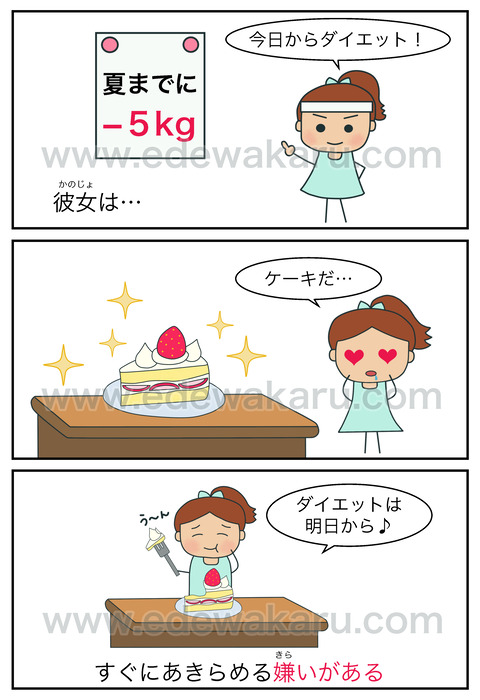
彼女はすぐにあきらめる嫌いがある
→彼女はすぐにあきらめるという傾向があるうちの息子は野菜を食べない嫌いがある
→うちの息子は野菜を食べないという傾向がある連休は事故がよく起きる嫌いがある
→連休は事故がよく起きるという傾向がある
毎日のんびり日本語教師
How to use it
名詞+の+きらいがある
動辞形+きらいがある
動ない形+きらいがある
Explanation
良くない傾向や性質があることを表します。
ここでいう「嫌い」とは、良くない傾向のことです。
ほとんどの場合、人の性格や内面的な特徴について述べるときに使います。
似ている文型「【N3文法】~がち」はその回数が多いことに使えますが、「~きらいがある」は使えません。
Notes
似ている文型「【N3文法】~がち」
In context 9 examples
彼は物事を独断で考えるきらいがある。(他思考事物有独断的倾向。)
現実を甘く見るきらいがある。(我有轻视现实的倾向。)
今の子供は野菜をあまり食べないきらいがある。(现在的孩子有不太吃蔬菜的倾向。)
苦労知らずな人ほど、他人を見下すきらいがある。
小さいことからでも深く考えすぎるきらいがある。
彼は人の言うことを何でも信じてしまうきらいがある。
君は何でも頑張りすぎるきらいがあるから、そんな時は周りの人に頼ったらいい。
自己評価が低すぎるきらいがあるが、それが彼の謙虚さに繋がっている。
Aさんは他人の言葉に過剰に反応するきらいがある。
IMABI
Tendency
Read this IMABI lesson ↗Explanation
Tendency: 嫌いがある, が早いか, が最後, & そばから
In this lesson we will learn about speech modals concerning tendency.
嫌いがある
嫌い means “to hate”–it is treated as a 形容動詞 instead of as a verb in Japanese–and is followed by がある to show what someone or something has a tendency of doing. As the word suggests, this is not a good tendency. This tendency has to be somewhat bad, so it doesn’t work with phrases like ぎりぎり間に合う.
1. 依存症の嫌いがあること
To have a tendency of dependence.
2. その生徒は遅刻する嫌いがありました。
That student had a tendency to be late.
3. 彼は酒を飲みすぎる嫌いがある。
He has a tendency of drinking too much sake.
4. 人には自分の聞きたくないことは耳に入れないというきらいがあるのではないか。
Isn’t there are tendency that what one doesn’t want to hear doesn’t get heard?
5. 彼女は優しいですが、無意識に人を傷付けることを言うきらいがある。
She’s nice but, she has a tendency to say things that hurt people without knowing it.
6. 人間は年を取ると、他の人の話を聞かなくなる嫌いがある。
When humans get older, they have a tendency of not wanting to listen to other people.
が早いか
が早いか is best translated as “the instant”. Basically the same as the noun 瞬間(instant). The situation in question must not be of one’s control. It has also become limited to actions done by people. The actions also have to be logically related to each other. が早いか can be used with the non-past or the past tense. However, the former is the most common and some speakers may not like it with the past tense.
7. 彼女は先生を見るが早いか、逃げ出しました。
She started running away the instant she saw the teacher.
8. 「飲んでみよう」と言ったが早いか、彼は全て飲んでしまった。
The instant I said, “Let’s try drinking it”, he completely drank it all.
9. 言うが早いかやってしまった。
No sooner said than done.
10. 弟は、口に押し込んだが早いか、玄関を出ていった。 (△)
My brother left the house just as soon as he shoved it down in his mouth.
11. 初級者向けのIMABIの教科書は店頭に並べられたが早いか、すぐに売れていきました。
The IMABI textbooks for beginners flew off the shelves the instant they were put up in front of the store.
12. ベルを聞くが早いか、生徒達は教室から飛び出していった。
The instant they heard the bell, the students dashed out of the classroom.
The verb must be one that describes something of an instant. It’s not a verb that entails a longer period of time. When you see, ask, arrive, etc. that is 瞬間的. The part of the sentence that comes after is unexpected. Again, this pattern must not be used to show the speaker’s wants or intentions.
~が最後
~が最後 shows that once some starts doing something, there is no end to their action in sight. Due to this, it is very similar to 一旦(いったん) meaning “once”. However, 一旦 doesn’t always have the implications of nonstop.
13. 飲みだしたが最後、止められなかった。
Once I started to drink it, I couldn’t stop.
14. 入ったが最後二度と出てこられなくなる場所に行ったことがありますか。
Have you ever gone to a place where once you entered, you became unable to leave (because it was so awesome)?
15. いったん始めたら、止めてはならない。
Once you start, you must not quit.
16. いったん封を切ると、返品できません。
Once you break the seal, you can’t return it.
そばから
そばから describes an event that repeatedly happens right over again, plain and simple. So, no matter what you do, right when you do it, something messes it up, and this cycle keeps repeating itself. So, it’s usually a bad thing. It’s usually used with the non-past form of a verb, but the past tense is also acceptable.
17. 返事を書いているそばからランスさんが次々とメールを送ってくる。まあ、日本語の勉強に非常に熱心ですね。
Every moment I write a response, but each instant Lance sends a new e-mail one after another. Well, he’s very earnest in his Japanese studies.
18. 妹が掃除するそばから散らかすから、もう諦めたくなりました。
My little sister messes the room up (repeatedly) as soon as I clean it up, so I’ve become tired of doing it.
19. IMABIは漢字が多くて大変ですね。調べたそばから新しい漢字がいつも出てきます。もっとシンプルな漢字でだけ書かれていたらいいのに。
It’s hard that IMABI has a lot of kanji, isn’t it? The moment I look one up, new kanji always show up. If only it were written with just simple kanji.
20. 習うそばから忘れてしまうので、ぜんぜん新しい単語が覚えられない。
Since as soon as I learn it I forget it, I can’t learn any new words.
In context 20 examples
依存症の嫌いがあること
To have a tendency of dependence.
その生徒は遅刻する嫌いがありました。
That student had a tendency to be late.
彼は酒を飲みすぎる嫌いがある。
He has a tendency of drinking too much sake.
人には自分の聞きたくないことは耳に入れないというきらいがあるのではないか。
Isn’t there are tendency that what one doesn’t want to hear doesn’t get heard?
彼女は優しいですが、無意識に人を傷付けることを言うきらいがある。
She’s nice but, she has a tendency to say things that hurt people without knowing it.
人間は年を取ると、他の人の話を聞かなくなる嫌いがある。
When humans get older, they have a tendency of not wanting to listen to other people.
彼女は先生を見るが早いか、逃げ出しました。
She started running away the instant she saw the teacher.
「飲んでみよう」と言ったが早いか、彼は全て飲んでしまった。
The instant I said, “Let’s try drinking it”, he completely drank it all.
言うが早いかやってしまった。
No sooner said than done.
弟は、口に押し込んだが早いか、玄関を出ていった。 (△)
My brother left the house just as soon as he shoved it down in his mouth.
初級者向けのIMABIの教科書は店頭に並べられたが早いか、すぐに売れていきました。
The IMABI textbooks for beginners flew off the shelves the instant they were put up in front of the store.
ベルを聞くが早いか、生徒達は教室から飛び出していった。
The instant they heard the bell, the students dashed out of the classroom.
飲みだしたが最後、止められなかった。
Once I started to drink it, I couldn’t stop.
入ったが最後二度と出てこられなくなる場所に行ったことがありますか。
Have you ever gone to a place where once you entered, you became unable to leave (because it was so awesome)?
いったん始めたら、止めてはならない。
Once you start, you must not quit.
いったん封を切ると、返品できません。
Once you break the seal, you can’t return it.
返事を書いているそばからランスさんが次々とメールを送ってくる。まあ、日本語の勉強に非常に熱心ですね。
Every moment I write a response, but each instant Lance sends a new e-mail one after another. Well, he’s very earnest in his Japanese studies.
妹が掃除するそばから散らかすから、もう諦めたくなりました。
My little sister messes the room up (repeatedly) as soon as I clean it up, so I’ve become tired of doing it.
IMABIは漢字が多くて大変ですね。調べたそばから新しい漢字がいつも出てきます。もっとシンプルな漢字でだけ書かれていたらいいのに。
It’s hard that IMABI has a lot of kanji, isn’t it? The moment I look one up, new kanji always show up. If only it were written with just simple kanji.
習うそばから忘れてしまうので、ぜんぜん新しい単語が覚えられない。
Since as soon as I learn it I forget it, I can’t learn any new words.