AIUEO JLPT Grammar
Meaning
This sentence pattern is used to express that following a certain event, a situation or state significantly changed and continues to persist. It emphasizes dramatic or ongoing changes triggered by an initial occurrence.
How to use it
動詞て形から+と+いうもの
Explanation · 日本語
この文型は、ある出来事をきっかけに、それ以降の状況や状態が大きく変わり、その状態が続いていることを表す表現です。何かが起こってから、何かが劇的に変わった、あるいは何かが変わり続けていることを強調するときに使われます。
In context 5 examples
彼は結婚してからというもの、家に早く帰るようになった。
Ever since he got married, he has started coming home earlier.
その事故があってからというもの、彼は車を運転しなくなった。
Ever since that accident, he has stopped driving.
引っ越してからというもの、彼とは一度も会っていない。
Ever since I moved, I haven’t seen him even once.
子供が生まれてからというもの、二人の生活は一変した。
Ever since their child was born, their lives have completely changed.
転職してからというもの、彼はやる気に満ちている。
Ever since he changed jobs, he has been full of motivation.
文法
Meaning
〜てからずっとある行動がきっかけとなって、何か大きな変化があったことを述べる表現
How to use it
V(て形)+ からというもの
In context 10 examples
日本に来てからというもの、私の国の料理を食べていない。
出産してからというもの、お酒を飲まなくなった。
彼女ができてからというもの、お洒落を気にするようになった。
今年に入ってからというもの、風をひいたり、インフルエンザにかかったり、よくないことが続いている。
田中さんが部長になってからというもの、部署の雰囲気がよくなった。
ミニマリストの本を読んでからというもの、あまり物を買わなくなった。
ジョギングを始めてからというもの、とても体調がいい。
タバコとお酒をやめてからというもの、体調がいい。
息子は退職してからというもの、新しい仕事も探さず、家でずっとゴロゴロしている。
一人暮らしを始めてからというもの、ファストフードやインスタント食品ばかり食べている。
Bunpro Grammar Reference
Meaning
After, Since, Ever since then
How to use it
Verb[て] + から + というもの
Phrase (A)。 それから + というもの + Phrase (B)
Nuance
A strong, formal structure, showing that ever since (A), (B). (B) is a thing which can be said to be from (A).
Explanation
てからというもの is an extension of the grammar point てから meaning 'after (A)', and partners と言う 'that which is' with もの 'thing'. It is often translated as 'ever since (A)', and will always express a new state of (B) that has been ongoing since (A). Although the literal translation is 'with that which was from (A)', the fact that (B) is ongoing is simply implied.
As with てから, this structure will be seen following verbs in their て-form.
この会社に入社してからというもの、日付が変わる前に家に帰ったことがない。
Ever since I joined this company, I have not been home before the clock ticks over midnight.
仕事に行く前に散歩に行くようにしてからというもの、どんどん体重が減ってきたのでこれからも散歩を続けようと思っている。
Ever since I started to go on walks before work, I have been steadily losing weight, so I am thinking of continuing to go on walks.
ファイナルデスティネーションという映画を見てからというもの、木材を運んだトラックの後ろを走るのを避けるようになった。
Ever since watching the movie 'Final Destination', I have been avoiding driving behind trucks carrying lumber.
Although not quite as common, からというもの may be seen following それ, when それ is at the beginning of a new sentence. In these cases, それ will linked to what was stated in the previous sentence.
彼は社長にみんなの前でものすごく怒られた。それからというもの彼は別人になったかのように性格が変わった。
He was yelled at in front of everyone by the boss. Ever since that event, he became a different person.
先月彼女が痴漢にあった。それからというもの、満員電車を避けるようになった。
She was groped last month. Ever since then, she has been avoiding packed trains.
Caution
As this phrase implicitly highlights something that has remained ongoing ever since (A), it will not be used when (A) is something that only happened in the very recent past. However, because length of time is subjective, it usually depends on what is considered 'long' based on any specific outcome.
Nuance · 日本語
(A)が起こってから、(B)だということを強く表す表現。(B)は(A)が起きたから起こったと言える。
Explanation · 日本語
「てからというもの」は、「(A) の後」を意味する「てから」に、「という」と「もの」を組み合わせた表現です。「(A) の後、ずっと」といった意味で使われ、(A) をきっかけに始まった新しい状況や状態 (B) が、今も続いていることを表します。
「てから」と同様に、この文型は動詞のテ形の後に置かれます。
この会社に入社してからというもの、日付が変わる前に家に帰ったことがない。
Ever since I joined this company, I have not been home before the clock ticks over midnight.
仕事に行く前に散歩に行くようにしてからというもの、どんどん体重が減ってきたのでこれからも散歩を続けようと思っている。
Ever since I started to go on walks before work, I have been steadily losing weight, so I am thinking of continuing to go on walks.
ファイナルデスティネーションという映画を見てからというもの、木材を運んだトラックの後ろを走るのを避けるようになった。
Ever since watching the movie 'Final Destination', I have been avoiding driving behind trucks carrying lumber.
稀に、文の頭で「それ」+「からというもの」という表現が使われることがあります。このときの「それ」は、前の文で述べられた内容を受けていることが多いです。
彼は社長にみんなの前でものすごく怒られた。それからというもの彼は別人になったかのように性格が変わった。
He was yelled at in front of everyone by the boss. Ever since that event, he became a different person.
先月彼女が痴漢にあった。それからというもの、満員電車を避けるようになった。
She was groped last month. Ever since then, she has been avoiding packed trains.
注意点
この表現は、(A) をきっかけに何かがずっと続いていることを強調するため、(A) がごく最近の出来事の場合には使われません。 とはいえ、時間の感覚は人によって異なるため、何をもって「長い」と見なすかには、絶対的な基準があるわけではありません。
In context 17 examples
- 赤ちゃんが生まれてからというもの、もっと本気で働くようになった。
Ever since the baby was born, I have come to take my job more seriously.
- この会社に入社してからというもの、日付が変わる前に家に帰ったことがない。
Ever since I joined this company, I have not been home before the clock ticks over midnight.
- ファイナルデスティネーションという映画を見てからというもの、木材を運んだトラックの後ろを走るのを避けるようになった。
Ever since watching the movie 'Final Destination', I have been avoiding driving behind trucks carrying lumber.
- 仕事に行く前に散歩に行くようにしてからというもの、どんどん体重が減ってきたのでこれからも散歩を続けようと思っている。
Ever since I started to go on walks before work, I have been steadily losing weight, so I am thinking of continuing to go on walks.
- 彼は社長にみんなの前でものすごく怒られた。それからというもの彼は別人になったかのように性格が変わった。
He was yelled at in front of everyone by the boss. Ever since that event, he became a different person.
- 先月彼女が痴漢にあった。それからというもの、満員電車を避けるようになった。
She was groped last month. Ever since then, she has been avoiding packed trains.
- あやうく溺れかけてからというもの、泳ぎ方を習い始めました。
Ever since I almost drowned, I started learning how to swim.
- ツイート:「娘が生まれてからというもの、一日たりともろくに眠れていない。」
Tweet: 'Ever since my daughter was born, I haven't been able to get a good night's sleep one single day.'
- スペースXのファルコンヘビーの離陸を観てからというもの、宇宙が頭から離れない。
Ever since watching the launch of SpaceX's falcon heavy, I cannot stop thinking about space.
- 親友が鬱で自殺してからというもの、心理学を勉強してカウンセラーになりたいとずっと夢見ている。
Since my best friend commited suicide due to depression, I have constantly been studying psychology, and had the dream of wanting to become a counselor.
- 息子はパートナーができてからというもの、私たち両親と出かける事がめっきりなくなった。
Ever since my son was able to get a partner, going out with us, his parents, has ceased noticeably.
- 妊娠してからというもの、頻繁に気持ち悪くなったり腰が痛くなったりするので毎日よく眠れていません。
After becoming pregnant, since there are things like my mood incessantly becoming bad, and my lower back starting to hurt, I have not been able to sleep well.
- 日本に留学をしに来てからというもの毎日和食を食べているので体重が大幅に減りました。
Since I have been eating Japanese food ever since coming to Japan on a student exchange, my weight has drastically decreased.
- 社会に出て一人暮らしを始めてからというもの、コンビニ弁当ばかりで食事が楽しくなくなってしまいました。
Since stepping out into society and starting to live by myself, eating nothing but convenience store bentos has unfortunately lost its fun.
- 映画ナレーター:「30年前、ロボットが反旗を翻した。それからというもの人生のために戦わない日はなかった。」
Movie narrator: '30 years ago robots revolted. Ever since then, a day has not passed where we have not fought for our lives.'
- 伝記:「彼はとても元気な人だったが、パラシュートの落下事故にあってからというもの、身体が目に見えて弱っていった。」
Biography: 'He used to be a very lively man, but ever since he had the parachute accident, his health has clearly declined.'
- ジムに行き始めてからというもの順調に体脂肪率が下がっているので、これからも通い続けようと思っている。
Since my body fat percentage has reduced after having started going to the gym, I reckon I will keep going.
どんなときどう使う 日本語表現文型辞典
Meaning
from the time…
How to use it
Vて+からというものW
Explanation
てからというもの(は)
~してから、今までずっと
1)「その行為やできごとが後の状態の契機になって」という意味を表す。以後の変化が大きいことに対して話者が心情を込めて言う。
2)「てからは」と意味・用法がだいたい同じであるが、「というもの」があるために、より詠嘆的になっている。
2)Meaning and usage of てからは is nearly the same, but addition of というもの makes the phrase exclamatory.
1)Something creates a chance for a situation after some action or event. Speaker expresses emotions about a dramatic change that occurs later.
In context 3 examples
たばこを止めてからというもの、食欲が出て体の調子がとてもいい。
あの本を読んでからというものは、どう生きるべきかについて考えない日はない。
円高の問題は深刻だ。今年になってからというもの、円高傾向は進む一方だ。
絵でわかる日本語
Meaning
〜てから、ずっと
How to use it
動詞[て形]+てからというもの
Explanation
「〜てからというもの」は「〜てから、ずっと〜」という意味を表す文型です。
「〜をきっかけに、状態が大きく変わった」
と言いたい時に使用します😊「〜てからというもの」は書き言葉的ですが、
「〜て以来」に比べて話者の感情を表します
😮
(復習:〜て以来)
(復習:〜に比べて)
[例]
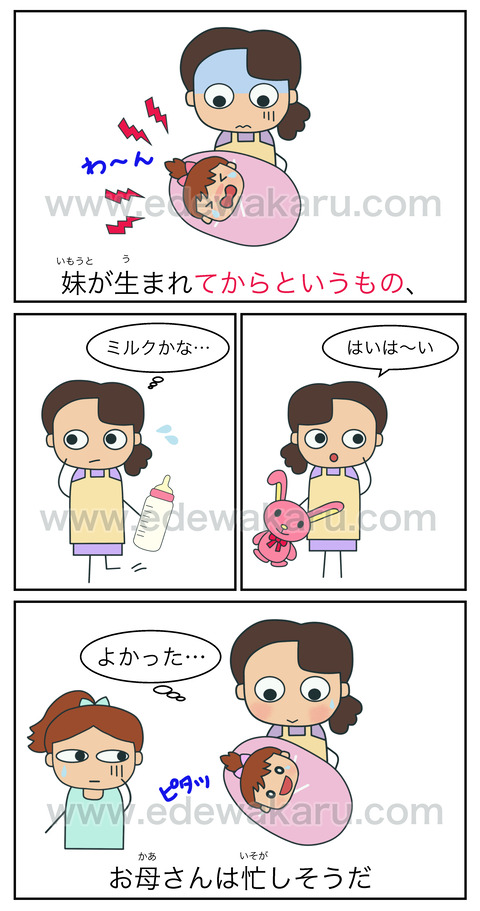
妹が生まれ
て以来、お母さんは忙しそうだ
→無感情
妹が生まれ
てからというもの、お母さんは忙しそうだ
→大変そうだな…という感情を込めて言っている
(復習:〜を込めて・〜を込めた)
N1の文型は書き言葉的なものも多いですが、テストのために覚えておきましょう😊
【「から」シリーズ】
〜から〜にかけて
〜からする・〜からある・〜からの
〜からといって・〜からって
〜からなる
〜からには
〜てからでないと〜ない
〜てからというもの
In context 4 examples
妹が生まれてからというもの、お母さんは忙しそうだ
→妹が生まれてから、ずっとお母さんは忙しそうだ結婚してからというもの、お酒を飲んでいない
→結婚してから、ずっとお酒を飲んでいないタバコをやめてからというもの、とても体調がいい
→タバコをやめてから、ずっと体調がいい一人暮らしをしてからというもの、カップラーメンを食べてばかりいる
→一人暮らしをしてから、ずっとカップラーメンを食べてばかりいる(復習:〜てばかりいる・〜てばかりだ)
くらべてわかる日本語表現文型辞典
Meaning
Aという状態になって(Aという出来事があって)、以前とは一変したBという状態がずっと続いている。
How to use it
AてからというものB(AてからというものはB)
[動詞-て形]からというもの
Explanation
【対比1】
「AてからB」
「AてからというものB」は順次動作を表す「AてからB」に置き換えられる。しかし「AてからB」は一時的な変化にも使えるが、「AてからというものB」は以前とは一変した状態が継続することしか使えない。
○日本に来てから結婚しました。
×日本に来てからというもの結婚しました。
「A以来B」(意味1 P.35)
Notes
【注意1】
・Aという状態になってからは、かなりの時間の経過が必要。
×朝、薬を飲んでからというもの、昼まで飲んでいない。
・Bには継続性のある状態が来る。
×彼は電車通勤に変えてからというもの、定期を買いにいった。
In context 4 examples
日本に来てからというもの、一度も国へ帰っていない。
彼女は高校に入ってからというものはまじめに勉強している。
父は定年退職してからというもの、めっきり年を取ってしまった。
車の免許を取ってからというもの、バスや電車に乗らなくなった。
日本語NET JLPT文法解説まとめ
Meaning
"〜てからずっと"
ある行動がきっかけとなって、何か大きな変化があったことを述べる表現
How to use it
V(て形)+ からというもの
Explanation
"Ever since
In context 10 examples
日本に来てからというもの、私の国の料理を食べていない。
出産してからというもの、お酒を飲まなくなった。
彼女ができてからというもの、お洒落を気にするようになった。
今年に入ってからというもの、風を引いたり、インフルエンザにかかったり、よくないことが続いている。
田中さんが部長になってからというもの、部署の雰囲気がよくなった。
ミニマリストの本を読んでからというもの、あまり物を買わなくなった。
ジョギングを始めてからというもの、とても体調がいい。
タバコとお酒をやめてからというもの、体調がいい。
息子は退職してからというもの、新しい仕事も探さず、家でずっとゴロゴロしている。
一人暮らしを始めてからというもの、ファストフードやインスタント食品ばかり食べている。
毎日のんびり日本語教師
How to use it
動て形+からというもの
Explanation
ある動作がきっかけとなり、その後何らかの大きな変化が生じたことを表す文型です。
「それからというもの」「そこからというもの」という言い方もあります。
Notes
「~てから」シリーズ
In context 14 examples
良いライバルができてからというもの、練習にも熱が入る。
結婚してからというもの、趣味に費やす時間が減ってきている。
あのホラー映画を見てからというもの、トイレにすら行けなくなった。
思いきってイメチェンしてからというもの、知らない人からも褒められるようになった。
就職してからというもの、社会の厳しさを痛感している。
この番組は出演者が変わってからというもの、本当につまらなくなった。
友達を増やしたいけど社会人になってからというもの、中々できない。
ちょうど4年前にこの女性に出会ってからというもの、私の人生大きく変わった。
夜勤になってからというもの、曜日感覚が完全に死んだ。
子育てが始まってからというもの、外食する機会が極端に減った。
転職で東京に来てからというものお友達もできず暇しています。
禁煙してからというもの、タバコの臭いがつらい。
元カレと数年ぶりに再会して、それからというもの、彼のことばかり考えるようになってしまいました。
出された料理に虫が入っていて、そこからというものあの店には一度も行ってない。
NINJAL 日本語文型データベース
Meaning
ある状態や継続的な行為・出来事の時間的な起点を表します。「〜」の前後で大きな違いが生じたと言いたいときに、話し手の深い気持ちを込めて使います。
How to use it
Vてからというもの
Notes
近い過去から続いていることには使いません。
「〜」には、過去のある時点の行為や出来事を表す文がきます。「〜てからというもの」の後には、状態や行為・出来事の継続を表す文がきます。また、変化を表す文がきて、変化後の状態の持続を示すこともあります。
In context 5 examples
あの人に出会ってからというもの、私の人生は幸福感に満ちている。
子どもが生まれてからというもの、家のことは全て子ども中心に回っている。
彼の秘密を知ってからというもの、私は彼と自然に話すことができない。
近くに大型スーパーができてからというもの、地元の商店街は客足が遠のき、シャッターの閉まった店が多くなった。
この薬を飲み始めてからというものは、体の不調に悩まされることがなくなった。
IMABI
~てからというもの, ~て以来, & ~てこのかた
Read this IMABI lesson ↗Explanation
(Ever) Since: ~てからというもの, ~て以来, & ~てこのかた
In this lesson, we will direct our focus to three fairly nuanced means of expressing “since”: ~てからというもの(は), ~て以来, and ~てこのかた.
~てからというもの(は)
In the pattern “Situation A + ~てからというもの(は) Situation B,” ever since Situation A has occurred, Situation B remains to be the case. With this pattern, neither Situation A nor Situation B may refer to something that began in the recent past, and it is more often the case than not that Situation B implies a less than positive outlook for those involved. Given its added layer of nuance, it is not used nearly as often in the spoken language in casual settings (Ex. 5) in which cases ~てから alone may suffice.
1. ギリシャに来てからというもの、国の家族のことを思わない日はありません。
Ever since I’ve come to Greece, there has not been a day where I don’t think of my family at home.
2. ドル安の問題は深刻である。今年度になってからというもの、ドル安(の)傾向けいこうは進む一方である。
The weak dollar is a serious problem. This trend will continue onward through this fiscal year and beyond.
3. このタブレット端末たんまつを使ってからというもの、手放てばなせなくなった。
Ever since using this tablet, I have not been able to let go of it.
4. 冒険に出かけてからというもの、お前がおかしくなり始めた。
Ever since you’ve been going out on adventurers, you’ve begun to act all weird.
5. ラファエル君は、一人暮らしをしてから(というもの)、ずっとカップ麺とか安物ばっかり食べてるな。
Ever since living by himself, Rafael-kun sure has just been eating cheap things like instant noodles.
In sentence/clause-initial position, we find that ~てから can be replaced with a temporal noun pertaining to duration. Compare this to when a temporal noun pertaining to duration occurs after the pattern so long as ~てからというもの appears in full (see below with Ex. 23).
6. 今年は、とりわけ干ばつが長引き、ここ一か月というもの、火事などが大暴れをして、各地に大きな被害をもたらしている。
As for this year, drought has especially prolonged, and in this month, wild fires and such have raged on and continued to bring great damage everywhere.
Nowadays, there is a growing minority of speakers treating ~てからというもの as a wordier, more emphatic version of ~てから. Thus, the implication behind that “emphasis” may vary in severity (positive or negative outlook) among speakers.
7. 先月、競馬けいばで大穴おおあなを当ててからというもの、何であれ、勝ちに勝ちまくっているそうだ。(△)
Ever since winning big last month in the horse races, I hear that he’s raking in the wins no matter what the game is.
8. 大学生になってからというもの、毎日が楽しい。(△)
Ever since becoming a college student, everyday is fun.
9. タバコをやめてからというもの、とても体調が良くなっている(△)
Ever since quitting smoking, my health has been much better.
10. タバコをやめてから、ずっと調子がいい。◎
Ever since quitting smoking, my health has been good.
Though fairly uncommon, something that can occur with ~てからというもの but not with the other patterns showcased in this lesson is its topicalization via the addition of the particle は. This adds a fairly complex wrench to how the outlook on Situation B is perceived, as Situation A is now highlighted as the impetus for Situation B. Situation A could still very well be a pivotal event, one that might not have been so pleasant, but the focus placed on it now defines precisely why Situation B remains to be the case. Thus, with emphasis so strongly placed on Situation A, the emotional appeal of Situation B is entirely consequential to Situation A, yes, but not the true focus, allowing for it to be a “positive” change.
11. 遼平が落第してからというものは、今までにも増して勉強した。
Ever since Ryohei failed a grade, he has studied harder than ever before.
12. その昔に人殺しがあってからというものは、そこに泊まれば、たいてい良からぬことが起こった。
Ever since a murder took place there long ago, something untoward would almost invariably happen to anyone who stayed the night there.
~て以来
Similarly, with the pattern “Situation A + ~て以来 + Situation B,” ever since Situation A has occurred, Situation B remains to be the case. However, ~て以来 generally implies a positive/neutral evaluation of Situation B, but it is not limited to such evaluations. In fact, even though ~てからというもの is not always appropriate with positive outlooks, outlooks on a whole with ~て以来 are typically stated without any particular emotional appeal. In any event, Situation A constitutes a major turning point, just as is the case with ~てからというもの.
Now, as far as the temporal dynamics surrounding Situation B, like we see in Ex. 13, Situation B can be a statement for what has happened since Situation A so long as there is the understanding that it will continue, making ~て以来 highly synonymous with ~てから but with a formal flare. Consequently, in such environments, Situation A sounds less consequential more so than it sounds like a juncture in time being highlighted.
13. 東大に入学して{以来・から}、すでに1年(が)過ぎ{ている・た1}。
Since entering Tokyo University, one year has already passed.
Thus, whether ~て以来 translates to “ever since” or just “since” will be determined by how Situation B is phrased. If Situation A is consequential and emotional “can” be read into the situation, then the inclusion of “ever” in its translation becomes more warranted.
14. 弟が生まれて以来、お母さんは弟にかかりっきり。
(Ever) since my little brother was born, my mom has been spending all her time and energy on him.
Something that ~以来 can do which ~からというもの is directly follow nouns. Such nouns will always pertain to a situation/event. This is equivalent to how からというもの can follow temporal nouns of duration, but for the duration to be specifically denoted with ~以来, it would have to appear after it.
15. あの事故以来、セスさんは一切運転しなくなった。
Ever since that accident, Seth-san stopped driving entirely.
16. お分かりの通り、それ以来、私はこんな状態です。
As you can tell, ever since then, I’ve been this way as you see me now.
17. おお、セス君、久しぶり!卒業以来じゃない!
Oh, hey there, Seth-kun! Long time no see! (I believe this is the first time we’ve seen each other) since graduation, yeah?!
In completely neutral environments, ~以来 may appear after temporal nouns in an adjectival capacity, in which case the resultant phrase function as a no-adjective.
18. 両国の直接協議はロシアの侵略直後の2022年3月以来だ。
Direct talks between the two countries mark the first such engagement since March 2022, immediately following Russia’s invasion.
19.ドルの反発は、2022年以来の安値となった1月の損失を巻き戻す形で、ここ数週間続いている傾向を反映しています。
The dollar’s rebound reflects a trend that has persisted over the past few weeks, effectively reversing the losses incurred in January—a month in which the currency hit its lowest level since 2022.
Although now having largely fallen out of use, 以来 may also be used as a sentence-initial conjunction meaning “henceforth.” However, this meaning has largely been taken over by 以後.
20. {以来・以後}、気をつけたまえ。
Be careful, henceforth.
Interchangeability
In the following examples, ~てから, ~てからというもの, and ~て以来 are more or less interchangeable with practically no impact on how they are translated into English. All three structures are ungrammatical with Situation B as an instantaneous verb, and all three structures may allow for a negative evaluation of Situation B.
21. この夏の検査けんさで、進行しんこう膵臓癌すいぞうがんと診断しんだんされて{から・からというもの・以来}、明日にでも死ぬかのような恐怖きょうふに囚われている。
Ever since being diagnosed with advanced pancreatic cancer in this summer’s scan, I have been entrapped by the fear of maybe dying at morning’s wake.
22. 就職して15年、部長になって{から・からというもの・以来}、ほとんど毎晩のように残業ざんぎょうで遅くなり、目に見えて顔色 が悪くなっている。
Since becoming the department head after working for 15 years, he has been late almost every night it seems due to overtime, and his complexion has visibly worsened.
23. 武山たけやま美み砂子さこ15歳のときからずっと付き合っていた恋人こいびとと失恋しつれんして{から・からというもの・以来}、食事も喉のどを通らなくなって、窶やつれ果はてて、見る影かげもなくなってしまった。
Misako Takeyama couldn’t put down food and withered down to the point of leaving a mere shadow of her former self ever since being lovelorn with her partner she had been with since the age of 15.
24. 愛犬を亡くして{から・からというもの・以来}、すっかり元気をなくし、人が変わったようになってしまった。
Since losing (his) beloved dog, (he) has lost all vitality, (his) entire persona altered.
Though Situation B has its limitations, there is historically no problem in changing up Situation B after the fact. For this to work for both ~てからというもの and ~て以来, a temporal noun pertaining to duration must be affixed to them. Then, the speaker may qualify afterward how things are holding up now.
25. セスさんは、愛犬を亡くして{から・以来}3年というもの、人が変わったようになっていたが、最近、少し元気を取り戻しつつあるようだ。
It seemed as though Seth-san’s personality had shifted drastically since his dear dog died three years ago, but as of late, he seems to be regaining his vitality.
~てこのかた
Rather than putting emphasis on Situation A being a major turning point, what if you wish to place emphasis on the time that has elapsed since, a.k.a, the duration of Situation B? Just as you can say “in all the time between Situation A and now (Situation B),” the pattern ~てこのかた can fill this role, with このかた2. Despite its unique nuancing, this pattern is relegated largely to somewhat stiff written language.
26. 東京の夜景の写真を見てこのかた、いつかは来日して自分の目で見てみたいなあと、ずっと思い続けてきました。
Ever since I first saw photographs of Tokyo’s nightscape, I have constantly harbored the dream of one day visiting Japan to see it with my own eyes.
27. 生まれてこのかた、この町を出たことが一度もありません。
I have never once left this town since I was born.
このかた may also be affixed to a temporal noun of duration.
28. 10年このかた、両親には会っていません。
I haven’t seen my parents in ten years.
As 過ぎる is not an “instantaneous” verb, the use of ~た may be viewed as being largely interchangeable with ~ている, as there is already an implication that time will continue to pass, granted that the turning point established by Situation A will continue to define the reality of the speaker. ↩︎
このかた, when spelled in kanji as 此の方, represents a presently felt temporal grounding in the now. ↩︎
In context 28 examples
ギリシャに来てからというもの、国の家族のことを思わない日はありません。
Ever since I’ve come to Greece, there has not been a day where I don’t think of my family at home.
ドル安の問題は深刻である。今年度になってからというもの、ドル安(の)傾向けいこうは進む一方である。
The weak dollar is a serious problem. This trend will continue onward through this fiscal year and beyond.
このタブレット端末たんまつを使ってからというもの、手放てばなせなくなった。
Ever since using this tablet, I have not been able to let go of it.
冒険に出かけてからというもの、お前がおかしくなり始めた。
Ever since you’ve been going out on adventurers, you’ve begun to act all weird.
ラファエル君は、一人暮らしをしてから(というもの)、ずっとカップ麺とか安物ばっかり食べてるな。
Ever since living by himself, Rafael-kun sure has just been eating cheap things like instant noodles.
今年は、とりわけ干ばつが長引き、ここ一か月というもの、火事などが大暴れをして、各地に大きな被害をもたらしている。
As for this year, drought has especially prolonged, and in this month, wild fires and such have raged on and continued to bring great damage everywhere.
先月、競馬けいばで大穴おおあなを当ててからというもの、何であれ、勝ちに勝ちまくっているそうだ。(△)
Ever since winning big last month in the horse races, I hear that he’s raking in the wins no matter what the game is.
大学生になってからというもの、毎日が楽しい。(△)
Ever since becoming a college student, everyday is fun.
タバコをやめてからというもの、とても体調が良くなっている(△)
Ever since quitting smoking, my health has been much better.
タバコをやめてから、ずっと調子がいい。◎
Ever since quitting smoking, my health has been good.
遼平が落第してからというものは、今までにも増して勉強した。
Ever since Ryohei failed a grade, he has studied harder than ever before.
その昔に人殺しがあってからというものは、そこに泊まれば、たいてい良からぬことが起こった。
Ever since a murder took place there long ago, something untoward would almost invariably happen to anyone who stayed the night there.
東大に入学して{以来・から}、すでに1年(が)過ぎ{ている・た1}。
Since entering Tokyo University, one year has already passed.
弟が生まれて以来、お母さんは弟にかかりっきり。
(Ever) since my little brother was born, my mom has been spending all her time and energy on him.
あの事故以来、セスさんは一切運転しなくなった。
Ever since that accident, Seth-san stopped driving entirely.
お分かりの通り、それ以来、私はこんな状態です。
As you can tell, ever since then, I’ve been this way as you see me now.
おお、セス君、久しぶり!卒業以来じゃない!
Oh, hey there, Seth-kun! Long time no see! (I believe this is the first time we’ve seen each other) since graduation, yeah?!
両国の直接協議はロシアの侵略直後の2022年3月以来だ。
Direct talks between the two countries mark the first such engagement since March 2022, immediately following Russia’s invasion.
ドルの反発は、2022年以来の安値となった1月の損失を巻き戻す形で、ここ数週間続いている傾向を反映しています。
The dollar’s rebound reflects a trend that has persisted over the past few weeks, effectively reversing the losses incurred in January—a month in which the currency hit its lowest level since 2022.
{以来・以後}、気をつけたまえ。
Be careful, henceforth.
この夏の検査けんさで、進行しんこう膵臓癌すいぞうがんと診断しんだんされて{から・からというもの・以来}、明日にでも死ぬかのような恐怖きょうふに囚われている。
Ever since being diagnosed with advanced pancreatic cancer in this summer’s scan, I have been entrapped by the fear of maybe dying at morning’s wake.
就職して15年、部長になって{から・からというもの・以来}、ほとんど毎晩のように残業ざんぎょうで遅くなり、目に見えて顔色 が悪くなっている。
Since becoming the department head after working for 15 years, he has been late almost every night it seems due to overtime, and his complexion has visibly worsened.
武山たけやま美み砂子さこ15歳のときからずっと付き合っていた恋人こいびとと失恋しつれんして{から・からというもの・以来}、食事も喉のどを通らなくなって、窶やつれ果はてて、見る影かげもなくなってしまった。
Misako Takeyama couldn’t put down food and withered down to the point of leaving a mere shadow of her former self ever since being lovelorn with her partner she had been with since the age of 15.
愛犬を亡くして{から・からというもの・以来}、すっかり元気をなくし、人が変わったようになってしまった。
Since losing (his) beloved dog, (he) has lost all vitality, (his) entire persona altered.
セスさんは、愛犬を亡くして{から・以来}3年というもの、人が変わったようになっていたが、最近、少し元気を取り戻しつつあるようだ。
It seemed as though Seth-san’s personality had shifted drastically since his dear dog died three years ago, but as of late, he seems to be regaining his vitality.
東京の夜景の写真を見てこのかた、いつかは来日して自分の目で見てみたいなあと、ずっと思い続けてきました。
Ever since I first saw photographs of Tokyo’s nightscape, I have constantly harbored the dream of one day visiting Japan to see it with my own eyes.
生まれてこのかた、この町を出たことが一度もありません。
I have never once left this town since I was born.
10年このかた、両親には会っていません。
I haven’t seen my parents in ten years.