AIUEO JLPT Grammar
Meaning
This sentence pattern strongly asserts that a matter is certain. It is often used to convey the speaker’s certainty and is more formal than expressions like「〜に違いない」.
How to use it
動詞に+相違ない形容詞に+相違ない形容動詞に+相違ない名詞に+相違ない
Explanation · 日本語
この文型は、ある事柄が間違いなく確かであると強く断定する表現です。話し手の確信を伝えるときに使われ、書き言葉で使われることが多いです。「〜に違いない」と類似していますが、やや硬いニュアンスを持ちます。
In context 5 examples
彼の成功は努力の結果に相違ない。
His success must be the result of his hard work.
その証拠が見つかった以上、彼が犯人であるに相違ない。
Since that evidence has been found, he must be the culprit.
この状況から見て、事故の原因は人為的ミスに相違ありません。
Judging from this situation, the cause of the accident must be human error.
その提案が採用されたのは、優れたアイデアだったに相違ないからだ。
The proposal was accepted because it must have been an excellent idea.
彼女の表情を見る限り、何か隠しているに相違ないです。
Judging by her expression, she must be hiding something.
文法
Meaning
きっと〜だ / 〜に間違いない
話し手が確信を持って述べる推量表現。
How to use it
V(普通形)+ に相違ない
イA(普通形+ に相違ない
ナA + に相違ない
N + に相違ない
Notes
「〜に違いない」よりも硬い表現。
In context 7 examples
彼の証言は嘘に相違ない。必ず証拠を見てつけてやる!
犯人はあいつに相違ない。
僕らの秘密を漏らしたのはキムさんに相違ない。
この文章はお前が書いたものに相違ないか。
毎日10時間以上勉強しているし、模試の判定もAだったので、彼は余裕で合格するに相違ない。
オンラインで勉強した方が効率がいいに相違ない。
この会社は離職率が高いし、何か問題があるに相違ない。
Bunpro Grammar Reference
Meaning
Without a doubt, Certainly, Surely, Not mistaken
How to use it
Verb + (から)+ に相違ない
[い]Adjective + (から)+ に相違ない
[な]Adjective + (である(1))+ に相違ない
Noun + (である(1))+ に相違ない
(1) であるから
Nuance
A formal phrase expressing that there is no mistaking (A). Literally there are no mutual discrepancies in (A).
Explanation
In a similar fashion to に違いない, に相違ない is a structure that firmly states that something is 'without a doubt (A)', or that there is 'no mistaking (A)'. It may be used to strengthen one's own opinions, or to strongly agree with the opinion of another. Although 相違 may be used by itself meaning 'to differ', or 'to have a discrepancy', 相違ない is considered as a set い-Adjective. When combined with ない, the literal meaning is just 'there is no discrepancy in (A)'.
に相違ない may be used with verbs, い-Adjectives, な-Adjectives and nouns.
彼は小学生の頃から一生懸命勉強をし続けたので、いい大学に行けるに相違ない。
Since he's been studying hard since he was in elementary school, there's no doubt that he can go to a good university.
このコースはあの世界的に有名なシェフによって作られたものなので美味しいに相違ない。
This course has been prepared by a world famous chef, so there is no doubt that it will be delicious.
この街には電車が3分に1本来るので便利に相違ない。
In this city, a train comes every 3 minutes, so there is no doubt that it is convenient.
あの事件の犯人はあの人に相違ない。
There is no doubt that that person is the culprit.
に相違ない will often follow から, highlighting that there is no mistaking the 'cause' of (A).
彼がキョロキョロしているのは、嘘をついているからに相違ない。
There is no doubt that he's being restless because he's lying.
この技が全国の大会で禁止されているのは危ないからに相違ない。
There's no doubt that the reason why this move is forbidden in all competitions across the nation is because it's dangerous.
Caution
This grammar structure is very formal, with に違いない almost always being used in its place.
Nuance · 日本語
(A)で間違えがないということを表す表現。文字通り、(A)には食い違いがないことを表す。
Explanation · 日本語
「に相違ない」は、「に違いない」と同じように、「確実に (A) だ」「(A) であることは間違いない」と断定するときに使われる文型です。この文型は自分の意見を強く主張したり、誰かの意見に強く同意したりするときに使われます。「相違」そのものは「違いがある」や「一致しない」のような意味を持ちますが、「ない」と組み合わさるとイ形容詞として機能し、文字通り「(A) に不一致はない」を意味します。
「に相違ない」は動詞、イ形容詞、ナ形容詞、そして名詞と一緒に使われます。
彼は小学生の頃から一生懸命勉強をし続けたので、いい大学に行けるに相違ない。
Since he's been studying hard since he was in elementary school, there's no doubt that he can go to a good university.
このコースはあの世界的に有名なシェフによって作られたものなので美味しいに相違ない。
This course has been prepared by a world famous chef, so there is no doubt that it will be delicious.
この街には電車が3分に1本来るので便利に相違ない。
In this city, a train comes every 3 minutes, so there is no doubt that it is convenient.
あの事件の犯人はあの人に相違ない。
There is no doubt that that person is the culprit.
「に相違ない」は「から」に続いて、(A) という原因や理由に間違がないことを強調することがよくあります。
彼がキョロキョロしているのは、嘘をついているからに相違ない。
There is no doubt that he's being restless because he's lying.
この技が全国の大会で禁止されているのは危ないからに相違ない。
There's no doubt that the reason why this move is forbidden in all competitions across the nation is because it's dangerous.
注意点
「に相違ない」はとても硬い文型なので、日常会話ではほとんど使われません。たいていはその代わりに「に違いない」が使われます。
In context 18 examples
- この下駄は彼の物に相違ない。
There is no doubt that these geta are his.
- 彼は小学生の頃から一生懸命勉強をし続けたので、いい大学に行けるに相違ない。
Since he's been studying hard since he was in elementary school, there's no doubt that he can go to a good university.
- このコースはあの世界的に有名なシェフによって作られたものなので美味しいに相違ない。
This course has been prepared by a world famous chef, so there is no doubt that it will be delicious.
- あの事件の犯人はあの人に相違ない。
There is no doubt that that person is the culprit.
- 彼がキョロキョロしているのは、嘘をついているからに相違ない。
There is no doubt that he's being restless because he's lying.
- この街には電車が3分に1本来るので便利に相違ない。
In this city, a train comes every 3 minutes, so there is no doubt that it is convenient.
- この技が全国の大会で禁止されているのは危ないからに相違ない。
There's no doubt that the reason why this move is forbidden in all competitions across the nation is because it's dangerous.
- これは県庁からの指示ということに相違ないか?
There is no doubt that these are instructions from the prefectural office?
- これは我が社の公式の見解ということに相違ない。
There is no doubt that this is our company's official view.
- わたしの意見は妻の意見ということに相違ない。
There is no doubt that my opinion is my wife's opinion.
- これはゴッホの絵のコレクションに相違ない。
This is without a doubt Gogh's collection of paintings.
- 彼こそこの作品の本当の作者に相違ない。
He is, without a doubt, the real creator of this work.
- 撮影した日は10月19日に相違ない。
I am certain that the (photo) shoot took place on October 19th. (without a doubt)
- 課長:「競合他社は何か魂胆があるに相違ない。」
Section manager: 'Competitors are surely plotting something.' (without a doubt)
- 報告によると、この新しいウイルスは空気を介して広がるに相違ない。
According to the report, this new virus is, without a doubt, spreading through the air.
- 田中先生は一流の外科医だから、手術は成功するに相違ない。
Doctor Tanaka is a first-class surgeon, so the surgery will be successful without a doubt.
- 検察官:「被害者の死因は鉄パイプのようなもので殴りつけられたからに相違ない。」
Public prosecutor: 'It is certain that the cause of the victim's death was a blow from something like an iron pipe.' (without a doubt)
- 記者:「首相は来年減税をすると言ったから、グレーゾーンを減らそうとするに相違ない。」
Reporter: 'The prime minister said that he will reduce taxes next year, so he will without a doubt attempt to reduce the gray zone.'
どんなときどう使う 日本語表現文型辞典
Meaning
no doubt that
How to use it
〔普通形〕(ナA・ナAである/N・Nである)+に相違ないFW
Explanation
きっと~と思う
1)「きっと~と思う」という話者の確信を述べる推量の表現。「たぶん~だろう」より確信の程度が強い。
2)「にちがいない」よりさらに硬い書き言葉。
1)Conjecture in which speaker has high degree of confidence. Higher degree of certainty than たぶん~だろう.
2)Even more of written form than にちがいない.
In context 3 examples
不合格品がそれほど出たとは、製品の検査がそうとう厳しいに相違ない。
彼の言ったことは事実に相違ないだろうとは思うが、一応調べてみる必要がある。
反対されてすぐ自分の意見を引っ込めたところを見ると、彼女は初めから自分の意見を信じていなかったに相違ない。
絵でわかる日本語
Meaning
きっと〜だと思う
〜で間違いない
How to use it
動詞・形容詞・名詞[普通形]+に相違ない
Explanation
「〜に相違ない」は「きっと〜だと思う」という意味の文型です。
これは話者の判断や考えを表す文型で、
話者が確信を持って「きっと〜だ」と言いたい時に使われます。
また「〜で間違いない」という意味でも使用されます。「〜に違いない」の書き言葉です。
「〜に相違ない」には、似ている文型がありますので、一緒に覚えておきましょう。
【関連文型】
In context 5 examples
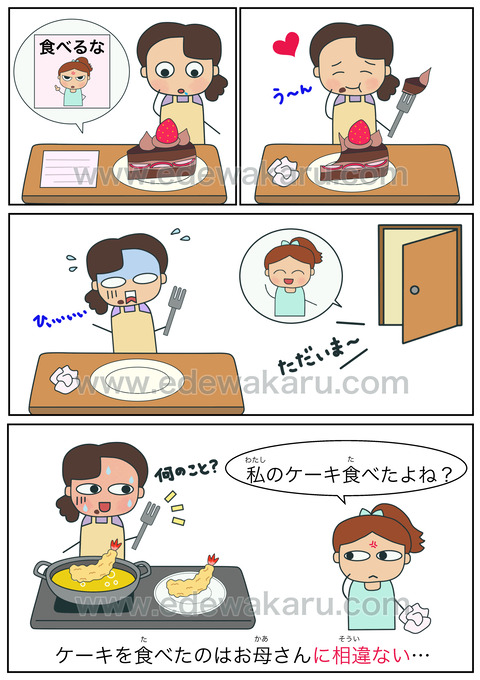
ケーキを食べたのはお母さんに相違ない
→ケーキを食べたのは、きっとお母さんだと思う私の秘密をばらしたのは、山田くんに相違ない
→秘密をばらしたのは、きっと山田くんだと思うあの男が犯人に相違ない
→きっとあの男が犯人だと思うA:このバッグはあなたのものに相違ないですか?B:はい
→このバッグはあなたのもので間違いないですか?警察:お前がやったことに相違ないか?犯人:はい、私がやりました
→お前がやったことで間違いないか?
くらべてわかる日本語表現文型辞典
Meaning
XはAであると強く断言する表現。
How to use it
(Xは)Aに相違ない
[動詞]に相違ない
[イ形-い/かった]に相違ない
[ナ形-である/だった]に相違ない
[名詞-∅/である/だった]に相違ない
Explanation
【対比1】
「Aに間違いない」
「Aに間違いない」は「Aに相違ない」の柔らかい表現。
「Aに違いない」(意味1 P.246)
In context 4 examples
これはきのうあなたが盗まれた財布に相違ないですか。
「今、述べたことは真実に相違ないか。」
「はい、真実に相違ありません。」これだけのメンバーが出演するなら、切符はすぐ完売するに相違ない。
こんなにたくさんの書類を一人で整理したんだから、さぞ大変だったに相違ない。
日本語NET JLPT文法解説まとめ
Meaning
きっと〜だ / 〜に間違いない
話し手が確信を持って述べる推量表現。
How to use it
V(普通形)+ に相違ない
イA(普通形+ に相違ない
ナA + に相違ない
N + に相違ない
Explanation
without
「〜に違いない」よりも硬い表現。
In context 7 examples
彼の証言は嘘に相違ない。必ず証拠を見てつけてやる!
犯人はあいつに相違ない。
僕らの秘密を漏らしたのはキムさんに相違ない。
この文章はお前が書いたものに相違ないか。
毎日10時間以上勉強しているし、模試の判定もAだったので、彼は余裕で合格するに相違ない。
オンラインで勉強した方が効率がいいに相違ない。
この会社は離職率が高いし、何か問題があるに相違ない。
毎日のんびり日本語教師
How to use it
動詞普通形+に相違ない
い形容詞普通形+に相違ない
な形容詞語幹+に相違ない
名詞+に相違ない
Explanation
話し手の自信に満ちた強めの判断・断定を表します。
書き言葉として用いられます。
Notes
似ている文法「【N2文法】~に決まっている」
似ている文法「【N2文法】~に違いない」
「~に決まっている」「~に違いない」「~に相違ない」はそれぞれ同じ意味ですが、最も柔らかい表現は「~に決まっている」です。「~に相違ない」は主に書き言葉として用いられます。
In context 5 examples
あの人が犯人に相違ない。
どれだけ釈明したとしても、罪を犯したことに相違ない。
今回の事件と、5年前の事件は何か深い関係があるに相違ない。
これは先日盗まれたものに相違ありません。
過去ばかり振り返っているのは、過去に生きていることに相違ない。
NINJAL 日本語文型データベース
Meaning
ある根拠から生じる話し手の強い確信を表します。
How to use it
V普通形+に相違ない
i-A普通形+に相違ない
na-A普通形+に相違ない(ただし、「na-Aだ」→「na-A+に相違ない・na-Aである+に相違ない」)
N普通形+に相違ない(ただし、「Nだ」→「N+に相違ない・Nである+に相違ない」)
Notes
丁寧体で使うときは、「〜に相違ないです」より「~に相違ありません」のほうをよく使います。
In context 21 examples
皆さん、この田中さんがこの県の知事になったなら誰もが安心して暮らせる県を実現するに相違ありません。
わずか10歳でこのような難解な数学の問題を解いてしまったこの子は、大きな可能性を持っているに相違ない。
この渋滞では、救助隊は1時間以内に事故現場に着けないに相違ない。ドクターヘリを要請するべきだろう。
この土地の人々は1年の間に2度も大きな天災に見舞われた。物理的な被害だけではなく、精神的にも大きなダメージを受けたに相違ない。
首相は自身の発言がこれほど国民の反発を招くことになるとは予想していなかったに相違ない。
A社は製品の検査に大変厳しいに相違ない。あの会社の製品に欠陥があったことは一度もない。
今年は暖冬だとの予報が出ている。2月もさほど寒くないに相違ない。
高橋監督の次回の映画の主役に全くの新人である岡田健さんが抜擢されました。オーディションでの岡田さんの演技が素晴らしかったに相違ありません。
当時、この土地の農民は収穫した米の半分以上を税として領主に納めなければならなかったという。その頃の農民の暮らしはかなり貧しかったに相違ない。
買収を検討しているA社との交渉後、山田社長の表情は厳しかった。交渉の結果は予想されていたほど望ましくなかったに相違ない。
この研究所には、K大学の児玉研究室出身の研究者が多いと聞きました。児玉教授が指導された研究者たちなら、皆、優秀であるに相違ありません。
データ処理などの分野で人間がAIと同じ働きをすることは不可能に相違ないが、高度なコミュニケーションなどAIが苦手な分野は依然として存在する。
久しぶりに会った花子は、どこか沈んだ顔に見えた。あの様子では、彼女は今、あまり幸福ではないに相違ない。
16世紀、キリスト教の布教のために日本に来た宣教師達が、この地方の風習をすぐに理解することは極めて困難であったに相違ない。
太古の日本では女性は土器を作り、子育てをし、調理もした。集落の中で男性は、女性ほど勤勉ではなかったに相違ない。
その鑑定士は持ち込まれた絵を確かにピカソの作品に相違ないと断定した。
1300年前の遺跡の一部であるこの場所から、寄生虫の卵の化石が多数発見された。このことからこの場所は当時のトイレの跡であるに相違ないと判断された。
雄一には人望がない。残念ながら我が息子、雄一は我が東西グループの長としてふさわしい人物でないに相違ない。
母の今までの人生は苦労の連続であったに相違ない。夫を早くに亡くし、息子である私を一人で育ててくれたのだ。
タナカ自動車の狙いはトイタと合併することではなかったに相違ない。タナカ自動車は海外販路拡大のためトイタの海外拠点を傘下に収めたかっただけなのだろう。
犯行があった午前2時に、容疑者の田中が現場から遠く離れた東京駅近くで目撃されていたという知らせが入った。やはり田中は犯人ではなかったに相違ない。
IMABI
No doubt that
Read this IMABI lesson ↗Explanation
No Doubt that: ~に違いない, ~に相違ない, & ~に決まっている
~に違いない and ~に相違ない are not necessarily difficult, but there are certain problems that students have. The unusual way it connects to adjective/verb expressions, not properly understanding what can follow them, and not understanding formality differences are the main sources of error. The lesson will be ended with the similar ~に決まっている.
~に違いない VS ~に相違ない
First and foremost, these expressions are both translated as “there is without a doubt that…”. This is the immediate source of confusion because you can add phrases like “I think that” or “probably” in English without causing ungrammaticality. However, with these Japanese expressions, doing so does. First, consider the following defining of these terms.
~に違いない: Not from objective proof or logical speculation, but rather from the speaker’s own experience, this phrase shows one’s intuitive speculation/confidence. With such a bold move, it is without surprise that this is quite strong. It is often used in situations where it’s as if one is talking to oneself in attempts to verify one’s own guess or deliberation.
~に相違ない: Like ~に違いない, it shows intuitive speculation/confidence, but it is more stiff and formal. This formality difference is very important to keep in mind. One reason is that speech modals more akin to the spoken language like the final particle から, which is commonly used with ~に違いない, are not typically used with ~相違ない. This also implies that there is no mistake in it; thus, it gives a more confident tone. Thus, although adverbs like きっと are common with ~に違いない, it is not with ~に相違ない due to the tone. Although perhaps of old logic, some speakers feel this is more so indicative of middle-aged/old men as they are more likely to use old-fashioned expressions, which would not be old-fashioned for them, and fits the traditional tone for masculine speech.
These patterns attach to phrases in the following manner.
Nouns N(である)+~に{違い・相違}ない
形容詞 形容詞 + ~に{違い・相違}ない
形容動詞 形容詞(である) + ~に{違い・相違}ない
Verbs Verb + ~に{違い・相違}ない
Notice that it does not say Adj/V + こと + に{違い・相違}ない. It is a set phrase, and like other phrases with に, the reason for why this is allowed stems from a Classical Japanese grammatical maneuver of using conjugational parts of speech as nominal phrases when in the 連体形. As this base has changed appearance for many items, it’s not surprising that in Modern Japanese this technique is limited.
Examples
1. 政府の報道官の応答はどんなに(か)悔しかったに違いない。
The response of the government spokesperson was in no doubt overly regrettable.
Grammar Note: In a more literary sense どんなに(か) may be replaced with いかばかりか. Also note that the use of か with this in the first place is hardly ever heard.
2. 違いない(その通り)、君の言う通りだ。
That’s right. It’s just as you say.
3. この計画の実行は困難に違いない。
It is without a doubt that this plan’s implementation is difficult.
4. 泥棒どろぼうが入ったに違いない。
There is no doubt that a robber came in.
5. 馬鹿者ばかものには違いないが、責任を取らざるをえないだろう。
Although it’s without a doubt that you’re an idiot, there’s no other way but to take responsibility.
By 大仏次郎おさらぎじろう
6. 明日は曇くもるに違いない。
It will definitely be cloudy tomorrow.
7. 社長は天才であることに相違ない。
There’s no doubt that the company president is a genius.
8. 「あの女の人は誰でしょうか」「ケンさんのガールフレンドに違いありません。手を繋つないで一緒に歩いていますから」
“Who is that woman?” “There’s no doubt that she’s Ken’s girlfriend because they’re holding hands walking together”.
9. 「あの人は何語なにごの学生でしょうか」「日本語の学生に違いありません。読んでいるものに「新しい」と書いてありますから」
“What language student is that person? “That person is no doubt a Japanese student because the thing (that person) is reading has “atarashii” written on it”
10. 「あの人は日本に住んでいたんでしょうか」「そうに違いありません。日本の新聞を読んでいますから」
“I wonder if that person lived in Japan” There’s no doubt about it because he’s reading a Japanese newspaper”
11. 「あの女の人は結婚しているんでしょうか」「そうに違いありません。指輪ゆびわを嵌はめていますから」
“I wonder if that woman is married” “There’s no doubt about it because she’s wearing a ring”
~に決まっている
~に決まっている means “it is certainly…” and follows nouns, adjectives, or verbs. This speech modal shows 100% certainty and is reflective of 話し言葉. It shows that the speaker is very confident in labeling something as so. It is also used in chastising.
12. 彼は嘘うそをついているに決まっている。
He’s certainly lying.
13. 夏は暑いに決まっている。
It is certainly hot in summer.
14. 負けるに決まってる。(Casual)
(They) will certainly lose.
In context 14 examples
政府の報道官の応答はどんなに(か)悔しかったに違いない。
The response of the government spokesperson was in no doubt overly regrettable.
違いない(その通り)、君の言う通りだ。
That’s right. It’s just as you say.
この計画の実行は困難に違いない。
It is without a doubt that this plan’s implementation is difficult.
泥棒どろぼうが入ったに違いない。
There is no doubt that a robber came in.
馬鹿者ばかものには違いないが、責任を取らざるをえないだろう。
Although it’s without a doubt that you’re an idiot, there’s no other way but to take responsibility.
明日は曇くもるに違いない。
It will definitely be cloudy tomorrow.
社長は天才であることに相違ない。
There’s no doubt that the company president is a genius.
「あの女の人は誰でしょうか」「ケンさんのガールフレンドに違いありません。手を繋つないで一緒に歩いていますから」
“Who is that woman?” “There’s no doubt that she’s Ken’s girlfriend because they’re holding hands walking together”.
「あの人は何語なにごの学生でしょうか」「日本語の学生に違いありません。読んでいるものに「新しい」と書いてありますから」
“What language student is that person? “That person is no doubt a Japanese student because the thing (that person) is reading has “atarashii” written on it”
「あの人は日本に住んでいたんでしょうか」「そうに違いありません。日本の新聞を読んでいますから」
“I wonder if that person lived in Japan” There’s no doubt about it because he’s reading a Japanese newspaper”
「あの女の人は結婚しているんでしょうか」「そうに違いありません。指輪ゆびわを嵌はめていますから」
“I wonder if that woman is married” “There’s no doubt about it because she’s wearing a ring”
彼は嘘うそをついているに決まっている。
He’s certainly lying.
夏は暑いに決まっている。
It is certainly hot in summer.
負けるに決まってる。(Casual)
(They) will certainly lose.