AIUEO JLPT Grammar
Meaning
This sentence pattern expresses a situation where someone is forced to take specific actions or make decisions due to external factors or unavoidable circumstances. The subject of 「〜を余儀なくさせる」 is the cause, while the subject of 「〜を余儀なくされる」 is the affected party.
How to use it
名詞を+余儀なく+させる名詞を+余儀なく+される
Explanation · 日本語
この文型は、何か外部の要因や避けられない状況によって、誰かが特定の行動や決定を強制されることを表す表現です。「〜を余儀なくさせる」の主語は原因で、「〜を余儀なくされる」の主語は結果を受けた対象です。
In context 5 examples
洪水が地域住民に避難を余儀なくさせた。
The flood forced the local residents to evacuate.
不景気の影響が続き、企業は人員削減を余儀なくされた。
The effects of the recession continued, forcing companies to cut staff numbers.
自然災害により、多くの学校が休校を余儀なくされました。
Due to natural disasters, many schools were forced to close temporarily.
この事実は、私たちに再調査を余儀なくさせた。
This fact compelled us to re-investigate the matter.
予算不足が事業の縮小を余儀なくさせました。
The budget shortfall forced the project to be scaled back.
Bunpro Grammar Reference
Meaning
Force to, To compel, Make unavoidable
How to use it
Noun + を余儀なくさせる
Verb + こと + を余儀なくさせる
Noun + を余儀なくさせます
Verb + こと + を余儀なくさせます
Nuance
A phrase implying that someone is being forced to (A). To make it impossible to regard (A) as another problem. Usually a non-human cause.
Explanation
Like を余儀なくされる, a formal grammar pattern that is usually translated as ‘to be forced to (A)’, を余儀なくさせる has the same base, but uses the causative auxiliary verb させる ‘to make do’, in place of the passive される ‘to have done to one’.
Its component parts are the adverbial particle を, the noun 余儀 ‘another method’, the conjunctive form of the い-Adjective ない, なく, and the causative form of する, させる. In this way, it literally means ‘to not give another way than to (A)’.
を余儀なくさせる will be seen following an (A) noun, where (A) is the thing that is unavoidable.
外出自粛要請が、飲食店の閉店を余儀なくさせた。
The official request to refrain from going out forced many eating establishments to close.
地元住民からの反対の声が、ショッピングモールの建設の中止を余儀なくさせた。
The voices of opposition from local residents forced the cancellation of the shopping mall.
運転手の不注意が、入院を余儀なくさせた。
The carelessness of the driver, forced them to get hospitalized.
Unlike を余儀なくされる, in most cases the (A) subject of sentences that use を余儀なくさせる will be non-human cause. However, there are exceptions to this.
Fun Fact
Despite 余儀 and ない being separate words, 余儀なく is often thought of simply as a single word that means ‘unavoidably’, or ‘inevitably’.
Nuance · 日本語
誰かが(A)をさせられているということを表す表現。(A)を別の問題と見なすことができないようにすること。人間以外のものが原因。
Explanation · 日本語
「を余儀なくさせる」は、「を余儀なくされる」と似た文型で、通常「(A) をせざるを得ない状況に追い込む」という意味を表します。違いは「される」が受身形であるのに対し、「させる」は使役形である点です。
この表現は、副助詞「を」、名詞「余儀」(意味:ほかの方法)、イ形容詞「ない」の連用形「なく」、そして「する」の使役形「させる」から構成されています。そのため、文字通りには「(A) 以外の方法がないようにさせる」になります。
「を余儀なくさせる」は、避けられない事柄や状況などを表す名詞(A) に続けて使われます。
外出自粛要請が、飲食店の閉店を余儀なくさせた。
The official request to refrain from going out forced many eating establishments to close.
地元住民からの反対の声が、ショッピングモールの建設の中止を余儀なくさせた。
The voices of opposition from local residents forced the cancellation of the shopping mall.
運転手の不注意が、入院を余儀なくさせた。
The carelessness of the driver, forced them to get hospitalized.
「を余儀なくさせる」と異なり、この文型の主語は、出来事や状況などの人間以外のものになることが多いですが、例外もあります。
豆知識
「余儀」と「ない」はもともと別の言葉ですが、「余儀なく」は「避けられない」や「必然的に」といった意味で、一語のように扱われることが多いです。
In context 9 examples
- 地球温暖化が、サンタクロースに北極点から移転することを余儀なくさせた。
Global warming forced Santa Claus to relocate away from the North Pole.
- 外出自粛要請が、飲食店の閉店を余儀なくさせた。
The official request to refrain from going out forced many eating establishments to close.
- 運転手の不注意が、入院を余儀なくさせた。
The carelessness of the driver, forced them to get hospitalized.
- 地元住民からの反対の声が、ショッピングモールの建設の中止を余儀なくさせた。
The voices of opposition from local residents forced the cancellation of the shopping mall.
- パンデミックは店や学校の閉鎖を余儀なくさせた。
The pandemic forced stores and schools to close.
- 大洪水は都市からの撤退を余儀なくさせた。
The major flood forced people to withdraw from the city.
- 70年代のエネルギー危機は政府にガソリン以外の代替エネルギーを探すことを余儀なくさせた。
The energy crisis of the 1970s forced the government to look for alternative energy sources, other than gasoline.
- バブル崩壊が彼に会社の株式の売却を余儀なくさせた。
The economic bubble burst forced him to sell his shares in the company.
- 夏の間の、例年になく少ない降水量は市民に水の消費量を減らすことを余儀なくさせ、水危機意識の向上につながりました。
Unusually low precipitation during the summer forced citizens to reduce their water consumption, leading to increased water crisis awareness.
どんなときどう使う 日本語表現文型辞典
Meaning
compel
How to use it
N+を余儀なくさせるW
Explanation
しかたなく~させる
1)自然や環境など本人の力では及ばない強い力で「~させる」という表現。行為を表す名詞につく。
2)「余儀なくされる」とは立場が反対になる。
2)Opposite emphasis: よぎなくされる (be compelled to).
1)Nature, environment, or other powers beyond those of party in question compel him to do something. Appends to nouns of action.
In context 2 examples
太郎は役者志望だったが、家庭の事情は彼に家業を継ぐことを余儀なくさせた。
人件費の高騰が新しい支店開設の中止を余儀なくさせた。
絵でわかる日本語
Meaning
〜しなければいけない状態にさせる
How to use it
名詞[辞書形]+を余儀なくさせる
Explanation
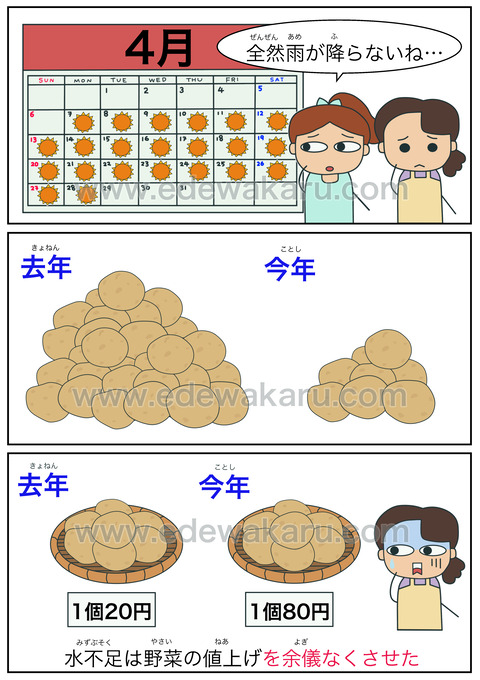
「Aを余儀なくさせる」は「Aしなければいけない状況にさせる」という意味の文型です。「原因があって、Aをしなければいけない状況にさせる」と言いたい時に使います。「〜を余儀なくさせる」は使役形で
【原因】が主語
になります。
どちらも書き言葉で、会話で使われることはほとんどありませんがN1の文型として区別して覚えておきましょう。
【関連文型】
In context 4 examples
水不足は野菜の値上げを余儀なくさせた
→水不足が野菜の値上げをしなければいけない状態にさせた大雨はイベントの中止を余儀なくさせた
→大雨がイベントを中止しなければいけない状態にさせた事故のケガは彼に入院生活(にゅういんせいかつ)を余儀なくさせた
→事故のケガは、入院生活をしなければいけない状態にさせた土砂崩れは住民に避難を余儀なくさせた
→土砂崩れが避難しなければいけない状態にさせた
毎日のんびり日本語教師
Meaning
(人に)~を強制する
How to use it
名詞+を余儀なくさせる
Explanation
何らかの現象が人に対して行動を強制することを表します。
動作主体はその行為をすることを望んでおらず、嫌々行うようなニュアンスがあります。
多くの場合は悪い事態に対して使います。
主語は必ず原因です。
ニュースなどに用いられるような硬い表現です。主に書き言葉として使います。
「余儀ない」はもともと、他に方法がない状態、やむを得ない状態を表す形容詞です。
似ている文型に「【N1文法】~を余儀なくされる」がありますが、こちらの主語は原因ではなく人や集団です。
Notes
似ている文法「【N1文法】~を余儀なくされる」
In context 10 examples
両国関係の悪化が、プロジェクトの中止を余儀なくさせた。
台風の上陸が、フライトの延期を余儀なくさせた。
突然発生した雪崩が、登山計画の中止を余儀なくさせた。(突然发生的雪崩导致登山计划被迫停止。)
貿易交渉の結果、A国はB国に関税の引き下げを余儀なくさせた。
たった一つのミスが、彼に辞職を余儀なくさせた。
夫の不倫は、結婚生活の破綻を余儀なくさせた。(丈夫出轨使婚姻生活破裂了。)
敵の物資の補給路を遮断し撤退を余儀なくさせた。
軍による爆撃は数万人に避難を余儀なくさせています。
A被告はコンビニのレジ付近の床に大便をし、店員に清掃作業を余儀なくさせて業務を妨害した。
A先輩は後輩に手を出し孕ませ、その子に退学を余儀なくさせた。
IMABI
Can’t Help III
Read this IMABI lesson ↗Explanation
Can’t Help III: ~ないではすまない, ~ないではおかない, ~を余儀なく[される・させる], & ~を禁じ得ない
These are even more difficult phrases dealing with not being able to help one’s emotions, etc. Not only do you need to try to separate these in your mind from the phrases found in the two previous lessons about this topic, but you’re going to have to pay even more attention to the differences among these patterns.
~{ないで・ずに}はすまない
Also seen as ~ずにはすまない, which is more formal but can still be found used in the spoken language, is used to show that if one thinks from a societal point of view with a given circumstance, doing something is simply and certainly unavoidable. It is difficult to use, however, when you think that you have to do something from personal emotion. Given that the phrase is stiff, this should be understandable.
1. 人の心を傷つけてしまったなら、謝らずにはすまない。
If you are to hurt someone’s heart, you can’t avoid apologizing.
2. 借金をせずにはすむまい。(古風で、硬い言い方)
You can’t get by without borrowing money.
3. 親に知られたら叱られないではすまないよ。
If your parents found out, you won’t be able to avoid getting scolded.
The non-double negative form above result in ~ないで済すむ, which means “to get by without…”. Just as in English, this implies a good thing because you got away without doing something. 済む itself may show that something is done.
4. 済んだことだ。
It’s finished.
5. 済んだのですか。
Is it over?
6. 金を払わないで済みました。
I got by without paying for it.
7. 気づかれずに済む。
To escape attention.
8. 彼が怪我けがをせずに済んでよかった。
I’m glad that he got by without injury.
9. 冗談じょうだんですまない。
To go beyond a joke. (Shows guilt)
10. 済んだことは元もとに戻もどらない。
What’s done cannot be undone.
11. 蜂を見つけたら、ゆっくり離れたほうがいい。体に止まっても振り払わずにじっとしていれば刺されずに済むよ。
If you are to find a bee, it’s best to separate oneself from it slowly. Even if it lands on you, you can leave without being stung if you stay still.
12. もう一つは、犯行後、同じように夜を待ち、普通の道を河内長野方面に向かって歩いたかもしれないことだ。これは車道以外に近道の旧道もあるので、ここを歩けば夜間は誰にも見られずに済む。
Another possibility is that (the criminal) waited just like that for night after the crime and walked down a regular road toward Kawachi-Nagano. This could go without being seen by anyone at night walking through here because there are also old shortcuts aside from the roadway.
From 二重葉脈 by 松本清張.
~{ないで・ずに}はおかない
Also seen as ~ずにはおかない, this pattern is used to show that one will certainly happen naturally or that you won’t allow something to stay not being done. It shows strong resolution. The situation where one won’t allow for something deals with first person. However, the first situation deals with subjects outside of first person, which includes inanimate things.
13. あの話はやはり嘘だったと、絶対に白状はくじょうさせないではおかないぞ。
If that was indeed a lie, I will absolutely not stand without making (that person) confess.
14. 彼女が歌ったのは聞く人の心を揺ゆさぶらずにはおかない。
What she had sung will surely move the hearts of those who hear.
~を余儀なく[される・させる]
余儀 よぎ means “another way/problem” and 余儀ない expresses “out of one’s control”. So, ~を余儀なくされる, shows that one had to do something that was not of one’s will and there was no other choice to get around it. You are essentially driven into a corner in a certain situation. This can also be seen in the causative as ~を余儀なくさせる. Usually the subject of sentences with ~を余儀なくされる is usually human, but the subject of sentences with ~を余儀なくさせる is usually not human but a something.
15. 悪天候のため試合の中止を余儀なくされました。
Bad weather made us postpone the match.
16. アメリカの圧力が貿易ぼうえき自由化を余儀なくさせた。
American pressure made free trade unavoidable.
17. 暴風雨で遠足は延期を余儀なくされた。
We had to put off the field trip due to fierce rain.
18. {余儀ない・やむを得ない}事情で欠席しました。
I was absent due to an uncontrollable situation.
19. 辞任を余儀なくされる。
To become out of one’s control to resign.
~を禁じ得ない
Although most dictionaries will just tell you this is the same as ~ないではいられない, this is not enough information to help you get a question right about it on the JLPT. Like all the other phrases in this series, this phrase describes not being able to withhold emotions, but this portrays an image of not being able to restrain emotions that have sprung up due to the circumstances. This phrase attaches to nouns that imply emotion. Sentences with it are usually first person.
20. 涙を禁じえなかった。
I couldn’t hold back the tears.
21. 犯人の供述を聞き、犯行動機はんこうどうきの身勝手みがってさに怒いかりを禁じ得なかった。
I couldn’t withhold my anger at the selfishness of the motive from listening to the criminal’s affidavit.
22. 同情の念を禁じえない。
I can’t hold back sympathy
23. 残された子犬を見て、涙を禁じ得なかった。
I couldn’t hold back the tears from looking at the puppy that was left.
In context 23 examples
人の心を傷つけてしまったなら、謝らずにはすまない。
If you are to hurt someone’s heart, you can’t avoid apologizing.
借金をせずにはすむまい。(古風で、硬い言い方)
You can’t get by without borrowing money.
親に知られたら叱られないではすまないよ。
If your parents found out, you won’t be able to avoid getting scolded.
済んだことだ。
It’s finished.
済んだのですか。
Is it over?
金を払わないで済みました。
I got by without paying for it.
気づかれずに済む。
To escape attention.
彼が怪我けがをせずに済んでよかった。
I’m glad that he got by without injury.
冗談じょうだんですまない。
To go beyond a joke. (Shows guilt)
済んだことは元もとに戻もどらない。
What’s done cannot be undone.
蜂を見つけたら、ゆっくり離れたほうがいい。体に止まっても振り払わずにじっとしていれば刺されずに済むよ。
If you are to find a bee, it’s best to separate oneself from it slowly. Even if it lands on you, you can leave without being stung if you stay still.
もう一つは、犯行後、同じように夜を待ち、普通の道を河内長野方面に向かって歩いたかもしれないことだ。これは車道以外に近道の旧道もあるので、ここを歩けば夜間は誰にも見られずに済む。
Another possibility is that (the criminal) waited just like that for night after the crime and walked down a regular road toward Kawachi-Nagano. This could go without being seen by anyone at night walking through here because there are also old shortcuts aside from the roadway.
あの話はやはり嘘だったと、絶対に白状はくじょうさせないではおかないぞ。
If that was indeed a lie, I will absolutely not stand without making (that person) confess.
彼女が歌ったのは聞く人の心を揺ゆさぶらずにはおかない。
What she had sung will surely move the hearts of those who hear.
悪天候のため試合の中止を余儀なくされました。
Bad weather made us postpone the match.
アメリカの圧力が貿易ぼうえき自由化を余儀なくさせた。
American pressure made free trade unavoidable.
暴風雨で遠足は延期を余儀なくされた。
We had to put off the field trip due to fierce rain.
{余儀ない・やむを得ない}事情で欠席しました。
I was absent due to an uncontrollable situation.
辞任を余儀なくされる。
To become out of one’s control to resign.
涙を禁じえなかった。
I couldn’t hold back the tears.
犯人の供述を聞き、犯行動機はんこうどうきの身勝手みがってさに怒いかりを禁じ得なかった。
I couldn’t withhold my anger at the selfishness of the motive from listening to the criminal’s affidavit.
同情の念を禁じえない。
I can’t hold back sympathy
残された子犬を見て、涙を禁じ得なかった。
I couldn’t hold back the tears from looking at the puppy that was left.