Bunpro Grammar Reference
Usage 1
Meaning
Even, To even, To the extent of
How to use it
Noun + まで(も)
Nuance
A phrase which states that something is even to or until the surprising extent of (A).
Explanation
The adverbial particle まで is used in the same way as many other adverbial particles, in that it is highlighting that the statement that comes after it as important in some way. However, unlike our first look at まで, which discussed its use as 'until', this use of まで has the nuance of 'even', or 'to the extent'.
隣街の店舗まで行ったけど、そこでもお目当てのグッズは売っていなかった。
I even went to the store in the next town, but even there, the merchandise I was looking for wasn't being sold.
お腹が空きすぎて、大嫌いなバナナまで食べた。
Because I was so hungry, I even ate a banana, which I hate.
Although using まで as 'even' may seem different to 'until', they are essentially the same thing in Japanese. This is because まで always means '(A) まで, (B)', where (A) is the 'limitation/extent', and (B) is the 'noteworthy factor'. This 'noteworthy factor' will usually be a descriptive word/phrase, such as a verb, adjective, or explanation.
バイクまで持っているの?
You even have a bike?
一回笑ったら、面白くない話までおかしくなる。
Once you start laughing, even uninteresting topics become funny.
Fun Fact
The も particle is sometimes grouped together with まで, when the meaning is 'even'. This just adds emphasis to the fact that the event is somewhat surprising, or that the result is satisfying.
私はスポーツカーまでも持っています。
I even have a sports car.
Nuance · 日本語
何かが(A)の驚くべき程度までたどり着いたことを表す表現。
In context 17 examples
- こっちまでイライラしてきた。
Even I am starting to get annoyed. (to the extent・until)
- 隣街の店舗まで行ったけど、そこでもお目当てのグッズは売っていなかった。
I even went to the store in the next town, but even there, the merchandise I was looking for wasn't being sold.
- バイクまで持っているの?
You even have a bike?
- 一回笑ったら、面白くない話までおかしくなる。
Once you start laughing, even uninteresting topics become funny.
- お腹が空きすぎて、大嫌いなバナナまで食べた。
Because I was so hungry, I even ate a banana, which I hate.
- それまでやらなくてはいけないの?
I have to even do that? (to the extent・until)
- 頭まで痛くなってきた。
Even my head is starting to hurt. (to the extent・until)
- 夜中まで日本語の文法を勉強している。
I'm studying Japanese grammar until the middle of the night. (to the extent・until)
- お腹が空いているとき、熊は果実まで食べる。
Bears will even go as far as to eat berries when they are hungry. (to the extent・until)
- 私まで疑われるから、話しかけないで。
Even I will be suspected, so don't talk to me. (even...to the extent of)
- 君たちがいたから、ここまで来られた。
Because you guys were here, we were able to come as far as this point. (to this extent・until)
- 彼は何年間も勉強したから、漢字まで書ける。
He has studied a number of years, so he can even write kanji. (to the extent・until)
- あの人は1年間で漢字をいっぱい覚えただけじゃなくて、日本語能力試験2級まで受けた。
That person not only remembered a lot of kanji in one year of study, but he even took the JLPT N2. (to the extent・until)
- 彼はアップルが好きで、アップルウォッチまで持っています。
He likes Apple, so he even has an Apple Watch. (to the extent・until)
- 彼は頭がいいから夜遅くまで勉強をしなくてもいい。
He is smart, so it is okay if he doesn't go so far as to study all night. (to the extent・until)
- 彼は親切だが、家族と一緒とまでは言えない。
He is really kind, but I wouldn't go as far as calling him family. (even...to the extent・until)
- 私はスポーツカーまでも持っています。
I even have a sports car.
Usage 2
Meaning
Until, Till, To (but no further than)
How to use it
Ending Point + まで
Noun + まで
Nuance
A word that highlights the point at which an ongoing action will finish.
Explanation
まで is a particle that roughly means 'as far as'. Due to this, when used with regular nouns, or words that signify some kind of end point (a time or day), it is often translated as 'until', 'till', or 'to'.
空港まで行く。
I go to the airport. (To 'go' until the airport, and then be finished)
9時まで勉強する。
I always study until 9.
When used in relation to a place, まで functions similarly to に. This means that someone or something will go 'to' the place, but not any further.
駅まで送るよ。
I'll take you to the station. (Until the station is reached)
車で駅に行く。
I will go to the station by car.
まで may also be used about points in time in the past, where 'up until' would usually be used in English.
昨日のパーティーは11時まで続いた。
The party last night continued up until 11.
Nuance · 日本語
継続していることが終わる地点を強調するために使われる言葉。
In context 18 examples
- どこまで行く?
How far will you go? (Until)
- 駅まで送るよ。
I'll take you to the station. (Until the station is reached)
- 9時まで勉強する。
I always study until 9.
- 昨日のパーティーは11時まで続いた。
The party last night continued up until 11.
- 車で駅に行く。
I will go to the station by car.
- 空港まで行く。
I go to the airport. (To 'go' until the airport, and then be finished)
- 7時までです。
Until seven o'clock.
- このセールは金曜日までです。
This sale lasts until Friday.
- 朝まで寝ました。
I slept until morning.
- 8時まで、テレビを見る。
To watch TV until eight o'clock.
- 来月まで、ダイエットをする。
To diet until next month.
- 先月まで、仕事をした。
I worked until last month.
- 駅まで、歩く。
To walk until the station.
- 木曜日まで、本を借ります。
To borrow the book until Thursday.
- 午後1時まで、暇です。
To have free time until one o'clock in the afternoon.
- 一昨日まで、お金があった。
I had money until the day before yesterday.
- 明後日まで、この服を着ます。
I will wear these clothes until the day after tomorrow.
- 何時までですか。
Until what time?
Usage 3
Meaning
Until (something) happens
How to use it
Verb + まで
Nuance
A word that indicates that until (A) happens, (B) will continue.
Explanation
まで is a particle that roughly means 'as far as (A)', or 'until the point of (A)'. When used with verbs, it is often translated as 'until (A) happens'.
Because まで means 'as far as/until the point of', it cannot be used with verbs in past tense, as would usually be the case in English. Due to this, past tense will be made clear by the context of the story, or verbs that come later in the sentence.
友達が来るまで、駅をウロウロした。
Until my friend came, I wandered around the station. (した gives the whole sentence the meaning of past tense)
携帯は壊れるまで、使います。
Until my phone breaks, I will use it.
When used with a place, まで functions similarly to に. This means that someone or something will go 'to' the place, but not go any further.
Caution
To get a better idea of how まで is used in relation to the past, let's have a look at another example, and how it would translate in English.
授業が始まるまで、先生が来なかった。
The teacher didn't come until the class started.
Here we can see that the English sentence will say 'started', but 始まる 'start' (non-past tense) is required in Japanese. However, later in the sentence, 来なかった (past tense) is used. In this way, the overall meaning stays the same, while being slightly different to what an English native speaker would expect.
Nuance · 日本語
(B)は、(A)が起こらない限り継続されるということを示す言葉。
In context 15 examples
- 映画が始まるまで、友達と話した。
Until the movie started, I talked with my friend.
- 携帯は壊れるまで、使います。
Until my phone breaks, I will use it.
- 友達が来るまで、駅をウロウロした。
Until my friend came, I wandered around the station. (した gives the whole sentence the meaning of past tense)
- 彼が来るまで、日本語を勉強します。
Until he comes, I will study Japanese.
- カタカナを覚えるまで、私は寝ない。
Until I memorize katakana, I won't sleep.
- その漢字を覚えるまで、辞書を使う。
Until I remember that kanji, I will use a dictionary.
- お風呂に入るまで、ゆっくりしたい。
Until I get in the bath, I want to relax.
- 返すまで、結構使いました。
Until I returned it, I used it quite a bit.
- この服は新しい服を買うまで、着ます。
I will wear these clothes until I get new ones.
- 薬を飲むまで、頭が痛かった。
Until I took the medicine, my head hurt.
- 雨が降るまで、外で遊ぶ。
Until it rains, I will play outside.
- 彼が答えるまで、みんなは待ちました。
Until he answered, everyone waited.
- 寝るまで、本を読む。
Until I sleep, I will read a book.
- 終わるまで、頑張った。
Until it was finished, I gave my best.
- 授業が始まるまで、先生が来なかった。
The teacher didn't come until the class started.
DoJG 日本語文法辞典(全集)
Meaning
As far as; till; up to; until; through; even
How to use it
(i) Noun (time/location) | まで | |
| 五時/学校まで | Until five/as far as school |
(ii) Vinformal nonpast | まで | |
| 話すまで | Until someone talks/talked |
| 食べるまで | Until someone eats/ate |
(iii) Number-counter | まで | |
| 四十人まで | Up to forty people |
| 五枚まで | Up to five sheets of paper |
Explanation
A particle to indicate a spatial, temporal or quantitative limit or an unexpected animate/inanimate object.
In context 9 examples
昨日は三時から五時まで友達とテニスをした・しました。
Yesterday I played tennis from three to five with my friend.
東京から京都まで新幹線で三時間かかる・かかります
It takes three hours by bullet train from Tokyo to Kyoto.
私が行くまでうちで待っていて下さい。
Please wait at home until I get there.
このホールは二千人まで入れる・入れます。
This hall can hold up to 2,000 people.
あの人は鼠やスカンクは勿論蛇まで好きだ・好きです。
He even likes snakes, not to mention rats and skunks.
アメリカ人は毎週月曜日から金曜日まで働く。
Americans work every week from Monday through Friday.
駅から大学までは歩いて十分ぐらいです。
It's about 10 minutes from the station to the university on foot.
スミスさんは刺身は勿論、納豆まで食べるんですよ。
Mr. Smith even eats fermented soybeans, not to mention raw fish.
飛行機が出るまでロビーで友達と話していた。
Until the plane left I was talking with my friend in the lobby.
どんなときどう使う 日本語表現文型辞典
Meaning
even
How to use it
N(+助詞)+まで
Explanation
~も/~さえ
1)「~まで」の形で、極端なものごとを挙げて「こんな程度の~も」だから、ほかのことはもちろんと言う場合の表現。極端な範囲にまで広がっているという話者の気持ちの込もった言い方。
2)話者の主張・判断・評価などを表す文が多い。
1)Takes up extreme case of something; if even one element has certain degree, then naturally so do other things. Speaker feels something extends to extreme range.
2)Often describes speaker's assertions, judgments, or evaluations.
In context 4 examples
一番の親友のあなたまで、わたしを疑うの。
日本の生活にすっかり慣れて、納豆まで食べられるようになった。
家族との生活まで犠牲にして、会社のために仕事をするつもりはない。
今度の事件では、妻の両親にまで迷惑をかけてしまった。
絵でわかる日本語
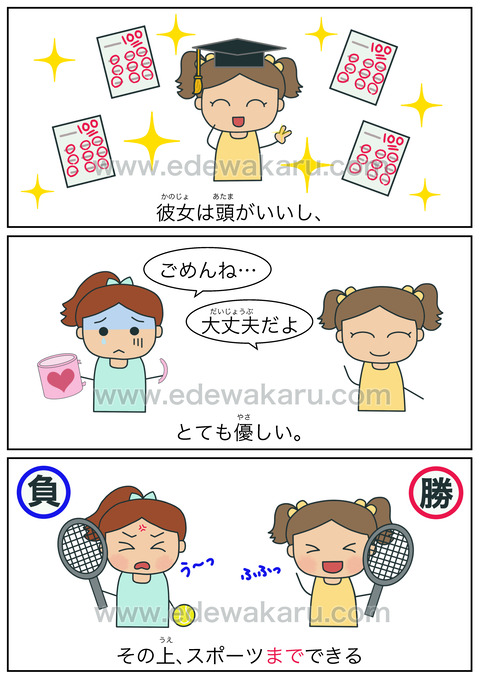
Meaning
〜も
How to use it
名詞[辞書形]+まで
Explanation
「Aまで〜」は「Aも〜」という意味で、「Aという、極端なものも〜だ」と言いたい時に使われる文型です。これは程度を表す文型で、
「普通に考えられるものはもちろん、意外なものも〜という状態になっている」
という意味で使用されます。「A」には、極端な例が入り、[驚き]や[非難]の気持ちを強調します。N3の文型
「〜さえ」
やN1の文型
「〜すら」
と一緒に覚えておきましょう😊
「〜まで」がつく文型はたくさんありますので、復習をしておきましょう😊
In context 5 examples
彼女は頭がいいし、とても優しい。その上、スポーツまでできる
→その上、スポーツもできる雨が降ってきた!それに、風まで強くなってきた
→それに、風も強くなってきた彼女は英語のみならず、フランス語まで話せる
→英語のみならず、フランス語も話せるうちのお母さんは、とても料理が上手なの。中華料理(ちゅうかりょうり)まで作れちゃうんだよ!
→中華料理も作れちゃうんだよ!かぜをひいて、のどだけでなく頭まで痛くなってきた
→のどだけでなく頭も痛くなってきた
日本語文型辞典
Meaning
時間や場所・数量を表す名詞などとともに使われて、範囲を表す。起点を言う必要がないときには「Nまで」だけで用いられる。
「行く、来る、歩く、走る、泳ぐ」などの動詞とともに使われて、移動の終わる場所を表す。「歩く、走る、泳ぐ」などの動詞は、「に」や「へ」には直接付かないが、「まで」とはいっしょに使うことができる。
また、次の例でわかるように、「まで」は、続いている動作の終了した場所を示すので、同時に二つ以上の場所をとることはできない。
⑦は、「係に」と同じ意味であるが、改まった感じがする。
a. Nまで
時間を表す名詞に付いて、「まで」で表される時点以前に、ずっと動作や出来事が続いていることを表す。後ろには、動作や状態の継続を表す表現を伴う。出来事の生起を表す表現を伴うことはできない。
「まで」と「までに」の違いについては、「までに」の項を参照。
b. V-るまで
出来事を表す節に付いて、その出来事が起こる以前に同じ状態や動作がずっと続くことを表す。⑥は、手順を説明する時などによく使われる表現で、中火で煮て、肉がやわらかくなった段階で煮るのを止めるよう指示している。
a. Nまで
「普通考えられる範囲はもちろん、普通では考えられない範囲にまで及んでいること」を話し手が驚きを込めて述べる表現。①を例にあげると、「ふつうマンガは子供が読むものであるが、近頃は子供だけではなくて、大人も読んでいる」という意味。⑦は、「暗くなってくるだけでも良くないのに、その上雨も降って来るというもっと悪い状態が重なった」、⑧は、反対に良いことの上にもっと良いことが重なったということを表している。④の「子供にまで」のように、「名詞+助詞+まで」の形になることもある。
b. V-るまでになる
「なる」の他に「成長する・育つ・回復する・進歩する」など変化を表すような動詞とともに使われる。長い時間や労力をかけて、現在の結果・状態にいたったことを表す。「努力して現在の良い結果・状態に到達した」ことを表す場合によく使われる。
c. V-るまで(のこと)もない
「…する必要がない」という意味。①②のように、「程度が軽いので…する必要はない/しなくても大丈夫だ」、③~⑤のように、「当然のことであるので、…する必要がない」という場合に使う。⑥は、「後でもちろん怒られた」という意味になる。
d. …までして
極端なことを示す表現に付いて、「それほどのことをして」という意味を表す。①④⑤のように、目的のためには手段を選ばないようなやり方を非難する場合に用いる。「-するために、そんな手段をとるのはよくない」「(私は)…するためにそんな手段は使いたくない」という文脈でよく使われる。また、②③のように「普通以上に努力した」「たいへんな犠牲をはらって目的を達成しようとした」という意味で使う。
a. V-るまでくのこと)だ
「現在の方法がだめでも落胆することはない、別の方法をとる」という話し手の決意を表す。
b. V-たまで(のこと)だ
「話し手がそのような行動をしたのは、単にそれだけの理由で他意はない」という意味を表す。
c. これ/それ までだ
「V一ば、それまでだ」という形で使われて、「それでおわりだ」という意味を表す.また③ぼ医用句で絶体絶命の窮地に陥ったときに用いる。
⇾ないまでも
How to use it
NからNまで
Nまで【目的地】
…まで【時間】
…まで【程度】
[Nまでして
V-てまで
…までだ
V-ないまでも
In context 67 examples
シンポジウムは1時から3時まで第3会場で行います。
A:大阪から東京までどのくらいかかりますか。
B:新幹線なら3時間ぐらい。≪ホテルで≫
A:シングルでいくらですか。
B:シングルのお部屋は、 7500 円から 12000 円までとなっております。教科書の25頁から35頁まで読んでおいてください。
この映画は、子供からお年寄りまでご家族みんなで楽しんで頂けます。
A:昼休みは何時までですか。
B:1時までです。バスに乗らずに駅まで歩いて行くことにした。
公園まで走りましょう。
毎日学校まで歩きます。
川幅が広くて向こう岸まで泳げそうもない。
先週の日曜日は、散歩がてら隣の町まで行ってみた。
A:京都にはどうやって行ったらいいですか。
B:そうですねえ、山手線で東京駅まで行って、新幹線に乗るのが一番早いと思いますよ。わからないことがありましたら、係までおたずね下さい。
(正) 公園まで走りましょう。
(誤) 公園{に/へ}走りましょう。
(正) 毎日学校まで歩きます。
(誤) 毎日学校{に/へ}歩きます。
(正) 向こう岸まで泳いだ。
(誤) 向こう岸{に/へ}泳いだ。
(正) イタリアではローマとミラノ{に/へ}行った。
(誤) イタリアではローマとミラノまで行った。
3時まで勉強します。
きのうは結局朝方まで飲んでいた。
私はなまけもので、日曜日はもちろん普通の日でも、たいてい11時頃まで寝ている。
ついこのあいだまでセーターを着ていたのに、この二三日急に暖かくなった。
祖父は死ぬ直前まで意識がはっきりしていた。
(誤) 5時まで到着します。
(正) 5時までに到着します。
あなたが帰ってくるまで、いつまでも待っています。
私がいいと言うまで目をつぶっていてください。
辻さんは結婚して退職するまで、貿易会社に勤めていたそうだ。
≪医者が患者に≫もう少し暖かくなるまで外出はしないほうがいいでしょう。
佐藤さんが会社を辞めるなんて、昨日山田さんに聞くまで知りませんでした。
肉がやわらかくなるまで、中火で煮ます。
近頃は子供ばかりか、いい年をしたおとなまでマンガを読んでいる。
きみまでそんなことを言うのか。
一番信頼していた部下までが、彼を裏切った。
子供にまでばかにされている。
そんなつまらないものまで買うんですか。
落ちぶれた身には、鳳までが冷たい。
だんだん暗くなって来るのにさがしている家は見つからない。その上、雨まで降ってきた。
今年はいいことばかりだ。新しい家に引っ越したし、子供も生まれた。その上、宝くじまで当たった。
私にも悪い点はあるが、そこまで言われたら、黙ってはいられない。
生活に困って盗みまでするようになった。
苦労の甲斐あって、やっと日本語で論文が書けるまでになった。
人工飼育されていたひなはこいひとりで餉がとれるまでに成長した。
リハビリの結果、ひじを曲げられるまでになった。
この程度の風邪なら、医者に行くまでのこともない。うまいものを食べて、一日ぐっすり眠れば治る。
その程度の用事ならわざわざ出向くまでもない。電話でじゅうぶんだ。
皆さんよく御存知のことですから、わざわざ説明するまでもないでしょう。
改めてご紹介するまでもありませんが、山本先生は世界的に有名な建築家でいらっしゃいます。
田中先生は、御専門の物理学は言うまでもなく、平和運動の推進者としてたいへん有名であります。
子供の頃、兄が大事にしていた万年筆を持ちだしてなくしてしまったことがある。後でひどく怒られたことは言うまでもない。
色々ほしいものはあるが三も借金までして買いたいとは思わない。
徹夜までしてがんばったのに、テストでいい点が取れなかった。
彼が自殺までして守りたかった秘密というのは何だろう。
彼は、友だちを騙してまで、出世したいのだろうか。
自然を破壊してまで、山の中に新しい道路をつくる必要はない。鬨吶@出世自然破壊山中新道路必要
父があくまで反対するなら、家を出るまでのことだ。
もし入学試験に失敗しても、私はあきらめない。もう一年がんばるまでのことだ。
そんなに怒ることはない。本当のことを言ったまでだ。
妻:どうして子供たちに結婚する前の話なんかしたんですか。夫:聞かれたから答えたまでで、別に深い意味はないよ。
いくらお金を貯めても、死んでしまえばそれまでだから、生きているうちに楽しんだ方がいい。
運がよかったと言ってしまえばそれまでだが、彼があの若さで成功したのはそれなりの理由がある。
もはや、これまでだ。
喜びはしないまでも、いやがりはしないだろう。
優勝とは言わないまでも、ベスト4ぐらいはねらいたい。
日本語文型辞典 英語版
Meaning
B:新幹線なら3時間ぐらいでしょう。
If you take the shinkansen (bullet train) it will take about three hours.
A:シングルでいくらですか。
How much is a single?
B:シングルのお部屋は、7500 円から 12000 円までとなっております。
A single room costs from 7,500 yen up to 12,000 yen.
B:1時までです。
Until one o’clock.
Used with nouns of time, place, or quantity to indicate a range or span. When it is not necessary to state the starting point, Nまで can be used by itself.
B:そうですねえ。山手線で東京駅まで行って、新幹線に乗るのが一番早いと思いますよ。
Hmm. I think the quickest way is to go to Tokyo Station on the Yamanote Line and then take the shinkansen (bullet train).
Used with verbs such as 行く, 来る, 歩く, 走る, 泳ぐ and so on, expresses where the movement ends. Verbs such as 歩く, 走る, 泳ぐ and the like cannot be directly attached to に and へ, but they can be used together with まで.
(○)公園まで走りましょう。
Let’s run to the park.
(×)公園{に/へ}走りましょう。
Let’s run to the park.
(○)毎日学校まで歩きます。
I walk to school every day.
(×)毎日学校{に/へ}歩きます。
I walk to school every day.
(○)向こう岸まで泳いだ。
I swam to the other side.
(×)向こう岸{に/へ}泳いだ。
I swam to the other side.
Also, as can be understood from the next examples, as まで demonstrates the place at which continuing movement ends, it cannot be used when referring to two places at the same time.
(○)イタリアではローマとミラノ{に/へ}行った。
In Italy, I went to Rome and Milan.
(×)イタリアではローマとミラノまで行った。
In Italy, I went to Rome and Milan.
係まで in
(7)
has the same meaning as 係に, but its tone is more formal.
Attached to a time noun, this indicates that an action or occurrence continued up until the point in time denoted by まで. After it, expressions which demonstrate the continuation of an action or situation are used. It cannot be used with expressions which demonstrate the occurrence of an event.
(×)5時まで到着します。
We will arrive by five o’clock.
(○)5時までに到着します。
We will arrive by five o’clock.
Please see the entry for までに regarding the difference between まで and までに.
b. V-るまで
Attached to a clause which includes an event, signifies the continuation of an action or situation until that event occurs. As in example
(6)
, it is often used when explaining a procedure or process and here instructs one to stop boiling the meat at the stage where it has become tender after being cooked over medium heat.
Used to convey the speaker’s surprise when describing a situation in which something beyond the usual in addition to the usual things has happened. Example
(1)
, for example, means “Usually manga are read by children. However, these days, not only children but also adults are reading them.” Example
(7)
means “It was bad enough that it was getting dark, but the fact that it started raining made the situation even worse.” Example
(8)
expresses, conversely, that on top of a good thing, an even better thing has happened. As in 子供にまで in example
(4)
, this expression can take the pattern N + particle + まで.
b. V-るまでになる
In addition to なる, can be used together with verbs that show change such as 成長する, 育つ, 回復する, and 進歩する. Expresses how the current effect or situation has been reached after a long period of time or through effort. It is often used to express the outcome of striving to achieve something.
c. V-るまで(のこと)もない
Means “it is not necessary to do....” Can be used in cases where, as in examples
(1)
and
(2)
, “as the degree to which something is the case is so slight, it is unnecessary to do... / it is okay not to do....” Can also be used, as in examples
(3)
to
(5)
, in cases where “as something is a matter of course, it is unnecessary to do....” In example
(6)
, it means “of course, afterwards he was angry with me.”
d. ...までして[Nまでして][V-てまで]
Used with phrases that express extremities, this means “to do such a thing as....” As in examples
(4)
and
(5)
, it is used to express criticism of methods of which the speaker does not approve used to achieve an aim. It is often used in such contexts as “It is not good to take such steps in order to...” or “(I) wouldn’t want to do such a thing in order to....” It can also be used, as in examples
(2)
and
(3)
, to mean, “to have made greater efforts than usual” or “to have made tremendous sacrifices to reach a goal.”
Shows the speaker’s determination “not to be discouraged, even if the current method is no good, and to try another way.”
b. V-たまで(のこと)だ
夫:聞かれたから答えたまでで、別に深い意味はないよ。
Husband: I only told them because they asked. There wasn’t any particular reason.
Expresses that the speaker has carried out a certain action without an ulterior motive or agenda and simply for the reason given.
c. これ/それ までだ
Used in the form V-ば、それまでだ, means “that is the end.” Also, as in example
(3)
, it is used idiomatically at times when the speaker has found him/herself in a desperate situation or facing a dilemma.
→
How to use it
1. NからNまで
2. Nまで〈destination〉
3. ...まで〈time〉a. Nまで
4. ...まで〈degree〉a. Nまで
5. ...までだa. V-るまで(のこと)だ
6. V-ないまでも
In context 57 examples
シンポジウムは1時から3時まで第3会場で行います。
The symposium will be held from one o’clock until three o’clock in venue number three.
A:大阪から東京までどのぐらいかかりますか。
Approximately how long does it take from Osaka to Tokyo?
《ホテルで》
《at a hotel》
教科書の 25 頁から 35 頁まで読んでおいてください。
Please read from page 25 to page 35 of the textbook in advance.
この映画は、子供からお年寄りまでご家族みんなで楽しんで頂けます。
This film can be enjoyed by all the family together, from children to the elderly.
A:昼休みは何時までですか。
Until what time is lunch break?
バスに乗らずに駅まで歩いて行くことにした。
I decided to walk to the station without taking the bus.
公園まで走りましょう。
Let’s run to the park.
毎日学校まで歩きます。
I walk to school every day.
川幅が広くて向こう岸まで泳げそうもない。
The river is so wide it’s probably impossible to swim to the other side.
先週の日曜日は、散歩がてら隣の町まで行ってみた。
Last Sunday I went out for a walk to the neighboring town.
A:京都にはどうやって行ったらいいですか。
What would be a good way to get to Kyoto?
わからないことがありましたら、係までおたずね下さい。
If there is something you don’t understand, please ask the person on duty.
3時まで勉強します。
I will study until three o’clock.
きのうは結局朝方まで飲んでいた。
Yesterday I ended up drinking till the wee hours.
私はなまけもので、日曜日はもちろん普通の日でも、たいてい11 時頃まで寝ている。
I am a lazy person, so not only on Sundays but also on ordinary days I usually sleep until about eleven o’clock.
ついこのあいだまでセーターを着ていたのに、この二三日急に暖かくなった。
Even though I was wearing a sweater until just the other day, these last two or three days it has suddenly become warm.
祖父は死ぬ直前まで意識がはっきりしていた。
My grandfather was conscious until just before he died.
あなたが帰ってくるまで、いつまでも待っています。
I will wait forever until you return.
私がいいと言うまで目をつぶっていてください。
Please keep your eyes closed until I say it’s OK.
辻さんは結婚して退職するまで、貿易会社に勤めていたそうだ。
I heard that Tsuji-san had been working at a trading company until she got married and resigned.
《医者が患者に》もう少し暖かくなるまで外出はしないほうがいいでしょう。
《a doctor to a patient》It is best that you don’t go out until it has gotten a little warmer.
佐藤さんが会社を辞めるなんて、昨日山田さんに聞くまで知りませんでした。
I didn’t know that Sato-san would be leaving the company until I heard it from Yamada-san yesterday.
肉がやわらかくなるまで、中火で煮ます。
Cook the meat over medium heat until it becomes tender.
近頃は子供ばかりか、いい年をしたおとなまでマンガを読んでいる。
These days, not only children but even fully grown-up adults read manga.
きみまでそんなことを言うのか。
Even you say such a thing?
一番信頼していた部下までが、彼を裏切った。
Even his most trusted subordinate betrayed him.
子供にまでばかにされている。
Even children make fun of me.
そんなつまらないものまで買うんですか。
Are you going to buy even such a worthless thing?
落ちぶれた身には、風までが冷たい。
To a man who has fallen so low, even the wind seems cold and unfeeling.
だんだん暗くなって来るのにさがしている家は見つからない。その上、雨まで降ってきた。
It is getting dark and we still can’t find the house we are looking for. On top of that, it has even started to rain.
今年はいいことばかりだ。新しい家に引っ越したし、子供も生まれた。その上、宝くじまで当たった。
This year has brought only good things. We moved to a new house and had a baby. On top of that, we even won the lottery.
私にも悪い点はあるが、そこまで言われたら、黙ってはいられない。
I admit that I have my own bad points, but if you are going to say that much, I can’t keep quiet any more.
生活に困って盗みまでするようになった。
I was so hard up that it led me to stealing.
苦労の甲斐あって、やっと日本語で論文が書けるまでになった。
His efforts have paid off and he has progressed to where he can finally write an essay in Japanese.
人工飼育されていたひなは、ひとりで餌がとれるまでに成長した。
The hand-reared chick has grown enough to be able to get food by itself.
リハビリの結果、ひじを曲げられるまでになった。
As a result of rehabilitation, I have improved to where I can now bend my elbow.
この程度の風邪なら、医者に行くまでのこともない。うまいものを食べて、一日ぐっすり眠れば治る。
If your cold is no worse than this, there is no need to go to the doctor. You will recover if you eat tasty things and sleep soundly for one day.
その程度の用事ならわざわざ出向くまでもない。電話でじゅうぶんだ。
You don’t need to make a point of going out to do that kind of errand. It’s enough to do it by telephone.
皆さんよく御存知のことですから、わざわざ説明するまでもないでしょう。
It’s something you all know well, so I don’t think there’s a need for me to give any particular explanation.
改めてご紹介するまでもありませんが、山本先生は世界的に有名な建築家でいらっしゃいます。
There’s no need for me to introduce him again, but Yamamoto-sensei is an internationally famous architect.
田中先生は、御専門の物理学は言うまでもなく、平和運動の推進者としてたいへん有名であります。
I don’t need to tell you that Tanaka-sensei’s specialty is physics, and he is very famous as a promoter of the peace movement.
子供の頃、兄が大事にしていた万年筆を持ちだしてなくしてしまったことがある。後でひどく怒られたことは言うまでもない。
When I was a child I took a fountain pen that was very important to my older brother and lost it. It goes without saying that he was very angry with me afterwards.
色々ほしいものはあるが、借金までして買いたいとは思わない。
There are many things I want but not to the extent that I would take out a loan to buy them.
徹夜までしてがんばったのに、テストでいい点が取れなかった。
Even though I made the effort to study all night, I still didn’t get a good score on the test.
彼が自殺までして守りたかった秘密というのは何だろう。
I wonder what secret he wanted to hide so much that he chose to commit suicide for it.
彼は、友だちを騙してまで、出世したいのだろうか。
I wonder if he wants to succeed even to the extent that he would cheat his friends.
自然を破壊してまで、山の中に新しい道路をつくる必要はない。
It is not necessary to go so far as to destroy nature just to build new roads in the mountains.
父があくまで反対するなら、家を出るまでのことだ。
If my father opposes it to the end, it is something I will leave home for.
もし入学試験に失敗しても、私はあきらめない。もう一年がんばるまでのことだ。
Even if I fail the entrance exam, I won’t give up. It is something I’ll work hard for another year for.
そんなに怒ることはない。本当のことを言ったまでだ。
You don’t have to be so angry. I only spoke the truth.
妻:どうして子供たちに結婚する前の話なんかしたんですか。
Wife: Why did you talk about us before we were married in front of the children?
いくらお金を貯めても、死んでしまえばそれまでだから、生きているうちに楽しんだ方がいい。
However much money you save, you can’t take it with you when you die, so it’s better to enjoy it while you’re alive.
運がよかったと言ってしまえばそれまでだが、彼があの若さで成功したのにはそれなりの理由がある。
You could just say he was lucky, but there must be a reason why he was successful at such a young age.
もはや、これまでだ。
No more—I’ve had it.
喜びはしないまでも、いやがりはしないだろう。
I wouldn’t go so far as to say she would delight in it, but she wouldn’t hate it, either.
優勝とは言わないまでも、ベスト4ぐらいはねらいたい。
I wouldn’t go so far as to say I want to win, but I’m aiming at being somewhere around the top four.
NINJAL 日本語文型データベース
Meaning
[1] ある状態や継続的な動作・出来事の時間的な終点を表すときに使います。
[2] ある空間的範囲の終点や動作・出来事の空間的終点を表します。
起点を「~から」で表すことがあります。
[3] ある範囲の終点を表します。起点を「~から」で表すことがあります。
How to use it
Vるまで
Nまで
Notes
[1] 「~」には、時点を表す言葉や瞬間的な動作・出来事を表す文がきます。「~まで」の後には、状態や継続的な動作・出来事を表す文がきます。
In context 22 examples
私は結婚するまで親と同居していました。
「君が本当に納得するまで何度でも説明するよ」
フライパンに油を入れて熱し、豚肉を入れて、色が変わるまで炒める。
リーさんは日本に来てから5年後に帰国するまで、ずっと私の仕事を手伝ってくれた。
母「どこかに行っちゃだめ。ママが戻ってくるまでここで待っていてね」
私は毎日9時まで働いています。
今の職場で定年まで働き続けたいとは思わない。
今週は土曜日までずっと予定が入っているんです。
朝まで寝ないでずっとゲームをやっていた。
この港は昭和の初めまで漁港として栄えていた。
締め切りまでの時間が長いと、つい後回しにしてしまうことが多い。
「向こうの山の上まで競争しよう。どちらが先に着くかな」
「ここからあの旗が立っているところまでゆっくり歩いていってください」
日本の北端から南端まで自転車で走ってみたい。
この時期、中国大陸の黄砂は、海を越えて日本列島まで飛んできます。
月までの距離は約38万キロです。
この映画は子どもから大人まで誰でも楽しめます。
日本語能力試験のレベルは、N5からN1まである。
ああ、疲れた。今日の勉強はここまでにしよう。
「日本の明治時代のことを知りたいなら、この本を終わりまでしっかり読んでみて」
21世紀、科学はどこまで進歩していくのか。
1課から4課までの漢字を復習しましょう。
Yokubi — The Common Grammar Guide (https://yoku.bi)
Explanation
ころ is a noun that roughly means "approximate time". You run into Xのころに a lot. This can either be a conjunction "around the time of X", or a noun like "the general time when X" with the に particle attached. In some situations ころ can attach directly to nouns as the suffix ごろ.
くらい takes a measure or amount (including time) and makes it approximate. It is completely interchangeable with ぐらい and it is entirely up to speaker's preference.
It can also be used to mean "to the point where" or "to the level where" and not an inch beyond that.
When paired with the は particle it gives a nuance of "at least".
まで essentially means "up to" or "until". The limit or boundary marked by まで is included in the set.
まで is often paired with から as 〜から〜まで (from 〜 until 〜).
までに changes the meaning of まで to mean "by" (as in "do something by next Friday")
ほど essentially means "as" in terms of a comparison. Deep down the core meaning of ほど is "to the extent of".
In positive statements where ほど attaches to an "amount", it's an approximation.
すぎる is a verb and means "to exceed" or "to surpass". As an auxiliary verb, it means "too much" or indicates an excess of activity. It attaches to the ます stem.
In context 3 examples
世界が終わる日まで。
Until the day the world ends.
小さなことから、大きなことまで。
From the small things to the big things.
明後日までには終わらせます。
I will finish it by the day after tomorrow.
IMABI
The Particle まで
Read this IMABI lesson ↗Explanation
The Particle まで
As its core function, the particle まで indicates extent1, and it is generally easily translated as “up to/until/till” into English, permitting liberal translation for its finer nuancing. As far as classification is concerned, まで is typically classified as an adverbial particle in mainstream dictionaries2.
Usage I: As a case particle indicating the point to which an action is carried out. The extent of the action may be interpersonal (up to a certain individual), spatial (up to a point in space), temporal (up to a certain point in time), or quantitative (up to a certain amount/degree).
1. お医者さんまで連れていきましょうか。
Shall I take you (up) to the doctor’s?
Usage II: As a case particle indicating the final extent of a range/sequence/order, and said range may be interpersonal (between two (groups of) people), spatial (between two points of space), temporal (between two points in time), or quantitative (between two amounts).
2. テイラー君は午前10時から午後6時半まで働きました。
Taylor-kun worked from 10 AM to 6:30 PM.
3. オースティンからダラスまで4時間半かかる。
It will take 4.5 hours (to get) from Austin to Dallas.
Usage III: As an adverbial particle strongly emphasizing an extreme extent.
4. セス先生まで疑っている。
Even Seth Sensei (along with everyone else) is doubting me.
Usage IV: As an adverbial noun indicating the severe degree to which the modifier (adjective/adjectival noun) attached to it is so. This utilization is highly emphatic.
5. 見事なまでに失敗した。
I failed splendidly so.
Literally: I failed to the point of said failure splendidly coming to pass.
Orthography Note: Unlike most particles, there is a kanji spelling for まで—迄—which is fairly commonly used for Usage I when the preceding noun is temporal.
In this lesson, we will be investigating each of these core meanings of まで, keeping in mind how factors such as part of speech (品詞), other particles, and surrounding context all play a role in how to understand it.
Usage I: To the Extent of…
For the case particle まで, Usage I is ironically more straightforward grammatically speaking than Usage II, despite the latter usage being its staple usage. Yet, as will be demonstrated, Usage I truly is where the logic behind まで begins.
Usage I, at first glance, seems very similar to other particles like に・へ, especially when paired with intransitive verbs. In such contexts, while まで could be switched out for them, the change in meaning cannot be overlooked.
6a. 渋谷まで行きました。(Extent)
I went as far as Shibuya.
6b. 渋谷{に・へ}行きました。(Destination)
I went to Shibuya.
Yet, this affinity does not stop with intransitive verbs. In the next example, while in the native mind まで is the best choice, learners struggle to choose it over に given how both particles can just as easily be translated as “to” in such scenarios.
7. ご用の方は、係までお申し出ください。
For those (who need) assistance, please submit (your request) to the clerk.
From the speaker’s perspective, まで sets a line for how far they want the person submitting a request to go in their endeavor. By using まで, the listener knows not to submit their request to someone above the clerk, but it also directs them to that point. While both に and まで express an end point, に does not indicate one way or another whether the agent (doer of the action) exceeded that end point, whereas this is precisely what まで does.
8. 「日本のどこに行きましたか?」「いろんなところに行きましたが、残念ながら、沖縄までは3行きませんでした」
“Where (all) did you go in Japan?” “I went to all sorts of places, but unfortunately, I didn’t make it to Okinawa.”
In Ex. 8, the first speaker simply asks the other where they went in Japan. The response the second speaker gives starts off by indicating all the destinations that made up their trip but then finishes by admitting that they didn’t go to the extent that they could have. The implication is that their travel was limited by some exterior force.
9. ちょっと大学まで行ってくる!
I’m going to go to the university for a little bit and come back!
10.「どちらへ?」「ちょっとそこまで」
“Where are you going?” “Nowhere particular.”
Culture Note: In Japanese, you may be asked as a gesture where you are going in the sense of “are you heading out?”
11. 私たちは一緒いっしょに駅まで行きました。
We went together up to the train station.
12. このバスは京都きょうとまで行きます。
This bus goes (up) to Kyoto.
13. 新宿までいくらですか。
How much is it up to Shinjuku?
In addition to nouns, まで may also follow adverbial nouns. Adverbial nouns include counter phrases as well as temporal nouns.
14. 僕は9歳さいまでローマで育そだちました。
I was raised in Rome until I was nine years old.
15. 6月まで福岡に住む予定よていです。
I plan to live in Fukuoka until June.
16. 最近さいきんまでアメリカに住んでいました。
I was living in America until recently.
17. 最後さいごの一粒ひとつぶまで食べてください。
Eat to the last grain.
18. きょうまでよく耐たえたな・・・
I’ve endured pretty well thus far…
While まで is most often seen after nouns, it may also be seen after the 連体形 of verbs in the non-past tense. ~まで cannot be paired with the past tense, as it is illogical to describe an event that has yet to occur as if it had been completed when the verb ~まで would be following has yet to even be completed.
19. カチッと音が鳴なるまで鍵かぎを押おし込こむ。
To push a key in until there is a click sound.
The case particle まで may even be followed by the case particle の to then modify another noun.
20. 仕事が始まるまでの休み時間は素晴すばらしい。
My free time until work starts is wonderful.
21. 大阪までの切符を4枚ください。
Four tickets up to Osaka please.
22. なるべく令和〇年〇月〇日までの提出をお願いします。
Please submit it by #/## (Reiwa Year #) if at all possible.
In Ex. 22, the particle に would otherwise appear if it were not the case that [令和〇年〇月〇日まで] was not modifying a noun. To know how ~までに works, however, we will touch on that separately later in this lesson (compare with Ex. 50).
Usage II: “From X to Y”
Usage II4 takes this notion of extent and applies it to a range, and this range is denoted by the pattern XからYまで, which translates to “from…to…” in various capacities: temporal, locational=spatial, or quantitative5, etc. In doing so, まで acts both like a case marker and like an adverbial phrase.
What is meant by a range depends on the kind of range involved, a point which is often overlooked. A range implies at least one quantifying factor with at least two points: Point X and Point Y.
Within that range, the action occurring may be further quantified by another factor. In this scenario, ambiguity naturally occurs as to whether the action is collectively or individually distributed within that range.
23a. [先生から生徒四人まで]が5台の机を運んだ。
From the teacher to his four students, they moved 5 desks.
In this example, the range pertains to people—Point X (from the “teacher”) and Point Y (to “the students”). Within that range, the act of moving desks occurs. Yet, it is unclear whether they collectively moved 5 desks or if each person moved 5 desks. There are two solutions to this ambiguity: the surrounding context (visual and/or textual) or supplementing the main clause with a modifier that clearly rules out one of the interpretations.
The second solution is arguably the easier route, as is demonstrated by Exs. 23b–c.
23b. [先生から生徒まで]がそれぞれ5台の机を運んだ。
From the teacher to his students, they each moved 5 desks.
23c. [先生から生徒まで]が{みんなで・一緒に}5台の机を運んだ。
From the teacher to his students, they moved 5 desks (al)together.
With these additional modifiers, however, まで’s necessity is significantly weakened, with XからYまでが likely being paraphrased out with XとYが, though the use of まで does always highlight extent to which something is not done just as much as it does so in the affirmative, making both 23b and 23c valid.
If the easier route seems to be the less traveled route, this has major implications for why in everyday speech, visual/textual clues are more likely to pinpoint which interpretation is intended—to the point of affecting grammaticality judgements. Lo and behold, in the context of ranges made by まで, speakers are quick to assume whether a range’s potential output is within reason.
24. [テイラー君からセス君まで]が150キロだ。
Meaning I: (As for the weight of the group), from Taylor to Seth, that’s 150 kilos.
Meaning II: (As for who has that weight), from Taylor to Seth, (they) are at 150 kilos.
The topic at hand, which is the discussion in and of itself, greatly sways the interpretation of the whole sentence, which is an all too common phenomenon in Japanese discourse. If one can visibly tell that one person could not possibly weigh that much, Meaning II would be out of the question. A reasonable scenario for Meaning I to be meant would be in regard to the weight limit of a structure or provided Taylor and Seth are a group of children having their weights tallied. Meaning II, meanwhile, would make sense in the context of weight class, albeit a heavily overweight class.
Ranges pertaining to time, space, or degree, on the other hand, are not ambiguous like this. Regardless of what other factors appear within their range, the amount of time, space, or the severity with which the agents (doers) have to deal with is set in stone.
25 [午後1時から午後2時まで]が休憩時間だ。
From 1 PM to 2 PM is break time.
26. [故郷から首都まで]が100キロだ。
From my hometown to the capital is 100 km.
27. [15度から20度まで]が適温だ。
From 15℃ to 20℃ is an adequate temperature.
From these examples, we can see that there is a clear difference between ranges in which X and Y are people or things versus ranges in which X and Y are points in time, space, or degree, but both kinds of scenarios equate “ranges” with “sets” in their respective ways.
The ambiguity that arises from people or things (tangible sets) being part of a range, as opposed to time, space, or degree (intangible sets), is further felt when attempting to use said ranges in an attributive sense to modify another phrase, whether that modified phrase be another noun or the predicate itself. Consider how strange saying the following would be in both English and Japanese.
28. 言語交流会には、テイラー君からセス先生までの外国語が得意な方が参加している。?
At the language exchange, people talented at foreign languages, from Taylor-kun to Seth Sensei, are participating. ?
29. 言語交流会には、外国語が得意な方が、テイラー君からセス先生まで参加している。X
At the language exchange, people talented at foreign languages are participating from Taylor-kun to Seth Sensei. X
In Exs. 28 and 29, notice how people and things are treated as a set within the same range. Moreover, what makes them so unnatural is how the “X to Y” ranges attributed leave too many questions about what actually defines the set. In both sentences, it is as if the speaker were trying to redefine the elements of the set outlined by XからYまで—within it in Ex. 28 and externally before even stating the set in Ex. 29. Ultimately, word order and “tangible” set boundaries are not flexible when using まで, which is also corroborated by Exs. 23–24 from earlier.
The grammaticality of these tangible sets is also based on practicality just as much as they are by syntactic restrictions. Take for instance the following:
30a. 哲学の本をプラトンからサルトルまで読んだ。?
30b. 哲学の本プラトンからサルトルまでを読んだ。X
30c. 哲学の本プラトンからサルトルまでを、私は読んだ。?
30d. プラトンからサルトルまでの哲学の本を読んだ。??
30e. プラトンからサルトルまで哲学の本を読んだ。◎
I’ve read philosophy books from Plato to Sartre.
What is so important about Ex. 30 is how the unnaturalness behind 30a–d cannot be felt from the English translation alone. That being said, let’s break each one of these iterations down.
30a. is just as unnatural as 30d, but what 30a implies is a tad bit more likely to rationalize. 30a sounds as though the speaker is viewing X (Plato) and Y (Sartre) on a contiguous line of progress, which would make sense if the speaker were meticulously studying philosophy books one by one and viewed X (Plato) definitely as the starting point and Sartre as either the definitive end point or the extent to which the speaker has studied. The ambiguity of the end point and the oddness of the speaker viewing X as the definitive start of the range add to the unnaturalness of the statement.
30b. is ungrammatical because of how [哲学の本プラトンからサルトルまで] is treated definitively as the set which is philosophy books, when in reality, a speaker would know that [プラトンからサルトルまで] cannot be the definitive bounds of [哲学の本], yet here this range is defining the head of the expression [哲学の本] as if it were.
30c. While this ought to be just as ungrammatical as 30b., the reason why it gets more of a pass is because the speaker makes it clear that, despite the incorrect implication of the statement, the speaker is very much under the impression that [哲学の本] = [哲学の本プラトンからサルトルまで].
30d. Here, we see that [プラトンからサルトルまで] is modifying the head of the expression [哲学の本]. By doing so, the set is unambiguously defined as not philosophy books as a whole, but rather the exact set of philosophy books from Plato to Sartre is what the speaker read. 30d is more unnatural than even Ex. 28 is because of how impractical the feat is. Provided the set of books composing X to Y could be adequately conceptualized, 30d itself would remain grammatical, but its impracticality begs to question the validity of the set itself, thus defeating the purpose of using XからYまで.
30e. Here, [プラトンからサルトルまで] sets an open-ended range–with the understanding that all sorts of other examples are part of the set–with which the speaker (agent) read [哲学の本], which is both logical and sound without erroneously making any strange rationalizations about the set itself. Sentences like this demonstrate how まで phrases behave adverbially, and in this case, [プラトンからサルトルまで] modifies the predicate 読んだ. This is also the case in 30f.
30f. プラトンからサルトルまで読んだ。
I’ve read from Plato to Sartre.
If, in 30a., the range [プラトンからサルトルまで] were qualified with a counter phrase, the unnaturalness would disappear, as the range and counter phrase would be one of the same thing, relying heavily on the adverbial nature of まで. With the counter phrase acting as the anchor for the adverbial phrase as a whole, it may freely float around without any logical limitations.
30g. 哲学の本をプラトンからサルトルまで30冊読んだ。
30h. プラトンからサルトルまで30冊(の)哲学の本を読んだ。
I’ve read 30 philosophy books from Plato to Sartre.
Meanwhile, intangible sets create dimensional ranges with which the predicate occurs, allowing for anything to occur within them so long as they actually occur in the kind of range being made.
31a. テイラー君は、午後1時から午後2時まで休憩を取りました。
31b. テイラー君は、午後1時から午後2時までの休憩を取りました。
31c. テイラー君は、午後1時から午後2時まで1時間の休憩を取りました。
31d. テイラー君は、1時間午後1時から午後2時まで休憩を取りました。X
31e. テイラー君は、休憩を午後1時から午後2時まで取りました。
Taylor-kun took his break (of 1 hour) from 1 PM to 2 PM.
Ex. 31d is ungrammatical due to a matter of word order. The counter should occur after XからYまで, and NEVER before.
What else Taylor-kun does while taking his break is irrelevant, although expected, so long as it all occurs within the range set by Point X (1 PM) and Point Y (2 PM).
32a. セスさんは20歳から40歳までの独身男性を対象に彼氏を探している。◎
32b. セスさんは独身男性を対象に20歳から40歳まで彼氏を探している。X
Seth-san is looking for a boyfriend, aiming for a single guy from ages 20–40.
Ex. 32b is ungrammatical because the act of searching is not done through a temporal range, but through a range of people. The range of people may be qualified by an age range, but the reverse is not logical. Thus, while intangible sets may float around, they may only do so if the predicate makes sense with them.
At times, the predicate may still make sense regardless of where the intangible set is placed, but the meaning of the sentence may not stay the same.
33. 100ページから150ページまでの論文を読みました。
I read the thesis on Pg 100–150.
34. 論文を100ページから150ページまで読みました。
I read the paper from Pg 100 to Pg 150.
Omitting まで
XからYまで may actually be rendered as XからY so long as the phrase is followed by another case particle, but まで must ALWAYS be present if the phrase is being used adverbially (in which case it may be observed floating around given the right conditions described thus far). Often times when まで is omitted, XからY is spelled as X~Y.
35. 20代から30代に多い病気を調べてみました。
I looked into diseases common for those in their 20s to 30s.
36. 花粉は朝5時から10時が特に危険だ。
Pollen is particularly dangerous from 5 AM to 10 AM.
37. 10匹~100匹(のポケモン)を登録した。
I recorded 10~100 (Pokémon).
Usage I まで vs ~までに
The addition of the case particle に onto まで results in a profound change in nuance. While まで continues denoting the extent to which the action occurs, に sets that as the time frame “by” which the action ought to be done. While ~まで still establishes the extent to which the predicate may be true, に points out that the action must at least occur at any point within that range.
In short, imagine まで establishing a line on a temporal plane. While the line is still there with までに, the に indicates a point on that line. The point can be anywhere before the line ends, but it still defines a point nonetheless.
38. 零時れいじまでに3冊読んでください。
Please read three books by midnight.
39a. 日が出るまでに床に就く。 〇/?
39b. 日が出るまで寝ている。〇
39a. To go to sleep by the time the sun rises.
39b. To be asleep until the sun rises.
40. 明日までに郵便局ゆうびんきょくに行かないといけない。
I have to go to the post office by tomorrow.
41. 私に情をかけたいつもりなら、処刑までに三日間の日限を与えてください。
If you intend on showing me mercy, please allot me a deadline of three days before my execution.
From 『走れメロス』by 太宰治.
42. 結婚するまでには、もう日本で働き始めました。
By the time I got married, I had already begun working in Japan.
43. お食事は、会議が開かれるまでには、済ませてください。
Please be sure to finish eating by the time the meeting is started.
Having seen how ~までに works, consider the following sentences in which just the change between ~まで and ~までに makes a profound difference.
44a. あの店は朝6時まで閉まっている。
44b. あの店は朝6時までに閉まっている。
44a. That store is closed until 6 AM.
44b. That store is closed by 6 AM.
45a. 寝るまでテレビを見ている。
45b. 寝るまでにテレビを見ている。
45a. I habitually watch TV until I sleep.
45b. I habitually watch TV by the time I go to sleep.
46a. 番組が始まるまで、テレビを消してある。
46b. 番組が始まるまでに、テレビを消してある。
46a. (I) have the TV kept off until the show starts.
46b. (I) have the TV turned off by the time the show starts.
In Ex. 46a, the TV is turned on once the shows starts, but in Ex. 46b, just with the inclusion of に, the TV is turned off at some point before the show starts, but the TV remains off even after the show starts.
47. 完治する{まで 〇・までに X}入院している。
I am hospitalized until I fully recover.
48a. お客様がお見えになるまでお待ちしております。(うちの店で)
I am there waiting (in my store) for (as long as) I see customers coming.
48b. お客様がお見えになるまでにお待ちしております。(駅などで)
I’m (there) waiting (for my customers) by the time they get (there).
~までに vs ~前に
While ~までに may seem very similar to ~前に because of how the main clause occurs before the subordinate clause with ~までに is completed, the key difference is that ~までに sets a deadline for which the first action must be completed (which coincidentally is before the main clause occurs), whereas ~前に simply indicates “before.” Whether a sentence will make sense with either or will rest on whether the notion of “by said point” is intended and/or necessitated.
49a. 新居に引っ越すまでに不要な家具を捨てました。
49b. 新居に引っ越す前に不要な家具を捨てました。
49a. I had thrown out unneeded furniture by the time I moved to my new place.
49b. I had thrown out unneeded furniture before I moved to my new place.
50. 明日{までに 〇・前に X}、第63課のレポートを提出すること!
Submit your report on Lesson 63 by tomorrow!
51. お父さんは完治する{まで X・までに △・前に 〇}退院していました。
My father had left the hospital [by the time ?/before] he fully recovered.
Usage I まで + Non-Temporal に
Now, the particle に after まで need not always be temporal in nature. If it is not temporal in nature, it is likely being used as a purpose marker, which is the case for the following examples.
52a. ご参考さんこうまでにしてください。
52b. ご参考まで(に)6
Please use for your reference.
53. ご挨拶(まで)に伺いました。
I have come by to greet (which is the extent of my visit).
Grammar Note: The verb 伺う is the humble form of 来る.
Usage 1 まで + で
It may seem surprising that ~までで is also possible, but the choice of the particle で indicates a transition point where, at that point in time, the action/situation at hand is stopped/concluded for the next to occur. In this structure, what precedes ~までで will necessarily be a temporal noun (most likely a deadline).
54. 午後6時までで帰宅した。
(I) put a hold (on work) at 6 PM and returned home.
At times, though, までで appears overlap with まで, but in situations like Ex. 55, the choice of までで indicates that “the most fun” to have had is being reflected on with “now” as the transition point into a discussion on what might be done next. Meaning, the fun that has happened may be finished, but there is the open possibility of going back to complete all the fun that could be had7. By simply using まで, the focus is kept within the time frame that 今まで establishes, which ends at “now.”
55. 今{まで・までで}一番楽しかったことは何ですか?
What has been the most fun thing you’ve experienced [so far/up-to-date].
It may also be the case that で is not the particle で at all. Instead, you may be looking at the copula in its て form. Now, Ex. 54 could be viewed as a bridging context between the two, but for an example in which で can only be viewed as the latter, consider Ex. 56. In this example, までで clearly marks the end of a subordinate clause.
56. ご応募の締め切りは、今月末までで、詳細はホームページで確認するよう呼び掛けています。
The deadline to apply is until the end of this month, and we are asking that (everyone) see the details on (our) website.
Usage III: Extremity
The adverbial particle まで may also indicate an extremity. This is by nature an extension of its case particle function (Usage I) of establishing the extent of an amount/degree. The “extreme” nature of how true the statement is provides an emotional aspect quite different from its utilization seen thus far, but also like other phrases which may equate to “even,” other things below the threshold that まで establishes are implied to be just as true.
57. あの留学生は、日本語を学び始めて半年なのに、難しい漢字まで読めるよ。
That foreign exchange student has only started Japanese for half a year, yet he can read even difficult kanji (having mastered everything less complicated).
58. 子供の喧嘩なのに、警察まで出てきたんだよ。
Even though it was just kids arguing, (it has reached the point that) even the police have arrived on the scene.
59. 自分の彼女までもオレを疑うたがってるんだよ。
Even my own girlfriend doubts me.
60. どこまでオレを憎にくむのか。(Masculine; rough)
To what extent do you detest me?
61. そこまで言うの?ちょっとひどくない?
Wow, isn’t that a little harsh saying that much?
One way the adverbial particle まで differs from the case particle まで is how it can go after other case particles like に・へ, though its appearance results in the ellipsing of other case particles like が・を.
62. だから、自分の子供にまで軽蔑されるんだよ。
That’s why you’re scorned by even your own kids (and everyone else for that matter).
63. 彼は会社にまでペットのワニを連れてきているよ。まだちっちゃいんだけど、怖いなあ。
He’s bringing his pet crocodile even to the office. It’s still small and all, but dang, it’s sure scary.
64. 外国へまで行って探しました。
I went all the way to a foreign country to find (it).
At this point, you may wonder whether the adverbial particles は and も may follow the adverbial particle まで to provide their unique emphatic effects8, and the simple answer to this is yes.
65. あの人は、いじめが原因で学校へ行かなくなり、さらに付き合っていた彼女までも殺害したという。
They say that that person stopped going to school with bullying being the cause, and what’s more that he went so far as to kill even his girlfriend that he was dating.
Usage III does not, in practice, get used with the negative, as the extreme extent (degree) at hand is intended to be an affirmative realization of the extreme effect at play. As such, when the particle まで is clearly being used adverbially but is merely a negation of not reaching a certain extent, this ought to be viewed as an iteration of Usage I, a counterargument to it being viewed (solely) as a case particle.
66. そこまでは言っていません。
I wouldn’t go that far.
Usage IV: Adverbial Particle or Dummy Noun?—To be Continued
Under specific circumstances as we have begun to see in Usage III, まで may indicate an extreme/severe/incredible degree, and in doing so, in conjunction with adjectives/adjectival nouns which describe extreme situations, it possesses dummy noun-like qualities.
Yet, the grammatical situations in which まで takes on dummy-noun-like qualities are varied, resulting in the dummy-noun まで being riddled with subtleties, so much so that rather than viewing this as a separate usage from a semantic standpoint, it is best to view it as a different syntactic realization of either Usage I, Usage III, or both at the same time.
67. この世界は残酷なまでに美しい。(Adj. Noun + ~までに = Severe Degree)
This world is beautiful to the point of brutality.
68. プリンセスを助けるまでに成長した。(Verb + ~までに = Severe Degree)
I had grown to the point of (going out and) saving the princess.
69. 死ぬほどまでに苦しんでいた。(~ほどまでに = Severe Degree → Usage III)
I had been suffering to the point of death.
70. 蒼穹に聳え立つ山頂から見える日の出は、いっそ神々しいまでだ。(Dummy-Noun = Severe Degree)
The sunrise that can be viewed from atop the mountain peak which towers into the blue sky is nothing short of being ever more sublime.
71. そんなに嫌なら、会社を辞めるまでだな。(Dummy-Noun ≠ Severe Degree?)
If you hate the company that much, then there is nothing left for you to do but to quit.
The extent to which まで may function in this capacity and how it relates to other structures are worth further study, but due to the complexity involved, that discussion will be saved for the second lesson on まで.
参照
『助詞・助動詞の辞典』 by 森田良行.
『日本語類義表現 使い分け辞典』by 泉原省二.
順序助詞句「AからBまで」について by 茂木俊伸.
“Extent” as in a point to which something is attained but does not extend beyond said point. The “point” may be interpersonal, spatial, temporal, or quantitative. ↩︎
The 広辞苑 defines all the usages of まで discussed in this lesson as being adverbial in nature. ↩︎
The case particle まで may be emphasized via the addition of the particle は, which highlights the extent marked by まで as being both noteworthy and contrastive to some exterior expectation. ↩︎
In light of how Usage II of まで functions in creating a range–”from X to Y”– the classification 順序助詞 has been proposed by some researchers to account for how まで functions so similarly to other quantifiers (数量詞) like counter phrases, especially given how case particles such as が and を may appear with まで. By this logic, the 順序助詞「まで」can exhibit both case (tangible end point) and adverbial (extent) functionality. ↩︎
Usage II of the case particle まで is limited to what sort of quantitative phrases it may follow. If following a phrase like 最後の一粒 (final grain of rice) or 3本目 (third cylindrical item) in which the “quantity” is directly attributed to a physical noun, まで is grammatical. However, directly following counter phrases is trickier:
v. おひとり様ひとつまで
Up to one per customer
vi. お酒は{三本 X・三本め ○}まで無料です。
Alcohol is free up to the third drink.
It is generally unnatural to rationalize multiple quantities as being part of a range when its the individual items that make up said range. The same could be said for English, as “alcohol is free up to three” is less natural than “alcohol is free up to the third drink.” ↩︎
When dropping する, the choice seems to be between まで and までに, but because に is not being used temporally, it is more so how far does the phrase get shortened and what the impact on tone is by that decision. Without に, while まで still softens the request for how far the listener should take the speaker’s advice, the sentence is direct enough that it sounds as though the speaker is of higher authority than the listener. ↩︎
In other words, までで sets up a goal that at which point said time has been reached, the effect of the main clause takes hold, and there is a sense of some accomplishment had from the time that was had, but the entire act may very still follow in the future. This is not the case with までに, as V1 must occur and be completed by the time V2 commences. ↩︎
は being contrastive by nature and possible in negative sentences, while も highlights the affirmative. ↩︎
In context 96 examples
お医者さんまで連れていきましょうか。
Shall I take you (up) to the doctor’s?
テイラー君は午前10時から午後6時半まで働きました。
Taylor-kun worked from 10 AM to 6:30 PM.
オースティンからダラスまで4時間半かかる。
It will take 4.5 hours (to get) from Austin to Dallas.
セス先生まで疑っている。
Even Seth Sensei (along with everyone else) is doubting me.
見事なまでに失敗した。
I failed splendidly so.
渋谷まで行きました。(Extent)
I went as far as Shibuya.
渋谷{に・へ}行きました。(Destination)
I went to Shibuya.
ご用の方は、係までお申し出ください。
For those (who need) assistance, please submit (your request) to the clerk.
「日本のどこに行きましたか?」「いろんなところに行きましたが、残念ながら、沖縄までは3行きませんでした」
“Where (all) did you go in Japan?” “I went to all sorts of places, but unfortunately, I didn’t make it to Okinawa.”
ちょっと大学まで行ってくる!
I’m going to go to the university for a little bit and come back!
「どちらへ?」「ちょっとそこまで」
“Where are you going?” “Nowhere particular.”
私たちは一緒いっしょに駅まで行きました。
We went together up to the train station.
このバスは京都きょうとまで行きます。
This bus goes (up) to Kyoto.
新宿までいくらですか。
How much is it up to Shinjuku?
僕は9歳さいまでローマで育そだちました。
I was raised in Rome until I was nine years old.
6月まで福岡に住む予定よていです。
I plan to live in Fukuoka until June.
最近さいきんまでアメリカに住んでいました。
I was living in America until recently.
最後さいごの一粒ひとつぶまで食べてください。
Eat to the last grain.
きょうまでよく耐たえたな・・・
I’ve endured pretty well thus far…
カチッと音が鳴なるまで鍵かぎを押おし込こむ。
To push a key in until there is a click sound.
仕事が始まるまでの休み時間は素晴すばらしい。
My free time until work starts is wonderful.
大阪までの切符を4枚ください。
Four tickets up to Osaka please.
なるべく令和〇年〇月〇日までの提出をお願いします。
Please submit it by #/## (Reiwa Year #) if at all possible.
[先生から生徒四人まで]が5台の机を運んだ。
From the teacher to his four students, they moved 5 desks.
[先生から生徒まで]がそれぞれ5台の机を運んだ。
From the teacher to his students, they each moved 5 desks.
[先生から生徒まで]が{みんなで・一緒に}5台の机を運んだ。
From the teacher to his students, they moved 5 desks (al)together.
[テイラー君からセス君まで]が150キロだ。
Meaning I: (As for the weight of the group), from Taylor to Seth, that’s 150 kilos.
[故郷から首都まで]が100キロだ。
From my hometown to the capital is 100 km.
[15度から20度まで]が適温だ。
From 15℃ to 20℃ is an adequate temperature.
言語交流会には、テイラー君からセス先生までの外国語が得意な方が参加している。?
At the language exchange, people talented at foreign languages, from Taylor-kun to Seth Sensei, are participating. ?
言語交流会には、外国語が得意な方が、テイラー君からセス先生まで参加している。X
At the language exchange, people talented at foreign languages are participating from Taylor-kun to Seth Sensei. X
哲学の本をプラトンからサルトルまで読んだ。?
I’ve read philosophy books from Plato to Sartre.
哲学の本プラトンからサルトルまでを読んだ。X
I’ve read philosophy books from Plato to Sartre.
哲学の本プラトンからサルトルまでを、私は読んだ。?
I’ve read philosophy books from Plato to Sartre.
プラトンからサルトルまでの哲学の本を読んだ。??
I’ve read philosophy books from Plato to Sartre.
プラトンからサルトルまで哲学の本を読んだ。◎
I’ve read philosophy books from Plato to Sartre.
is ungrammatical because of how [哲学の本プラトンからサルトルまで] is treated definitively as the set which is philosophy books, when in reality, a speaker would know that [プラトンからサルトルまで] cannot be the definitive bounds of [哲学の本], yet here this range is defining the head of the expression [哲学の本] as if it were.
I’ve read from Plato to Sartre.
While this ought to be just as ungrammatical as 30b., the reason why it gets more of a pass is because the speaker makes it clear that, despite the incorrect implication of the statement, the speaker is very much under the impression that [哲学の本] = [哲学の本プラトンからサルトルまで].
I’ve read from Plato to Sartre.
Here, we see that [プラトンからサルトルまで] is modifying the head of the expression [哲学の本]. By doing so, the set is unambiguously defined as not philosophy books as a whole, but rather the exact set of philosophy books from Plato to Sartre is what the speaker read. 30d is more unnatural than even Ex. 28 is because of how impractical the feat is. Provided the set of books composing X to Y could be adequately conceptualized, 30d itself would remain grammatical, but its impracticality begs to question the validity of the set itself, thus defeating the purpose of using XからYまで.
I’ve read from Plato to Sartre.
Here, [プラトンからサルトルまで] sets an open-ended range–with the understanding that all sorts of other examples are part of the set–with which the speaker (agent) read [哲学の本], which is both logical and sound without erroneously making any strange rationalizations about the set itself. Sentences like this demonstrate how まで phrases behave adverbially, and in this case, [プラトンからサルトルまで] modifies the predicate 読んだ. This is also the case in 30f.
I’ve read from Plato to Sartre.
プラトンからサルトルまで読んだ。
I’ve read from Plato to Sartre.
哲学の本をプラトンからサルトルまで30冊読んだ。
I’ve read 30 philosophy books from Plato to Sartre.
プラトンからサルトルまで30冊(の)哲学の本を読んだ。
I’ve read 30 philosophy books from Plato to Sartre.
テイラー君は、午後1時から午後2時まで休憩を取りました。
Taylor-kun took his break (of 1 hour) from 1 PM to 2 PM.
テイラー君は、午後1時から午後2時までの休憩を取りました。
Taylor-kun took his break (of 1 hour) from 1 PM to 2 PM.
テイラー君は、午後1時から午後2時まで1時間の休憩を取りました。
Taylor-kun took his break (of 1 hour) from 1 PM to 2 PM.
テイラー君は、1時間午後1時から午後2時まで休憩を取りました。X
Taylor-kun took his break (of 1 hour) from 1 PM to 2 PM.
テイラー君は、休憩を午後1時から午後2時まで取りました。
Taylor-kun took his break (of 1 hour) from 1 PM to 2 PM.
セスさんは20歳から40歳までの独身男性を対象に彼氏を探している。◎
Seth-san is looking for a boyfriend, aiming for a single guy from ages 20–40.
セスさんは独身男性を対象に20歳から40歳まで彼氏を探している。X
Seth-san is looking for a boyfriend, aiming for a single guy from ages 20–40.
100ページから150ページまでの論文を読みました。
I read the thesis on Pg 100–150.
論文を100ページから150ページまで読みました。
I read the paper from Pg 100 to Pg 150.
20代から30代に多い病気を調べてみました。
I looked into diseases common for those in their 20s to 30s.
花粉は朝5時から10時が特に危険だ。
Pollen is particularly dangerous from 5 AM to 10 AM.
10匹~100匹(のポケモン)を登録した。
I recorded 10~100 (Pokémon).
零時れいじまでに3冊読んでください。
Please read three books by midnight.
日が出るまでに床に就く。 〇/?
39a. To go to sleep by the time the sun rises.
日が出るまで寝ている。〇
39a. To go to sleep by the time the sun rises.
明日までに郵便局ゆうびんきょくに行かないといけない。
I have to go to the post office by tomorrow.
私に情をかけたいつもりなら、処刑までに三日間の日限を与えてください。
If you intend on showing me mercy, please allot me a deadline of three days before my execution.
結婚するまでには、もう日本で働き始めました。
By the time I got married, I had already begun working in Japan.
お食事は、会議が開かれるまでには、済ませてください。
Please be sure to finish eating by the time the meeting is started.
あの店は朝6時まで閉まっている。
44a. That store is closed until 6 AM.
あの店は朝6時までに閉まっている。
44a. That store is closed until 6 AM.
寝るまでテレビを見ている。
45a. I habitually watch TV until I sleep.
寝るまでにテレビを見ている。
45a. I habitually watch TV until I sleep.
番組が始まるまで、テレビを消してある。
46a. (I) have the TV kept off until the show starts.
番組が始まるまでに、テレビを消してある。
46a. (I) have the TV kept off until the show starts.
完治する{まで 〇・までに X}入院している。
I am hospitalized until I fully recover.
お客様がお見えになるまでお待ちしております。(うちの店で)
I am there waiting (in my store) for (as long as) I see customers coming.
お客様がお見えになるまでにお待ちしております。(駅などで)
I’m (there) waiting (for my customers) by the time they get (there).
新居に引っ越すまでに不要な家具を捨てました。
49a. I had thrown out unneeded furniture by the time I moved to my new place.
新居に引っ越す前に不要な家具を捨てました。
49a. I had thrown out unneeded furniture by the time I moved to my new place.
明日{までに 〇・前に X}、第63課のレポートを提出すること!
Submit your report on Lesson 63 by tomorrow!
お父さんは完治する{まで X・までに △・前に 〇}退院していました。
My father had left the hospital [by the time ?/before] he fully recovered.
ご参考さんこうまでにしてください。
Please use for your reference.
ご参考まで(に)6
Please use for your reference.
ご挨拶(まで)に伺いました。
I have come by to greet (which is the extent of my visit).
午後6時までで帰宅した。
(I) put a hold (on work) at 6 PM and returned home.
今{まで・までで}一番楽しかったことは何ですか?
What has been the most fun thing you’ve experienced [so far/up-to-date].
ご応募の締め切りは、今月末までで、詳細はホームページで確認するよう呼び掛けています。
The deadline to apply is until the end of this month, and we are asking that (everyone) see the details on (our) website.
あの留学生は、日本語を学び始めて半年なのに、難しい漢字まで読めるよ。
That foreign exchange student has only started Japanese for half a year, yet he can read even difficult kanji (having mastered everything less complicated).
子供の喧嘩なのに、警察まで出てきたんだよ。
Even though it was just kids arguing, (it has reached the point that) even the police have arrived on the scene.
自分の彼女までもオレを疑うたがってるんだよ。
Even my own girlfriend doubts me.
どこまでオレを憎にくむのか。(Masculine; rough)
To what extent do you detest me?
そこまで言うの?ちょっとひどくない?
Wow, isn’t that a little harsh saying that much?
だから、自分の子供にまで軽蔑されるんだよ。
That’s why you’re scorned by even your own kids (and everyone else for that matter).
彼は会社にまでペットのワニを連れてきているよ。まだちっちゃいんだけど、怖いなあ。
He’s bringing his pet crocodile even to the office. It’s still small and all, but dang, it’s sure scary.
外国へまで行って探しました。
I went all the way to a foreign country to find (it).
あの人は、いじめが原因で学校へ行かなくなり、さらに付き合っていた彼女までも殺害したという。
They say that that person stopped going to school with bullying being the cause, and what’s more that he went so far as to kill even his girlfriend that he was dating.
そこまでは言っていません。
I wouldn’t go that far.
この世界は残酷なまでに美しい。(Adj. Noun + ~までに = Severe Degree)
This world is beautiful to the point of brutality.
プリンセスを助けるまでに成長した。(Verb + ~までに = Severe Degree)
I had grown to the point of (going out and) saving the princess.
死ぬほどまでに苦しんでいた。(~ほどまでに = Severe Degree → Usage III)
I had been suffering to the point of death.
蒼穹に聳え立つ山頂から見える日の出は、いっそ神々しいまでだ。(Dummy-Noun = Severe Degree)
The sunrise that can be viewed from atop the mountain peak which towers into the blue sky is nothing short of being ever more sublime.
そんなに嫌なら、会社を辞めるまでだな。(Dummy-Noun ≠ Severe Degree?)
If you hate the company that much, then there is nothing left for you to do but to quit.
The Particle まで II
Read this IMABI lesson ↗Explanation
The Particle まで II
Back in Lesson 63, we learned that the particle まで has four broad usages which all center around the concept of “extent” while differing on the exact grammatical mechanics. In that same spirit, we will be investigating other applications of まで, categorizing by how まで functions from the point of view of part of speech.
Usage 1: Case Particle まで = “Until/Up to”
Usage 2: (Range-Indicating) Case Particle まで = “From… To…”
Usage 3: Adverbial Particle まで = Extremity
Usage 4: Adverbial Noun/Dummy Noun = Severe Degree/Furthest
Usage III: ~てまで
A very important application of Usage III of まで which was not covered in the first lesson is when it follows the て form of verbs. This pattern indicates that the agent goes through the effort despite their reluctance to bring about the following clause. If the following clause fails, it is often followed by the particle のに, which is then followed by the ultimate consequence.
1. 県民大会けんみんたいかいを開いてまで反対を訴うったえたのに、オスプレイは配備はいびされてしまった。
Although we voiced our protest by going as far as to open a meeting of the prefecture citizens, the Ospreys ended up being deployed.
From NHK on January 22, 2012.
2. 体を壊してまで、仕事を続ける。
To continue the/a job to the point of damaging one’s health.
3. 「苦肉の策」は自分の身を傷めてまでも敵を欺くことを指す言葉です。
“Kuniku no saku” is a phrase that refers to deceiving an enemy even at the cost of hurting oneself.
As an application of Usage III, the relationship ~てまで has with the negative is complicated. Consider the following:
4. お金を払ってまでコーラを飲まない。
I don’t drink coke to the point of spending money for it.
One major reason for why the extreme degree (Usage III) iteration of まで is said to not work with the negative is because the extreme degree marked by まで necessitates that something occur because of it. This remains true for Ex. 4 in how it cannot be interpreted. Meaning, Ex. 4 cannot mean “I go so far to spend money to not drink coke.” Here, the negation can be seen negating the premise of the entire sentence. Even so, there are still two potential interpretations of the sentence.
4′. [お金を払ってまでコーラを飲ま]ない。
I don’t [drink coke to the point of spending money for it].
(Agent doesn’t drink coke)
4”. [お金を払って]までコーラを飲まない。
I don’t drink coke to the point of [spending money for it].
(Agent does drink coke but doesn’t pay for it)
5. 10万ドル払はらってまでテキサス大学に入りたくないよ。
I don’t want to go to the University of Texas to the point of paying $100,000.
Usage III: ~までして
Of the same vein as ~てまで but with a distribution, ~までして is seen after nouns (including verbal nouns with する) and adverbial determiners. Intrinsically, this is just the て form of Usage III being used with する, and as such,する is not restricted to being in this form (Ex. 9).
6. そこまでして勝ちたいのか。
You’d go that far just to win?
7. 何故そうまでして嘘をつかなきゃいけないんだよ!
Why would you have to go that far to lie?
8. 徹夜{までして・してまで}とても頑張ったそうです。
I heard that (he) tried so hard that he went so far as to stay up all night.
9. 借金{までして・してまで}物を買う人がいますが、どうしてお金が貯まってから買わないのでしょうか。
There are people who will by things to the point of going into debt, but why is it that they don’t buy (those things) once they’ve saved up the money (for them)?
10. 回収まですることなのでしょうか。
Do (they) really need to go so far as to recall (it)?
Usage IV: ~まで(のこと)だ = The Extent of the Matter at hand
The pattern ~まで(のこと)だ indicates that the intent of the agent does not extent beyond the action in question. This intent to not go beyond the extent declared, however, is borne from a willpower made possible only by there being no perceivable other option. That in and of itself, though, is presented in a light-hearted, unserious manner by the part of the agent.
The inclusion of のこと both emphasizes the structure and re-nominalizes the phrase as a whole. This subtle difference is what prevents this structure from being alternatively interpreted as severe degree, which would otherwise be inherent of the dummy-noun まで when it possesses a far more adverbial role.
11. 誰も協力してくれないんなら、自分でやってみるまでさ。
If no one else will help out, I’ll just have to do it myself.
12. 来月ビザが更新できないのであれば、帰国するまでのことです。
In the case I can’t renew my visa next month, then I’ll be returning to my country, and that’s that.
13. 給料があがらないのなら、転職するまでだ。
If your salary doesn’t go up, then switch jobs: that’s that.
14. ここまでして罪を認めないなら、裁判を起こすまでだ。
If you’ve gone this far yet won’t admit to your wrongdoing, then I am left with no other choice but to file a lawsuit.
Whenever this pattern is used with the past tense, it indicates how the action of the agent was inconsequential, which although in line with what is above, is usually discussed as a separate
15. 考え事をしていたまでです。
I was just thinking (and nothing more).
16. 人として正しいことをしたまでだ。
I did only what was right as a person (and nothing more).
Usage IV: ~までもない
~までもない indicates a lack of need to go so far as to do the act in question, and it is most often translated as “there is no need to…”
17. それをするまでもない。
There’s no need to do that.
18. 手紙に書くまでもないことだから、電話で伝える。
Because it’s not necessary to write a letter, I’ll tell you on the telephone.
19. 確かめるまでもなく明らかだった。
It was clear without even having to check.
20. それは言うまでもないよ。
That goes without saying.
Usage IV: ~ないまでも
The pattern ~ないまでも, while similar in construction to ~までもない, above, differs with how も functions grammatically. Here, も functions as a conjunctive particle indicating a contrastive circumstance (逆接).
The exact nuancing at hand indicates that V1, though not reaching the extent it could, still reaches the threshold with which V2 is true, translating more literally into English as “even though not quite to the point of…” The key to using this structure naturally is making sure that V1 be either an extreme example or ideal (that can never be reached = extreme situation) and that V2 (the actual result) be within the realm of acceptability.
21. セス先生のお父さんは、プロにはなれないまでも、ゴルフをやり続けていくつもりらしい。
Seth Sensei’s father apparently intends on continuing playing golf although he may never quite become a pro.
22. 毎年とは言わないまでも、数年に一度はエアコンフィルターを交換しておいた方がいいですよ。
Although not quite every year, it’d be best to change out your air conditioner’s filter at least once every other several years.
Usage III: ~(ほど)までに
When after the 連体形 of a verb, ~までに1 may indicate how said event is now well within the realm of possibility. In this sense, the severe degree to which this is in line with Usage IV, but given how the adverbial particle ほど may intervene in the structure, the adverbial particle nature of まで indicating an extremity is also strongly felt. This application of まで is best translated as “to the point of.”
23a. わたしは死ぬほど(までに)苦くるしんだ。
23b. わたしは死ぬ(ほど)までに苦しんだ。
I suffered to the point of death.
24. 彼らは生きている人間と見紛うまでに精巧なオートマトンを作り出した。
They produce an automaton so exquisitely to the point it could be confused for a living human being.
The use of the particle に clarifies the intensity as a metaphor as opposed to a literal realization of V1 This can be contrasted with Usage 1 of まで after verbs, which does have V1‘s realization taken literally. Note that, though not discussed in Lesson 63, Usage 1 of まで when after verbs may be preceded by とき (when) as well as くらい・ほど with no change in meaning or function.
25. テイラー君は死ぬ(とき)まで苦しんでいた。
Taylor-kun had suffered until (the moment) he died.
In the case of くらい・ほど being followed by まで, まで would normally not follow given how setting an estimated goal as the furthest extent would limit further development of the situation that might follow.
26. 胃痛になるほど(まで)悩んだ。
I worried by myself (up) to the point of having stomach aches.
27. カラオケで歌えるようになるくらい(まで)練習しなさい。
Please practice to the point (until) you can sing at karaoke.
These examples also indicate how the extent of time Usage I まで establishes blends into the particle’s ability to indicate degree/severity, as an intense situation unfolding described by the situation still requires time to occur, though whether time elapsing is really at the forefront of the speaker’s mind depends on the severity being described. For instance, in Ex. 26, the anxiety the speaker experienced could have onset the stomach pain instantaneously, but there is nothing intrinsic about Usage III まで seen here that indicates a more concrete temporal interpretation.
Meanwhile, in Ex. 27, まで can more safely be interpreted as Usage I > Usage III, as the degree is not severe. The same can be said for Ex. 28.
28. 小さい文字がはっきり読めるまで画面を明るくしました。
I brightened up the screen to the point I could clearly read (the) small print.
29. ミドリを入れるまで、ドリンクは緑色ではなかった。
The drink was not green until I added in the Midori.
However, a key difference between Usage I and Usage III is that severe degree as opposed to extent of time cannot be attributed to a negative outcome2 (Ex. 29), as we also saw with ~てまで. This critical feature of Usage III is what also distinguishes it from other particles which denote extreme situations like さえ3.
Grammatically speaking, the only context in which Usage 1/Usage III and さえ appear, albeit with different meanings, where confusion may consequently occur is when they follow a noun with the potential of an intervening case particle, most notably に. That being said, consider the difference between the following:
30a. 親にまでゲイであることを打ち明けた。
30b. 親にさえゲイであることを打ち明けた。
30c. 親にまでゲイであることを打ち明けなかった。
30d. 親にさえゲイであることを打ち明けなかった。
30e. 親にまではゲイであることを打ち明けなかった。
30f. 親にまでゲイであることを打ち明けたのではない。
30g. 親にもゲイであることを打ち明けなかった。
30h. 親にでもゲイであることを打ち明けなかった。
30a. I went so far as to come out as gay to my parents.
30b. I even came out as gay to my parents.
30c. I didn’t take that final step of coming out as gay to my parents.
30c’. I didn’t come out as gay to the extent of doing so to my parents.
30d. I didn’t even come out as gay to my parents.
30d’. I didn’t come out as gay to my parents on top of (who I did come out to). X
30e. I didn’t come out as gay to my parents (but I did manage to do so to others).
30f. I did not make that final step of coming out as gay to my parents.
30g. I also/even didn’t come out as gay to my parents.
30h. I didn’t come out as gay, even to my parents.
Ex. 30 forces us to consider how まで and さえ differ within the broad distribution – affirmative/negative sentences – where they may both occur.
30a. indicates that agent likely came out to their parents as a last resort, with their parents being the final extent.
30b. indicates that the agent coming out to their parents is a big deal, with さえ heavily emphasizing the sense of “even.” Whether their parents were the last, crucial people to find out is not indicated.
30c. has two interpretations – 30c and 30c’ – based on the consequence of the extent set by まで. In 30c, the agent’s parents are viewed as the highest source of trust between the agent and that the agent did not go to the extent of even coming out to them. This reading rests on the notion that まで is more akin to Usage III, which albeit irregular, is not impossible due to the agent’s situation not changing – the agent is still in the closet. 30c’ is the more likely interpretation, as it applies that while the agent’s parents may still be the furthest extent coming out to may be carried out, the issue is not serious enough to warrant having to go that far; meaning, some people were told, just not to the extent of telling the parents.
30d. The more natural rendering of the first interpretation of 30c, the agent highly emphasizes how they didn’t even come out to their parents; however, the possibility of 30d’, although unlikely, is striking both in how it exists and how it still differs from 30c’, which rests on a far more literal interpretation of さえ4 that has disappeared from negative sentences in modern usage, thus the X grammaticality judgment.
30e. is a non-ambiguous rendering of 30c’.
30f. is a non-ambiguous yet far heavier rendering of 30c, negating a result that the agent is culpable for not doing, which the agent will subsequently explain their reasoning for.
30g. The most no-strings-attached rendition, the use of も does not indicate that the choice of not coming out to their parents is extreme, but it does give the sense that their parents weren’t the only ones not told.
30h. With the use of でも, the negation is heavily stilted towards [親に], but just like with も, the predicate of “coming out” is not being presented as an extreme situation.
The paraphrases 30e-f are most telling as for how まで and さえ differ in negative constructions. While wide-scope interpretations like 30c are possible with まで but more likely to be rephrased with さえ, narrow-scope interpretations like in 30c’, 30e-f are far more likely with まで but also impossible with さえ.
31. テイラー君{まで 〇・さえ X}試験に合格したのではない。(Narrow Scope)
It is not the case (the students) passed the test to the point Taylor-kun did.
Usage I or III: まで + Case Particles
While まで’s relationship with the other particles is fairly predictable in general practice, its dual case/adverbial particle results in rather weird combinations. Excluding ~までに and ~までで which were covered in Lesson 63, consider the following combinations.
~までが
So long as the particle まで is used as a case particle, it may be optionally followed by the case particle が. The effect this has on the sentence is one of grammatical emphasis. This also applies when が is used in conjunction with から (Usage II).
32. 足の下の畳たたみまでが冷ひえて来るので、一人で湯ゆに行こうとすると、 「待って下さい。私も行きます。」と、今度は女が素直すなおについて来た。
While I was about to go bathe alone since even the tatami mat underneath my feet was getting cold, she finally came by this time and meekly said, “Wait for me. I’m going too.”
From 『雪国』 by 川端康成.
33. 緊急時において、経営層から現場の第一線までが適切に行動できるよう、それぞれの役割に応じた訓練を実施しております。
So that (we) can adequately mobilize from our management level to those on the front line, we routinely conduct drills suited to every role.
~までを
So long as the particle まで is used as a case particle, it may be optionally followed by the case particle を. The effect this has on the sentence is one of grammatical emphasis. This also applies when を is used in conjunction with から (Usage II).
34. 円周率は小数点以下2000桁までを暗記している。
I have pi memorized up to 2000 digits past the decimal point.
35. 子供からお年寄りまでを繋げるプロジェクトを開催いたしました。
We opened a project to connect (the community) from children to the elderly.
~をまで
Though excessively rare, the case particle を may appear before まで when it indicates extreme degree. This is highly literary and unlikely to ever be heard in the spoken language. Though, due to the emphatic nature of the combination, it is usually rendered as ~をまでも (see below).
~までへ
Structurally redundant though not impossible, this case particle combination would be used to exaggerate the distance factor behind the extent set by まで.
36. 我々は社員が納得できるビジョンを組織のトップから組織の隅々までへと浸透させていく。
We are aimed to spread a vision that our employees can back from those in the senior management of the organization to those in its every last nook and cranny.
~へまで
The reverse, ~へまで, is very common. Here, へ ought to be viewed as a case particle, while まで should be viewed as an adverbial particle (Usage III) which emphasizes such a great distance as the extent reached.
37. 彼は大破局で得た傷も癒えぬまま、未来へまで飛び込んだ。
With the wounds he had earned from his major collapse unhealed, he jumped into his future (that being the furthest extent he could jump).
~にまで
This combination has about just as many interpretations as に does usages, with the case particle role being established by に and the (extreme) degree being emphasized by まで.
38. この戦いは今日にまで至る。
This fight spans up into the present day.
39. 山の水が湖に流れるのだが、車の走っている道にまで流れているのだ。
Though the mountain water flows into the lake, it is flowing up into streets with cars passing.
40. 寒月君、君の事を譫語(うわがと)にまで言った婦人の名は、当時秘密であったようだが、もう話しても善かろう。
Coldmoon, my dear fellow, I seem to remember at the time the name of that young lady who called your name from the depths of her delirium was to be kept secret, but surely the time has now come when you can speak of her?
From 『吾輩は猫である』by 夏目漱石.
41. 客足が約1割にまで減ったという。
(They) report that customer traffic has dropped to approximately 10% (of what it usually is).
42. 女には逃げられるわ、ヤクザには脅されるわ、終いにゃ売春婦にまで騙された。
Being avoided by women and intimidated by the yakuza, in the end, I was even deceived by a prostitute.
43. 今までは車屋のかみさんでも捕
つらまえて、鼻づらを松の木へこすりつけてやろうくらいにまで怒
おこっていた主人が、突然この反古紙
ほごがみを読んで見たくなるのは不思議のようであるが、こう云う陽性の癇癪持ちには珍らしくない事だ。
The fact that my master, who until but a moment ago was so frenetically incensed that he could happily have grabbed the wife of the rickshawman and ground her snout against some pine tree, now suddenly wishes to read old scraps of paper may seem a little strange, but actually such conduct is not all that unusual in an extrovert so easily entered.
From 『吾輩は猫である』by 夏目漱石.
Usage III~IV: ~までも + {が・を}
While we have established how ~までも exists as an emphatic variant of Usage III, the adverbial nature of both まで and も also have the added effect of canceling out the case particles が・を, yet on seldom occasion, this factor alone fails to delete them. This results in three odd particle combinations:
・までもが
・までをも
・までもを
While ~までもを may be explained due to the combination をも being heavily used in old-fashioned speech – indicating that the ellipsing of を before adverbial particles5 is a recent phenomenon, the grammaticality of までもが and までもを are both contingent on the lexicalization of the particle も within adverbial noun6 phrases, most notably with interrogatives but also with Usage III of まで. If a speaker finds 誰もに acceptable (as opposed to using the established 誰にも), that same speaker will likely find ~までもを acceptable.
44. 日本人までをも魅了みりょうした異文化いぶんかの習慣しゅうかん
A tradition of another culture that has fascinated even Japanese people
45. あの戦争で愛する夫おっとと父をなくし、終戦後しゅうせんごの混乱こんらんの中で母までもをなくし、あわただしい結婚生活の中で子どもをもうけるいとまなく、以来天涯孤独いらいてんがいこどくの身みをかかえて生きて参まいりました。
I lost my beloved husband and father in that war, and I even lost my mother in the turmoil after the end of the war, and with there being no time to bear a child in my busy married life, I have since picked myself up and lived on alone with no relatives.
From 『海辺のカフカ 上』 by 村上春樹.
46. 忠雄名義の銀行預金口座から、ほぼ全額が引き出されていた。御丁寧なことに、定期預金までもが解約されていた。
Nearly all of the funds had been withdrawn from their bank account which was under his name, Tadao. Even the money that had been in his savings account had been thoroughly removed and account closed.
From 『祈りの幕が下りる時』by 東野圭吾.
Provided まで indicates extreme degree and it is already emphasized by を coming first, that means ~をまでも is also possible. Though highly literary, do not be surprised if you encounter this variant.
47. 同時に、一方では、あのおそろしい猛火と混乱との中で、しまいまで、おちついて機敏に手をつくし、または命をまでもなげ出して、多くの人々をすくい上げた、いろいろの人々のとうといはたらきをも忘れてはなりません。
Meanwhile, simultaneously, amid those terrifying flames and the chaos, one mustn’t forget the noble labor of all the people who, composed and with their quick wit left no stone unturned, sacrificing even their lives, rescued so many people.
From 『大震火災記』by 鈴木三重吉.
参照
二種のマデ節について by 小西正人.
とりたて詞「まで」「さえ」についてー否定との関わりからー by 茂木俊伸.
「さえ・まで」の分布についての一考察 by 朱武平.
This iteration of the particle に is its adverbial function, not its temporal function. ↩︎
It is the extreme situation which affirmatively brings about some change which prevents Usage III from being used with a main clause in the negative, as that change brought about such a severe threshold would consequently not occur. If the sentence does not necessarily describe a change in a situation and the speaker is trying to describe a severe lack of extent which something should have gone for emphatic effect, Usage III may appear valid with the negative, but distinguishing it from Usage I would be both impossible and unproductive. ↩︎
Usage III and さえ both describe extreme situations, but they denote opposite ends of what is meant by “extreme” in negative sentences. まで does not agree with negation as an intensifier, thus being rendered as Usage I when used with ~ない, and as such, it still describes a threshold at the furthest (think upward) extent the situation does not attain. さえ, on the other hand, does agree with negation as an intensifier, and it denotes the lowest extent (think downward) that the situation does not go. ↩︎
さえ’s literal interpretation is “in addition to,” in which case the “extent” of the action is expanded to fit the added element. In the context of さえ…ない, this would be a narrow interpretation, which it no longer has in negative sentences in Modern Japanese. ↩︎
In which case, もは has never existed due to conflicting semantics. ↩︎
While まで here still demonstrates an “extremity,” the appearance of both ~までをも and ~までもを indicates how まで is rather fluid when it comes to part of speech. ↩︎
In context 60 examples
県民大会けんみんたいかいを開いてまで反対を訴うったえたのに、オスプレイは配備はいびされてしまった。
Although we voiced our protest by going as far as to open a meeting of the prefecture citizens, the Ospreys ended up being deployed.
体を壊してまで、仕事を続ける。
To continue the/a job to the point of damaging one’s health.
「苦肉の策」は自分の身を傷めてまでも敵を欺くことを指す言葉です。
“Kuniku no saku” is a phrase that refers to deceiving an enemy even at the cost of hurting oneself.
お金を払ってまでコーラを飲まない。
I don’t drink coke to the point of spending money for it.
10万ドル払はらってまでテキサス大学に入りたくないよ。
I don’t want to go to the University of Texas to the point of paying $100,000.
そこまでして勝ちたいのか。
You’d go that far just to win?
何故そうまでして嘘をつかなきゃいけないんだよ!
Why would you have to go that far to lie?
徹夜{までして・してまで}とても頑張ったそうです。
I heard that (he) tried so hard that he went so far as to stay up all night.
借金{までして・してまで}物を買う人がいますが、どうしてお金が貯まってから買わないのでしょうか。
There are people who will by things to the point of going into debt, but why is it that they don’t buy (those things) once they’ve saved up the money (for them)?
回収まですることなのでしょうか。
Do (they) really need to go so far as to recall (it)?
誰も協力してくれないんなら、自分でやってみるまでさ。
If no one else will help out, I’ll just have to do it myself.
来月ビザが更新できないのであれば、帰国するまでのことです。
In the case I can’t renew my visa next month, then I’ll be returning to my country, and that’s that.
給料があがらないのなら、転職するまでだ。
If your salary doesn’t go up, then switch jobs: that’s that.
ここまでして罪を認めないなら、裁判を起こすまでだ。
If you’ve gone this far yet won’t admit to your wrongdoing, then I am left with no other choice but to file a lawsuit.
考え事をしていたまでです。
I was just thinking (and nothing more).
人として正しいことをしたまでだ。
I did only what was right as a person (and nothing more).
それをするまでもない。
There’s no need to do that.
手紙に書くまでもないことだから、電話で伝える。
Because it’s not necessary to write a letter, I’ll tell you on the telephone.
確かめるまでもなく明らかだった。
It was clear without even having to check.
それは言うまでもないよ。
That goes without saying.
セス先生のお父さんは、プロにはなれないまでも、ゴルフをやり続けていくつもりらしい。
Seth Sensei’s father apparently intends on continuing playing golf although he may never quite become a pro.
毎年とは言わないまでも、数年に一度はエアコンフィルターを交換しておいた方がいいですよ。
Although not quite every year, it’d be best to change out your air conditioner’s filter at least once every other several years.
わたしは死ぬほど(までに)苦くるしんだ。
I suffered to the point of death.
わたしは死ぬ(ほど)までに苦しんだ。
I suffered to the point of death.
彼らは生きている人間と見紛うまでに精巧なオートマトンを作り出した。
They produce an automaton so exquisitely to the point it could be confused for a living human being.
テイラー君は死ぬ(とき)まで苦しんでいた。
Taylor-kun had suffered until (the moment) he died.
胃痛になるほど(まで)悩んだ。
I worried by myself (up) to the point of having stomach aches.
カラオケで歌えるようになるくらい(まで)練習しなさい。
Please practice to the point (until) you can sing at karaoke.
小さい文字がはっきり読めるまで画面を明るくしました。
I brightened up the screen to the point I could clearly read (the) small print.
ミドリを入れるまで、ドリンクは緑色ではなかった。
The drink was not green until I added in the Midori.
親にまでゲイであることを打ち明けた。
30a. I went so far as to come out as gay to my parents.
親にさえゲイであることを打ち明けた。
30a. I went so far as to come out as gay to my parents.
親にまでゲイであることを打ち明けなかった。
30a. I went so far as to come out as gay to my parents.
親にさえゲイであることを打ち明けなかった。
30a. I went so far as to come out as gay to my parents.
親にまではゲイであることを打ち明けなかった。
30a. I went so far as to come out as gay to my parents.
親にまでゲイであることを打ち明けたのではない。
30a. I went so far as to come out as gay to my parents.
親にもゲイであることを打ち明けなかった。
30a. I went so far as to come out as gay to my parents.
親にでもゲイであることを打ち明けなかった。
30a. I went so far as to come out as gay to my parents.
indicates that the agent coming out to their parents is a big deal, with さえ heavily emphasizing the sense of “even.” Whether their parents were the last, crucial people to find out is not indicated.
30e. is a non-ambiguous rendering of 30c’.
has two interpretations – 30c and 30c’ – based on the consequence of the extent set by まで. In 30c, the agent’s parents are viewed as the highest source of trust between the agent and that the agent did not go to the extent of even coming out to them. This reading rests on the notion that まで is more akin to Usage III, which albeit irregular, is not impossible due to the agent’s situation not changing – the agent is still in the closet. 30c’ is the more likely interpretation, as it applies that while the agent’s parents may still be the furthest extent coming out to may be carried out, the issue is not serious enough to warrant having to go that far; meaning, some people were told, just not to the extent of telling the parents.
30e. is a non-ambiguous rendering of 30c’.
The more natural rendering of the first interpretation of 30c, the agent highly emphasizes how they didn’t even come out to their parents; however, the possibility of 30d’, although unlikely, is striking both in how it exists and how it still differs from 30c’, which rests on a far more literal interpretation of さえ4 that has disappeared from negative sentences in modern usage, thus the X grammaticality judgment.
30e. is a non-ambiguous rendering of 30c’.
The most no-strings-attached rendition, the use of も does not indicate that the choice of not coming out to their parents is extreme, but it does give the sense that their parents weren’t the only ones not told.
With the use of でも, the negation is heavily stilted towards [親に], but just like with も, the predicate of “coming out” is not being presented as an extreme situation.
テイラー君{まで 〇・さえ X}試験に合格したのではない。(Narrow Scope)
It is not the case (the students) passed the test to the point Taylor-kun did.
足の下の畳たたみまでが冷ひえて来るので、一人で湯ゆに行こうとすると、 「待って下さい。私も行きます。」と、今度は女が素直すなおについて来た。
While I was about to go bathe alone since even the tatami mat underneath my feet was getting cold, she finally came by this time and meekly said, “Wait for me. I’m going too.”
緊急時において、経営層から現場の第一線までが適切に行動できるよう、それぞれの役割に応じた訓練を実施しております。
So that (we) can adequately mobilize from our management level to those on the front line, we routinely conduct drills suited to every role.
円周率は小数点以下2000桁までを暗記している。
I have pi memorized up to 2000 digits past the decimal point.
子供からお年寄りまでを繋げるプロジェクトを開催いたしました。
We opened a project to connect (the community) from children to the elderly.
我々は社員が納得できるビジョンを組織のトップから組織の隅々までへと浸透させていく。
We are aimed to spread a vision that our employees can back from those in the senior management of the organization to those in its every last nook and cranny.
彼は大破局で得た傷も癒えぬまま、未来へまで飛び込んだ。
With the wounds he had earned from his major collapse unhealed, he jumped into his future (that being the furthest extent he could jump).
この戦いは今日にまで至る。
This fight spans up into the present day.
山の水が湖に流れるのだが、車の走っている道にまで流れているのだ。
Though the mountain water flows into the lake, it is flowing up into streets with cars passing.
寒月君、君の事を譫語(うわがと)にまで言った婦人の名は、当時秘密であったようだが、もう話しても善かろう。
Coldmoon, my dear fellow, I seem to remember at the time the name of that young lady who called your name from the depths of her delirium was to be kept secret, but surely the time has now come when you can speak of her?
客足が約1割にまで減ったという。
(They) report that customer traffic has dropped to approximately 10% (of what it usually is).
女には逃げられるわ、ヤクザには脅されるわ、終いにゃ売春婦にまで騙された。
Being avoided by women and intimidated by the yakuza, in the end, I was even deceived by a prostitute.
今までは車屋のかみさんでも捕
日本人までをも魅了みりょうした異文化いぶんかの習慣しゅうかん
A tradition of another culture that has fascinated even Japanese people
あの戦争で愛する夫おっとと父をなくし、終戦後しゅうせんごの混乱こんらんの中で母までもをなくし、あわただしい結婚生活の中で子どもをもうけるいとまなく、以来天涯孤独いらいてんがいこどくの身みをかかえて生きて参まいりました。
I lost my beloved husband and father in that war, and I even lost my mother in the turmoil after the end of the war, and with there being no time to bear a child in my busy married life, I have since picked myself up and lived on alone with no relatives.
忠雄名義の銀行預金口座から、ほぼ全額が引き出されていた。御丁寧なことに、定期預金までもが解約されていた。
Nearly all of the funds had been withdrawn from their bank account which was under his name, Tadao. Even the money that had been in his savings account had been thoroughly removed and account closed.
同時に、一方では、あのおそろしい猛火と混乱との中で、しまいまで、おちついて機敏に手をつくし、または命をまでもなげ出して、多くの人々をすくい上げた、いろいろの人々のとうといはたらきをも忘れてはなりません。
Meanwhile, simultaneously, amid those terrifying flames and the chaos, one mustn’t forget the noble labor of all the people who, composed and with their quick wit left no stone unturned, sacrificing even their lives, rescued so many people.
Adverbial Particles
Read this IMABI lesson ↗Explanation
第032課: Adverbial Particles
All of the particles that will be discussed in this lesson are those that you should already know from Modern Japanese. Essentially little has changed, which will hopefully make this an easy lesson. The particles that will be studied in this lesson are the following.
まで など し(も) ばかり
のみ だに すら さえ
The Particle まで
As you know, the particle まで created some sort of extent, and this is rather concrete, even when it is dealing with unexpected degree as opposed to other phrases like にかけて. As is the case in Modern Japanese, this particle may follow noun phrases and the 連体形. Just like in Modern Japanese it can be paired with either the particles から or より to create “from…to…”.
1. 明くるより暮るるまで、東の山ぎはを眺めて過ぐす。
From the time the sun came up till it went down, I passed the time by gazing at the edge of the eastern hills.
From the 更級日記.
2. 夜更くるまで酒飲み物語して、あるじの親王、酔ひて入りたまひなむとも。
The Prince of the household drank and talked until night and was completely drunk as he tried to enter (his bedroom).
From the 伊勢物語.
3. 武蔵の國まで惑ひ歩きけり。
He walked wandering as far as Musashi Province.
From the 伊勢物語.
4. わが宿は道もなきまで荒れにけり。
As for our house, it has been overrun to the point that the road has disappeared.
From the 古今和歌集.
5. 朝ぼらけ有明の月と見るまでに吉野の里に降れる白雪
It’s the white snow piled up in Yoshino village to the point that one mistakes it for the moon at dawn’s light shining across.
From the 古今和歌集.
The Particle など
The particle など first appeared in the 平安時代. Its primary function is to show example(s), implying similar items of such group are included as well. However, just as in Modern Japanese, it may just be used primarily to soften the sentence.
6. 雨など降るもをかし。
It is also charming when the rain and such falls.
From the 枕草子.
7. いみじううつくしきちごの、いちごなど食ひたる。
Extremely kids ate strawberries and such.
From the 枕草子.
8. いざ、いと心安き所にて、のどかに聞こえむなど語らひ給へば…
Since (Genji) said such things as “Well, let’s talk all relaxed somewhere very comfortable”,…
From the 源氏物語.
9. 閼伽棚に菊紅葉など折り散らしたる、さすがに住む人のあればなるべし。
The chrysanthemums and colored leaves bent and scattered on the water offering board is no doubt because people are living there.
From the 徒然草.
10. 大人、童、下衆なんど、かたちよし。
The adults, children, and low class people and such have beautiful appearances.
From the 宇津保物語.
11. 車の音すれば、若き者どもの覗きなどすべかめるに
It looked like the young (lady) attendants were looking for an opening of such when there was noise from a cart, but…
From the 源氏物語.
The Particle し(も)
Up until the 平安時代, the particle し was seen in all sorts of positions in a sentence, but it quickly became more commonly seen in combinations such as し…ば… or combined with bound particles. This is where the form しも comes to play, which is sometimes classified as a bound particle with there being も. The particle is quite emphatic and singles out a single item from a list of things, and thus, it is very limiting. Just like in Modern Japanese, this means it’s perfect for strengthening a negation.
12. 今し、かもめむれゐてあそぶ所あり。
Right now, there is a place where the seagulls are gathering and playing.
From the 土佐日記.
13. 折りしも雨風うしつづきて、心あわただしく散りすぎぬ。
The rain and wind unfortunately continued, and (the cherry blossoms) restlessly ended up scattering away.
From the 徒然草.
14. 飛鳥川の淵瀬常ならぬ世にしあれば
Since this is the world just like the rapids and abysses of the Asuka river ever changing
From the 徒然草.
15. 心には月見むとしも思はねどうきには空ぞながめられける。
Though in my heart, I didn’t have any thought of looking at the moon, in my sorrow I found myself gazing at the sky.
From the 後拾遺集.
The Particle ばかり
Just like in Modern Japanese, the primary usage of ばかり is to show approximation. This approximation deals with numbers, place, age, time, weight, etc. It can also show degree/extent. The use of “just”, which is also found in Modern Japanese, began in the 平安時代. This is pretty distinguishable from the other usage because it wouldn’t be used with a “counter/quantity noun”.
Now, the intense repetition usage found in things like 鳴いてばかりいる in Modern Japanese started out in the 鎌倉時代 as a final particle usage, but now it is the most important usage, with its use for “just” as a means of restriction being almost entirely given to だけ and its approximation usage fighting with くらい over minute semantics (Lesson 83).
Origin Note: The particle ばかり comes from the verb 計る. If you know that はかり・秤 means a “scale/weighing machine” even to this day, you can see the direct correlation it has with its fundamental meaning of showing approximation, which all of its other usages evolved from over time.
Sound Change Note: Starting in the 江戸時代, the particle underwent dialectical sound changes, of which some have survived into Modern Japanese as slang/colloquial variants. Those that are important include ばっかり, ばっかし, ばかし, and ばっか.
Base Note: ばかり goes after the 終止形 for approximation usages but after the 連体形 for limitation usages.
Examples
16. 廣瀬河袖衝許 淺乎也 心深目手 吾念有良武 (原文)
広瀬川袖つくばかり浅きをや 心深めて我が思へるらむ。
Just like the Hirose River being so shallow that my sleeves are wet,
I wonder why I’m taking it so deep to the heart.
From the 万葉集.
17. 如此許恋乍不有者高山之磐根四巻手死奈麻死物乎 (原文)
かくばかり恋ひつつあらずは高山の磐根し枕まきて死なましものを
Without yearning and suffering this much,
I want to end up dying upon the rocks as my pillow in that tall mountain.
From the 万葉集.
18. されど、なほ夕顔という名ばかりはをかし。
But after all, only the name of the evening face is charming.
From the 枕草子.
19. 頚もちぎるばかり引きたるに。
They pulled (his head) to the extent that his neck was almost torn off.
From the 徒然草.
20. 卯のときばかりにふねいだす。
We set out on the boat around the Hour of the Rabbit.
From the 土佐日記.
21. 人しれずおつる涙のつもりつつ數かくばかりなりにけるかな。
As my tears in secret piled up, I ended up at the point of writing down the number of tears in vain.
From the 拾遺和歌集.
22. 命あらば逢ふよもあらん世の中になど死ぬばかりおもふ心ぞ。
If I had life, I would probably have a time of being able to meet that person, but even so, why does my heart fret as if I’m going to die?
From the 金葉集.
Word Note: 世の中 in this passage has both the meaning of “male-female relationship” and “longevity”. This adds to the modern translation as referring to the speaker and the partner as well as the twist on “life”.
23. 吾屋前 芽子花咲有 見来益 今二日許 有者将落 (原文)
我が屋戸の萩が花咲けり見に来ませいま二日ばかりあらば散りなむ
The ogi flowers have bloomed at my yard. Come see them! Won’t they scatter away in two days?
From the 万葉集.
24. 有明のつれなく見えし別れより暁ほど憂きものはなし。
Nothing is better than the dawn from the day we parted as the dawn moonlight shined coldly above.
From the 古今和歌集.
25. かぞふれば年の残りもなかりけり老いぬるばかり悲しきはなし。
When you count, there is no remaining years. There is nothing more said that getting old.
From the 新古今和歌集.
26. 今来んと言ひしばかりに長月のありあけの月を待ちいでつるかな。
I wait for the moon of the dawn of the ninth month saying it will show now, but will it emerge?
From the 古今和歌集.
The Particle のみ
The particle のみ during the 奈良時代 was used far more frequently than ばかり, but ever since it has lost its steam, and even in Modern Japanese were it has survived to, it is used in a limited fashion in more literary/formal situations. Its use, just like today is to show “limitation” meaning “only”. Up until the 平安時代, it would be placed before particles like を and に, but the order switched to をのみ and にのみ respectively, as is the case to the present day.
27. ただ浪の白きのみぞ見ゆる。
The only thing that was visible was the white of the waves.
From the 土佐日記.
28. 秋の夜も名のみなりけり逢ふといへば事ぞともなく明けぬるものを。
The fall night was in name only. If I were to meet (my lover), I wish this night would end oh so soon.
From the 古今和歌集.
29. 筑波祢尓 可加奈久和之能 祢乃未乎可 奈伎和多里南牟 安布登波奈思尓 (原文)
筑波嶺に かか鳴く鷲の音のみをか 泣きわたりなむ 逢ふとはなしに。
Like the eagles crying at Tsukubane, I too shall cry for I can no longer see that child.
From the 万葉集.
30. 花は盛りに、月はくまなきをのみ見るものかは。
Should we look at the moon only when it is clear or at flowers only at their peak?
From the 徒然草.
The Particles だに, すら, & さえ
Except for some particle details, the original coverage of these particles almost completely applies here as well.
だに was used a lot in the 奈良時代 to primarily show minimal desire (せめて…でも), and then afterwards it began being used to show minimal example, eventually replacing すら. However, as we know, in Modern Japanese さえ took over all of them.
すら was used in the ancient period too, in which it showed minimal example. So, at least in the 奈良時代, the two particles weren’t really confused in function with each other. There wasn’t even any true consistency on how it was used with case particles. Combinations like をすら, すらを, すらに, にすら, etc. were all common. At one point it also appeared as そら, and managed to survive into Modern Japanese be being consistently used in writing.
さえ is slightly different in that it can mean “on top of that” and show minimal example. “Minimal example” in Modern Japanese can appear as でさえ(も) to distinguish the usages. It came from the verb “to add”, 添ふ. This shouldn’t be a surprise. It too was used in the ancient period. With the similar roles of だに, すら, and さえ, it’s not surprising that they’d be confused with each other and that one would become used more than the others as a result.
Examples
31. 今一度聲をだに聞かせ給へ。
Now let me hear your voice at least once.
From the 源氏物語.
32. かたみに打ちて、男をさへぞ打つめる。
They took turns hitting each other, and it appears that they even hit the men!
From the 枕草子.
33. 昇らんをだに見送り給へ。
At the very least, watch me ascend.
From the 竹取物語.
34. 言不問 木尚妹興兄 有云乎 直独子尓 有之苦者 (原文)
言問はぬ木すら妹いもと兄せありとふをただ独子ひとりごにあるが苦しさ。
They say that even the mute tree has sisters and brothers; oh how hard it must be as an only child!
From the 万葉集.
35. ひとつ子にさへありければ、いとかなしうし給ひけり。
In addition, since he was the only child, (the mother) was even more saddened.
From the 伊勢物語.
36. 星の光だに見えず暗きに。
It was dark and even the light of the stars wasn’t visible.
From the 更級日記.
37. 人所寝 味宿不寝 早敷八四 公目尚 欲嘆 (原文)
人の寝る 味眠は寝ずて愛はしきやし 君が目すらを欲りて嘆くも。
Having not had sweet sleep with someone, my dear, I sigh desiring at least a glimpse of you.
From the 万葉集.
In context 37 examples
明くるより暮るるまで、東の山ぎはを眺めて過ぐす。
From the time the sun came up till it went down, I passed the time by gazing at the edge of the eastern hills.
夜更くるまで酒飲み物語して、あるじの親王、酔ひて入りたまひなむとも。
The Prince of the household drank and talked until night and was completely drunk as he tried to enter (his bedroom).
武蔵の國まで惑ひ歩きけり。
He walked wandering as far as Musashi Province.
わが宿は道もなきまで荒れにけり。
As for our house, it has been overrun to the point that the road has disappeared.
朝ぼらけ有明の月と見るまでに吉野の里に降れる白雪
It’s the white snow piled up in Yoshino village to the point that one mistakes it for the moon at dawn’s light shining across.
雨など降るもをかし。
It is also charming when the rain and such falls.
いみじううつくしきちごの、いちごなど食ひたる。
Extremely kids ate strawberries and such.
いざ、いと心安き所にて、のどかに聞こえむなど語らひ給へば…
Since (Genji) said such things as “Well, let’s talk all relaxed somewhere very comfortable”,…
閼伽棚に菊紅葉など折り散らしたる、さすがに住む人のあればなるべし。
The chrysanthemums and colored leaves bent and scattered on the water offering board is no doubt because people are living there.
大人、童、下衆なんど、かたちよし。
The adults, children, and low class people and such have beautiful appearances.
車の音すれば、若き者どもの覗きなどすべかめるに
It looked like the young (lady) attendants were looking for an opening of such when there was noise from a cart, but…
今し、かもめむれゐてあそぶ所あり。
Right now, there is a place where the seagulls are gathering and playing.
折りしも雨風うしつづきて、心あわただしく散りすぎぬ。
The rain and wind unfortunately continued, and (the cherry blossoms) restlessly ended up scattering away.
飛鳥川の淵瀬常ならぬ世にしあれば
Since this is the world just like the rapids and abysses of the Asuka river ever changing
心には月見むとしも思はねどうきには空ぞながめられける。
Though in my heart, I didn’t have any thought of looking at the moon, in my sorrow I found myself gazing at the sky.
廣瀬河袖衝許 淺乎也 心深目手 吾念有良武 (原文)
如此許恋乍不有者高山之磐根四巻手死奈麻死物乎 (原文)
されど、なほ夕顔という名ばかりはをかし。
But after all, only the name of the evening face is charming.
頚もちぎるばかり引きたるに。
They pulled (his head) to the extent that his neck was almost torn off.
卯のときばかりにふねいだす。
We set out on the boat around the Hour of the Rabbit.
人しれずおつる涙のつもりつつ數かくばかりなりにけるかな。
As my tears in secret piled up, I ended up at the point of writing down the number of tears in vain.
命あらば逢ふよもあらん世の中になど死ぬばかりおもふ心ぞ。
If I had life, I would probably have a time of being able to meet that person, but even so, why does my heart fret as if I’m going to die?
吾屋前 芽子花咲有 見来益 今二日許 有者将落 (原文)
有明のつれなく見えし別れより暁ほど憂きものはなし。
Nothing is better than the dawn from the day we parted as the dawn moonlight shined coldly above.
かぞふれば年の残りもなかりけり老いぬるばかり悲しきはなし。
When you count, there is no remaining years. There is nothing more said that getting old.
今来んと言ひしばかりに長月のありあけの月を待ちいでつるかな。
I wait for the moon of the dawn of the ninth month saying it will show now, but will it emerge?
ただ浪の白きのみぞ見ゆる。
The only thing that was visible was the white of the waves.
秋の夜も名のみなりけり逢ふといへば事ぞともなく明けぬるものを。
The fall night was in name only. If I were to meet (my lover), I wish this night would end oh so soon.
筑波祢尓 可加奈久和之能 祢乃未乎可 奈伎和多里南牟 安布登波奈思尓 (原文)
花は盛りに、月はくまなきをのみ見るものかは。
Should we look at the moon only when it is clear or at flowers only at their peak?
今一度聲をだに聞かせ給へ。
Now let me hear your voice at least once.
かたみに打ちて、男をさへぞ打つめる。
They took turns hitting each other, and it appears that they even hit the men!
昇らんをだに見送り給へ。
At the very least, watch me ascend.
言不問 木尚妹興兄 有云乎 直独子尓 有之苦者 (原文)
ひとつ子にさへありければ、いとかなしうし給ひけり。
In addition, since he was the only child, (the mother) was even more saddened.
星の光だに見えず暗きに。
It was dark and even the light of the stars wasn’t visible.
人所寝 味宿不寝 早敷八四 公目尚 欲嘆 (原文)
AIUEO JLPT Grammar
Meaning
This sentence pattern is used to express the range from the start to the end of an action, time, place, or sequence.「〜から」indicates the starting point, and「〜まで」indicates the ending point. These can be used independently as well. Similar to "from ... to ...” in English.
Explanation · 日本語
この文型は、始まりと終わりの範囲を示す表現で、時間や場所、順序などを表すときに使われます。「〜から」は開始点、「〜まで」は終了点を示します。これらは単独でも使用することができます。
In context 5 examples
会議は10時から始まります。
The meeting starts at 10 o’clock.
このレポートの提出は明日までです。
This report is due by tomorrow.
夏休みは7月1日から8月31日までです。
Summer vacation is from July 1st to August 31st.
台風は沖縄から九州まで影響を及ぼしました。
The typhoon affected from Okinawa to Kyushu.
この契約は来年の12月まで有効です。
This contract is valid until December next year.
くらべてわかる日本語表現文型辞典
Meaning
意味1:Aを出発点として、帰着点がBというはっきりした範囲を表す。
意味2:Aを出発点として終点Bの範囲ですべて。Aを基本とし、Aから発展したBの範囲ですべて。
How to use it
AからBまで
[名詞-∅]から[名詞-∅]まで
Explanation
【対比1】
「AからBにかけて」(意味1 P.64)
Notes
【注意2】
・「何から何まで」「一から十まで」「隅から隅まで」は慣用的な表現。
○何から何までお世話になってありがとうございました。
○彼は物分かりが悪いから、一から十まで説明しなければならない。
In context 8 examples
勤務時間は朝9時から夕方5時までです。
ここからあの木まで何メートルありますか。
去年の9月から今年の8月まで日本に住んでいました。
あの人は北海道から九州まで、自転車で走ったそうだ。
ご妊娠からご出産まできめ細かなケアでご満足いただいております。
このスタジオは録音からCD製作まで行える。
泥棒に入られ、お金から靴下までとられてしまった。
通勤から行楽まで、私たちは普段、交通機関には世話になっている。