Bunpro Grammar Reference
Meaning
To do something completely to the end, Utterly, Resolutely
How to use it
Verb[stem]+ 切る
Verb[stem]+ 切ります
Nuance
A grammar point that expresses (A) being done completely, or to the cutoff point.
Explanation
Another verb that is often seen used after the conjunctive form of other verbs is the う - Verb 切る 'to cut'. 切る will give the (A) verb the nuance of being done 'to completion'. However, the 'completion' that is being conveyed with 切る is usually caused by the running out of some kind of resource, like energy. Due to this, 切る is often translated as 'to do (A) to the point of being unable to continue' (or not needing to continue), or 'to totally and utterly do (A)'.
自分は全部使い切るまで、新しいのを買わない。
Personally, I don't buy new ones until I use everything up.
今日はライトノベルを2冊も読み切った。
I finished reading 2 light novels today.
水筒の水を飲み切ったがまだのどが渇いている。
I finished drinking the water in my bottle, but am still thirsty.
Occasionally, 切る may also be used to show that (A) is being done at 'full pelt', 'full steam', or 'full capacity'. In these cases, it is similar to 'to resolutely do (A)', and just means that 100% effort is being put into the action.
このカーブではスピードを落とさずに走り切るのが重要だ。
At this curve, it is important to drive at full pelt without slowing down.
今回の大会で全力を出し切ることができて良かったです。
I am happy that I was able to do the best that I can do at this tournament. (Full capacity of power)
Nuance · 日本語
(A)が完全に行われた、又はいいところで中断されたということを表す表現。
Explanation · 日本語
動詞の連用形につながるもう一つの動詞に、五段動詞「切る」があります。「切る」は、「最後まで (A) する」や「完全に (A) する」という意味で使われます。主にエネルギーや材料など、それを行うために必要なものがなくなって、それ以上続けられなくなるような状況で使われます。
自分は全部使い切るまで、新しいのを買わない。
Personally, I don't buy new ones until I use everything up.
今日はライトノベルを2冊も読み切った。
I finished reading 2 light novels today.
水筒の水を飲み切ったがまだのどが渇いている。
I finished drinking the water in my bottle, but am still thirsty.
また、「切る」は「全力で」や「精いっぱい」という意味で使われることもあります。この場合、(A) という行動に100%(パーセント)の力を注いでいることを表します。
このカーブではスピードを落とさずに走り切るのが重要だ。
At this curve, it is important to drive at full pelt without slowing down.
今回の大会で全力を出し切ることができて良かったです。
I am happy that I was able to do the best that I can do at this tournament. (Full capacity of power)
In context 17 examples
- 使い切ってから次のジャムを買ってよ。
Buy another jar of jam after you use one up completely.
- 自分は全部使い切るまで、新しいのを買わない。
Personally, I don't buy new ones until I use everything up.
- 今日はライトノベルを2冊も読み切った。
I finished reading 2 light novels today.
- 水筒の水を飲み切ったがまだのどが渇いている。
I finished drinking the water in my bottle, but am still thirsty.
- このカーブではスピードを落とさずに走り切るのが重要だ。
At this curve, it is important to drive at full pelt without slowing down.
- 今回の大会で全力を出し切ることができて良かったです。
I am happy that I was able to do the best that I can do at this tournament. (Full capacity of power)
- 今日の寒さで冷え切ってしまいました。
Because of the cold today, I am completely frozen. (utterly)
- 給料をもらった日に使い切ってしまった。
I completely used up my entire paycheck the day I got it. (utterly)
- たとえどんなことがあっても勇者さまを信じ切ります。
No matter what will happen, I trust the hero completely.
- 先週末、三冊のマンガを読み切った。
I completely finished reading three manga last weekend.
- これだけの薪があれば冬を乗り切ることが出来るでしょう。
With this much firewood, we will surely be able to make it completely through winter.
- 彼はウィスキーを水のように一気に一本飲み切った。
He completely drank an entire bottle of whiskey like it was water.
- 喉が渇き切っていたから、水がものすごく美味しく感じた。
The water tasted amazing, because my throat was completely dry. (utterly)
- 妻は亡き夫の代わりに本を書き切った。
The wife finished writing the book in place of the late husband. (completely・resolutely)
- 彼女がお詫びを言い切らないうちに、彼は「ドンマイ」と言った。
Before she could finish her apology, he said, 'Don't worry about that.' (completely)
- 疲れ切っていたから、私の代わりに兄をお母さんの迎えに行かせた。
Because I was completely worn out, I had my brother go pick up my mother in my place. (utterly)
- 新製品は大成功でした!初ロットを一週間で売り切りました。
The new product was a great success! We completely sold the first batch in one week.
絵でわかる日本語
毎日のんびり日本語教師
Meaning
~し終わる
完全に~になる
How to use it
動ます形+きる
動ます形+きれる
動ます形+きれない
Explanation
意味は2つあり、一つは動作の完了、もう一つは極限の状態になることを表します。いずれにしても特に動作が完遂されたことを強調しています。
「きれる」は「きる」の可能形です。
「きれない」は否定形で、最後まで~できないという意味になります。
漢字の「切る」を使うこともあります。
Notes
似ている文型に「~抜く」がありますが、こちらは大変なことを最後まで一生懸命やったというニュアンスがあります。「~切る」にはこの意味がありません。
In context 7 examples
フルマラソンを走りきったのはこれが初めてだ。
ずっと考えてたんだけど、やっぱり君のことを諦めきれない。
疲れ切ったのか、帰宅してすぐ寝てしまった。
昨日大量に買ったチョコをもう食べきってしまった。
給料日なのにもう全部使いきってしまった。
到底食べ切れない量を注文してしまった。
たくさん買い物して冷蔵庫に入りきらない。
NINJAL 日本語文型データベース
Meaning
全体量が決まっている物事を、最後まで〜し終わることを表します。また、ある物事を完全に・十分に〜した状態にすること、あるいは、ある物事が完全に・十分に〜した状態になることも表します。
How to use it
In context 8 examples
息つぎなしで25m泳ぎ切った。私は息つぎが苦手なのだ。
スプレー缶は、必ず中身を使い切ってから捨ててください。
この小説は、今の時代の雰囲気を見事に描き切っている。
頑張って勉強したのに、試験当日に体調を崩し、実力を出し切ることができなかった。
イベント準備のため残業続きで、社員はみんな疲れ切っている。
寒い中、長時間バスを待っていたので、体が冷え切ってしまった。
「この山、歩いて登るんだよね」「もちろん。わかり切ったことを聞かないで」
Tシャツの首回りが伸びきってしまって、だらしない感じになっている。
IMABI
Used to/together…
Read this IMABI lesson ↗Explanation
~慣れる, ~合う・合わせる, & ~切る
This lesson continues on with intermediate compound verb endings.
Grammar Note: 来る can only be used with the following patterns: 来慣れる (to be used to coming to) and 来合わせる (to make one’s appearance). If you think about the meanings of these phrases as they are discussed, this will make sense to you.
~慣れる
慣なれる, an 一段 verb, means “to get used to” and may also mean “to domesticate”, which is in essence animals getting used to human control. 慣れる is intransitive and is used as a compound ending to show an inclination to liking or being accustomed to something.
1. この街には住み慣れました。
I got used to living in this town.
2. 彼は都市の生活に慣れることができなかった。
He couldn’t get used to living in the city.
3. 通学に慣れるのは重要じゅうようです。
It is important that you become used to commuting to school.
4. コンピューターは使い慣れるのは時間がかかります。
It takes time to get used to the computer.
5. 彼は旅慣たびなれている。
He’s well-traveled.
6a. 日本料理{は、・を}食べ慣れました。
6b. 日本料理に慣れました。(もっと自然)
I’ve gotten used to eating Japanese food.
7. 私は人前ひとまえで話すことに慣れていません。
I am not used to speaking in front of people.
8. 日本の天候てんこうに慣れる。
To get used to Japanese weather.
9. まだ明るさに慣れてねー。(砕くだけた言い方)
(My eyes) are still not adjusted to the light.
10. 寵愛ちょうあいに慣れるのはだめですよ。
It is no good to be over-familiar with attention.
Orthography Note: なれる may be written as 狎れる when specifically referring to domestication.
~合う・合わせる
合う shows how something “fits”. In compounds it shows “to…with each other”. So, there is someone else with you doing the same action. Essentially, ~合う shows people doing something with each other–reciprocal action. The object(s) of the sentence must be similar.
The causative form 合わせる may show that one makes something into one, looks into differences, reciprocally does, or does something all of a sudden.
11. ロミオとジュリエットは愛し合っていた。
Romeo and Juliet loved each other.
12. 誘さそい合わせる。
To invite each other.
13. 彼らは宿題を手伝てつだい合った。
They helped each other with homework.
14. 犯行現場はんこうげんばに居合わせました。
I was present at the crime scene.
15. 何時に待ち合わせようか?
What time shall we meet?
16. 彼と彼女は君が代よを歌い合っていた。?
彼と彼女は君が代を一緒に歌っていた。〇
He and she sang Kimigayo with each other.
Culture Note: 君きみが代よ is the national anthem (国歌こっか) of Japan.
17. 二人で聖書せいしょを読み上げ合いました。
The two read aloud the bible with each other.
18. 彼らは想おもいを打ち明け合うだろう。
They will probably confide their feelings with each other.
19. ケーキを一緒に{食べましょう 〇・ 食べ合いましょう X}。
Let’s eat cake together.
20. 乗り合わせた乗客
Fellow passengers
21. 計算を読み合わせる。
To read out and compare calculations.
22. このドレスはあたしにぴったり{(と)合いますか・ですか}。 (Feminine)
Does this dress fit perfectly with me?
23. 申し合わせた通りにしましょう。
Let’s do as arranged.
24. お互たがいに引き合わせる。
To introduce to each other.
25. 警察に問い合わせましたか。
Did you check with the police?
26. 書類しょるいを綴とじ合わせましたか。
Have you bound the documents together?
27. 布を縫ぬい合わせる。
To sew together.
28. 傷口きずぐちを縫い合わせてもらった。
I had my wound(s) sewn up.
29. 各種詰づめ合あわせキャンディーを買かいに行いった。
I went to buy mixed candies.
30. それらの糸は縒より合わせ難がたい。
These threads are hard to twist together.
31. 悲しみを分かち合う。
To share in the sadness.
Word Note: 分かち合う is typically interchangeable with 分け合う, but it is generally more 文語的. However, in the case of “sharing” non-physical items such as sadness, you should use 分かち合う.
32. 家族の都合が合うのは今日だけだ。
Today is only when my convenience matches with my family’s.
Word Note: 都合が合う is unavoidable in contexts like these, but it is generally not liked when referring to just one’s convenience. In which case, you should say 都合がいい.
There is also another ending that shows mutual action: ~違える. This sometimes confusingly has a meaning of ~間違える. This is because the verb 違える itself has the following meanings: to not have something be the same; to mess up; to be against a contract; to injure one’s muscles. You have to essentially learn on a case by case basis.
33. 靴を履き違える。
To mix up shoes.
34. 約束を違える。
To break one’s promise.
Reading Note: This 違える may be read as either ちがえる or たがえる.
35. 寝違えて、首筋が痛い。
I got a crick in my neck, and now it hurts.
36. 社長と刺し違える。
To expose the company president and receive repercussions from him/her.
37. 一審を差し違える。
To overturn the first match decision (and give the win to the other opponent).
~切る
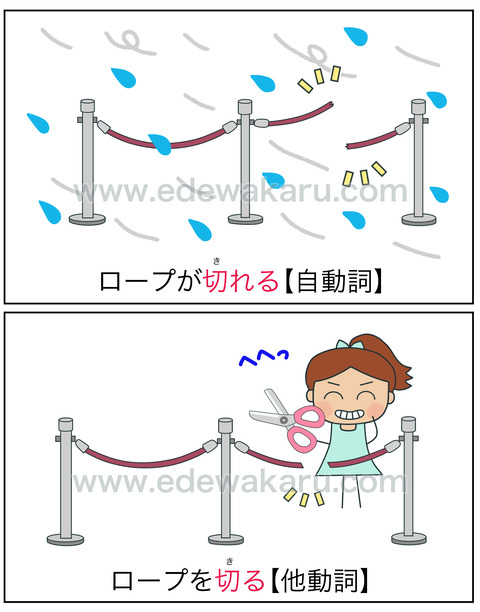
切きる means “to cut” and may be used literally and figuratively. ~切る shows that “something is done completely”.
38. 彼は読書に浸ひたり切っていた。
He was completely engrossed in reading.
39. 紙をはさみで切る。
To cut paper with scissors.
漢字 Note: 鋏 is not uncommonly used to spell はさみ.
40. 彼はかの歌手の全ての歌を歌い切った。
He sang all of that singer’s songs completely.
41. いつかは地球に残っている石油は全て使い切ってしまうだろう。
The remaining oil on the earth will probably one day end up completely used.
42. 紐ひもを切る。
To cut a string.
43. 電話を切る。
To hang up the phone.
44. {手・関係}を切る。
To break a relationship.
45. 彼がイギリス海峡かいきょうの距離きょりを泳ぎ切りました。
He completely swam the (entire) distance of the English Channel.
46. 水泳選手は、日本海を一緒に泳ぎきりました。
The swimmers swam across the Sea of Japan together.
47. ジョーンズ先生は来月までに約やく10冊読み切っているでしょう。
Ms. Jones will have probably read around 10 books by next month.
In context 48 examples
この街には住み慣れました。
I got used to living in this town.
彼は都市の生活に慣れることができなかった。
He couldn’t get used to living in the city.
通学に慣れるのは重要じゅうようです。
It is important that you become used to commuting to school.
コンピューターは使い慣れるのは時間がかかります。
It takes time to get used to the computer.
彼は旅慣たびなれている。
He’s well-traveled.
日本料理{は、・を}食べ慣れました。
I’ve gotten used to eating Japanese food.
日本料理に慣れました。(もっと自然)
I’ve gotten used to eating Japanese food.
私は人前ひとまえで話すことに慣れていません。
I am not used to speaking in front of people.
日本の天候てんこうに慣れる。
To get used to Japanese weather.
まだ明るさに慣れてねー。(砕くだけた言い方)
(My eyes) are still not adjusted to the light.
寵愛ちょうあいに慣れるのはだめですよ。
It is no good to be over-familiar with attention.
ロミオとジュリエットは愛し合っていた。
Romeo and Juliet loved each other.
誘さそい合わせる。
To invite each other.
彼らは宿題を手伝てつだい合った。
They helped each other with homework.
犯行現場はんこうげんばに居合わせました。
I was present at the crime scene.
何時に待ち合わせようか?
What time shall we meet?
彼と彼女は君が代よを歌い合っていた。?
二人で聖書せいしょを読み上げ合いました。
The two read aloud the bible with each other.
彼らは想おもいを打ち明け合うだろう。
They will probably confide their feelings with each other.
ケーキを一緒に{食べましょう 〇・ 食べ合いましょう X}。
Let’s eat cake together.
乗り合わせた乗客
Fellow passengers
計算を読み合わせる。
To read out and compare calculations.
このドレスはあたしにぴったり{(と)合いますか・ですか}。 (Feminine)
Does this dress fit perfectly with me?
申し合わせた通りにしましょう。
Let’s do as arranged.
お互たがいに引き合わせる。
To introduce to each other.
警察に問い合わせましたか。
Did you check with the police?
書類しょるいを綴とじ合わせましたか。
Have you bound the documents together?
布を縫ぬい合わせる。
To sew together.
傷口きずぐちを縫い合わせてもらった。
I had my wound(s) sewn up.
各種詰づめ合あわせキャンディーを買かいに行いった。
I went to buy mixed candies.
それらの糸は縒より合わせ難がたい。
These threads are hard to twist together.
悲しみを分かち合う。
To share in the sadness.
家族の都合が合うのは今日だけだ。
Today is only when my convenience matches with my family’s.
靴を履き違える。
To mix up shoes.
約束を違える。
To break one’s promise.
寝違えて、首筋が痛い。
I got a crick in my neck, and now it hurts.
社長と刺し違える。
To expose the company president and receive repercussions from him/her.
一審を差し違える。
To overturn the first match decision (and give the win to the other opponent).
彼は読書に浸ひたり切っていた。
He was completely engrossed in reading.
紙をはさみで切る。
To cut paper with scissors.
彼はかの歌手の全ての歌を歌い切った。
He sang all of that singer’s songs completely.
いつかは地球に残っている石油は全て使い切ってしまうだろう。
The remaining oil on the earth will probably one day end up completely used.
紐ひもを切る。
To cut a string.
電話を切る。
To hang up the phone.
{手・関係}を切る。
To break a relationship.
彼がイギリス海峡かいきょうの距離きょりを泳ぎ切りました。
He completely swam the (entire) distance of the English Channel.
水泳選手は、日本海を一緒に泳ぎきりました。
The swimmers swam across the Sea of Japan together.
ジョーンズ先生は来月までに約やく10冊読み切っているでしょう。
Ms. Jones will have probably read around 10 books by next month.