AIUEO JLPT Grammar
Meaning
“〜抜く” is used to express completing something, even in the face of difficulty or overcoming challenges. It emphasizes willpower and effort.
How to use it
動詞ます形+抜く
Explanation · 日本語
「〜抜く」は、最後までやり遂げることや、困難を乗り越えて物事を成し遂げることを表す表現です。意志や努力を強調するときによく使われます。
In context 5 examples
マラソンを走り抜いたとき、達成感があった。
When I finished the marathon, I felt a sense of accomplishment.
彼は困難に負けずに、最後までやり抜いた。
He didn’t give up and saw it through to the end.
これからも諦めずにやり抜こうと思います。
I will continue to persevere and not give up.
彼女は重い荷物を持ち、山道を歩き抜いた。
She carried the heavy load and walked through the mountain path.
苦しい状況の中でも笑顔を絶やさずに生き抜きます。
Even in difficult situations, I continue to smile and survive.
文法
Meaning
最後まで頑張って〜する。
How to use it
V(ます形)ます + ぬく
In context 10 examples
彼は途中で足を負傷しながらも、42.195kmを走りぬいた。
これは私が悩みぬいて出した結論なので、結果がどうなろうと後悔はありません。
日本のストレス社会を生きぬくために、私たちが考えなければいけないことは何だろう。
戦争を生きぬいた人の話を聞いたことがありますか。
妻とは長い付き合いなので、私のことなら何でも知りぬいている。
大変かもしれないけど、最後まで頑張ってやりぬいてみせる。
これは私が考えぬいた結果です。もうこれ以外には考えられません。
彼は最後まで約束を守りぬいた。
何があっても、城を守りぬいてみせる。
試験中お腹が痛くなったが、なんとか最後まで耐えぬいた。
Bunpro Grammar Reference
Meaning
All~, Completely, See through, Overcome, To the bitter end
How to use it
Verb[stem]+ ぬく
Verb[stem]+ ぬきます
Nuance
A strong construction used to indicate that (A) is seen through completely. The situation of (A) has completely been extracted out of.
Explanation
When connected to the ます-stem of another verb, the う-Verb 抜く 'to extract' is often used to indicate that (A) has happened 'completely'. This 'extract' nuance frequently indicates that beyond completion, (A) has been 'overcome', or 'seen through to the bitter end'.
The literal meaning of 抜く can be thought of as being quite close to the English expression 'to pull through', for example, 'despite difficulties, I pulled through in the end'. Let's look at a few examples of where 抜く will be used.
私の計画は彼に見抜かれていた。
He saw through my plans.
自分の子供達を守り抜くためならなんでもできる。
I could do anything to protect my kids till the end.
私は何があっても最後までやり抜かないと気が済まないです。
I can't have peace of mind until I finish something completely, no matter what happens.
Alternatively, 抜く may be used in situations where (A) is something that is done to a very deep or substantial degree. This nuance is less like 'to pull through', and closer to 'thoroughly', or simply 'deeply'. This meaning tends to appear with verbs that don't have an obvious end, like 知る 'to know'.
考え抜いた結果、俺は大学を中退して親父の会社を継ぐことにした。
After thoroughly thinking about it, I decided to drop out of college and take over my father's company.
田中師匠は俳句の事なら知り抜いている。
Master Tanaka is all-knowing when it comes to haiku.
Despite this nuance seeming different, the verb with 抜く attached to it in these types of sentences is usually considered to have already been done to a 'finished' degree, where there is nothing left beyond that point. With the example of 'to know', it would mean 'to know every single little detail'.
Caution
On most occasions, ぬく will be used when there is some hardship or adversity associated with the action. Also, unlike きる, ぬく will almost always be used in relation to human actions. きる on the other hand may be used in relation to either human actions or other events equally as naturally.
この洗濯機ではこの量の洗濯物は洗いぬけない。
This washing machine cannot completely wash this amount of laundry. (Unnatural Japanese)
この洗濯機ではこの量の洗濯物は洗い切れない。
This washing machine cannot completely wash this amount of laundry. (Natural Japanese)
Nuance · 日本語
(A)は完全に見破られているということを示す表現。(A)の状況が完全に切り捨てられている。
Explanation · 日本語
五段動詞「抜く」(意味:内から外に取り出す)が別の動詞のマス形の語幹と結びつくと、(A) を「完全に」行うことを意味します。
この表現は、ただ (A) が完了したことを表すだけでなく、「困難を克服して最後までやり通す」というニュアンスで使われます。以下に例を見てみましょう!
私の計画は彼に見抜かれていた。
He saw through my plans.
自分の子供達を守り抜くためならなんでもできる。
I could do anything to protect my kids till the end.
私は何があっても最後までやり抜かないと気が済まないです。
I can't have peace of mind until I finish something completely, no matter what happens.
また、「抜く」は (A) が非常に深いレベルで徹底的に行われたことを表すこともあります。この場合、「すごく (A) をする」や「たくさん (A) をする」のような意味に近くなります。この用法では、例えば「知る」のように明確な終わりがない動作を表す動詞と一緒に使われることが多いです。
考え抜いた結果、俺は大学を中退して親父の会社を継ぐことにした。
After thoroughly thinking about it, I decided to drop out of college and take over my father's company.
田中師匠は俳句の事なら知り抜いている。
Master Tanaka is all-knowing when it comes to haiku.
このような意味で使われる「抜く」は、その動作がすでに「完了した」状態であり、それ以上のものは残されていないことを示すと考えられます。例えば、「知る」の場合、「全ての細かい点まで知る」つまり「知らない点は残っていない」ということを示します。この「抜く」は一見すると最初に挙げた「抜く」とニュアンスが異なるように見えますが、この二つは「完全に終わらせる」ことを表すという点で共通しています。
注意点
多くの場合、「ぬく」は困難や逆境を伴う行動に対して使われます。また、「ぬく」は人の行動についてのみ使われますが、この点が、人の行動だけでなく、出来事にも自然に使うことができる「きる」とは異なります。
この洗濯機ではこの量の洗濯物は洗いぬけない。
This washing machine cannot completely wash this amount of laundry. (Unnatural Japanese)
この洗濯機ではこの量の洗濯物は洗い切れない。
This washing machine cannot completely wash this amount of laundry. (Natural Japanese)
In context 19 examples
- ウォルターさんは化学のことなら知り抜いている。
Walter-san is all-knowing when it comes to chemistry. (completely)
- 私は何があっても最後までやり抜かないと気が済まないです。
I can't have peace of mind until I finish something completely, no matter what happens.
- 考え抜いた結果、俺は大学を中退して親父の会社を継ぐことにした。
After thoroughly thinking about it, I decided to drop out of college and take over my father's company.
- 田中師匠は俳句の事なら知り抜いている。
Master Tanaka is all-knowing when it comes to haiku.
- 私の計画は彼に見抜かれていた。
He saw through my plans.
- 自分の子供達を守り抜くためならなんでもできる。
I could do anything to protect my kids till the end.
- 木材に刺さった釘を引き抜く。
To completely pull out the nails in the lumber.
- 徹夜してでも、このプロジェクトをやり抜きたい。
Even if I have to sit up all night, I want to complete this project.
- 彼は漁師として人生を生き抜いた。
He lived life completely as a fisherman.
- 真の友というのなら、信じ抜く心が必要だ。
If they are a true friend, they need to have a heart that you can completely believe in.
- アスリートはケガを負いつつも、最後までフルマラソンを走り抜いた。
Even though the athlete was injured, he ran the marathon till the (bitter) end. (Literally - Bearing an injury)
- 社長の方針を守り抜くためならなんでもする覚悟だ。
I am resolved to do anything to completely protect the CEO's policies.
- 兵士はひざに矢を受けたが、最後まで戦い抜いた。
Despite taking an arrow to the knee, the soldier fought till the bitter end.
- 勇者は、魔王の計画を見抜き、それをはばむことにした。
The hero saw through the plan of the devil king, and decided to put a stop to it.
- 研究には長い年月がかかったが、彼は耐え抜き、自身の仮説を実証した。
The research took years, but he overcame (completely) adversities and proved his hypothesis. (to the bitter end)
- 祖父の古い車を修復するのは無駄な努力だと知りつつも、やり抜いた。
Even though I knew that repairing my grandfather's old car would be a wasteful effort, I still went through with it. (completely)
- チームは、たとえ試合に勝っても準決勝進出は不可能と知りつつも、最後まで頑張り抜いた。
The team, despite knowing it was impossible to advance to the semifinals even if they won, fought to the bitter end.
- この洗濯機ではこの量の洗濯物は洗いぬけない。
This washing machine cannot completely wash this amount of laundry. (Unnatural Japanese)
- この洗濯機ではこの量の洗濯物は洗い切れない。
This washing machine cannot completely wash this amount of laundry. (Natural Japanese)
どんなときどう使う 日本語表現文型辞典
Meaning
from beginning to end
How to use it
Vます+ぬく
Explanation
最後まで~する
「Vぬく」の形で、動詞に「困難なことを乗り越えて最後まで完全に~し終える」 ❶ ❷、「完全に~する」 ❸、「徹底的に~する」 ❹ などの意味を加える。
ノ行ぬく
Transcends all difficulties to manage to do something completely or to the end, as in sentences ❶ and ❷ . Adds meaning of "completely," as in sentence ❸ , and "thoroughly," as in sentence ❹ .
In context 4 examples
マラソンの精神というのは、試合に負けても最後まで走りぬくことだ。
彼は10年間も続いた内戦の時代をなんとか生きぬいて、今この国で幸せに暮らしている。
わたしは親としてあの子の長所も欠点も知りぬいているつもりです。
いなかでの一人暮らしを望む祖母を残して東京に来たのは、家族で考えぬいて出した結論です。
絵でわかる日本語
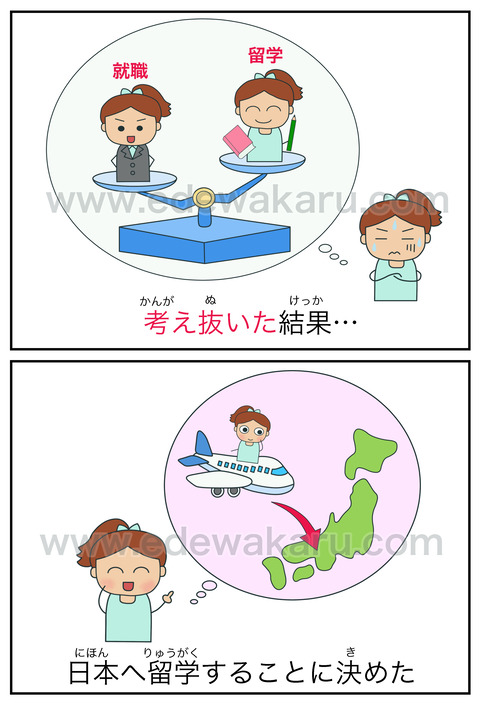
Meaning
すごく〜する
最後までしっかり〜する
How to use it
動詞[ます形]+抜く
Explanation
「〜抜く」は「すごく〜する」「最後まで〜する」という意味を表す文型です。例文①は「すごく〜する」、例文②③は「最後まで〜する」という意味で使います😊「すごく〜する」はほとんどの場合、決まった単語に使用されますのでいくつか覚えておきましょう😉
[「すごく〜する」の意味でよく使われる単語]
考え抜く
困り抜く
悩み抜く
悲しみ抜く
知り抜く など
この文型は
「大変なことを最後まで一生懸命(いっしょうけんめい)やった」「苦しかったが、最後までがんばった」と言いたい時に使う
と覚えておくといいと思います😀
In context 2 examples
マラソン42.195キロを走り抜いた
→マラソン42.195キロを最後までしっかり走った彼は約束を守り抜いた
→彼は約束を最後までしっかり守った
日本語文型辞典
Meaning
基本情報R-ぬく説明必要な行為・過程を全て最後までやり終えるという意味。苦しさに耐えてやり遂げるという意味合いが強い。例文① 苦しかったが最後まで走りぬいた。② 一度始めたからには、あきらめずに最後までやりぬこう。③ 考え抜いた結果の決心だからもう変わることはない。④ この長い漂流を耐え抜くことができたのは、「ここで死にたくない」という強い気持ちがあったからだと思います。
日本語文型辞典 英語版
Meaning
【ぬく】[R-ぬく]
Means finishing all of the necessary actions or processes, right up to the end. Conveys a strong implication that suffering has been endured in order to accomplish something.
In context 4 examples
苦しかったが最後まで走りぬいた。
It was very hard, but I ran all the way to the end.
一度始めたからには、あきらめずに最後までやりぬこう。
Now that we’ve started, let’s see it through to the end, without giving up.
考え抜いた結果の決心だからもう変わることはない。
I reached this decision after thinking long and hard about it, so I’m not going to change my mind.
この長い漂流を耐え抜くことができたのは、「ここで死にたくない」という強い気持ちがあったからだと思います。
I think the reason I was able to survive being adrift at sea for so long is that I had a strong feeling that “I don’t want to die here.”
くらべてわかる日本語表現文型辞典
Meaning
一つのことを可能なかぎり、困難にめげず、達成するまでA。とことん深くA。
How to use it
Aぬく(AぬいたB)
[動詞-ます形]ぬく
Explanation
【対比1】
「Aきる」(意味1 P.76)
「Aきる」は一つのことを残すところなくするという完了の意味だが、
「Aぬく」はそれが困難なことであっても、努力してその状態から抜け出すという意味。
○長編小説をやっと読みきった。
×長編小説をやっと読みぬいた。
×長い闘病生活を耐えきった。
○長い闘病生活を耐えぬいた。
また、「Aきる」は主語が人間でなくても成り立つが、「Aぬく」は主語が人間(意思のあるもの)である場合が多い。
○澄みきった青空
×澄みぬいた青空
「Aつくす」(意味1 P.133)
「Aつくす」はたくさんあるものを残すところなく、Aするという意味である。また、主語に無生物を持ってくると状態を表せる。
○冷蔵庫にある食材を食べつくしてしまった。
×冷蔵庫にある食材を食べぬいてしまった。
○黒い雲が空を覆いつくした。
×黒い雲が空を覆いぬいた。
「Aつくす」と「Aぬく」が両方使える文でも、ニュアンスが異なる。
○大臣の秘書をしていたので、政治の世界のことは知りぬいている。(深く裏まで知っている)
○大臣の秘書をしていたので、政治の世界のことは知りつくしている。(全部知っている)
「Aとおす」
「Aとおす」は最初から最後までAという状態を続けたという意味で、「Aぬく」は頑張ってAしたことの方に焦点がある。
○東京から大阪まで、1カ月かかって歩きとおした。(最初から最後まで歩いた)
○東京から大阪まで、1カ月かかって歩きぬいた。(頑張って歩いた)
「Aあげる」
「Aあげる」は具体的に何かを作り完成させるという部分に焦点があり、「Aぬく」は深くとことんまでAという部分に焦点がある。
○論文を書きあげた。
×論文を書きぬいた。
「Aこむ」
「Aこむ」は何度も何度も、あるいは一つのことを深くAという意味だが、これで終わりという意味はない。「Aぬく」はとことん、最後までというニュアンスがあり、困難な過程とある時点での達成を述べる。
○磨きぬかれた技
○磨きこんだ廊下
「Aつづける」
「Aつづける」は同じ状態のAを持続することだが、「Aぬく」は困難なことでもとことん深く達成するという意味。
○遅刻しそうだったので、駅まで走りつづけた。
×遅刻しそうだったので、駅まで走りぬいた。
○一人の人を愛しつづけた。(愛する状態を続けた)
○一人の人を愛しぬいた。(困難にもめげず、生涯深く愛した)
In context 4 examples
日本に来たからにはどんなに辛いことがあっても頑張りぬく。
これは考えぬいた末に出した結論だから、簡単に変えるつもりはない。
オリンピックでは選手たちの鍛えぬかれた技と肉体が堪能できる。
彼女は生涯、一人の男性だけを愛しぬいた。
日本語NET JLPT文法解説まとめ
Meaning
最後まで頑張って〜する。
How to use it
V(ます形)ます + ぬく
Explanation
to keep trying until the end to do ~.
In context 10 examples
彼は途中で足を負傷しながらも、42.195kmを走りぬいた。
これは私が悩みぬいて出した結論なので、結果がどうなろうと後悔はありません。
日本のストレス社会を生きぬくために、私たちが考えなければいけないことは何だろう。
戦争を生きぬいた人の話を聞いたことがありますか。
妻とは長い付き合いなので、私のことなら何でも知りぬいている。
大変かもしれないけど、最後まで頑張ってやりぬいてみせる。
これは私が考えぬいた結果です。もうこれ以外には考えられません。
彼は最後まで約束を守りぬいた。
何があっても、城を守りぬいてみせる。
試験中お腹が痛くなったが、なんとか最後まで耐えぬいた。
毎日のんびり日本語教師
How to use it
動ます形+抜く
Explanation
動作性の動詞に接続して、その動作の完遂を表します。
動作の完遂にあたって何らかの困難があり、それを克服したニュアンスを持ちます。
Notes
似ている文法「~通す」
In context 9 examples
苦しみながらも1500mを何とか走り抜いた。
今までの人生で何か一つのことをやり抜いた経験がない。
これは考えに考え抜いた結果です。
相手の猛攻を耐え抜いて勝利を手にした。
この昆虫は数万年の間進化を重ね生き抜いてきた、生きる化石である。
彼が移籍を決めたのは悩み抜いた末の決断だった。(他决定转会是在烦恼至极之后做出的决断。)
何かやり抜いた達成感は大きな自信に繋がる。(坚持到底的成就感与自信紧密相连。)
考え抜いた結果、彼と別れることを決めた。(深思熟虑以后决定跟他分手了。)
波乱の時代を生き抜いてきた老人たちの話を聞くのは面白い。
NINJAL 日本語文型データベース
Meaning
困難な過程を経て、または強い意志や努力によって、最後まで・完全に・徹底的に〜することを表します。
How to use it
In context 5 examples
途中で諦めず最後までやり抜くことこそが成功への道である。
変化の激しい現代社会を生き抜くためには、柔軟な発想をしていかなければならないだろう。
この店のシェフは、長年の経験からあらゆる食材について知り抜いている。
悩み抜いた末に、会社をやめて故郷に帰るという選択をした。
江戸時代にキリスト教が禁教となってから約230年間、長崎・天草地方でひそかに信仰を守りぬいた人々は、潜伏キリシタンと呼ばれる。
IMABI
The Verb 抜く
Read this IMABI lesson ↗Explanation
抜く: ~ぬきで(は), ~ぬきに(は), ~ぬきで, ~ぬきにして(は), & ~ぬきの
This lesson is all about 抜く. Now, what may be so special about 抜く? It so happens to be used in ways that brings on some somewhat complicated grammar.
抜く
抜く means “to extract” or “to remove.” It is used in compounds to provide a sense of thoroughness. In other verbs, it describes a state of extreme degree. This is related to the sense of something being thorough.
To shoot through 射抜く いぬく To see through 見抜く みぬく
To excerpt 書き抜く かきぬく To gouge out 刳り抜く くりぬく
To pierce through 突き抜く つきぬく To hit through ぶち抜く ぶちぬく
To dig through 掘り抜く ほりぬく To pass (car) 追い抜く おいぬく
To select through 選り抜く え・よりぬく To win through 勝ち抜く かちぬく
To cut through 切り抜く きりぬく To know thoroughly 知り抜く しりぬく
To persist through 耐え抜く たえぬく To jump through 出し抜く だしぬく
Examples
1. 彼は辛い仕事をやり抜いた。
He persevered through a harsh job.
2. 手を抜くな。
Don’t slack off!
Literally: Don’t extract your hand (away).
3. 頑張り抜くのは難しい。
Persisting until the end is difficult.
4. 彼は生き抜けるのか?
Can he make it out alive?
5. 戦国時代を生き抜く。
To live through the Warring States Period.
Word Note: The intransitive version of 抜く is ~抜ける. It too attaches to verbs.
6.逆境を切り抜ける。
To pass through adversity.
~ぬきで(は), ~ぬきに(は), ~ぬきで, ~ぬきにして(は), ~ぬきの
「Xぬき{で・に}(は)Y(ない)」 shows that putting others aside, without X you wouldn’t be able to do Y. What causes either で or に incorrect is based on whether the phrase is dynamic 動態 (で) or static 静態 (に).
7. ちょっと私ぬき{〇 では・△ には}イベントが始まらないんじゃなかったの? Without me, the event wouldn’t start, no?
8. 僕ぬき{で・△ に }そんなこと始めるなんてできないよ。
You couldn’t even start that without me.
9. そろそろ食事をしますから、私ぬきで、ゲームを続けていてください。
Since I’m having dinner soon, please continue the game without me.
10. 昼ご飯ぬき{〇で・ Xに}頑張ってるんですか。
So you’re trying without having had lunch?
11. 優勝なんて、あいつぬきじゃ、できっこないんだよ。
(We) won’t be able to win victory without that guy.
12. 朝食ぬきで働くなんて、できるわけがないよ。
There’s no way I can work without having breakfast.
13. 冗談{ぬきで・はぬきにして}、まじめに話し合いましょう。
Leaving jokes aside, let’s seriously talk with each other.
As you would imagine, ~ぬきの is used in modifying other noun phrases.
14. 塩ぬきのをください。
One without salt, please.
15. マッシュルームぬきの(ラーメン)をください。
Ramen without mushrooms, please.16a. アルコール抜きのパーティー
16b. ノンアルコールパーティー
An alcohol-free party
~を抜きにして
~を抜きにして means “leaving out”. This means that an X is should be left out for the realization of B. Of course, if the sentence is negative, then the opposite is true.
17. 冗談は抜きにして、そろそろ帰らないと、まずいよ。
Leaving jokes aside, if you don’t go home pretty soon, it won’t be good.
18. 堅苦しい挨拶{は抜きに・抜きで}しましょう。
Let’s do without the ceremonious greetings.
19a. 力強い意志を抜きに(して)戦い続けることはできぬぞ。 (Old-man; 武士 talk)
19b. 強気でなければ戦い続けることはできぬぞ。(Old-man; 武士 talk)
Without a powerful will, you will not be able to continue fighting.
In context 20 examples
彼は辛い仕事をやり抜いた。
He persevered through a harsh job.
手を抜くな。
Don’t slack off!
頑張り抜くのは難しい。
Persisting until the end is difficult.
彼は生き抜けるのか?
Can he make it out alive?
戦国時代を生き抜く。
To live through the Warring States Period.
逆境を切り抜ける。
To pass through adversity.
ちょっと私ぬき{〇 では・△ には}イベントが始まらないんじゃなかったの? Without me, the event wouldn’t start, no?
You couldn’t even start that without me.
僕ぬき{で・△ に }そんなこと始めるなんてできないよ。
You couldn’t even start that without me.
そろそろ食事をしますから、私ぬきで、ゲームを続けていてください。
Since I’m having dinner soon, please continue the game without me.
昼ご飯ぬき{〇で・ Xに}頑張ってるんですか。
So you’re trying without having had lunch?
優勝なんて、あいつぬきじゃ、できっこないんだよ。
(We) won’t be able to win victory without that guy.
朝食ぬきで働くなんて、できるわけがないよ。
There’s no way I can work without having breakfast.
冗談{ぬきで・はぬきにして}、まじめに話し合いましょう。
Leaving jokes aside, let’s seriously talk with each other.
塩ぬきのをください。
One without salt, please.
マッシュルームぬきの(ラーメン)をください。
ノンアルコールパーティー
An alcohol-free party
冗談は抜きにして、そろそろ帰らないと、まずいよ。
Leaving jokes aside, if you don’t go home pretty soon, it won’t be good.
堅苦しい挨拶{は抜きに・抜きで}しましょう。
Let’s do without the ceremonious greetings.
力強い意志を抜きに(して)戦い続けることはできぬぞ。 (Old-man; 武士 talk)
Without a powerful will, you will not be able to continue fighting.
強気でなければ戦い続けることはできぬぞ。(Old-man; 武士 talk)
Without a powerful will, you will not be able to continue fighting.