日本語文型辞典
Meaning
基本情報N/V にそういない説明「間違いなくそうである」「きっと…だろう」といった話し手の強い確信を表す。書きことばに用いる。「…にちがいない」に言いかえられる。例文① 犯人はあの男に相違ない。② 彼女は3日前に家を出たまま帰ってこない。きっとなにか事件に巻き込まれたに相違ない。③ これを知ったら、彼はきっと烈火のごとく怒り出すに相違ない。
日本語文型辞典 英語版
Meaning
【にそういない】[N/V にそういない]
Expresses the speaker’s firm conviction and means “it must be so” or “I’m sure ....” Used in formal, written Japanese, and can be rephrased as ...にちがいない.
In context 3 examples
犯人はあの男に相違ない。
The criminal must be that man.
彼女は3日前に家を出たまま帰ってこない。きっとなにか事件に巻き込まれたに相違ない。
She left home three days ago and hasn’t come back yet. She must have been involved in some incident.
これを知ったら、彼はきっと烈火のごとく怒り出すに相違ない。
If he gets to know this, I’m sure he will fly into a rage.
IMABI
No doubt that
Read this IMABI lesson ↗Explanation
No Doubt that: ~に違いない, ~に相違ない, & ~に決まっている
~に違いない and ~に相違ない are not necessarily difficult, but there are certain problems that students have. The unusual way it connects to adjective/verb expressions, not properly understanding what can follow them, and not understanding formality differences are the main sources of error. The lesson will be ended with the similar ~に決まっている.
~に違いない VS ~に相違ない
First and foremost, these expressions are both translated as “there is without a doubt that…”. This is the immediate source of confusion because you can add phrases like “I think that” or “probably” in English without causing ungrammaticality. However, with these Japanese expressions, doing so does. First, consider the following defining of these terms.
~に違いない: Not from objective proof or logical speculation, but rather from the speaker’s own experience, this phrase shows one’s intuitive speculation/confidence. With such a bold move, it is without surprise that this is quite strong. It is often used in situations where it’s as if one is talking to oneself in attempts to verify one’s own guess or deliberation.
~に相違ない: Like ~に違いない, it shows intuitive speculation/confidence, but it is more stiff and formal. This formality difference is very important to keep in mind. One reason is that speech modals more akin to the spoken language like the final particle から, which is commonly used with ~に違いない, are not typically used with ~相違ない. This also implies that there is no mistake in it; thus, it gives a more confident tone. Thus, although adverbs like きっと are common with ~に違いない, it is not with ~に相違ない due to the tone. Although perhaps of old logic, some speakers feel this is more so indicative of middle-aged/old men as they are more likely to use old-fashioned expressions, which would not be old-fashioned for them, and fits the traditional tone for masculine speech.
These patterns attach to phrases in the following manner.
Nouns N(である)+~に{違い・相違}ない
形容詞 形容詞 + ~に{違い・相違}ない
形容動詞 形容詞(である) + ~に{違い・相違}ない
Verbs Verb + ~に{違い・相違}ない
Notice that it does not say Adj/V + こと + に{違い・相違}ない. It is a set phrase, and like other phrases with に, the reason for why this is allowed stems from a Classical Japanese grammatical maneuver of using conjugational parts of speech as nominal phrases when in the 連体形. As this base has changed appearance for many items, it’s not surprising that in Modern Japanese this technique is limited.
Examples
1. 政府の報道官の応答はどんなに(か)悔しかったに違いない。
The response of the government spokesperson was in no doubt overly regrettable.
Grammar Note: In a more literary sense どんなに(か) may be replaced with いかばかりか. Also note that the use of か with this in the first place is hardly ever heard.
2. 違いない(その通り)、君の言う通りだ。
That’s right. It’s just as you say.
3. この計画の実行は困難に違いない。
It is without a doubt that this plan’s implementation is difficult.
4. 泥棒どろぼうが入ったに違いない。
There is no doubt that a robber came in.
5. 馬鹿者ばかものには違いないが、責任を取らざるをえないだろう。
Although it’s without a doubt that you’re an idiot, there’s no other way but to take responsibility.
By 大仏次郎おさらぎじろう
6. 明日は曇くもるに違いない。
It will definitely be cloudy tomorrow.
7. 社長は天才であることに相違ない。
There’s no doubt that the company president is a genius.
8. 「あの女の人は誰でしょうか」「ケンさんのガールフレンドに違いありません。手を繋つないで一緒に歩いていますから」
“Who is that woman?” “There’s no doubt that she’s Ken’s girlfriend because they’re holding hands walking together”.
9. 「あの人は何語なにごの学生でしょうか」「日本語の学生に違いありません。読んでいるものに「新しい」と書いてありますから」
“What language student is that person? “That person is no doubt a Japanese student because the thing (that person) is reading has “atarashii” written on it”
10. 「あの人は日本に住んでいたんでしょうか」「そうに違いありません。日本の新聞を読んでいますから」
“I wonder if that person lived in Japan” There’s no doubt about it because he’s reading a Japanese newspaper”
11. 「あの女の人は結婚しているんでしょうか」「そうに違いありません。指輪ゆびわを嵌はめていますから」
“I wonder if that woman is married” “There’s no doubt about it because she’s wearing a ring”
~に決まっている
~に決まっている means “it is certainly…” and follows nouns, adjectives, or verbs. This speech modal shows 100% certainty and is reflective of 話し言葉. It shows that the speaker is very confident in labeling something as so. It is also used in chastising.
12. 彼は嘘うそをついているに決まっている。
He’s certainly lying.
13. 夏は暑いに決まっている。
It is certainly hot in summer.
14. 負けるに決まってる。(Casual)
(They) will certainly lose.
In context 14 examples
政府の報道官の応答はどんなに(か)悔しかったに違いない。
The response of the government spokesperson was in no doubt overly regrettable.
違いない(その通り)、君の言う通りだ。
That’s right. It’s just as you say.
この計画の実行は困難に違いない。
It is without a doubt that this plan’s implementation is difficult.
泥棒どろぼうが入ったに違いない。
There is no doubt that a robber came in.
馬鹿者ばかものには違いないが、責任を取らざるをえないだろう。
Although it’s without a doubt that you’re an idiot, there’s no other way but to take responsibility.
明日は曇くもるに違いない。
It will definitely be cloudy tomorrow.
社長は天才であることに相違ない。
There’s no doubt that the company president is a genius.
「あの女の人は誰でしょうか」「ケンさんのガールフレンドに違いありません。手を繋つないで一緒に歩いていますから」
“Who is that woman?” “There’s no doubt that she’s Ken’s girlfriend because they’re holding hands walking together”.
「あの人は何語なにごの学生でしょうか」「日本語の学生に違いありません。読んでいるものに「新しい」と書いてありますから」
“What language student is that person? “That person is no doubt a Japanese student because the thing (that person) is reading has “atarashii” written on it”
「あの人は日本に住んでいたんでしょうか」「そうに違いありません。日本の新聞を読んでいますから」
“I wonder if that person lived in Japan” There’s no doubt about it because he’s reading a Japanese newspaper”
「あの女の人は結婚しているんでしょうか」「そうに違いありません。指輪ゆびわを嵌はめていますから」
“I wonder if that woman is married” “There’s no doubt about it because she’s wearing a ring”
彼は嘘うそをついているに決まっている。
He’s certainly lying.
夏は暑いに決まっている。
It is certainly hot in summer.
負けるに決まってる。(Casual)
(They) will certainly lose.
どんなときどう使う 日本語表現文型辞典
Meaning
no doubt that
How to use it
〔普通形〕(ナA・ナAである/N・Nである)+に相違ないFW
Explanation
きっと~と思う
1)「きっと~と思う」という話者の確信を述べる推量の表現。「たぶん~だろう」より確信の程度が強い。
2)「にちがいない」よりさらに硬い書き言葉。
1)Conjecture in which speaker has high degree of confidence. Higher degree of certainty than たぶん~だろう.
2)Even more of written form than にちがいない.
In context 3 examples
不合格品がそれほど出たとは、製品の検査がそうとう厳しいに相違ない。
彼の言ったことは事実に相違ないだろうとは思うが、一応調べてみる必要がある。
反対されてすぐ自分の意見を引っ込めたところを見ると、彼女は初めから自分の意見を信じていなかったに相違ない。
絵でわかる日本語
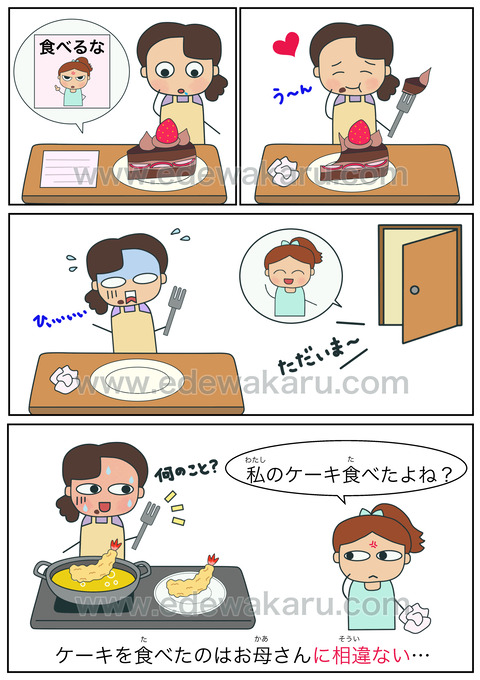
Meaning
きっと〜だと思う
〜で間違いない
How to use it
動詞・形容詞・名詞[普通形]+に相違ない
Explanation
「〜に相違ない」は「きっと〜だと思う」という意味の文型です。
これは話者の判断や考えを表す文型で、
話者が確信を持って「きっと〜だ」と言いたい時に使われます。
また「〜で間違いない」という意味でも使用されます。「〜に違いない」の書き言葉です。
「〜に相違ない」には、似ている文型がありますので、一緒に覚えておきましょう。
【関連文型】
In context 5 examples
ケーキを食べたのはお母さんに相違ない
→ケーキを食べたのは、きっとお母さんだと思う私の秘密をばらしたのは、山田くんに相違ない
→秘密をばらしたのは、きっと山田くんだと思うあの男が犯人に相違ない
→きっとあの男が犯人だと思うA:このバッグはあなたのものに相違ないですか?B:はい
→このバッグはあなたのもので間違いないですか?警察:お前がやったことに相違ないか?犯人:はい、私がやりました
→お前がやったことで間違いないか?
くらべてわかる日本語表現文型辞典
Meaning
XはAであると強く断言する表現。
How to use it
(Xは)Aに相違ない
[動詞]に相違ない
[イ形-い/かった]に相違ない
[ナ形-である/だった]に相違ない
[名詞-∅/である/だった]に相違ない
Explanation
【対比1】
「Aに間違いない」
「Aに間違いない」は「Aに相違ない」の柔らかい表現。
「Aに違いない」(意味1 P.246)
In context 4 examples
これはきのうあなたが盗まれた財布に相違ないですか。
「今、述べたことは真実に相違ないか。」
「はい、真実に相違ありません。」これだけのメンバーが出演するなら、切符はすぐ完売するに相違ない。
こんなにたくさんの書類を一人で整理したんだから、さぞ大変だったに相違ない。
毎日のんびり日本語教師
How to use it
動詞普通形+に相違ない
い形容詞普通形+に相違ない
な形容詞語幹+に相違ない
名詞+に相違ない
Explanation
話し手の自信に満ちた強めの判断・断定を表します。
書き言葉として用いられます。
Notes
似ている文法「【N2文法】~に決まっている」
似ている文法「【N2文法】~に違いない」
「~に決まっている」「~に違いない」「~に相違ない」はそれぞれ同じ意味ですが、最も柔らかい表現は「~に決まっている」です。「~に相違ない」は主に書き言葉として用いられます。
In context 5 examples
あの人が犯人に相違ない。
どれだけ釈明したとしても、罪を犯したことに相違ない。
今回の事件と、5年前の事件は何か深い関係があるに相違ない。
これは先日盗まれたものに相違ありません。
過去ばかり振り返っているのは、過去に生きていることに相違ない。
NINJAL 日本語文型データベース
Meaning
ある根拠から生じる話し手の強い確信を表します。
How to use it
V普通形+に相違ない
i-A普通形+に相違ない
na-A普通形+に相違ない(ただし、「na-Aだ」→「na-A+に相違ない・na-Aである+に相違ない」)
N普通形+に相違ない(ただし、「Nだ」→「N+に相違ない・Nである+に相違ない」)
Notes
丁寧体で使うときは、「〜に相違ないです」より「~に相違ありません」のほうをよく使います。
In context 21 examples
皆さん、この田中さんがこの県の知事になったなら誰もが安心して暮らせる県を実現するに相違ありません。
わずか10歳でこのような難解な数学の問題を解いてしまったこの子は、大きな可能性を持っているに相違ない。
この渋滞では、救助隊は1時間以内に事故現場に着けないに相違ない。ドクターヘリを要請するべきだろう。
この土地の人々は1年の間に2度も大きな天災に見舞われた。物理的な被害だけではなく、精神的にも大きなダメージを受けたに相違ない。
首相は自身の発言がこれほど国民の反発を招くことになるとは予想していなかったに相違ない。
A社は製品の検査に大変厳しいに相違ない。あの会社の製品に欠陥があったことは一度もない。
今年は暖冬だとの予報が出ている。2月もさほど寒くないに相違ない。
高橋監督の次回の映画の主役に全くの新人である岡田健さんが抜擢されました。オーディションでの岡田さんの演技が素晴らしかったに相違ありません。
当時、この土地の農民は収穫した米の半分以上を税として領主に納めなければならなかったという。その頃の農民の暮らしはかなり貧しかったに相違ない。
買収を検討しているA社との交渉後、山田社長の表情は厳しかった。交渉の結果は予想されていたほど望ましくなかったに相違ない。
この研究所には、K大学の児玉研究室出身の研究者が多いと聞きました。児玉教授が指導された研究者たちなら、皆、優秀であるに相違ありません。
データ処理などの分野で人間がAIと同じ働きをすることは不可能に相違ないが、高度なコミュニケーションなどAIが苦手な分野は依然として存在する。
久しぶりに会った花子は、どこか沈んだ顔に見えた。あの様子では、彼女は今、あまり幸福ではないに相違ない。
16世紀、キリスト教の布教のために日本に来た宣教師達が、この地方の風習をすぐに理解することは極めて困難であったに相違ない。
太古の日本では女性は土器を作り、子育てをし、調理もした。集落の中で男性は、女性ほど勤勉ではなかったに相違ない。
その鑑定士は持ち込まれた絵を確かにピカソの作品に相違ないと断定した。
1300年前の遺跡の一部であるこの場所から、寄生虫の卵の化石が多数発見された。このことからこの場所は当時のトイレの跡であるに相違ないと判断された。
雄一には人望がない。残念ながら我が息子、雄一は我が東西グループの長としてふさわしい人物でないに相違ない。
母の今までの人生は苦労の連続であったに相違ない。夫を早くに亡くし、息子である私を一人で育ててくれたのだ。
タナカ自動車の狙いはトイタと合併することではなかったに相違ない。タナカ自動車は海外販路拡大のためトイタの海外拠点を傘下に収めたかっただけなのだろう。
犯行があった午前2時に、容疑者の田中が現場から遠く離れた東京駅近くで目撃されていたという知らせが入った。やはり田中は犯人ではなかったに相違ない。