AIUEO JLPT Grammar
Meaning
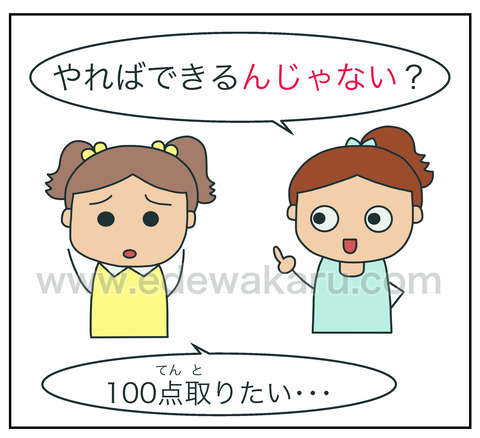
「〜んじゃない」is a casual form of 「〜のではない」used in informal contexts. The meaning and nuance can vary depending on the context, but it generally has three main uses:1.Prohibition or caution: It is used to give a non-official warning or prohibition, meaning “you should not do ~.”2.Speculation: It is used when making a guess or assumption about something.3.Casual question: It is used in a casual way to ask for someone’s opinion or about a situation.
How to use it
動詞ん+じゃない形容詞ん+じゃない形容動詞んor形容動詞なん+じゃない名詞んor名詞なん+じゃない
Explanation · 日本語
「〜んじゃない」は、「〜のではない」の変形で、カジュアルな場面で使われます。意味やニュアンスは文脈によって異なりますが、主に以下の三つの用法があります:1.禁止・注意:相手に対して「〜しないほうがいい」という意味で、非公式な警告や禁止を表現します。2.推測:何かについての推測や予想を述べるときに使われます。3.疑問:相手の意見や状況を尋ねるためのカジュアルな疑問形として使われます。
In context 5 examples
そんな危ないことをするんじゃない。
Don’t do something so dangerous.
彼、風邪をひいたんじゃない?
I think he might have caught a cold.
これ、本当に必要なんじゃない?
Isn’t this really necessary?
あれ、ちょっとおかしいんじゃない?
Isn’t that a bit strange?
あの店、もう閉まっているんじゃないかな。
I think that store might be closed already.
Bunpro Grammar Reference
Meaning
Don't, Mustn't, Shouldn't have
How to use it
Verb + んじゃない
Nuance
A slightly slangy expression used to prohibit an action by framing it as something that is not done.
Explanation
んじゃない is a slightly slang grammar pattern used with verbs to prohibit or request that something not be done. It will usually just be translated as 'don't do (A)', or 'you mustn't (A)'. んじゃない is almost always used from a higher position toward someone of a lower status. It may be used when the speaker is angry, but not always.
んじゃない is a combination of the case-marking particle の, and the abbreviated form of ではない, じゃない. It will connect to the dictionary form of verbs.
親に向かってそんなこと言うんじゃない。
Don't say something like that directed at your parents!
そこら辺のキノコを食べるんじゃない!
Don't eat the mushrooms from around there!
今日は混んでるからパパから離れるんじゃないぞ!
It's crowded today, so don't get separated from your dad!
Despite being slang, the slightly more formal version んじゃありません can also be seen occasionally. This variation is common when the speaker wants to forbid something, but not sound angry, such as when an adult is talking to a child.
勝手にお友達のものを取るんじゃありません。
You shouldn't just freely take your friend's things.
乳児にハチミツをあげるんじゃありません。
Don't give honey to infants.
The more literal translation of Verb + んじゃない is just 'it's not (verb)'. This sounds a bit strange in English, but might be similar to something like 'you're not (verb)', where a person is directly telling another what they shouldn't do.
It is also common to see the abbreviated ている form, てん, before じゃない.
いつまでもケラケラしながら話してんじゃない!
Don't keep laughing while you're talking!
一日中ダラダラしてんじゃない!いい加減、仕事でも探してこい!
Don't laze around all day! Get your act together and find a job!
Caution
When used in the past tense, んじゃなかった indicates that something 'should not have been done', and has a nuance of regret or disappointment that the action occurred.
こんな安い車を買うんじゃなかった。
I shouldn't have bought a cheap car like this.
あんな怪しい話に乗るんじゃなかった。
I shouldn't have gotten swept up in such a suspicious story.
Caution
When んじゃない comes at the end of a sentence, it will be important to listen to the intonation, as the statement may actually be a question. In this case, it is an abbreviation of んじゃないか.
本当は彼も来たかったんじゃない?
Really though, didn't he want to come too?
The difference between these two uses of んじゃない will usually be very clear. A question has a rising intonation, while an order will have a dropping intonation.
Nuance · 日本語
特定の行為を「してはいけないこと」と決めつけ、その行為を禁止すると言うことを表す際に使われる、スラング的な表現。
Explanation · 日本語
「んじゃない」は動詞につなげて使われるくだけた表現です。何かを禁止したり、やめるように伝えるときに「(A) するな」という意味で使われます。基本的に目上の人が目下の人に対して使います。怒っているときに使われることが多いですが、そうでないこともあります。
「んじゃない」は、助詞「の」と、「ではない」を短くした形の「じゃない」からできています。動詞に直接付けて使われます。
親に向かってそんなこと言うんじゃない。
Don't say something like that directed at your parents!
そこら辺のキノコを食べるんじゃない!
Don't eat the mushrooms from around there!
今日は混んでるからパパから離れるんじゃないぞ!
It's crowded today, so don't get separated from your dad!
少し丁寧に言いたいときは、「んじゃありません」が使われます。これは大人が子どもに注意するときなど、怒っているような印象を与えないで何かをやめさせたいときによく使われます。
勝手にお友達のものを取るんじゃありません。
You shouldn't just freely take your friend's things.
乳児にハチミツをあげるんじゃありません。
Don't give honey to infants.
動詞+「んじゃない」は、形だけ見ると「〜ではない」という否定の文ですが、実際にはその動作を「してはいけない」という禁止の意味を表します。
「てんじゃない」という形もよく使われます。「てん」は「ている」が短くなったものです。
いつまでもケラケラしながら話してんじゃない!
Don't keep laughing while you're talking!
一日中ダラダラしてんじゃない!いい加減、仕事でも探してこい!
Don't laze around all day! Get your act together and find a job!
注意点
過去形の「んじゃかった」は、「すべきではなかった」や「しなければよかった」という意味を表します。主に自分がしたことを、よくなかったと思うときに使われます。
こんな安い車を買うんじゃなかった。
I shouldn't have bought a cheap car like this.
あんな怪しい話に乗るんじゃなかった。
I shouldn't have gotten swept up in such a suspicious story.
注意点
「んじゃない」が文の終わりで使われたときは、イントネーションに気をつけましょう。このような「んじゃない」は、確認や疑問を表す「んじゃないか」を省略した形であることがあるからです。
本当は彼も来たかったんじゃない?
Really though, didn't he want to come too?
「んじゃない」が疑問を表す場合は文の終わりのイントネーションが上がりますが、禁止を表す場合は下がります。そのため、この二つの違いは聞けばすぐにわかるでしょう。
In context 22 examples
- 僕をバカにするんじゃない!
Don't make a fool of me!
- 親に向かってそんなこと言うんじゃない。
Don't say something like that directed at your parents!
- 乳児にハチミツをあげるんじゃありません。
Don't give honey to infants.
- いつまでもケラケラしながら話してんじゃない!
Don't keep laughing while you're talking!
- 一日中ダラダラしてんじゃない!いい加減、仕事でも探してこい!
Don't laze around all day! Get your act together and find a job!
- そこら辺のキノコを食べるんじゃない!
Don't eat the mushrooms from around there!
- 今日は混んでるからパパから離れるんじゃないぞ!
It's crowded today, so don't get separated from your dad!
- 勝手にお友達のものを取るんじゃありません。
You shouldn't just freely take your friend's things.
- 先生:「カンニングをするんじゃない!」
Teacher: 'Don't cheat!'
- 嘘をつくんじゃない。
You shouldn't lie.
- あなた、仕事をサボるんじゃありません。
Hey, don't skip work.
- まだ子供ですよ。門限を破るんじゃありません。
You're still a kid. Don't break curfew!
- 生意気を言ってんじゃない。
Don't say cheeky things!
- 見栄を張ってんじゃない。逆にカッコ悪いぞ。
Don't show off. On the contrary, it's uncool!
- 大学を中退するんじゃなかった…。
I shouldn't have dropped out of university…
- 事故を起こした…スピードを出すんじゃなかった。
I shouldn't have sped up… It caused an accident.
- パチンコに行ってお金を無駄にするんじゃない!
Don't go to pachinko and waste money!
- もう体はボロボロだ。違法な薬物をやるんじゃなかった…。
My body is wrecked. I shouldn't have taken illegal drugs…
- 上級生:「下級生が調子に乗ってんじゃない!」
Upperclassmen: 'Lowerclassmen, don't get carried away!'
- こんな安い車を買うんじゃなかった。
I shouldn't have bought a cheap car like this.
- あんな怪しい話に乗るんじゃなかった。
I shouldn't have gotten swept up in such a suspicious story.
- 本当は彼も来たかったんじゃない?
Really though, didn't he want to come too?
どんなときどう使う 日本語表現文型辞典
Meaning
don't…
How to use it
Vる+んじゃないS
Explanation
~てはいけない
1)禁止の言い方。「ない」の部分を下降調で言う。話し言葉で、親が子に言うような場面でよく使われる。
2)男性がよく使う。女性は丁寧体の「のではありません」または「んじゃありません」を使うことが多い。最後に「よ」をつけると軟らかくなる。
1)Injunction. ない is said in falling tone. Spoken form often used by parents to children.
2)Often used by men. Women use polite のではありません, or んじゃありません. Addition of suffix よ softens state-ment.
In context 3 examples
父:走り回るんじゃない。本でも読んで、少し静かにしていなさい。
兄:電車の中で大声で話すんじゃない。
食べ物の好き嫌いを言うんじゃありませんよ。
絵でわかる日本語
日本語文型辞典
Meaning
「のではないか」のくだけた形。上昇調のイントネーションで発せられる。②のように「んじゃないの」も可能。男性はこのほかに「んじゃないか」も使う。丁寧形は「んじゃありません」
⇾ではないか2
聞き手の行為を禁止する表現。下降調のイントネーションで発せられる。話しことば。男性の方がよく使う。女性は丁寧形の「んじゃありません」を使うことの方が多い。
How to use it
んじゃない
N/Na(なん)じやない
A/V んじゃない
V-るんじゃない
In context 10 examples
あの人、山田さんなんじゃない?
ほら、顔があかくなった。あなた山田さんが好きなんじゃないの?
それ、いいんじゃない?悪くないと思うよ。
かぎ?テーブルの上にあるんじゃない?
佐藤さん?もう帰ったんじゃない?
そんなところで遊ぶんじゃない。
電車の中で走るんじゃない!
そんなきたないものを口にいれるんじゃない!
そんな小さい子を突き飛ばすんじゃない!
いじめられて大きな心の傷を負っている子供に対して、そんなに頭ごなしに「もっと強くなれ」だなんて言うんじゃないよ。
日本語文型辞典 英語版
Meaning
An informal form of のではないか. Pronounced with a rising intonation. As in example
(2)
, んじゃないの can also be used. Men also use んじゃないか. In polite Japanese it becomes んじゃありません.
→
Used to prohibit the listener’s actions. Pronounced with a falling intonation. A spoken expression used more often by men. Women often use the polite form んじゃありません.
How to use it
1. んじゃない[N/Na (なん)じゃない][A/V んじゃない]
2. V-るんじゃない
In context 10 examples
あの人、山田さんなんじゃない?
Isn’t that person Yamada-san?
ほら、顔があかくなった。あなた、山田さんが好きなんじゃないの?
Hey, you’re blushing! Is it because you like Yamada-san?
それ、いいんじゃない? 悪くないと思うよ。
It is good, isn’t it? I don’t think it’s bad.
かぎ? テーブルの上にあるんじゃない?
The key? Isn’t it on the table?
佐藤さん? もう帰ったんじゃない?
Sato-san? Hasn’t she already gone home?
そんなところで遊ぶんじゃない。
Don’t play in that sort of place!
電車の中で走るんじゃない!
No running inside the train!
そんなきたないものを口にいれるんじゃない!
Don’t put such a dirty thing in your mouth!
そんな小さい子を突き飛ばすんじゃない!
Don’t push such a little child!
いじめられて大きな心の傷を負っている子供に対して、そんなに頭ごなしに「もっと強くなれ」だなんて言うんじゃないよ。
You shouldn’t keep saying things like “be stronger!” so unrelentingly to a child who has been bullied and who bears such major emotional scars.