くらべてわかる日本語表現文型辞典
Meaning
意味1:AはBだということを強調する表現。
意味2:Aということを聞いたり見たりすると、Bを連想したり思いつく。話し手にとってAとBの関係は特別なもの。
意味3:Aの次には(順番からいって)当然Bだ。
How to use it
AときたらB
[名詞-∅]ときたら
Explanation
【対比2】
「AといえばB」(意味2 P.157)
In context 12 examples
あの子ときたら、いつも遅刻ばかりなんだから。
日本の梅雨ときたら、蒸し暑くてたまらない。
あの店のケーキときたら、甘ったるくていけない。
彼女が身につけているものときたら、高級品ばかりよ。
大阪ときたら、なんといってもタコ焼きだろう。
ジャガイモ、にんじん、たまねぎときたら、カレーだね。
カラオケときたら、俺にまかせろよ。
日本の夏ときたら、祭りだ。
地震、雷ときたら、火事だ。
京都、大阪ときたら、次は神戸に行くべきだよ。
山ときたら川だろう。合言葉なんだから。
主任、係長ときたら、次は課長ですね。おめでとう!!
日本語文型辞典
Meaning
ある人物や事物を話題として取り上げ、それについて話し手の評価を述べる場合に用いる。話題は話し手にとって身近なもので、それについて話し手がとりわけ強く感じている感情や評価を表す。たいてい「本当に殊になる/あきれてしまう」といった非難や不満を表す表現が続く。話しことば的。
極端な性質をもつ人物や事物、状況を話題に挙げ、「このような場合・状況では、やっぱりこうなる(する)のが当然だ」といった意味を表す。③④は、「NときたらN」という形で使われて、「NにはNが一番あう」「NにはNが一番いい」という意味。
How to use it
Nときたら
…ときたら
In context 6 examples
うちの亭主ときたら、週のうち3日は午前様で、日曜になるとごろごろ寝てばかりいる。
あそこの家の中ときたら、散らかし放題で足の踏み場もない。
毎日残業の後に飲み屋のはしごときたら、体がもつはずがない。
働き者で気立てがいいときたら、みんなに好かれるのも無理はない。
新鮮な刺し身ときたら、やっぱり辛口の日本酒がいいな。
ステーキときたらやっぱり赤ワインでなくちゃ。
絵でわかる日本語
Usage 1
Read this source entry ↗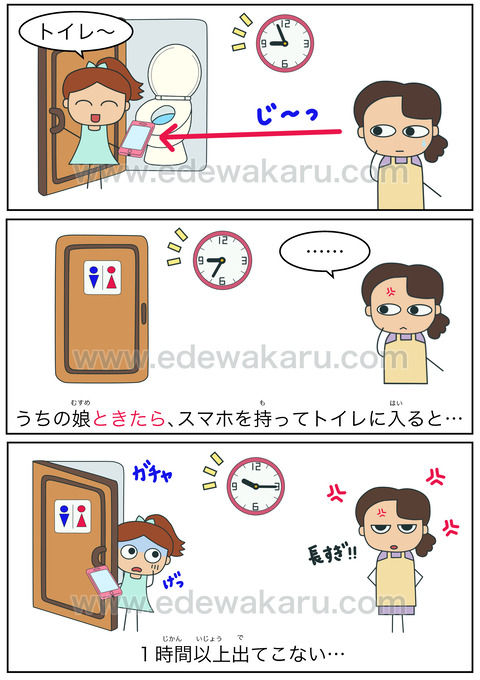
Meaning
〜は
How to use it
名詞[辞書形]+ときたら
Explanation
「AときたらB」は「AはBだ」という意味の文型です。この文型は、話し手の「A」に対する非難の気持ちや不満、怒り、あきれる気持ちを表します。「AはBで困る」「AはBであきれてしまう」「AはBで腹が立つ」と言いたい時などに使われます。「A」には人・動物・ものが入ります。
[例]
①うちの娘
ときたら、スマホを持ってトイレに入ると1時間以上出てこない…
→1時間は出てこないので困る
②あの子
ときたら、いつも遅れてくるのよ!
→いつも遅れてくるから腹が立つ
③うちの息子
ときたら、勉強もしないでゲームをしてばかりいる
→ゲームをしてばかりいるからあきれてしまう
④今年の新入社員
ときたら、敬語も使えないのか!!
→敬語も使えなくてあきれてしまう
→敬語も使えなくて困る
⑤山田くん
ときたら、お金を払わないで帰ったのよ
→お金を払わないで帰って、腹が立つ
⑥あのレストラン
ときたら、水だけで1000円もするんだよ
→水だけで1000円もして困る
⑦最近のネットニュース
ときたら、うそばかりだ!
→うそばかりで困る
「〜ときたら」は話し言葉として使われる文型です。非難の用法の他に、「〜のような場合になると、〜になるのが当然だ」という意味もありますので一緒に覚えておきましょう😉
【関連文型】
In context 7 examples
うちの娘ときたら、スマホを持ってトイレに入ると1時間以上出てこない…
→うちの娘は、スマホを持ってトイレに入ると1時間以上出てこないあの子ときたら、いつも遅れてくるのよ!
→あの子は、いつも遅れてくる!うちの息子ときたら、勉強もしないでゲームをしてばかりいる
→うちの息子は、勉強もしないでゲームをしてばかりいる今年の新入社員(しんにゅうしゃいん)ときたら、敬語も使えないのか!!
→今年の新入社員は、敬語も使えないのか!!A:昨日の飲み会楽しかった?B:うん。でも山田くんときたら、お金を払わないで帰ったのよA :また!?
→山田くんは、お金を払わないで帰ったのよあのレストランときたら、水だけで1000円もするんだよ
→あのレストランは、水だけで1000円もするんだよ最近のネットニュースときたら、うそばかりだ!
→最近のネットニュースは、うそばかりだ!
Usage 2
Read this source entry ↗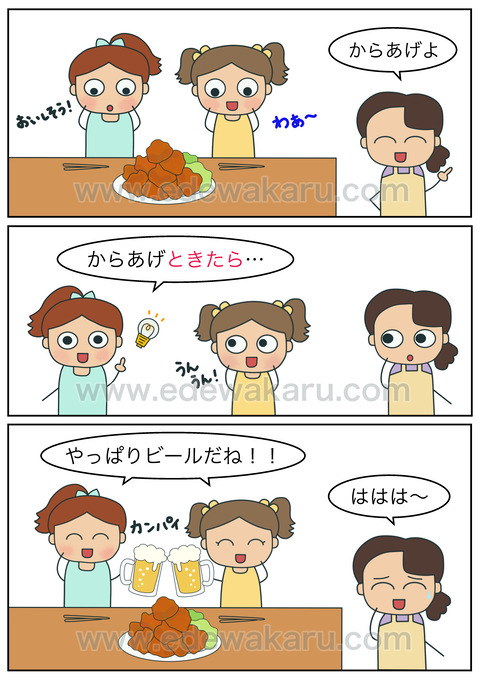
Meaning
〜だったら、〜になるのが当然だ
〜だったら、〜するのが当然だ
〜には〜が一番合う
How to use it
名詞[辞書形]+ときたら
形容詞[辞書形]+ときたら
Explanation
「AときたらB」は「Aの状況だったら、Bになるのが当然だ」「Aの場合だったら、Bするのが当然だ」という意味の文型です。 また「AにはBが一番合う」という意味でも使われます。この用法で使用する場合は[いいこと]にも[悪いこと]にも使うことができます。
「〜ときたら」には非難や不満を表す用法もありますので、一緒に覚えておきましょう😊
In context 5 examples
からあげときたら、やっぱりビールだね!
→からあげには、やっぱりビールが一番合うね!A:私の彼氏は女の子にすごく人気があるみたいなの…心配だわB:イケメンで優しいときたら、モテて当然だよ
→イケメンで優しかったら、モテて当然だよ毎日残業ときたら、病気になってもしかたがないと思うよ
→毎日残業だったら、病気になって当然だと思うよA:山田くん、首になったらしいよB:そっか…でも遅刻に無断欠勤(むだんけっきん)ときたら、首になるのも無理ないよね
→遅刻や無断欠勤をしている状況では、首になるのは当然だよねA:お寿司にはお茶が合うねB:寿司ときたら、日本酒でしょ!!
→寿司には日本酒が一番合うでしょ!!
どんなときどう使う 日本語表現文型辞典
Meaning
as for
How to use it
N+ときたら
Explanation
~は
非難、不満の気持ちを持って身近なものを話題にするときに使う。
Discusses something trivial in criticizing or dissatisfied manner.
In context 3 examples
お宅の息子さんは外でよく遊んでいいですね。うちの子ときたらテレビの前を離れないんですよ。
周りの家はみんなきれいなのに、わが家ときたら草がいっぱい生えている。
この自動販売機ときたらよく故障する。取り替えた方がいいと思う。
日本語NET JLPT文法解説まとめ
Meaning
"〜について言うと"
話し手の不満や非難の気持ちを言う時によく使われる。
"as for
How to use it
N + ときたら
In context 9 examples
うちの子ときたら、いつも宿題をやらないで遊んでばかりいる。
私の旦那ときたら、休みの日なのに家でゴロゴロしているのよ。子供たちも退屈そうだし、どこかに連れていって欲しいわ。
このパソコンときたら、しょっちゅうフリーズして使い物にならない。
うちの子ときたら、毎日ゲームばかりで全然勉強しないのよ。本当に困るわ。
私の彼氏ときたら、記念日を忘れて友達と遊びに行ったんだよ。本当に信じられない。
最近の若者ときたら、きちんと挨拶ができない人も多い。
最近のネットの情報ときたら、嘘か本当かわからない情報ばかりだ。
最近のテレビときたら、似たような番組ばかりでつまらない。
最近のYouTubeときたら、お金稼ぎのためにバカなことをする人が増えて見ていて不快だ。
毎日のんびり日本語教師
How to use it
名詞+ときたら/と来た日には
Explanation
比較的身近な人物や物事を表す名詞に接続して、それらの極端な行為や性質に対する否定的な評価や強い非難を行う文型です。
接続される名詞は主語にあたります(話題提示)ので、「~ときたら」は「~は」に置き換えることができます。
「~きたら」の後の否定的な評価は省略されることがあります。
「~と来た日には」はやや硬い言い方です。
Notes
特になし
In context 8 examples
うちの猫ときたら、すぐトイレットペーパーで遊んで散らかしたがる。
最近の若者ときたら、挨拶もまともにできない人が多い。
旦那ときたら、休みになればどこにも出掛けず家で寝てばかりいる。
息子と来た日には、食事中もトイレ中もずっとスマホを離さない。
友達が彼女との将来を考えているのに私ときたら…
オリンピックを見てると「この人たちはすごいのに私ときたら…」と思ってしまって精神衛生上良くない。
蝉ですら求愛行動するのに私ときたらもう…
諸外国は対応が早いのに、我が国ときたら緊急対応策さえも遅すぎる。用法② 必然的な判断、結果
日本語文型辞典 英語版
Meaning
Used by the speaker to introduce a certain person or situation as the topic of conversation and then state an evaluation of that person/situation. The topic is someone or something that is well-known to the speaker, and s/he uses ときたら to express a particularly strong emotion or evaluation that s/he has regarding it. Usually followed by expressions that indicate criticism or dissatisfaction, such as 本当にいやになる (I really hate it) or あきれてしまう (I’m shocked). Used mostly in spoken language.
Used to introduce as the topic of conversation a person, thing, or situation with an extreme characteristic. Means “in this kind of case/situation, of course this is the only thing to do (or the only thing that will happen).” As shown in
(3)
and
(4)
, this pattern also takes the form NときたらN, in which case it conveys the meaning that “N goes best with N” or “for N, N is the best.”
How to use it
1. Nときたら
2. ...ときたら
In context 6 examples
うちの亭主ときたら、週のうち3日は午前様で、日曜になるとごろごろ寝てばかりいる。
That husband of mine—he’s out till after midnight at least three times a week, and then come Sunday, he just lies around the house!
あそこの家の中ときたら、散らかし放題で足の踏み場もない。
You know that house over there? The inside is so cluttered that there's no place to stand!
毎日残業の後に飲み屋のはしごときたら、体がもつはずがない。
He works overtime every day and then goes bar-hopping, so there's no way his health could hold up.
働き者で気立てがいいときたら、みんなに好かれるのも無理はない。
She’s so hard-working and good-tempered—it's no wonder everyone likes her.
新鮮な刺し身ときたら、やっぱり辛口の日本酒がいいな。
If there’s fresh sashimi (raw fish), I’ll go for—what else?—a dry Japanese sake.
ステーキときたらやっぱり赤ワインでなくちゃ。
When you’re having steak, you’ve got to have red wine!
AIUEO JLPT Grammar
Meaning
This sentence pattern emphasizes the negative feelings or dissatisfaction towards a certain subject. It is commonly used to express displeasure or criticism towards specific people or things.
How to use it
名詞と+きたら
Explanation · 日本語
この文型は、話題にしている対象について、批判的・不満な感情を強調して述べるときに使われる表現です。多くの場合、ネガティブな評価や感情を表現する際に使われ、特定の人や物に対して不満を感じていることを強調します。
In context 5 examples
あの新人ときたら、仕事が遅くて困るよ。
That new employee is so slow at work, it’s really troublesome.
うちの子ときたら、宿題を忘れてばかりいる。
My child keeps forgetting their homework.
このパソコンときたら、すぐにフリーズして使い物にならない。
This computer freezes all the time and is practically useless.
彼女ときたら、いつも文句ばかり言っている。
She’s always complaining about something.
最近の若者ときたら、礼儀を知らないことが多い。
When it comes to young people these days, many don’t know proper manners.
文法
Meaning
"〜について言うと"
話し手の不満や非難の気持ちを言う時によく使われる。
How to use it
N + ときたら
In context 7 examples
私の旦那ときたら、休みの日なのに家でゴロゴロしているのよ。子供たちも退屈そうだし、どこかに連れていって欲しいわ。
うちの子ときたら、毎日ゲームばかりで全然勉強しないのよ。本当に困るわ。
私の彼氏ときたら、記念日を忘れて友達と遊びに行ったんだよ。本当に信じられない。
最近の若者ときたら、きちんと挨拶ができない人も多い。
最近のネットの情報ときたら、嘘か本当かわからない情報ばかりだ。
最近のテレビときたら、似たような番組ばかりでつまらない。
最近のYouTubeときたら、お金稼ぎのためにバカなことをする人が増えて見ていて不快だ。
Bunpro Grammar Reference
Meaning
When it comes to, That or this … of mine, That or this darn …, That or this blasted …
How to use it
Noun + ときたら
Nuance
A very casual, hypothetical construction, used for criticizing (A). When it comes to that darn (A).
Explanation
ときたら is an expression used casually when expressing mild frustration toward (A) in a lighthearted manner. This structure is a combination of the case-marking particle と, and 来る combined with the conjunction particle たら 'if', 来たら. It will often simply be translated as 'that blasted (A)', or 'that damn (A)'. Despite this, the literal meaning is just 'when it comes to (A)'.
ときたら will directly follow nouns.
うちの息子ときたら、就職もしないで家でダラダラしている。
When it comes to my son, he is not even trying to get a job, and he is just sitting around at home.
うちの弟ときたら、朝から文句ばかり言ってくるから本当にうざい。
This (darn) brother of mine, he always complains to me in the morning, and it is really annoying.
私の上司ときたら、自分が仕事できないくせに少しでもミスをしたらものすごく怒るからみんなから嫌われている。
When it comes to my boss, he gets super mad if you make the slightest mistake, even though he is not the best worker, so he is disliked by everyone at work.
This grammar pattern will almost exclusively appear in kana, so memorizing the stem verb it comes from will help to remember the meaning.
Fun Fact
In line with the literal meaning of 'when it comes to (A)', ときたら may also be used when the speaker wants to highlight something about (A) that is 'to be expected', or 'only natural'. Determining whether ときたら is being used in this way, or to express frustration, is usually quite clear in the second half of the statement.
うちの犬ときたら、家にお客さんが来るとその人に飛びつくからもっと躾をちゃんとしないといけない。
When it comes to my dog, when a guest comes to our place, he jumps on them so I need to train him properly. (To be expected)
カセットテープを使う機会がなくなったため、最近の若者ときたら、カセットプレイヤーが使えない子達が多い。
Since there is no opportunity to use cassette tapes, when it comes to the younger generation, there are many who do not know how to use cassette players. (Only natural)
Despite having two almost opposite nuances, it may help to think of ときたら as just 'when it comes to (A)' in all situations, with the (B) part of the phrase indicating whether it is positive or negative.
Nuance · 日本語
(A)を否定する時に使われるカジュアルな仮定表現。(A)についていうと。
Explanation · 日本語
「ときたら」は、(A) に対する軽い不満を砕けた調子で表す表現です。この文型は、格助詞「と」と、「来る」に接続助詞「たら」が付いた「来たら」の組み合わせです。文字通りの意味は「(A) に関しては」ですが、「あのひどい (A) は」や「まったく、(A) は」といった否定的なニュアンスで使われることが多いです。
「ときたら」は名詞の直後に置かれます。
うちの息子ときたら、就職もしないで家でダラダラしている。
When it comes to my son, he is not even trying to get a job, and he is just sitting around at home.
うちの弟ときたら、朝から文句ばかり言ってくるから本当にうざい。
This (darn) brother of mine, he always complains to me in the morning, and it is really annoying.
私の上司ときたら、自分が仕事できないくせに少しでもミスをしたらものすごく怒るからみんなから嫌われている。
When it comes to my boss, he gets super mad if you make the slightest mistake, even though he is not the best worker, so he is disliked by everyone at work.
この表現は、ほとんどの場面でひらがなで書かれるため、動詞「来る」の語幹からできていることを覚えておくと、意味を思い出すときの助けになるかもしれません。
豆知識
「ときたら」は、文字通りの「(A) に関しては」という意味で使われることもあります。この場合、(A) には「予想されていたこと」や「当然のこと」が入ります。「ときたら」が不満を表しているのか、当然のことを述べているのかは、たいてい文の後半を見ればわかります。
うちの犬ときたら、家にお客さんが来るとその人に飛びつくからもっと躾をちゃんとしないといけない。
When it comes to my dog, when a guest comes to our place, he jumps on them so I need to train him properly. (To be expected)
カセットテープを使う機会がなくなったため、最近の若者ときたら、カセットプレイヤーが使えない子達が多い。
Since there is no opportunity to use cassette tapes, when it comes to the younger generation, there are many who do not know how to use cassette players. (Only natural)
このように「ときたら」は異なるニュアンスで使われることがありますが、どの文脈においても、まずは「(A) に関しては」と考えて、(B) の部分で、それが肯定的か否定的かが判断するといいでしょう。
In context 19 examples
- 「義理の母ときたら私のことをぼやいてばかりよ。」
'That mother-in-law of mine, she always complains about me!'
- 私の上司ときたら、自分が仕事できないくせに少しでもミスをしたらものすごく怒るからみんなから嫌われている。
When it comes to my boss, he gets super mad if you make the slightest mistake, even though he is not the best worker, so he is disliked by everyone at work.
- うちの息子ときたら、就職もしないで家でダラダラしている。
When it comes to my son, he is not even trying to get a job, and he is just sitting around at home.
- うちの弟ときたら、朝から文句ばかり言ってくるから本当にうざい。
This (darn) brother of mine, he always complains to me in the morning, and it is really annoying.
- 「このプリンターときたら、忙しい時に限って故障するぞ!」
'This freaking printer of mine, it breaks only when I am busy.'
- 「娘は真面目に勉強しているのに、息子ときたら・・・(何もやらない)」
'Even though my daughter studies very seriously, that son of mine... (Doesn't do anything at all)'
- 「うちの旦那ときたら、連休中うちでゴロゴロばかりで、子どもの面倒をみてくれないの。」
'That husband of mine, he is always loafing around during the holidays and doesn't take care of children!'
- 「隣の人ときたら、毎日、毎日、朝の6時からラジオを聞くからうるさくて眠れない。」
'That freaking neighbor of mine, every single day he listens to radio from 6 a.m. so loud that I can't sleep.'
- 「最近の若者ときたら・・・(年上に敬意を払っていない)」
'When it comes to young people these days… (they do not respect their elders!)'
- 末っ子の息子ときたら、また長男や次男におねだりをしているみたいだわ。
That youngest son of mine, it appears he is pestering his older brothers again!
- あの子ときたら、また先生に媚びを売って内申点を稼ごうとしている。
That blasted kid. She’s trying to get grades by buttering up the teacher again.
- 「武さんのお父さんは格好いいよ。うちときたら水を節約してとか電気を無駄使いするなとかうるさくて腹が立つ。」
'Take, your father is so cool. When it comes to mine, he is always fussy, telling things like 'don't waste water' or 'don't waste electricity' and it pisses me off.'
- 他の先進国には女性の議員がもっといるのに、私の国ときたらほんの少ししかいない。
There’re more female members of parliament in other countries, but my blasted country has nobody but a few.
- 友達は結婚とか妊娠とか昇進とか人生の階段を順調に上っているのに私ときたら…。
Despite my friend rising through the stages of life smoothly with things like marriage, pregnancy, and a promotion, when it comes to me...
- ネットが普及してからのネット上の情報ときたら、デマばかりで全く信用できません。
When it comes to information on the internet since the internet’s popularization, there’s nothing but rumors, so you can’t trust it.
- 友達の彼氏ときたら、彼女を蔑ろにして友達ばかり優先するんだよ?早く別れちゃえばいいのにさ…。
When it comes to my friend’s boyfriend, he makes light of her and always prioritizes his friends, right? She should just hurry up and break up with him...
- 私が飼っているゴールデンレトリーバーときたら本当にやんちゃで、少し目を離せばいつも家が滅茶苦茶になっています。
That blasted Golden Retriever of mine, he’s so mischievous and as soon as I take my eyes off him even a little bit, the house gets destroyed.
- うちの犬ときたら、家にお客さんが来るとその人に飛びつくからもっと躾をちゃんとしないといけない。
When it comes to my dog, when a guest comes to our place, he jumps on them so I need to train him properly. (To be expected)
- カセットテープを使う機会がなくなったため、最近の若者ときたら、カセットプレイヤーが使えない子達が多い。
Since there is no opportunity to use cassette tapes, when it comes to the younger generation, there are many who do not know how to use cassette players. (Only natural)
NINJAL 日本語文型データベース
Meaning
不満を感じたりあきれたりする対象を話題として取り上げるときに使います。
How to use it
Nときたら
Notes
「~」には、身近な人物や事柄がきます。「~ときたら」の後にはふつう、「~」に対するマイナス評価を表す文がきます。
In context 5 examples
うちの子ときたら、朝から晩までゲームに夢中なんです。
ママのカレーときたらいつも辛さが足りなくておいしくない。
隣のうちの犬ときたら、吠えてばかりいるんだ。うるさくてたまらない。
部長ときたら、大事なことを決めなければならないときにいつもぐずぐずしていて決められないんだ。
あの人の話ときたらいつもわかりにくい。大事な部分が抜けていたり途中で別の話題に変わったりする。
IMABI
”When it Comes to…” III:と{きたら・きては・くると・きた日には・きている(ものだ)・くれば}
Read this IMABI lesson ↗Explanation
”When it Comes to…” III: と{きたら・きては・くると・きた日には・きている(ものだ)・くれば}
This lesson is a continuation of the last lesson but with a twist. It just so happens that the verb 来る is not as easy as it has been made out to be. At this point, we know that it is not always used in the literal sense of “coming” to a location. For instance, we know it can be used in idiomatic expressions such as 頭にくる (to get mad).
One usage that the verb has had for a very long time in Japanese history but which has been in decline in recent decades is using it to mean いう. This has been done so in Japanese to bring about extremely emphatic commentary about things that are deemed sensitive/of importance to the speaker.
So far, this sounds like random commentary out of context, but remember how といったら・いえば were used in the last lesson. These phrases are both used to conjure up some topic to emphatically make a statement about it. The phrases in this lesson are more or less synonymous to this degree, but the nuances implied, of course, are not 100% the same.
くる ≒ いう
ときたら
The purpose of ときたら is to bring up into conversation a very specific circumstance/event/matter/topic of some significance to the speaker in an emphatic manner, which is then followed by commentary true in the eyes of the speaker for the situation mentioned. This commentary is usually negative in connotation; however, regardless of whether the sentence is positive or negative in nuance, it always brings about some sense of astonishment/amazement. After all, you can be astounded by how awesome or how horrible something is.
Basic Translation: “When it comes to…”; “Regarding…”
As the basic translations suggest, you can view this phrase to be a very emphatic variation of phrases like といえば and に関しては.
1. 中国ちゅうごくでの生活せいかつときたら、本当ほんとうに散々さんざんだった。
As far as my livelihood in China went, it was truly miserable.
2. あの回まわらない寿司屋すしやときたら、利益率りえきりつが高たかそうだな。
When it comes to sushi restaurants that aren’t conveyor ones, it seems that the profit ratio is high, you know.
3. この車くるまときたら、夏なつはエンジンの熱気ねっきで外気がいきより暑あついくせに冬ふゆは隙間風すきまかぜで外そとより寒さむい。
Regarding this car, despite it being hotter than the outside due to the heat of the engine in the summer, it’s colder than the outside due to draft in the winter.
4. メキシコの天気てんきときたら、酷ひどい暑あつさだ。
When it comes to the weather in Mexico, the heat is awful.
5. 世界せかいでは酷ひどい事件じけんが頻発ひんぱつしてるのに、日本にほんの警察けいさつときたらこんなことを・・・
Even though horrible incidents are frequently happening in the world, to think that the Japanese police of all things would…
6. あの先生せんせいときたら、授業中じゅぎょうちゅうも冗談じょうだんばかりで、困こまるなあ。
When it comes to that teacher, he’s always joking in class, which is really bothersome.
7. このパソコンときたら、買かったばかりなのに、もう壊こわれ始はじめてて、困こまってるよ。
When it comes to this PC, even though I’ve just bought it, it’s already beginning to break, which is causing me a great bit of trouble.
8. まったく、最近さいきんの若者わかものときたら、なっとらん!
Ugh, young people these days, they just won’t cut it.
9. このチェーン居酒屋いざかやときたら、従業員じゅうぎょういんは最低さいていだよ。
When it comes to this chain izakaya, the employees are the worst.
10. 夫おっとときたら、私わたしを片時かたときとも一人ひとりにしてくれないのです。
When it comes to my husband, he won’t even let me have a moment alone by myself.
11. あいつときたら、いっつも嘘うそを突つくんだ。
When it comes to that guy, he always lies.
12. あいつときたら、毎朝まいあさ30さんじゅっぷん分以上遅刻ぷんいじょうちこくしてくるんだよ。
When it comes to that guy, he always shows up 30 minutes or more late every morning.
13. 隣となりの家いえの犬いぬときたら、いつも吠ほえてばかりで困こまってます。
When it comes to my neighbor’s dog, it’s always barking, and it’s bothering me.
14. うちの妻つまときたら、またもや出張中しゅっちょうちゅうだ。
Concerning my wife, she’s on a business trip again.
と言ったら is used in two kinds of situations. It either calls out/talks to a listener, or it talks about a certain situation. In both situations, commentary follows. The entire situation implies familiarity with the person/situation at hand. The commentary/critique/outburst can have a variety of emotions packed into it: anxiety, worry, rebuke, jealousy, pride, resignation, etc. Regardless of the emotion, all this holds together.
ときたら, on the other hand, brings up some topic as a prerequisite for a comment that follows. The comment that follows is deemed to be obvious/natural/absolutely certain. This ‘opinion’ is deeply felt by the speaker, demonstrating that the topic is of some significance to the speaker. Although と言ったら can be used to give positive or negative feedback in a familial tone, the same cannot be said of ときたら. The difference is that ときたら does not guarantee a tone of familiarity. In fact, the more negative the statement, the more visceral, cold line of sight you feel from the speaker. It is very easy to belittle someone by using ときたら whereas と言ったら doesn’t go beyond jokingly chastising someone.
ときては
ときては is a variation of ときたら which only differs in the fact that it brings into mind a cause-effect relationship. We know that the basic understand of ときたら is “With A being a prerequisite, B is only natural.” With ときては, you more explicitly state this on the lines of “Since A is so, B is only natural (as an effect).” Although very subjective, there is a very “as a matter of fact” tone to this pattern.
15. 見みた目めも同おなじ、使つかわれ方かたも同おなじ、薬効やっこうまで同おなじときては混同こんどうするのも無理むりはないでしょう。
When it comes down to their appearance, how they’re used, and even to their efficacy being the same, it would not be reasonable to also confuse them.
16. 残業代ざんぎょうだいは満額まんがくでないときては、納得なっとくできない人ひとが多おおい。
There are many people who cannot accept it when their overtime pay is not the full amount.
17. この雑誌ざっしときては、半分以上はんぶんいじょうが宣伝広告せんでんこうこくだよ。
Regarding this magazine, over half of it is advertisements.
18. おまけに殺人さつじんときては笑わらうに笑わらえぬ話はなしだ。
What’s more is that this story is one that not even murders are able to laugh at.
19. しかも商売しょうばいにならないほどの安値やすねときてはどうにも消費しょうひしきれないだろう。
Moreover, especially when it’s at such a low price it won’t even turn into business, you can’t possibly go through all of it.
20. おまけにハンサムときては皆みなの妬ねたみを買かっている。
What’s more, his handsomeness makes everyone envious.
21. 自らで朝あさから晩ばんまで苦労くろうして食事しょくじの用意よういをしても「天てんにましますお父さま、今日きょうの食事しょくじを感謝かんしゃします」ときては、神様かみさまも困こまってしまうだろう。
When you still pray, “Father who art in heaven, we thank you for this meal,” despite having worked on your own from morning to night and prepare the meal, God will be surely troubled as well.
とくると
This variation is the most objective form, and this is because of the use of と rather than the other conditional particles. As an effect, it doesn’t get used at scolding statements directed at others. It is essentially the same as と言うと with the only difference being that it is not near as common. This is simply due to the fact that the use of くる to stand for いう is in decline overall.
22. 酒さけとくると、からっきし駄目だめだ。
When it comes to alcohol, I’m absolutely hopeless.
23. 音楽おんがくとくると、やはりモーツァルトですね。
When it comes to music, Mozart is definitely where it’s at, you know.
ときた日にゃ(あ)
The compound particle には, in either dialectical and/or old-fashioned speech, can be contracted as にゃ(あ). Putting this aside, ときた日{には・にゃ(あ)} is simply a somewhat old-fashioned variant of ときたら. The 日 in this phrase is equivalent to 場合. Many speakers do not even know what this phrase is anymore, but it does appear in literature as well as in Early Modern Japanese. Meaning, if you like reading things from Natsume Sōseki (夏目漱石), you will find it.
24. うちの人と来きた日ひにゃ、大変たいへんなヤキモチやきでね。
When it comes to my partner, he/she is extremely jealous, you see.
25. うちの息子むすこと来きた日ひには、先さきが思おもいやられる。
When it comes to my son, I have no idea what is going to happen.
26. 松尾芭蕉まつおばしょうと来きた日ひにゃあ、大馬鹿おおばかじゃ。
When it comes to Basho Matsuo, he is an utter fool.
27. 会あったのは男性だんせいの高校生こうこうせい、ついでに美少年びしょうねんときた日ひにゃあ、夜よるも眠ねむれない。
Who I met is a guy in high school, and incidentally he’s a handsome guy; I can’t even sleep at night.
28. 大人おとなになるときた日ひにゃ、まったくしょうがない。
When it comes to becoming an adult, it absolutely can’t be helped.
ときている(もんだ)
When ときたら is paraphrased to come at the end of a sentence, you get ときている(ものだ). The use of {もの・もん}だ is there to simply imply that the statement is common sense, but the principles in understanding the phrase at large mentioned above still apply. Typically, the phrase is partnered with phrases that equate to “in addition to,” “what’s more,” etc. These phrases include ~うえに, ~に加えて, おまけに~, etc. The best way to translate this, although translation is not always necessary to reflect its meaning, is “to boot.”
31. 彼氏かれしは金遣かねづかいが荒あらいのに加くわえて、我わが儘ままときている。
In addition to his use of money being wasteful, my boyfriend is selfish to boot.
Sentence Note: The prerequisite for the boyfriend’s selfishness would be the person’s inherent nature which not only doesn’t stop at wasting money but which also leads to being selfish as a natural effect.
32. 賢かしこい上うえに、性格せいかくもいいときてるもんだから、困こまってます。
On top of being wise, since (his/her) personality is also nice to boot, which is what I’m grappling with.
33. サラリーマンは気楽きらくな家業かぎょうときたもんだ。
Salary-men have a carefree line of work to boot.
Sentence Note: The prerequisite of the “carefree nature” indicative of a salary-man have would be based on the nature of their work. In today’s Japan, this statement would not be true, but in the past, this was a very prominent critique of the leisure many saw in their lifestyles.
34. とんだタイミングときたもんだ。
What unthinkable timing.
Sentence Note: Although the prerequisite is not mentioned, one can imagine that the situation with the “horribly unthinkable timing” was a domino effect of bad circumstances.
35. 水も滴るいい男ときたもんだわ。
What a breathtakingly beautiful, nice guy he is!
36. この浴衣ゆかたと言いったら綺麗きれいな上うえに安やすいときている。
Talking about this yukata, on top of it being so pretty, it’s cheap to boot.
37. 全然美味ぜんぜんおいしくないときたもんだ。
It’s absolutely disgusting to boot. (taste)
38. どちらもしっかり1いち人前にんまえで、おまけに900きゅうひゃく円えんときたもんだ。
Both are full portions, and what’s more is that they’re 900 yen!
39. あの人ひとは、 何なにをするか分わからない上うえに、物覚ものおぼえが悪わるい。おまけにコーヒーの味あじでさえ毎日違まいにちちがうときたもんです。
On top of not knowing what he’s doing, that person has a terrible memory. To make matters worse, the taste of the coffee (he makes) is different each day.
40. あいつは、いつも自分じぶんのことしか考かんがえてないのに困こまったときだけ助たすけてくれときたもんだ。
Even though this guy is always thinking just about himself, what’s more is that he only cries for help only when he’s in trouble.
41. 女王蜂じょおうばちは過酷かこくな家業かぎょうときたものだ。
Queen bees have a cruel occupation to boot.
42. おまけに勉強べんきょうも出来できて運動うんどうもそこそこときてるもんだ。
What’s more, I’ve been able to study as well as reasonably exercise.
とくれば
We know that with the use of the particle ば, you can create a conditional phrase that is subjective, relating to present/future situation, and that also leads to a desire of the speaker. As such, this is never used in a negative connotation. This, as you can imagine, is a more emphatic version of と言えば.
44. 海うみとくれば、海水浴かいすいよくだ。
When it comes to the ocean, you think of sea bathing.
45. 大阪おおさかとくれば、やっぱりたこ焼やきが一番いちばんに思おもい浮うかびますね。
When it comes to Ōsaka, takoyaki definitely first comes to mind.
46. 前回は99点とくれば、次は100点が取れそうだね。
With it being that I got a 99 last time, it seems that I will get a 100 next time, huh.
47. クエン酸とくれば疲労回復!
When it comes to citric acid, think recovery from fatigue!
In context 44 examples
中国ちゅうごくでの生活せいかつときたら、本当ほんとうに散々さんざんだった。
As far as my livelihood in China went, it was truly miserable.
あの回まわらない寿司屋すしやときたら、利益率りえきりつが高たかそうだな。
When it comes to sushi restaurants that aren’t conveyor ones, it seems that the profit ratio is high, you know.
この車くるまときたら、夏なつはエンジンの熱気ねっきで外気がいきより暑あついくせに冬ふゆは隙間風すきまかぜで外そとより寒さむい。
Regarding this car, despite it being hotter than the outside due to the heat of the engine in the summer, it’s colder than the outside due to draft in the winter.
メキシコの天気てんきときたら、酷ひどい暑あつさだ。
When it comes to the weather in Mexico, the heat is awful.
世界せかいでは酷ひどい事件じけんが頻発ひんぱつしてるのに、日本にほんの警察けいさつときたらこんなことを・・・
Even though horrible incidents are frequently happening in the world, to think that the Japanese police of all things would…
あの先生せんせいときたら、授業中じゅぎょうちゅうも冗談じょうだんばかりで、困こまるなあ。
When it comes to that teacher, he’s always joking in class, which is really bothersome.
このパソコンときたら、買かったばかりなのに、もう壊こわれ始はじめてて、困こまってるよ。
When it comes to this PC, even though I’ve just bought it, it’s already beginning to break, which is causing me a great bit of trouble.
まったく、最近さいきんの若者わかものときたら、なっとらん!
Ugh, young people these days, they just won’t cut it.
このチェーン居酒屋いざかやときたら、従業員じゅうぎょういんは最低さいていだよ。
When it comes to this chain izakaya, the employees are the worst.
夫おっとときたら、私わたしを片時かたときとも一人ひとりにしてくれないのです。
When it comes to my husband, he won’t even let me have a moment alone by myself.
あいつときたら、いっつも嘘うそを突つくんだ。
When it comes to that guy, he always lies.
あいつときたら、毎朝まいあさ30さんじゅっぷん分以上遅刻ぷんいじょうちこくしてくるんだよ。
When it comes to that guy, he always shows up 30 minutes or more late every morning.
隣となりの家いえの犬いぬときたら、いつも吠ほえてばかりで困こまってます。
When it comes to my neighbor’s dog, it’s always barking, and it’s bothering me.
うちの妻つまときたら、またもや出張中しゅっちょうちゅうだ。
Concerning my wife, she’s on a business trip again.
見みた目めも同おなじ、使つかわれ方かたも同おなじ、薬効やっこうまで同おなじときては混同こんどうするのも無理むりはないでしょう。
When it comes down to their appearance, how they’re used, and even to their efficacy being the same, it would not be reasonable to also confuse them.
残業代ざんぎょうだいは満額まんがくでないときては、納得なっとくできない人ひとが多おおい。
There are many people who cannot accept it when their overtime pay is not the full amount.
この雑誌ざっしときては、半分以上はんぶんいじょうが宣伝広告せんでんこうこくだよ。
Regarding this magazine, over half of it is advertisements.
おまけに殺人さつじんときては笑わらうに笑わらえぬ話はなしだ。
What’s more is that this story is one that not even murders are able to laugh at.
しかも商売しょうばいにならないほどの安値やすねときてはどうにも消費しょうひしきれないだろう。
Moreover, especially when it’s at such a low price it won’t even turn into business, you can’t possibly go through all of it.
おまけにハンサムときては皆みなの妬ねたみを買かっている。
What’s more, his handsomeness makes everyone envious.
自らで朝あさから晩ばんまで苦労くろうして食事しょくじの用意よういをしても「天てんにましますお父さま、今日きょうの食事しょくじを感謝かんしゃします」ときては、神様かみさまも困こまってしまうだろう。
When you still pray, “Father who art in heaven, we thank you for this meal,” despite having worked on your own from morning to night and prepare the meal, God will be surely troubled as well.
酒さけとくると、からっきし駄目だめだ。
When it comes to alcohol, I’m absolutely hopeless.
音楽おんがくとくると、やはりモーツァルトですね。
When it comes to music, Mozart is definitely where it’s at, you know.
うちの人と来きた日ひにゃ、大変たいへんなヤキモチやきでね。
When it comes to my partner, he/she is extremely jealous, you see.
うちの息子むすこと来きた日ひには、先さきが思おもいやられる。
When it comes to my son, I have no idea what is going to happen.
松尾芭蕉まつおばしょうと来きた日ひにゃあ、大馬鹿おおばかじゃ。
When it comes to Basho Matsuo, he is an utter fool.
会あったのは男性だんせいの高校生こうこうせい、ついでに美少年びしょうねんときた日ひにゃあ、夜よるも眠ねむれない。
Who I met is a guy in high school, and incidentally he’s a handsome guy; I can’t even sleep at night.
大人おとなになるときた日ひにゃ、まったくしょうがない。
When it comes to becoming an adult, it absolutely can’t be helped.
彼氏かれしは金遣かねづかいが荒あらいのに加くわえて、我わが儘ままときている。
In addition to his use of money being wasteful, my boyfriend is selfish to boot.
賢かしこい上うえに、性格せいかくもいいときてるもんだから、困こまってます。
On top of being wise, since (his/her) personality is also nice to boot, which is what I’m grappling with.
サラリーマンは気楽きらくな家業かぎょうときたもんだ。
Salary-men have a carefree line of work to boot.
とんだタイミングときたもんだ。
What unthinkable timing.
水も滴るいい男ときたもんだわ。
What a breathtakingly beautiful, nice guy he is!
この浴衣ゆかたと言いったら綺麗きれいな上うえに安やすいときている。
Talking about this yukata, on top of it being so pretty, it’s cheap to boot.
全然美味ぜんぜんおいしくないときたもんだ。
It’s absolutely disgusting to boot. (taste)
どちらもしっかり1いち人前にんまえで、おまけに900きゅうひゃく円えんときたもんだ。
Both are full portions, and what’s more is that they’re 900 yen!
あの人ひとは、 何なにをするか分わからない上うえに、物覚ものおぼえが悪わるい。おまけにコーヒーの味あじでさえ毎日違まいにちちがうときたもんです。
On top of not knowing what he’s doing, that person has a terrible memory. To make matters worse, the taste of the coffee (he makes) is different each day.
あいつは、いつも自分じぶんのことしか考かんがえてないのに困こまったときだけ助たすけてくれときたもんだ。
Even though this guy is always thinking just about himself, what’s more is that he only cries for help only when he’s in trouble.
女王蜂じょおうばちは過酷かこくな家業かぎょうときたものだ。
Queen bees have a cruel occupation to boot.
おまけに勉強べんきょうも出来できて運動うんどうもそこそこときてるもんだ。
What’s more, I’ve been able to study as well as reasonably exercise.
海うみとくれば、海水浴かいすいよくだ。
When it comes to the ocean, you think of sea bathing.
大阪おおさかとくれば、やっぱりたこ焼やきが一番いちばんに思おもい浮うかびますね。
When it comes to Ōsaka, takoyaki definitely first comes to mind.
前回は99点とくれば、次は100点が取れそうだね。
With it being that I got a 99 last time, it seems that I will get a 100 next time, huh.
クエン酸とくれば疲労回復!
When it comes to citric acid, think recovery from fatigue!