絵でわかる日本語
IMABI
Start to I: ~始める & ~出す
Read this IMABI lesson ↗Explanation
Start to I: ~始める & ~出す
In this lesson, we will learn about the verb endings ~始める and ~出す, which indicate the start of something when used as the secondary verb in a compound verb.
Terminology Note: Compound verbs (複合動詞) are created by the continuative form (連用形) of the main verb (V1) being followed by a secondary verb (V2) which serves a predictable function for the main verb. In Japanese, the main verb is referred to as 前項動詞 and the secondary verb is referred to as 後項動詞1.
~始める
As a standalone verb, the Ichidan verb 始める is a transitive verb meaning “to begin/start.” It can mean this in the sense of starting some sort of action or in the sense of starting a business.
1. この仕事を始めたきっかけは何だったんですか。
What was your motive for starting this job?
2. 若者向けの喫茶店を始めました。
I started a coffee shop intended for young people.
When used in compound verbs, ~始める indicates that the agent of the sentence is starting said action of the main verb – that being a verb of volition regardless of transitivity – or it indicates that a state described by the main verb has begun – that being an intransitive verb of non-volition. Before seeing examples of both environments, let’s go over how to attach ~始める to the main verb (V1).
V1 Verb ClassExample Verb連用形+~始める
一段食べる
to eat食べ食べ始める
to start to eat/
to start eating
五段書く
to write書き書き始める
to start to write/
to start writing
サ変する
to doしし始める
to start to do/
to start doing
カ変来(く)る
to come来(き)来始める
to start coming
Whether the main verb is transitive or not, the original transitivity of V2 is irrelevant, which means 始まる (the intransitive form) is never used in this capacity2.
As for the slight difference in English between “to start to + infinitive” and “to start to + -ing,” this is borne out in context in Japanese, with occasional semantic restraints in Japanese preventing one or the other from being possible, as is eluded to by 来始める not meaning “to start to come.”
3. 今日、レポートを書き始めました。
I started writing the report today.
4. 宿題を(し)始めた。
I started doing my homework.
5. 日本語を勉強し始めたのは、6年前です。
It was six years ago since I started studying Japanese.
6. 疲つかれを感かんじ始めた。
I’ve begun to feel fatigue.
7. 来学期らいがっきからロシア語を勉強し始めようと思っています。
I’m intending on beginning to study Russian starting next semester.
8. 雪は冷たい霙(みぞれ)に変わり始めた。
The snow started to turn into icy sleet.
9. 手が悴(かじか)み始めました。
My hands began to feel numb.
~出す
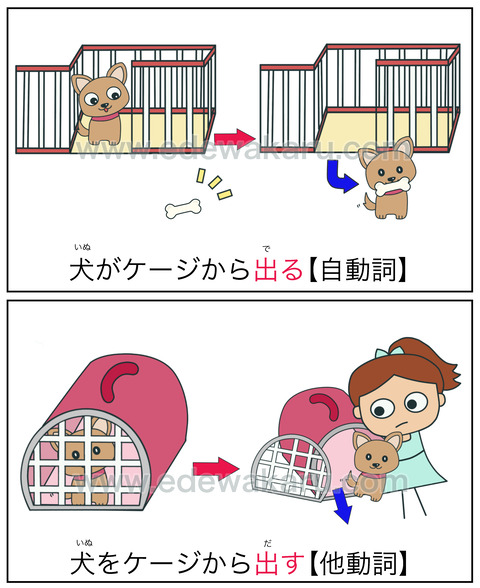
First, let’s investigate what the transitive verb 出す means as an independent verb. Of its core meanings, there is a common notion of taking an object and moving it outward and/or to the forefront. It is generally translated as meaning the following: “to take/get out,” “to put out/submit,” “to make public,” “to send (a letter, etc.), “to produce,” “to serve (food),” etc.
10. 住民はゴミを出しに集まってきました。
The residents have gathered taking out their trash.
11. カメムシは強い臭いを出した。
The stink bug gave off a strong smell.
12. 毎回の授業後にレポートを出します。
I submit a report after every class.
13. あの店員さんがお客さんに飲み物を出しています。
That employee is serving drinks to the customers.
14. サンタさんに手紙てがみを出しました。
I sent a letter to Santa.
15. 太陽が顔を出した。
The sun showed its face.
Before jumping into learning how ~出す as V2 in a compound verb can indicate the start of an action, let’s look at an example using the independent verb iteration which serves as a bridging context for its use in compounds.
16. マクドナルドは世界中に店を出しています。
McDonald’s has been (and still is) opening stores worldwide.
In Ex. 16, 出す indicates the start of operations from having put forth a location of business, but it is also a physical act in which something is put into the forefront. This leads into how ~出す has two interrelated usages, which more often than not go hand in hand.
①To have something (potentially oneself) put into the forefront.
②To start something (usually a scenario out of one’s control).
These meanings are adaptable to intransitive and transitive contexts accordingly, and the transitivity of the compound verb as a whole is determined by V1.
①The Semantic V2 ~出す
Deriving from its literal sense of “to put…into the forefront,” ~出す functions as what is known as a “semantic compound verb ending3,” and it is this grammatical distinction that you will need to distinguish it from its synonymous meaning of “to start” with ~始める (Usage ② ↓).
Before that, though, as stated, transitivity itself does not help in determining how ~出す functions, but rather, the meaning of the verb will have some directionality built into how the action is carried out or occurs.
V1 連用形 + ~出すTransitivityMeaning
追い出す他動詞To drive out; to expel
取り出す他動詞To take/pick out; to fetch
はみ出す自動詞To jut out
飛び出す自動詞To jump/fly out
流れ出す自動詞To flow/stream out
突き出す他動詞To push/stick out
運び出す他動詞To carry out
動き出す自動詞To get going
思い出す他動詞To remember
溢れ出す自動詞To pour out
照らし出す他動詞To illuminate
作り出す他動詞To produce; to dream up
見つけ出す他動詞To find out
見出す4他動詞To discover
17. 旦那と喧嘩して家から追い出した。
I got into an argument with my husband and kicked him out of the house.
18. 引き出しからペンを取り出した。
I took out a pen from the drawer.
19. 昔のことを思い出した。
I remembered something from a long time ago.
20. ハンバーガーから肉汁が溢れ出している。
Juice is flowing out from the hamburger.
21. シアノバクテリアは、地球で初めて酸素を作り出した生物だと言われています。
Cyanobacteria are said to be the creatures which produced oxygen for the first time on Earth.
~出る
For a number of compounds, ~出る may be seen instead of ~出す. At times, there is interchangeability between the two, but even then, there is always a difference in nuance.
■V1 w/ ~出る・出す Interchangeability
Whenever ~出る and ~出す are interchangeable, we see that ~出す by contrast does have a rather dynamic aspect to how the phenomenon/action is being perceived, whereas ~出る is truly just a simple description of something projecting outward.
22. 雨樋から水が溢れ{出て・出して}いる。
Water is overflowing from the rain gutter.
23. 1文字が枠外にはみ{出て・出して}いる。
One character/letter is jutting out of bounds.
24. 目の飛び{出 ○・出し ◎}そうな値段だ。
The price is eye-popping.
25. ごく小さな小川が泉から流れ{出て ◎・出して ?}いる。
A quite tiny stream is flowing out of the spring.
There are certain grammatical distinctions that can be made from choosing one over the other. For instance, whenever the verb is marked by ~た as opposed to ~ている, ~出す can simultaneously indicate the directionality as well as the ‘dramatic’ start of a phenomenon/outcome, whereas ~出る lacks this potential. Another peculiarity is that while compounds made with ~出す can be used as nouns when in the 連用形, that is not possible with any verb created with ~出る.
26. 文字のはみ出しを修正しました。
I fixed the text from jutting out of bounds.
27. 野生のピカチュウが飛び{出して 〇・出て X}きた!
A wild Pikachu appeared!
28a. 涙が瞼から流れ出した。
28b. 涙が瞼から流れ出た。
Tears flowed from (my/their) eyes.
■V1 w/o ~出る・出す Interchangeability: ~出る 〇/~出す X
V1 which may only take ~出る can be split into three categories:
i. Intransitive verbs
ii. Transitive verbs
iii. Transitive verbs which may become intransitive with ~出る
Verbs in Category i are the easiest to identify, as ~出る can be alternatively viewed as its independent verb iteration with the particle て happening to not intervene. The reason for why て does not intervene is so that the actions of V1 and V2 may occur concurrently as opposed to being separate instances in time. As for why ~出す is not grammatical with this category, the reason is that the ~出す would be interpreted as an aspect marker (Meaning ② ↓), but that does not make sense with all verbs, and such verbs are those which entail a progression, which goes against a dynamic, instantaneous start. If, however, a context can be conceived where that problem is alleviated, ~出す may become, in said context, grammatical.
29. 傷跡から膿が滲み{出て 〇・出して △}いる。
Puss is oozing out from the scar.
30. 生徒たちは一歩前へ進み{出た 〇・出した △}。
The students proceeded one step forward.
31. お延はわざと取り合わなかった。と云って別に煩い顔もしなかった。愛嬌を見せた平気とでもいうような態度をとった。小林はもう一歩前へ進み出した。
Onobu intentionally paid no mind (to him). She did not even appear particularly annoyed. Her demeanor was more on the lines of showing off her winsomeness as if to say she were okay. Kobayashi (then) presses (her) one step further.
From『お延』 by 夏目漱石.
32. どうやら絆創膏はいっときの慰めで、みるみるうちに血が滲み出している。
It would appear that the band-aid was only temporary relief, as blood started oozing out in the blink of an eye.
Similarly to Category i, verbs in Category ii which utilize ~出る cannot be used with ~出す lest its aspect meaning is intended, which at that point the meaning of the resultant compound is no longer the same. What distinguishes the two categories is that V1, and consequently the compound as a whole, is transitive.
33. 自分のアイデアを申し{出た 〇・出した X}。
I proposed my own idea.
34. マイナンバーを届け{出た 〇・出した X}。
I registered my “My Number (= personal identification number).”
35. 被害者が名乗り{出た 〇・出した X}。
The victim(s) came forward.
Interestingly, this category allows for some of its verbs to have their 連用形 used as standalone nouns, which is not a trait that ~出る compounds typically possess as stated previously.
36. 彼氏から結婚の申し出を受けました。
I received a marriage proposal from my boyfriend.
Category iii can be described as verbs with which the use of ~出る vs ~出す results in intransitive-transitive pairs in specific contexts. In any event, the use of ~出る is heavily stilted towards stative contexts, whereas ~出す remains dynamic in nature with a clear agent and object implied.
・突き出る vs 突き出す
In the sense of “jutting out,” 突き出る and 突き出す are interchangeable and both function as intransitive verbs, which is irregular in either case given how V1 (突く) is transitive, but when 突き出す is used to mean “to hand over (to the police)” or when it is used with a direct object in which something is being “pushed out,” it is strictly transitive and NOT interchangeable with 突き出る.
37. その崖は道路の上に突き{出ている・出している}。 (自動詞)
That cliff is jutting out above the road.
38. 私人逮捕について、例えば信号無視をした人を捕まえて警察に突き{出て X・出して 〇}もいいですよね?(他動詞)
So, about citizen’s arrests, for example, would it be okay to apprehend someone for running a light and turning them into the police?
・抜き出る vs 抜き出す
In the intransitive sense of “towering above,” literally and figuratively, 抜き出る may be used, while 抜き出す is only transitive with the meanings of “to single out” or “to extract out.” Note that the intransitive 抜き出る is usually seen as 抜きんでる5.
39. あの店の品揃えの広さは他の店よりも抜き出ている。
The extent of that store’s selection of goods is far better than other stores.
40. 最近、がん治療について新しい研究が進んでいて、中で日本が抜きんでています。
As of late, new research has been moving forward on cancer treatment, and among (those researching), Japan is excelling.
41. 御岳には雌岳、雄岳、平岳の3峰があり、周りの山より抜き出ている。
Ontake consists of the three peaks Metake, Otake, and Hiratake, and it towers over the surrounding mountains.
42. 金子さんはベニズワイガニの足6を折ってするりと身を抜き出した。
Kaneko-san cracked open the red snow crab legs and smoothly extracted out the meat.
■V1 w/o ~出る・出す Interchangeability: ~出る X/~出す 〇
Given that only a handful of verbs may take ~出る, that implies most verbs can only take ~出す. Such verbs are usually indicative of ~出す’s ability to mark the literal moving ‘outward’ by the agent while also indicating the start of said phenomenon (Usage ② ↓).
43. 引っ越し先で飼い猫が逃げ{出た X・出した 〇}。
(Our) cat ran away where we moved to.
44. 建物はがらがらと崩れ落ちた。通りへ駆け{出た X・出した7 〇}が、とても立っていられないほどだった。
The buildings came crashing down. (I) ran out to the street, but (the shaking) was to the point I could hardly keep standing.
Irregularities
There are some verbs that oddly possess intransitive and transitive meanings despite the transitivity of V1 or V2 (~出す itself). For these verbs, it is best to view V1 as constituting its own intransitive-transitive pair, with the nature of ~出す and surrounding context making it clear which is intended.
・繰り出す
繰り出す may be translated as “to draw (a thread out),” “to send out (someone),” or “to lunge (something out at)” in a transitive sense, but as an intransitive verb it means “to set out in large numbers.”
45. 主人公たちは新たな冒険へと繰り出した。
The protagonists set out on a new adventure.
46. 繭から糸を繰り出した。
(I) drew out string from the cocoon.
・乗り出す
In an intransitive sense, 乗り出す may figuratively be translated as “to set out” or more literally as “to start to ride (Meaning ② ↓), but in a transitive sense it means “to lean forward,” and in this latter usage, we see that its object takes を as opposed to に.
47. そう言って僕は身を乗り出して彼氏の頬に口づけをした。
As I say this, I lean my body over and kiss my boyfriend on the cheek.
48. 人類は月や火星に乗り出している。
Mankind has set out for the Moon, Mars, and elsewhere.
・吹き出す
Generally speaking, 吹く is an intransitive verb that generally translates to “(for the wind) to blow,” but it is also a transitive verb with the meanings “to blow (out),” “to play (a wind instrument),” “to emit (smoke) 噴く,” or even, “to sprout.” With V1 still determining the transitivity of a ~出す compound, that means that any of these meaning can be used with it.
49. スマホを見て、吹き出した。
I looked at my smart phone and burst out laughing.
50. 政府せいふの姿勢しせいに不満ふまんが噴ふき出した。
(My/their) dissatisfaction erupted by the government’s stance.
51. 桜島はいつも真っ白な火山灰かざんばいを噴ふき出すものですね。
Mt. Sakurajima always spouts out white volcanic ash.
52. ぶどうの木が芽を吹き出した。
The grape tree’s shoots sprouted.
②The Aspect Marker ~出す
Meaning ② of ~出す derives from a far more grammaticalized adaption of the sense to put forth something to then mean the onset, and a sudden/dramatic one at that, as an aspect marker.
Aspect (相) in Japanese can be defined as any ending which pertains to how an action/event occurs over time. In the case of ~出す, it not only indicates the start, but it also implies an intense beginning, and a duration which necessities a change in the position of the agent/subject.
Because Usage ② is an extension of Usage ① and not the other way around, context as well as understanding how the action of V1 plays out will determine whether ~出す implies duration. For instance, with the verb 思い出す (to remember), the action of “remembering” is instantaneous, and the role of ~出す is to emphasize how the thoughts put forth were done to view the act of 思う. Therefore, generally speaking, 思い出す is not intended to mean “to begin to remember,” and for that meaning we find that 思い出し始める is used, which is a great indicator as to how ~始める and ~出す are not fully interchangeable8.
Yet, 思い出す can mean “to begin to think” in some contexts, just never “to begin to remember.” This is when ~出す is meant as Meaning ②. To prevent V1 from being interpreted normally as an instantaneous event, it would need to be coupled with something that makes it clear ~出す is marking it as the start of an emotionally significant endeavor.
53. キム先生の説明が正しくないのではないかと思い出してきた。
I began to think that perhaps Kim Sensei’s explanations were not right.
Here, we see that the speaker is coming to a serious realization, and the aspect of how that action (V1 = 思う) is playing out is actually being marked by two aspect markers: ~出す and ~てくる to truly get to how it is coming about over time.
Next, let’s consider the verb 作り出す. Earlier, this compound was described as roughly meaning “to produce,” “to dream up,” etc. in the sense of manufacturing a product or idea. When ~出す is interpreted as Meaning ①, V1‘s action is more often than not fulfilled/completed upon the object of the sentence having been put forth. In the context of “to make,” the point at which the speaker is saying that it has been produced and brought forth, indeed, ~出す could not be interpreted as an aspect marker describing duration. Yet, upon further review, context is key, as 作り出す can be used to mean “to begin making.” Let’s compare two sentences, the first in which 作り出す describes something “completed” versus the second in which it describes something “starting with an impactful onset.”
54. 人類は言語を作り出した。
Mankind invented language.
55. 女王蜂が一匹で巣を作り出した時点で巣を見つけた場合は、比較的簡単に駆除できる。
If you discover a nest at the time in which the queen bee has singlehandedly begun to build it, it is relatively easy to exterminate.
In Ex. 54, we understand from general knowledge that our species has language, but we are also the inventors of that creation. While ~出す does imply a dynamic nature to the event, the event has already met a conclusion, for we are using the object of the verb through this very exercise of linguistic thought. Therefore, ~出す cannot indicate a dynamic onset in this context9. As for Ex. 55, it is clear from context that even with the use of ~た, 作り出す itself very much is describing an onset, and a dangerous one at that.
Knowing how V1 can be interpreted is crucial to understanding the role ~出す is playing correctly, but what is especially crucial for you as a learner is that, as different and opposing contexts with the same verb have shown, those separate meanings of the compound will always be listed in Japanese dictionaries as separate entries. So, when you encounter a new compound with ~出す, first try looking up to see how many entries it has. If V1 has multiple nuances, you might find multiple entries for the compound which will either go hand in hand with Meaning ① and/or ②.
Before looking at more example sentences, the chart below lists a healthy handful of verbs which, due to the nature of V1, would only be listed as ~出す indicating a dramatic onset.
V1 連用形 + ~出すTransitivity Meaning
降り出す自動詞To start to rain
泣き出す自動詞To burst into tears
歩き出す自動詞To start walking
走り出す自動詞To break into a run
56. 由美子さんが泣き出した。
Yumiko broke into tears.
57. 突然、男性の職員一人が笑わらい出した。
Suddenly, a male personnel member burst out laughing.
58. 天辺を目指して走り出した。
I began running to reach the top.
59. 雨が降り出した。
It began to rain (a lot).
~始める vs ~出す
The main reason for why so many similar yet different descriptions were given to describe the onset denoted by ~出す is because of how speakers internalize some sort of intrinsic difference between it and something generally starting. What is ultimately being described is something that is defined as 突発性 in the context of Japanese grammar, which directly translates to “suddenness” but plays a major role in certain aspect markers such as ~出す.
Moreover, we can also observe the following differences between ~始める and Meaning ② of ~出す:
~始める generally denotes the start of an event, and although the agent of the action may have volition (willpower) over its execution, that quality becomes pertinent when adding modal endings such as ~ていい (alright to do…) in which the agent must have actual control over the verb for it to begin. In the context of intransitive verbs which describe states, the onset is as generic as can be, with no strings attached as to how the onset occurred.
~出す attaches to verbs of volition/non-volition alike, as well, but there is a notable lack of control, which causes it to be ungrammatical with modal endings such as ~ていい (alright to do…). The dynamic onsets encapsulated by ~出す often go hand in hand with dynamic change.
60a. 食べ始めてください。〇
60b. 食べ出してください。X
Please start eating.
61a. 食べ出してもいいですか。△
61b. 食べ始めてもいいですか。〇
Is it alright if I start eating?
Both endings10 cannot be used with instantaneous verbs, but when such verbs repeatedly occur as if those occurrences constituted a flow which either ending denotes the start of, then they become grammatical.
62. 飼っていた魚が順調に育っていたんですが、急に次々と死に出したんです。
The fish that I was keeping were being raised just fine, but then they suddenly started dying one after another.
63. 社員たちが徐々に到着し始めた。
The company’s employees gradually began to arrive.
64. セス先生は授業に到着し始めた。X
Seth Sensei began to arrive to class. X
65. 愛犬が死に出した。X
My beloved dog started to die. X
→~かける
参照
①開始を表す複合動詞「~出す」「~始める」の違い
②複合動詞「~出る/~出す」の意味分析(二) by 徐民靜.
Functionally, these ‘secondary verb’ endings are very similar to supplementary verbs like いる in ている (progressive tense marker), and they are often referred to as “functional supplementary verbs” (機能上の補助動詞), but unlike true supplementary verbs, the particle て never intervenes, and the original sense of the secondary verb is generally either in tact or can be easily deduced. ↩︎
The V2 endings in this lesson which all indicate start (始動) constitute a semantic category of “syntactical compound verbs” (統語的複合動詞) in which the transitivity of V2 does not hold any value over V1, but the transitivity of V2 is heavily stilted to whatever is deemed the inherent transitivity of the semantic concept of the group. Which is to say, “starting” is first attributed to ‘transitive scenarios’ in the mind, but because the subsequent ‘functionally supplementary’ iteration of the verbs in question default to their transitive forms regardless of the transitivity of V1, this is a circular consequence of no longer 100% retaining how their independent iterations function. ↩︎
“Semantic compound verbs” (語彙的複合動詞) exhibit greater retention of the literal meaning of V2 than “syntactical compound verbs,” but at the same time, even “semantic compound verbs” are not entirely like their standalone counterparts, as Meaning ① of ~出す does not maintain its transitivity. ↩︎
見出す is generally irregularly read as みいだす, with いだす being the Classical Japanese rendition of 出す. For Meaning ②, みだす is the expected reading. Note also that the common word 見出(みいだ)し meaning “caption” derives from this compound verb. ↩︎
抜きんでる derives from the 撥音化 of the voiced mora で, and it just so happens to remain pronounced as such in this verb, whereas in all other instances this is no longer heard in Standard Japanese. This verb may also be alternatively spelled as 擢んでる・抽んでる. ↩︎
Crab “legs” may be rendered in Kanji with either 足 or 脚, though the former is more common due to being analogous to octopus/squid “arms,” which are usually expressed with 足. ↩︎
In this example, 駆けて出た could replace 駆け出す, but 駆ける itself is not used with V2 ~出る. Verbs which take V2 ~出す can all be described as exhibiting little to no volition by the agent (action doer) of the sentence. ↩︎
Here, we see that “semantic compound verb” endings can be modified by “syntactical compound verb endings,” as the latter are closer to being true supplementary verbs. ↩︎
Though, given the right context, describing the dynamic onset of human speech would be describable with ~出す. Say you are watching an NHK documentary about the dawn of our species:
i. そうして我らの祖先は言語を作り出していったのである。
As such, our ancestors went on to produce language. ↩︎
~出す under Meaning ① may be used with instantaneous verbs as we have seen. ↩︎
In context 68 examples
この仕事を始めたきっかけは何だったんですか。
What was your motive for starting this job?
若者向けの喫茶店を始めました。
I started a coffee shop intended for young people.
今日、レポートを書き始めました。
I started writing the report today.
宿題を(し)始めた。
I started doing my homework.
日本語を勉強し始めたのは、6年前です。
It was six years ago since I started studying Japanese.
疲つかれを感かんじ始めた。
I’ve begun to feel fatigue.
来学期らいがっきからロシア語を勉強し始めようと思っています。
I’m intending on beginning to study Russian starting next semester.
雪は冷たい霙(みぞれ)に変わり始めた。
The snow started to turn into icy sleet.
手が悴(かじか)み始めました。
My hands began to feel numb.
住民はゴミを出しに集まってきました。
The residents have gathered taking out their trash.
カメムシは強い臭いを出した。
The stink bug gave off a strong smell.
毎回の授業後にレポートを出します。
I submit a report after every class.
あの店員さんがお客さんに飲み物を出しています。
That employee is serving drinks to the customers.
サンタさんに手紙てがみを出しました。
I sent a letter to Santa.
太陽が顔を出した。
The sun showed its face.
マクドナルドは世界中に店を出しています。
McDonald’s has been (and still is) opening stores worldwide.
旦那と喧嘩して家から追い出した。
I got into an argument with my husband and kicked him out of the house.
引き出しからペンを取り出した。
I took out a pen from the drawer.
昔のことを思い出した。
I remembered something from a long time ago.
ハンバーガーから肉汁が溢れ出している。
Juice is flowing out from the hamburger.
シアノバクテリアは、地球で初めて酸素を作り出した生物だと言われています。
Cyanobacteria are said to be the creatures which produced oxygen for the first time on Earth.
雨樋から水が溢れ{出て・出して}いる。
Water is overflowing from the rain gutter.
1文字が枠外にはみ{出て・出して}いる。
One character/letter is jutting out of bounds.
目の飛び{出 ○・出し ◎}そうな値段だ。
The price is eye-popping.
ごく小さな小川が泉から流れ{出て ◎・出して ?}いる。
A quite tiny stream is flowing out of the spring.
文字のはみ出しを修正しました。
I fixed the text from jutting out of bounds.
野生のピカチュウが飛び{出して 〇・出て X}きた!
A wild Pikachu appeared!
涙が瞼から流れ出した。
Tears flowed from (my/their) eyes.
涙が瞼から流れ出た。
Tears flowed from (my/their) eyes.
傷跡から膿が滲み{出て 〇・出して △}いる。
Puss is oozing out from the scar.
生徒たちは一歩前へ進み{出た 〇・出した △}。
The students proceeded one step forward.
お延はわざと取り合わなかった。と云って別に煩い顔もしなかった。愛嬌を見せた平気とでもいうような態度をとった。小林はもう一歩前へ進み出した。
Onobu intentionally paid no mind (to him). She did not even appear particularly annoyed. Her demeanor was more on the lines of showing off her winsomeness as if to say she were okay. Kobayashi (then) presses (her) one step further.
どうやら絆創膏はいっときの慰めで、みるみるうちに血が滲み出している。
It would appear that the band-aid was only temporary relief, as blood started oozing out in the blink of an eye.
自分のアイデアを申し{出た 〇・出した X}。
I proposed my own idea.
マイナンバーを届け{出た 〇・出した X}。
I registered my “My Number (= personal identification number).”
被害者が名乗り{出た 〇・出した X}。
The victim(s) came forward.
彼氏から結婚の申し出を受けました。
I received a marriage proposal from my boyfriend.
その崖は道路の上に突き{出ている・出している}。 (自動詞)
That cliff is jutting out above the road.
私人逮捕について、例えば信号無視をした人を捕まえて警察に突き{出て X・出して 〇}もいいですよね?(他動詞)
So, about citizen’s arrests, for example, would it be okay to apprehend someone for running a light and turning them into the police?
あの店の品揃えの広さは他の店よりも抜き出ている。
The extent of that store’s selection of goods is far better than other stores.
最近、がん治療について新しい研究が進んでいて、中で日本が抜きんでています。
As of late, new research has been moving forward on cancer treatment, and among (those researching), Japan is excelling.
御岳には雌岳、雄岳、平岳の3峰があり、周りの山より抜き出ている。
Ontake consists of the three peaks Metake, Otake, and Hiratake, and it towers over the surrounding mountains.
金子さんはベニズワイガニの足6を折ってするりと身を抜き出した。
Kaneko-san cracked open the red snow crab legs and smoothly extracted out the meat.
引っ越し先で飼い猫が逃げ{出た X・出した 〇}。
(Our) cat ran away where we moved to.
建物はがらがらと崩れ落ちた。通りへ駆け{出た X・出した7 〇}が、とても立っていられないほどだった。
The buildings came crashing down. (I) ran out to the street, but (the shaking) was to the point I could hardly keep standing.
主人公たちは新たな冒険へと繰り出した。
The protagonists set out on a new adventure.
繭から糸を繰り出した。
(I) drew out string from the cocoon.
そう言って僕は身を乗り出して彼氏の頬に口づけをした。
As I say this, I lean my body over and kiss my boyfriend on the cheek.
人類は月や火星に乗り出している。
Mankind has set out for the Moon, Mars, and elsewhere.
スマホを見て、吹き出した。
I looked at my smart phone and burst out laughing.
政府せいふの姿勢しせいに不満ふまんが噴ふき出した。
(My/their) dissatisfaction erupted by the government’s stance.
桜島はいつも真っ白な火山灰かざんばいを噴ふき出すものですね。
Mt. Sakurajima always spouts out white volcanic ash.
ぶどうの木が芽を吹き出した。
The grape tree’s shoots sprouted.
キム先生の説明が正しくないのではないかと思い出してきた。
I began to think that perhaps Kim Sensei’s explanations were not right.
人類は言語を作り出した。
Mankind invented language.
女王蜂が一匹で巣を作り出した時点で巣を見つけた場合は、比較的簡単に駆除できる。
If you discover a nest at the time in which the queen bee has singlehandedly begun to build it, it is relatively easy to exterminate.
由美子さんが泣き出した。
Yumiko broke into tears.
突然、男性の職員一人が笑わらい出した。
Suddenly, a male personnel member burst out laughing.
天辺を目指して走り出した。
I began running to reach the top.
雨が降り出した。
It began to rain (a lot).
食べ始めてください。〇
Please start eating.
食べ出してください。X
Please start eating.
食べ出してもいいですか。△
Is it alright if I start eating?
食べ始めてもいいですか。〇
Is it alright if I start eating?
飼っていた魚が順調に育っていたんですが、急に次々と死に出したんです。
The fish that I was keeping were being raised just fine, but then they suddenly started dying one after another.
社員たちが徐々に到着し始めた。
The company’s employees gradually began to arrive.
セス先生は授業に到着し始めた。X
Seth Sensei began to arrive to class. X
愛犬が死に出した。X
My beloved dog started to die. X
Locational
Read this IMABI lesson ↗Explanation
Locational: ~渡る/渡す, ~出る, ~上がる/上げる, ~入る/入れる, ~下がる/下げる, ~おりる/おろす, ~落ちる/落とす, & ~回る/回す
This lesson is about the compound verb endings of direction. Not everything is common, but it is important for you to understand things that you may come across.
~渡る
One of the most unique things about the verb 渡る is its usage in に渡せられる・渡らせ給う, which are rare, literary alternative ways to express ある and いる in honorific speech.1. あの人は美男に渡らせられる。(Literary and old-fashioned)
He is a beautiful man.
In compound verbs after the 連用形, ~渡る is used to show the extent of a perimeter over a large area. When used in a transitive sense for the same purpose, it is replaced with its transitive form 渡す.
2. 空が晴れ渡った。
The sky is clear.
3. 城しろを明け渡すな。
Do not surrender the castle.
4. 悪魔あくまに魂たましいを売り渡すのは愚おろかことだ。
Selling your soul to the devil is a foolish thing to do.
5. 判事はんじは判決をそろそろ言い渡すだろう。
The judge will probably pass a sentence soon.
6. インターネット中に知れ渡っている。
To be well-known throughout the internet.
7. 祝砲しゅくほうが{鳴り渡る・轟とどろく}。
For gun salutes to resound.
~出る
~出る expresses that something is going out and is, with few exceptions, intransitive. Unlike ~出す which expresses great emphasis that doesn’t have to infer direction, ~出る always does.
8. 遺体いたいから突つき出ている刃やいば
A sword protruding from a body
9. 溢あふれ出る血が土に溜たまった。
The flowing blood pooled on the ground.
10. 涙が湧わき出た。
Tears welled up.
11. 彼は外へ走り出た。
He ran outside.
12. 海底かいていから石油せきゆが浮うき出た。
Oil stood out from the sea floor.
13. 目の玉たまが飛び出るような値段だよ。
It’s a price that can make your eyeballs pop out!
~上がる & -上げる
上がる and 上げる may be used in compound verbs to show that things are being lifted/raised. As we have learned, 上がる is intransitive and 上げる is transitive. ~上がる and ~上げる may also show the completion of something.
14. 浮き上がっているように見えませんか。
Does it not appear that they’re standing out? (As in being visible)
15. そんなにでかすぎる岩持ち上げれるのかい?(Rude)
Can you even lift such a humongous rock?
16. スーツケースを引き上げる。
To lug suitcases up.
17. 彼はボールを投げ上げた。
He threw the ball up into the air.
18a. メモに書き上がる。(More formal)
18b. メモに書いてある。
To be written up in a note.
19. 商品しょうひんの値段を押おし上げる。
To boost product prices.
20. 斜面しゃめんを這はい上がる。
To crawl up a slope.
21. 武器ぶきを取って立ち上がる。
To take up arms.
22. やれやれ、新たな難問が持ち上がったのー。(Old person)
Oh my, a new problem has come up.
~入る & ~入れる
~入る and ~入れる are the intransitive and transitive verbal pairs for “to enter”. In compound verbs they refer to something completely done or done deeply or ardently.
23. 味方みかたに引き入れる。
To win over.
24. 恐れ入りました。
I am much obliged.
25. 痛み入る。
To be greatly obliged.
26. 見事みごとな能力に感じ入る。
To be greatly impressed by astounding abilities.
27. 恥はじ入りました。
I was ashamed.
28. 絶たえ入るような顔
A dead looking face
29. 私たちは買い入れるペースを急激きゅうげきに上げています。
We are suddenly raising the pace of purchasing.
30. 赤ちゃんが寝入っているうちに両親は買い物に行った。
The parents went shopping while the baby was in a deep slumber.
31. 立ち入ったことを聞くようだが。
If I’m not being too inquisitive.
32. 立ち入り禁止
Keep Out
33. 空欄くうらんに書き入れる。
To fill in blank spaces.
34. 意見を聞き入れる。
To accede an opinion.
35. 新しい方針ほうしんを取り入れるつもりはない。
There is no plan to bring in a new policy.
~下がる & ~下げる
下がる and 下げる are the verbal pairs for “to hang down/fall” and are intransitive and transitive respectively. The nuances of the verbs that are created with ~下がる and ~下げる are negative.
36. あいつは引き下がるだろう。
He will probably back down.
37. 彼らは{訴願そがん・不服ふふく申し立て・異議いぎ申し立て}を引き下げた。
They pulled down the petition.
38. 垂たれ下がってる氷柱つららは明日落ちるだろうな。
The hanging icicles will probably fall tomorrow.
39a. 言ったことを取り下げるはずだ。?
39b. 言ったことを{取り消す撤回てっかいする}はずだ。〇
You should retract what you said.
Word Note: 取り下げる should be used in reference to things like documents/written statements.
~おりる & ~おろす
Meaning “to go down/drop”, おりる and おろす are used in compound expressions to show a sense of going down, but a negative emphasis is not always the case. おりる is typically written as 降りる and おろす is typically written as 下ろす.
40. 舞台ぶたいから引き下ろす。
To pluck someone done from a stage.
41. 東京を見下ろす。
To look down at Tokyo.
Word Note: 見下ろす can be used literally and metaphorically.
42. 私の友達は小説を書き下ろしました。
My friend wrote a new novel.
Nuance Note: This suggests that your friend is a professional novelist.
43a. 山頂さんちょうから駆かけ降りる。
43b. 山を駆け下りる。
To run down the peak of a mountain.
44. 舞まい降りてきた。
It came flying down.
45. 強風が吹き下ろしていた。
A strong wind was blowing down.
~落ちる & ~落とす
落ちる and 落とす are the verbal pairs for “to fall/drop” and are intransitive and transitive respectfully. These verbs show a downward sense of direction in a compound verb.
46. この世に生れ落ちなくてよかったのに。
If only I had not been born in this world.
47. 焼け落ちるのにほんの五分もかからなかったぞ。
It only took a mere five minutes to burn down.
48. 俺の皿から滑すべり落ちちまった。(Mature male; vulgar)
It slipped from my plate.
49. 彼が水を払はらい落とした。
He shook off the water.
50. {見落とされた・見過ごされた}のかな。
I wonder if it was overlooked.
51. 銀行口座から引き落とす。
To charge from one’s bank account.
52. 果物くだものを振り落とそう。
Let’s shake some fruit off.
53. 家を崖がけから突つき落とすのは危あぶないよ。
Pushing a house off of a cliff is dangerous.
~回る & ~回す
回る and 回す are the verbal pairs for “to turn/rotate” and are intransitive and transitive respectively. When used in compounds, they show movement while doing something. ~回る can be seen attached to both intransitive and transitive verbs, but ~回す is limited to transitive verbs. It is to be expected that a nuance difference is present when both ~回る and ~回す can be used. You will see this more clearly in the examples below.
54. あちこちを駆け回る。
To run around here and there.
55. 仕事を探し回るつもりがあるのか。
Do you have any intentions of looking about for a job?
56. 自分の周りを見回した方がよいです。(ちょっと古風; Formal)
It is best to look around one’s surroundings.
57. 私は新車を駐車場ちゅうしゃじょうに乗り回したいです。
I want to ride around a new car in a parking lot.
58. 警備員は輪番りんばんで見回ります。
The guards patrol in rotations.
Nuance Note: This infers that there are a lot of guards patrolling in rotation. You may consider using 交代で instead of 輪番で.
59. 犯人を追おい回す。
To chase about a criminal.
In context 61 examples
空が晴れ渡った。
The sky is clear.
城しろを明け渡すな。
Do not surrender the castle.
悪魔あくまに魂たましいを売り渡すのは愚おろかことだ。
Selling your soul to the devil is a foolish thing to do.
判事はんじは判決をそろそろ言い渡すだろう。
The judge will probably pass a sentence soon.
インターネット中に知れ渡っている。
To be well-known throughout the internet.
祝砲しゅくほうが{鳴り渡る・轟とどろく}。
For gun salutes to resound.
遺体いたいから突つき出ている刃やいば
A sword protruding from a body
溢あふれ出る血が土に溜たまった。
The flowing blood pooled on the ground.
涙が湧わき出た。
Tears welled up.
彼は外へ走り出た。
He ran outside.
海底かいていから石油せきゆが浮うき出た。
Oil stood out from the sea floor.
目の玉たまが飛び出るような値段だよ。
It’s a price that can make your eyeballs pop out!
浮き上がっているように見えませんか。
Does it not appear that they’re standing out? (As in being visible)
そんなにでかすぎる岩持ち上げれるのかい?(Rude)
Can you even lift such a humongous rock?
スーツケースを引き上げる。
To lug suitcases up.
彼はボールを投げ上げた。
He threw the ball up into the air.
メモに書き上がる。(More formal)
To be written up in a note.
メモに書いてある。
To be written up in a note.
商品しょうひんの値段を押おし上げる。
To boost product prices.
斜面しゃめんを這はい上がる。
To crawl up a slope.
武器ぶきを取って立ち上がる。
To take up arms.
やれやれ、新たな難問が持ち上がったのー。(Old person)
Oh my, a new problem has come up.
味方みかたに引き入れる。
To win over.
恐れ入りました。
I am much obliged.
痛み入る。
To be greatly obliged.
見事みごとな能力に感じ入る。
To be greatly impressed by astounding abilities.
恥はじ入りました。
I was ashamed.
絶たえ入るような顔
A dead looking face
私たちは買い入れるペースを急激きゅうげきに上げています。
We are suddenly raising the pace of purchasing.
赤ちゃんが寝入っているうちに両親は買い物に行った。
The parents went shopping while the baby was in a deep slumber.
立ち入ったことを聞くようだが。
If I’m not being too inquisitive.
立ち入り禁止
Keep Out
空欄くうらんに書き入れる。
To fill in blank spaces.
意見を聞き入れる。
To accede an opinion.
新しい方針ほうしんを取り入れるつもりはない。
There is no plan to bring in a new policy.
あいつは引き下がるだろう。
He will probably back down.
彼らは{訴願そがん・不服ふふく申し立て・異議いぎ申し立て}を引き下げた。
They pulled down the petition.
垂たれ下がってる氷柱つららは明日落ちるだろうな。
The hanging icicles will probably fall tomorrow.
言ったことを取り下げるはずだ。?
You should retract what you said.
言ったことを{取り消す撤回てっかいする}はずだ。〇
You should retract what you said.
舞台ぶたいから引き下ろす。
To pluck someone done from a stage.
東京を見下ろす。
To look down at Tokyo.
私の友達は小説を書き下ろしました。
My friend wrote a new novel.
山頂さんちょうから駆かけ降りる。
To run down the peak of a mountain.
山を駆け下りる。
To run down the peak of a mountain.
舞まい降りてきた。
It came flying down.
強風が吹き下ろしていた。
A strong wind was blowing down.
この世に生れ落ちなくてよかったのに。
If only I had not been born in this world.
焼け落ちるのにほんの五分もかからなかったぞ。
It only took a mere five minutes to burn down.
俺の皿から滑すべり落ちちまった。(Mature male; vulgar)
It slipped from my plate.
彼が水を払はらい落とした。
He shook off the water.
{見落とされた・見過ごされた}のかな。
I wonder if it was overlooked.
銀行口座から引き落とす。
To charge from one’s bank account.
果物くだものを振り落とそう。
Let’s shake some fruit off.
家を崖がけから突つき落とすのは危あぶないよ。
Pushing a house off of a cliff is dangerous.
あちこちを駆け回る。
To run around here and there.
仕事を探し回るつもりがあるのか。
Do you have any intentions of looking about for a job?
自分の周りを見回した方がよいです。(ちょっと古風; Formal)
It is best to look around one’s surroundings.
私は新車を駐車場ちゅうしゃじょうに乗り回したいです。
I want to ride around a new car in a parking lot.
警備員は輪番りんばんで見回ります。
The guards patrol in rotations.
犯人を追おい回す。
To chase about a criminal.