日本語文型辞典
Meaning
基本情報R-こむ説明なにかの中にいれるという意味の他動詞を作ったり(用例①~③)なにかの中にはいる、という意味の自動詞を作ったりする(用例④~⑥)。また、「徹底的に/じゅうぶんに…する」という意味の動詞を作るのに用いる(用例⑦~⑨)。例文① ここに名前を書きこんでください。② かばんに本をつめこんで旅にでかけた。③ トラックに荷物を積みこむのを手伝った。④ その客は家にあがりこんで、もう5時間も帰らない。⑤ 日本の社会に溶け込むことと自分の文化を見うしなわないこととは両立するのだろうか。⑥ 人の部屋に勝手に入り込まないでくれ。⑦ 友達と話し込んでいたらいつのまにか朝になっていた。⑧ サルに芸を教え込むことと子供を教育することとの違いが分かっていない教師がいる。⑨ 部屋の片隅に座り込んで、じっと考え事をしている。
絵でわかる日本語
Usage 1
Read this source entry ↗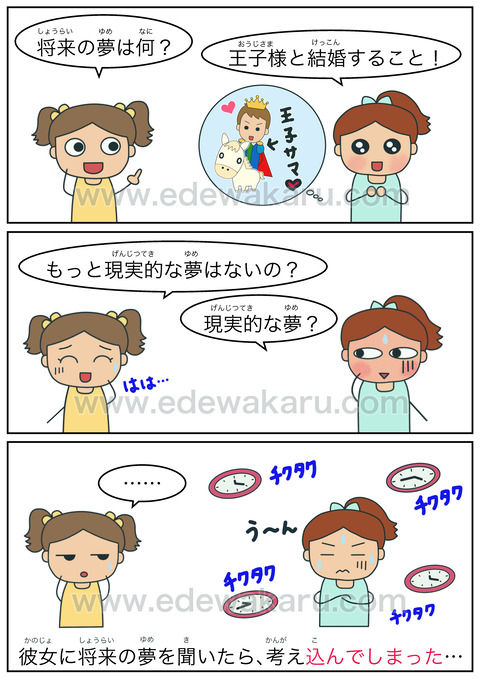
Meaning
長い時間〜する
十分に〜する
〜に熱中する
すごく〜の状態になる
How to use it
動詞[ます形]+込む
Explanation
「A込む」は「長い時間Aする」「十分にAする」という意味の文型です。「A」の程度が深いということを強調する文型です。「Aに熱中する」「すごく〜の状態になる」という意味でも使われます。「A」に使われる動詞は、ほとんど決まっています。
[例]
①彼女に将来の夢を聞いたら、考え込ん
でしまった
…
→将来の夢を聞いたら、長い時間考えていた
②友達と話し
込んでいたら、終電がなくなってしまった
→友達と話しに熱中していたら、終電がなくなってしまった
③カレーは煮
込めば
煮
込む
ほどおいしくなるよ〜
→カレーは長い時煮れば煮るほどおいしくなるよ〜
④今夜から明日の朝にかけてすごく冷え
込む
そうよ
→今夜から明日の朝にかけて、すごく冷えるそうよ
⑤食べ物とかを買い
込んで
おいたほうがよさそうね
→食べ物とかを十分に買っておいたほうがよさそうね
⑥彼は会社のお金を使い
込んで
首になったらしい
→会社のお金をすごく使って首になったらしい
「〜込む」には[内部への移動]を表す用法もありますので、一緒に覚えておきましょう😊
In context 6 examples
彼女に将来の夢を聞いたら、考え込んでしまった…
友達と話し込んでいたら、終電がなくなってしまった
カレーは煮込めば煮込むほどおいしくなるよ〜
今夜から明日の朝にかけてすごく冷え込むそうよ
娘:大きな台風が近づいているんだって!母:じゃあ、食べ物とかを買い込んでおいたほうがよさそうね
彼は会社のお金を使い込んで首になったらしい
Usage 2
Read this source entry ↗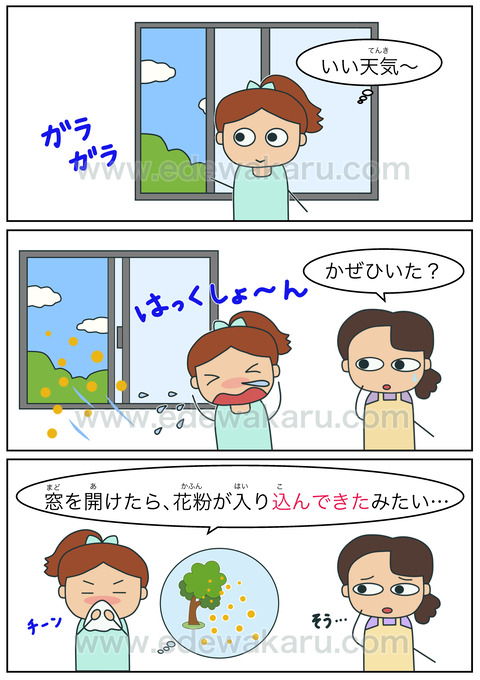
Meaning
〜の中に入る
〜の中に入れる
How to use it
動詞[ます形]+込む
Explanation
「〜込む」は「〜の中に入る」「〜の中に入れる」という意味で、[内部への移動]を表す文型です。入る【自動詞】と入れる【他動詞】の復習をしっかりとしておきましょう😊
[例]
①窓を開けていたら、花粉が入り
込んできた
みたい…
→花粉が部屋の中に入ってきたみたい
②ここにUSBを差し
込んでください
→ここにUSBを差して、中に入れてください
③キャンディーを飲み
込んでしまい、死にそうになった
→キャンディーをそのまま飲んでしまい、死にそうになった
④そんなにたくさん物を詰め込んだら、バッグが壊れるのも無理はないわよ
→そんなにたくさん、物を中に詰めて入れたらバッグが壊れるのも無理ないわよ
⑤勝手に家に上がり
込んできて、すごく困ったわ
→勝手に家の中に入ってきて、すごく困ったわ
「〜込む」には「長い時間〜する」「十分に〜する」という意味もありますので、一緒に覚えておきましょう😉
In context 5 examples
母:どうしたの?かぜひいた?娘:窓を開けたら、花粉が入り込んできたみたい…
ここにUSBを差し込んでください
キャンディーを飲み込んでしまい、死にそうになった
A:バッグが壊れちゃったの…B:そんなにたくさん物を詰め込んだら、バッグが壊れるのも無理はないわよ
A:昨日、山田くんが連絡なしに家にきてさ…B:え!?迷惑だね…A:うん…勝手に家に上がり込んできて、すごく困ったわ
日本語NET JLPT文法解説まとめ
Meaning
①長い時間〜する
②内部への移動を表す。
How to use it
V(ます形)ます + 込む
Explanation
① Engage in an activity for a long period of time.
② Indicates movement into the interior.
In context 11 examples
じっくり煮込んだスープは味がしっかりしていて美味しい。
トムさん、さっきからずっと考え込んでるよ。
今日は1時間走り込んだ。
うっかり話し込んでしまった。
息子は東京大学に合格するために勉強に打ち込んでいる。
店のオープンと同時に、セール品めがけて、たくさんの人が駆け込んだ。
ここに、カードを差し込んでください。
悪さばかりするので、息子を押し入れにぶち込んだ。
これはテストに必ず出るから、しっかり頭に叩き込んでおけよ。
薬は噛まずに飲み込んでください。
知らない男がいきなり家に上がり込んできた。
毎日のんびり日本語教師
How to use it
動ます形+込む
Explanation
内部への移動、状態が極まること、動作の(深い)継続を表します。
①内部への移動、中へ入れる
入れ込む、詰め込む、押し込む、はめ込む、埋め込む、挿し込む、教え込む、叩き込む、投げ込む等…
②状態が極まること
買い込む、売り込む、冷え込む、炊き込む、投げ込む等…
③深く~する、その状態をずっと続ける
考え込む、眠り込む、話し込む等…
「深く」というのがポイントです。例えば「眠り込む」なら深い眠りに落ちたことを意味しますし、「考え込む」ならより深いところまで考え巡らすという意味になります。
Notes
「打ち込む」は熱中するの意。
「叩き込む」は「教え込む」よりも厳しめ。
In context 6 examples
どこか窓が開いているせいか、冷たい風が吹き込んできた。
社会の矛盾や現体制の問題に鋭く切り込んでいくような政治家が必要だ。
突然の災害に備えて防災用品や非常食を買い込んでおくと安心だ。
USBを差し込む。(插上USB。)
深く考え込むのも重要だが、行動に移すことも重要だ。
今日は200球投げ込んだ。
AIUEO JLPT Grammar
Meaning
「〜込む」is a sentence pattern used with the masu-stem of verbs to indicate that an action deeply penetrates, or continues strongly or for a long time. It emphasizes the thoroughness or the process of an action deeply entering or continuing.
How to use it
動詞ます形+込む
Explanation · 日本語
「〜込む」は、動詞ます形に接続して、動作が深く入り込むことや、強く、または長く続けることを表す表現です。この表現は、動作が徹底的に行われることや、内部に浸透することを強調するときに使われます。
In context 5 examples
彼はプールに飛び込んだ。
He dived into the pool.
彼はその本を何度も読み込みました。
He read that book thoroughly many times.
その文書に自分の意見を書き込みましょう。
Write your opinion in that document.
彼女はパーティーのためにたくさんの食材を買い込みました。
She bought a lot of food to prepare for the party.
このシチューは何時間も煮込みました。
This stew has been simmered for hours.
文法
Meaning
①長い時間〜する
②内部への移動を表す。
How to use it
V(ます形)ます + 込む
In context 11 examples
じっくり煮込んだスープは味がしっかりしていて美味しい。
トムさん、さっきからずっと考え込んでるよ。
今日は1時間走り込んだ。
うっかり話し込んでしまった。
息子は東京大学に合格するために勉強に打ち込んでいる。
店のオープンと同時に、セール品めがけて、たくさんの人が駆け込んだ。
ここに、カードを差し込んでください。
悪さばかりするので、息子を押し入れにぶち込んだ。
これはテストに必ず出るから、しっかり頭に叩き込んでおけよ。
薬は噛まずに飲み込んでください。
知らない男がいきなり家に上がり込んできた。
IMABI
込む
Read this IMABI lesson ↗Explanation
込む
In this lesson we’ll learn all about 込む. It’s interesting to know that the character 込 is a Japanese-made 漢字. This verb and how it’s used often throws people off, especially when trying to translate stuff.
込む
込む means “to be crowded” or “to continue in the same state”. Of all of the compound verb endings in Japanese, -込む is by far one of the most important. This is because it is used to create hundreds of unique verbs. ~込む has four broad usages.
THE 4 USAGES: 1: Going inside 2: Put inside 3: Keep as is 4: Doing enough
(1) To plunge 飛び込む とびこむ (2) To corner into 追い込む おいこむ
(3) To mope 塞ぎ込む ふさぎこむ (4) To drill (teaching) 教え込む おしえこむ
(4) To boil well 煮込む にこむ (3) To age 老け込む ふけこむ
(2) To cram 詰め込む つめこむ (1) To invade 攻め込む せめこむ
(1) To run in yelling 怒鳴り込む どなりこむ (2) To entice 誘い込む さそいこむ
(1) To march in 繰り込む くりこむ (1) To roll in 転がり込む ころがりこむ
(3) To sit down 座り込む すわりこむ (2) To count on 見込む みこむ
Examples
1. 崖がけから海に飛び込むのは危ない。
Plunging into the sea from a cliff is dangerous.
2. 敵てきを窮地きゅうちに追い込むのは重要な戦略せんりゃくです。
Cornering the enemy is an important war strategy.
3. 冷たい空気が流れ込んでいます。
Cold air is flowing in.
4. 我々の大学が徹底的てっていてきに全教科課程を学生の頭に教え込むためには、そういった教授を雇用する必要があります。
It is necessary that our university employ professors that exhaustively drill the curriculum into the minds of their students.
Ending Note: More compound verbs are based off of the solely transitive form ~こめる.
5. 部屋に閉じ込められた。
I was locked in a room.
6. 策動さくどうを封ふうじ込める。(Rare)
To contain a scheme.
込・籠める
1. To load bullets.
8. 実弾を込める。
To hold live fire.
2. To pour emotion into. This is where を込めて mostly applies.
9. 彼は満身の力を込めて大石を投げた。
He threw a great stone with all his strength.
10. 心をこめて持て成す。
To make welcome with (all) one’s heart.
3. To include another item. Using 含める is more common.
11. 消費税を込めた料金
Fee with sales tax included.
4. As an intransitive verb, it means “enshroud (clouds, mist, etc.)”.
12a. 霧が町に込めた。(Old-fashioned)
12b. 霧が町に立ち込めた。(Natural)
Mist enshrouded the village.
~込める
~込める may mean to “put into” or “to do away with”. Examples include the following.
To imprison 閉じ込める
To seal up 塗り込める
To argue down 言い込める
To envelop 立ち込める
To confine 封じ込める
To shut up 押し込める
13. 雲の立ち込めた山を見よ。
Look at the cloud enveloped mountains!
14. 相手を言いこめた。
I argued down my opponent.
15. 強盗は人質を物置に押し込めた。
The burglar pushed the hostages down into a closet.
16. 強盗は人質を物置きに押し込んだ。
The burglar pushed the hostages into the closet.
17. 神社には、壁に塗り込められた経文がある。
There are sutras painted over in walls at shrines.
In context 19 examples
崖がけから海に飛び込むのは危ない。
Plunging into the sea from a cliff is dangerous.
敵てきを窮地きゅうちに追い込むのは重要な戦略せんりゃくです。
Cornering the enemy is an important war strategy.
冷たい空気が流れ込んでいます。
Cold air is flowing in.
我々の大学が徹底的てっていてきに全教科課程を学生の頭に教え込むためには、そういった教授を雇用する必要があります。
It is necessary that our university employ professors that exhaustively drill the curriculum into the minds of their students.
部屋に閉じ込められた。
I was locked in a room.
策動さくどうを封ふうじ込める。(Rare)
To contain a scheme.
実弾を込める。
To hold live fire.
To pour emotion into. This is where を込めて mostly applies.
He threw a great stone with all his strength.
彼は満身の力を込めて大石を投げた。
He threw a great stone with all his strength.
心をこめて持て成す。
To make welcome with (all) one’s heart.
To include another item. Using 含める is more common.
Fee with sales tax included.
消費税を込めた料金
Fee with sales tax included.
霧が町に込めた。(Old-fashioned)
Mist enshrouded the village.
霧が町に立ち込めた。(Natural)
Mist enshrouded the village.
雲の立ち込めた山を見よ。
Look at the cloud enveloped mountains!
相手を言いこめた。
I argued down my opponent.
強盗は人質を物置に押し込めた。
The burglar pushed the hostages down into a closet.
強盗は人質を物置きに押し込んだ。
The burglar pushed the hostages into the closet.
神社には、壁に塗り込められた経文がある。
There are sutras painted over in walls at shrines.
Bunpro Grammar Reference
Usage 1
Meaning
To go into, To put into
How to use it
Verb[stem] + 込む
Verb[stem] + 込みます
Nuance
A structure expressing that the action of (A) will be done into something else. With the nuance of jamming or pressing through any obstacles.
Explanation
In Japanese, the う - Verb 込む 'to jam into' is frequently used as a suffix to convey several different meanings. The primary meanings are as follows:
(A) 込む - To enter completely into doing (A), or the state of being in (A).
(A) 込む - To enter a state of doing (A) that will not be considered complete until 'success'.
(A) 込む - To enter a state of doing (A) that cannot be escaped from.
In this lesson, we will exclusively focus on the first meaning, which is usually translated as 'to put into (A)', or 'to go into (A)'. This form will be attached to the conjunctive form of other verbs.
ピンを壁に押し込む。
To push a pin into a wall.
薬を飲み込むのが苦手です。
I am not the best at drinking down medicine. (I am not the best at swallowing medicine)
電車のドアが閉まる前に、電車に走り込んだ。
Before the train door closed, I ran in.
サウナから出て、水風呂に飛び込むように入った。
I came out of the sauna and went into the water bath as if I was leaping into it.
Despite the multiple meanings, 込む can almost always be thought of as 'jamming (B) into (A)'. This means that whatever the (A) action is, will be something that is not easily entered, but also not easily escaped from.
Nuance · 日本語
別の何かに(A)という動作が行われることを表す表現。どんな障害物があっても、それを押し通すというニュアンスを込めて使われることが多い。
Explanation · 日本語
日本語の五段動詞「込む」は接尾語として使われます。これにはいくつかの意味があるので、主なものを見てみましょう。
(A) 込む - (A) の中に入れる。(A) の状態に入れる。
(A) 込む - 成功するまで (A) を続ける。
(A) 込む - (A) の状態の中に入り、そこから抜けられない。
ここでは、一つ目の使い方を学びましょう。この「込む」は、動詞の連用形と一緒に使われます。そして、何かを「(A) の中に入れる」または「(A) の状態にする」という意味を表します。
ピンを壁に押し込む。
To push a pin into a wall.
薬を飲み込むのが苦手です。
I am not the best at drinking down medicine. (I am not the best at swallowing medicine)
電車のドアが閉まる前に、電車に走り込んだ。
Before the train door closed, I ran in.
サウナから出て、水風呂に飛び込むように入った。
I came out of the sauna and went into the water bath as if I was leaping into it.
「込む」にはいくつか意味がありますが、どの場合も「(A) の中に (B) をぎゅっと詰める」ことをイメージすると良いでしょう。なぜなら、「込む」は、入りにくく(始めにくく)、一度入ったら抜けにくい(止めにくい)ようなことに使われるからです。
In context 16 examples
- 教師:「教科書に答えを書き込んでください。」
Teacher: 'Please fill in your textbooks with answers.' (put into)
- 電車のドアが閉まる前に、電車に走り込んだ。
Before the train door closed, I ran in.
- ピンを壁に押し込む。
To push a pin into a wall.
- 薬を飲み込むのが苦手です。
I am not the best at drinking down medicine. (I am not the best at swallowing medicine)
- サウナから出て、水風呂に飛び込むように入った。
I came out of the sauna and went into the water bath as if I was leaping into it.
- トムはジェロニモと叫びながら、プールに飛び込んだ。
Tom jumped into the pool while screaming 'Geronimo!' (put into)
- A(エー):「どうして窓が閉めてあるの?」
B(ビー):「冷たい風が入りこまないように。」A: 'Why is the window closed?' B: 'So that cold air won't get in.' (put into)
- バッキンガム宮殿の警護官について:「笑いを飲み込みながら、移動せずに立ったままだった。」
About a Buckingham Palace guard: 'He kept standing, unmoving, while holding in a smile.' (swallowing・put into)
- 友達との話:「彼女は泥棒の顎に見事に拳を打ち込んだそうだ。」
Chat between friends: 'I heard that she fantastically drove her fist into the thief's face.' (put into)
- 友達との話、A(エー):「お金って、何するの?」
B(ビー):「銀行に払い込もうと思う。」Chat between friends, A: 'What are you gonna do with the money?' B: 'I plan to deposit it into the bank.' (put into)
- ライトノベル、勇者たちの会話:「一人で魔王の城に乗り込むおつもりですか?おやめ下さい!」
Light novel, chat between heroes: 'Do you plan to march into the demon king's castle alone? Please, stop!' (put into)
- 行列で:「(列に)わり込むなんて、図々しいですよ!」
In the queue: 'To cut in (line)! How impudent!' (put into)
- ライトノベル、ナレーター:「コタカが突然、部室に入り込んで来て、彼女の隣に席を取った。」
Light Novel, Narrator: 'Kotaka suddenly came into the club room and took the seat next to her.' (go into)
- ライトノベル、クラスメートとの話:「ドラゴンをクラスに持ち込むのはルール違反じゃないか?」
Light novel, chat between classmates : 'Taking a dragon into class, isn't that breaking the rules?' (put into)
- 友達との話:「布団で寝ていると、猫が布団の中に潜り込んできた。」
Chat between friends: 'When I was sleeping, my cat slipped into the futon. ' (put into)
- ノベル:「心地よい風が窓から吹き込んできた。」
Novel: 'A pleasant breeze has started blowing in from the window.' (put into)
Usage 2
Meaning
Remain, To do thoroughly, Deeply, Intensely
How to use it
Verb[stem]+ 込む
Verb[stem]+ 込みます
Nuance
A grammar point expressing that the action of (A) will be done deeply or thoroughly. With the nuance of jamming or pressing through any obstacles.
Explanation
In Japanese, the う - Verb 込む 'to jam into' is frequently used as a suffix to convey several different meanings. The primary meanings are as follows:
(A) 込む - To enter completely into doing (A), or the state of being in (A).
(A) 込む - To enter a state of doing (A) that will not be considered complete until 'success'.
(A) 込む - To enter a state of doing (A) that cannot be escaped from.
In this lesson, we will exclusively focus on the second and third meanings, which are usually translated as 'to remain in (A)', 'to thoroughly do (A)', 'to do (A) deeply', or 'to do (A) intensely'. This form will be attached to the conjunctive form of other verbs.
警察が道の真ん中で座り込んでいる人に話しかけた。
The police went to talk to the person that remained seated in the middle of the road.
もうこんな時間か、話し込んじゃったな。
It's already this time, we got lost in talking, didn't we?
そんなに考え込まなくてもいいよ。
You don't have to think so deeply about this.
今は取り込み中なので手が空いたらかけなおします。
I am held up working right now, so I will call you back once my hands are free.
Despite the multiple meanings, 込む can almost always be thought of as 'jamming (B) into (A)'. This means that whatever the (A) action is, will be something that is not easily entered, but also not easily escaped from.
Nuance · 日本語
(A)という動作が丁寧に、又は慎重に行われるということを示す文法。どんな障害物があっても、それを押し通すというニュアンスを込めて使われることが多い。
Explanation · 日本語
五段動詞「込む」は接尾語として使われます。いくつかの意味があるので、主なものを見てみましょう。
(A) 込む - (A) の中に入れる。(A) の状態に入れる。
(A) 込む - 成功するまで (A) を続ける。
(A) 込む - (A) の状態の中に入り、そこから抜けられない。
ここでは、二つ目と三つ目の使い方を学びます。この「込む」は、動詞の連用形につながり、「(A) し続ける」「徹底的に (A) をする」「深く (A) をする」のような意味で使われます。
警察が道の真ん中で座り込んでいる人に話しかけた。
The police went to talk to the person that remained seated in the middle of the road.
もうこんな時間か、話し込んじゃったな。
It's already this time, we got lost in talking, didn't we?
そんなに考え込まなくてもいいよ。
You don't have to think so deeply about this.
今は取り込み中なので手が空いたらかけなおします。
I am held up working right now, so I will call you back once my hands are free.
「込む」にはいくつか意味がありますが、どの場合も「(A) の中に (B) をぎゅっと詰める」ことをイメージすると良いでしょう。なぜなら、「込む」は、入りにくく(始めにくく)、一度入ったら抜けにくい(止めにくい)ようなことに使われるからです。
In context 16 examples
- みんないっせいに黙り込んでいた。
At once, everyone sunk into an intense silence and remained silent.
- 警察が道の真ん中で座り込んでいる人に話しかけた。
The police went to talk to the person that remained seated in the middle of the road.
- そんなに考え込まなくてもいいよ。
You don't have to think so deeply about this.
- もうこんな時間か、話し込んじゃったな。
It's already this time, we got lost in talking, didn't we?
- 今は取り込み中なので手が空いたらかけなおします。
I am held up working right now, so I will call you back once my hands are free.
- ノベル:「れつこは気分が悪くなり、座り込んだ。」
Novel: 'Retsuko felt weak and sat down.' (deeply・thoroughly)
- 疲れていたので、シャワーを浴びずに眠り込んだ。
I was tired, so I fell deeply asleep without taking a shower. (intensely・thoroughly)
- 友達との話:「何を長々話し込んでたの?」
Chat between friends: 'What were you so intently talking about for so long?' (deeply・thoroughly)
- エッセイ:「熱心にひとつの事に打ち込むことが必要だと思っている。」
Essay: 'I think that devoting oneself deeply to one thing is important.'
- 小さな花の写真を撮るためにしゃがみ込む。
To squat down deeply (with their face between their legs) in order to take a picture of a small flower.
- 友達との話:「テストの前に単語を覚え込むつもりだよ。」
Chat between friends: 'I plan to thoroughly memorize the vocabulary before the exam.'
- 会社、上司:「この資料は、明日までによく読み込んでおいて。」
部下:「はい。」The company, boss: 'Thoroughly read those documents by tomorrow.' Subordinate: 'Understood.'
- 社長:「一日中考え込んだあとで、会社社長を退任することに決めました。」
Company president: 'After having thought deeply about it all day, I have decided to step down from the position of company president.' (intensely・thoroughly)
- 明日から旅行に行くから、学校の課題をやり込んでおくつもりだ。
I am going on a trip tomorrow, so I plan to thoroughly do my school homework.
- 論文:「しかし、サンタクロースがいると信じ込む子供もいる。」
Essay/article: 'However, there are also children that firmly believe that Santa Claus exists.' (deeply・thoroughly)
- ブログの投稿:「パスワードを思い出せず、しばらく考え込んだ。」
Blog post: 'Not being able to recall the password, I plunged deep into thought for a while.' (remained thinking・brood)