くらべてわかる日本語表現文型辞典
Meaning
意味1:もしAが可能であればB。話し手は不可能だと思うAを望んでいる。
意味2:「AものならBてみろ」の形で。相手が絶対Aできないと話し手が思い、それを挑発する表現。
How to use it
AものならB(AものならBてみろ/AものならBてみたい)
[動詞-可能]ものなら
In context 8 examples
若くて元気だった昔に戻れるものなら戻りたい。
許されるものなら、今すぐにでも国の恋人に会いたい。
みんなダイエットしたがっているが、私は太れるものなら太りたい。
手術をして治るものなら、手術をしたほうがいいと思う。
この問題を1分で解けるものなら解いてみろ。
後輩には、先輩の真似ができるものならやってごらんと言っている。
いつも違法駐車されている所に、止められるものなら止めてみろと植木鉢を並べた。
いくら教えても命令を聞かないこの犬を訓練できるものならしてみろ。
DoJG 日本語文法辞典(全集)
Meaning
If; if ~ at all
How to use it
Vpotential informal nonpast | ものなら | |
| 行けるものなら | If I can/could go there |
| 読めるものなら | If I can/could read it |
Explanation
A conjunction indicating that the preceding clause presents a hypothetical situation that is unlikely to become a reality.
In context 11 examples
(もし)一戸建ての家が買えるものなら買いたい。
If I could buy a single family house, I would like to.
一人でやれるものならやってみろ!
If (you think) you can do it by yourself, go ahead and do it!
近い将来における日本語の存在意義など、書けるものなら書いてみたい。
If I could, I would like to write about the raison d'etre of Japanese language in the near future.
喫煙所の中でタバコを吸っている人たちを外から見ればまるで動物園…。もしやめられるものならやめてみようかなあと思い始めたこの頃です。
When I look at people smoking in smoking areas, I feel like I am at the zoo. Lately, I have begun to think that, if I could, I would try quitting.
この新刊、もし町の図書館で借りられるものなら買わずに済むのに、まだ入っていないようだ。
I wouldn't need to buy this new book if I could borrow it at the public library in my town, but it looks like it isn't available there yet.
南極旅行は、気持ち的には、借金してでも行けるものなら行きたいんだが。
I feel like I'd like to travel to the South Pole, even if I had to borrow money to do it.
もしできるものなら、もう一度生まれ変わりたい。
If I could, I would like to be born again.
西行じゃないけれど、願いがかなうものなら、満開の桜の下で春に死にたい。
I am no Saigyo, but if wishes came true, I would wish to die in spring, under cherry trees in full bloom.) [Saigyo (1118-1190) is a famous waka poet and Buddhist priest who expressed in his poetry his desire to die under blooming cherry trees.]
この曲がやさしいって言うんですか?何も分かっていないからそんなことを言うんですよ。弾けるものなら弾いてみなさい。
Are you saying this piece is easy? You're saying that because you don't know anything about it. Go ahead and play it if you think you can!
訴えるなんて言ってもちっとも怖くなんかありませんよ。訴えられるものなら訴えてごらんなさい。
Even if you tell me that you're going to sue me, I'm not afraid at all. Sue me if you can!
カリスマのある哲学者が大学に来て講演をしようものなら、1万人を越える聴衆が集まる。
If a charismatic philosopher did come to the university to give a lecture, more than 10,000 people would gather to listen to him.
日本語文型辞典
Meaning
実現する可能性の少ないことに関して、「もし実現した場合は」と仮定するのに用いる。可能動詞を使うことが多い。また、同じ動詞をくりかえす場合、実際にはできないことを強調する。⑥は、慣用的表現で、相手に挑戦する言い方。
やや誇張した条件の述べ方で、「万一そのようなことが起こったら」という意味を表す。後ろには「大変な事態が生じる」という内容を続けるのが普通。
How to use it
…ものなら
V-ようものなら
In context 11 examples
できるものなら世界中を旅行してみたい。
もし願いがかなうものなら、この美術館にある絵が全部ほしい。
もし希望通りのことができるものなら、今すぐ引退して、趣味の花作りに打ち込みたい。
こんな職場などやめられるものならやめてしまいたいが、家族がいるから、そうはいかない。
A:今年はスキーに行かないんですか。
B:行けるもんならもう行っているわよ。忙しくてどうしても休みがもらえないの。やれるものならやってみろ。
そんなことを彼女に言おうものなら、軽蔑されるだろう。
そんな言葉を使おうものなら何と下品な女かと思われるだろう。
最後の試験に遅刻でもしようものなら、僕の一生は狂ってしまうだろう。
彼女は気が短くて、僕がデートにすこしでも遅れでもしようものなら、怒って帰ってしまう。
となりの子供はわがままで、ちょっと注意でもしようものなら、大声で泣き叫ぶ。
絵でわかる日本語
Usage 1
Read this source entry ↗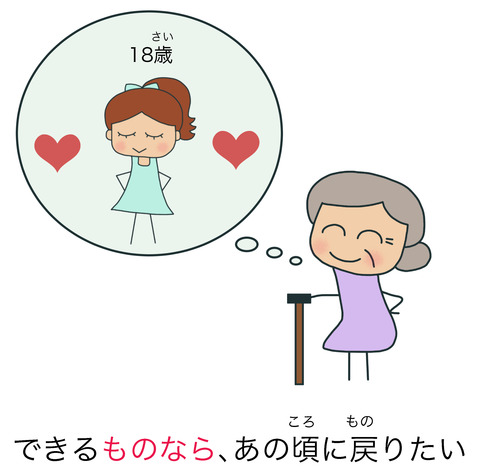
Meaning
もし〜が可能なら(…したい/…て欲しい/…てみろ)
How to use it
動詞[原形]+ものなら(〜たい/〜て欲しい/〜てみろ)
*多くの場合「可能動詞の原形」を使う
Explanation
「〜ものなら…たい」は実現が不可能だと思うことに対する「願望・期待」を表す文法です。N4で勉強した仮定形の「〜なら」とほとんど同じ意味ですが、
「〜ものなら」を使うと実現する可能性が少ないということを強調します。 例文④は慣用的表現ですのでドラマなどで聞く機会があるかもしれませんね😀この文法はほとんどの場合
「〜ものなら…たい」
の形で使われますので、そのまま覚えておくといいですね😉
【上級レベルの人へ】
この文法は「動詞の原形」につきますが、その
動詞はほとんど「状態動詞」
です。「状態動詞」は初級日本語で勉強したと思います。代表的なものは「ある」「いる」「できる」「わかる」などですね😊初級の文法はN1のもの以上に複雑で重要です。上級になればなるほど初級文法は忘れがちですので、更に上を目指す人は復習をしっかりして、きれいな日本語を話せるようにがんばってくださいね😆
【「もの」シリーズ】
〜たいものだ・〜てほしいものだ
〜たものだ
〜たものではない
〜というもの(Nというもの)
〜ないものだろうか
〜ないものは〜ない
〜もの・〜んだもの
〜ものか
〜ものがある
〜ものだ(感慨)
〜ものだ(本来の性質・一般的な考え方)
〜ものだ・〜ものではない
〜もので・〜ものだから
〜ものと思っていた
〜ものなら
〜ものの
〜ものを
〜ようものなら
In context 4 examples
できるものなら、あの頃に戻りたい
→もしできるなら、あの頃(若かった頃)に戻りたい休めるものなら、1週間くらい休みたい
→もし休むことが可能なら、1週間くらい休みたいたばこは高いし体に悪いし、やめられるものならやめたいよ
→たばこは高いし 体に悪いし、やめることが可能ならやめたいよやれるものならやってみろよ【慣用的表現】
→もしやれると思うなら、やってみろよ
Usage 2
Read this source entry ↗Meaning
もし〜が可能なら(…したい/…て欲しい/…てみろ)
How to use it
動詞[原形]+ものなら(〜たい/〜て欲しい/〜てみろ)
*多くの場合「可能動詞の原形」を使う
Explanation
「〜ものなら…たい」は実現が不可能だと思うことに対する「願望・期待」を表す文法です。N4で勉強した仮定形の「〜なら」とほとんど同じ意味ですが、
「〜ものなら」を使うと実現する可能性が少ないということを強調します。 例文④は慣用的表現ですのでドラマなどで聞く機会があるかもしれませんね😀この文法はほとんどの場合
「〜ものなら…たい」
の形で使われますので、そのまま覚えておくといいですね😉
【上級レベルの人へ】
この文法は「動詞の原形」につきますが、その
動詞はほとんど「状態動詞」
です。「状態動詞」は初級日本語で勉強したと思います。代表的なものは「ある」「いる」「できる」「わかる」などですね😊初級の文法はN1のもの以上に複雑で重要です。上級になればなるほど初級文法は忘れがちですので、更に上を目指す人は復習をしっかりして、きれいな日本語を話せるようにがんばってくださいね😆
【「もの」シリーズ】
〜たいものだ・〜てほしいものだ
〜たものだ
〜たものではない
〜というもの(Nというもの)
〜ないものだろうか
〜ないものは〜ない
〜もの・〜んだもの
〜ものか
〜ものがある
〜ものだ(感慨)
〜ものだ(本来の性質・一般的な考え方)
〜ものだ・〜ものではない
〜もので・〜ものだから
〜ものと思っていた
〜ものなら
〜ものの
〜ものを
〜ようものなら
どんなときどう使う 日本語表現文型辞典
Meaning
if can
How to use it
Vる(可能の意味の動詞)+ものなら
Explanation
もしできるなら
B:ぼくも行けるものなら行きたいんだけど、ちょっと無理そうだなあ。
男2:殴れるものならやってみろ!
「~ものなら」の形で、「~」の前には可能の意味を含む動詞が来る。そして実現が難しそうなことを、「もしできるなら」と仮定して、後の文で希望や命令など話者の意志を表す。
Verbs of potentiality precede ものなら. Supposes being able to accomplish reality that is difficult to achieve. Speaker's volition, including hopes or commands, appear in clause following.
In context 5 examples
できるものなら鳥になって国へ帰りたい。
A:ねえ、いっしょに旅行に行きましょうよ。
スケジュールが自由になるものなら、広島に1泊したいのだが、そうもいかない。
男1:殴るぞ!
治るものなら、どんな手術でも受けます。
日本語NET JLPT文法解説まとめ
Meaning
"〜なら"
実現が難しいものやことに対しての願望や期待を表す。後ろには「〜たい」や「〜みろ」、「〜て欲しい」など願望や命令を表す言葉が来る。
How to use it
V(可能形) + ものなら
Explanation
"if"
This expression conveys desires or expectations regarding something that is difficult to achieve or obtain. It is often followed by expressions like "〜たい", "〜みろ" or "〜てほしい"
・カジュアルな言い方は「〜もんなら」
In context 5 examples
やれるもんなら、やってみな。
辞められるものなら、今すぐこの会社を辞めたいけど、生活を考えると無理だ。
まさか私の息子が末期の癌だなんて。代われるものなら、代わってやりたい。
一度でいいから芸能人と付き合えるものなら、付き合ってみたいね。
僕の人生は本当に最悪。やり直せるもんなら、今すぐやり直したい。
毎日のんびり日本語教師
How to use it
動可能形+ものなら/もんなら
動辞形+ものなら/もんなら
Explanation
実現する可能性が非常に低い物事が実現することを強く願う話者の願望や期待を表します。
多くの場合、動詞可能形に接続します。
また、例文(7)(8)のように相手を煽るような表現としても使えます。
口語では「もんなら」となります。
Notes
似ている文法「【N2文法】~(よ)うものなら/(よ)うもんなら」
In context 8 examples
寝れるもんなら一生寝ていたい。
初恋の相手に会えるものなら会ってみたい。
手伝えるものなら手伝ってあげたいが、あいにく手が空いていない。
あの辺りの高級住宅街に住めるものなら一度は住んでみたい。
昨日のライブ、行けるものなら行きたかったが大雨で行けなかった。
仕事休めるもんなら休みたい。
どうぞ、できるもんならしてみろ。
やれるもんならやってみろ。
日本語文型辞典 英語版
Meaning
B:行けるもんならもう行っているわよ。忙しくてどうしても休みがもらえないの。
If I could I would already have gone. (However,) I’m busy and can’t get time off no matter what.
Used to hypothesize “if... could be realized/implemented...,” in relation to things which have little possibility of being realized/implemented. It often uses verbs of potential. Also, when the same verb is repeated, emphasizes the fact that something cannot be done in reality. Example
(6)
is a set phrase which is used to challenge/defy the other party.
A way of expressing a somewhat exaggerated condition and means “if by any chance such a thing should happen.” Following that it is usual to continue with content which details that “a terrible situation will arise.”
How to use it
1. ...ものなら
2. V-ようものなら
In context 11 examples
できるものなら世界中を旅行してみたい。
If I could do it, I’d like to travel all over the world.
もし願いがかなうものなら、この美術館にある絵が全部ほしい。
If wishes came true, I would want all the pictures in this gallery.
もし希望通りのことができるものなら、今すぐ引退して、趣味の花作りに打ち込みたい。
If I could just do as I wished, I would retire at once and devote myself to my hobby of growing flowers.
こんな職場などやめられるものならやめてしまいたいが、家族がいるから、そうはいかない。
If I could I would quit this kind of workplace, but as I have a family, I can’t.
A:今年はスキーに行かないんですか。
Aren’t you going skiing this year?
やれるものならやってみろ。
Do your best!
そんなことを彼女に言おうものなら、軽蔑されるだろう。
If you said that kind of thing to her, you would be looked down on.
そんな言葉を使おうものなら何と下品な女かと思われるだろう。
If you used that kind of language, you would probably be thought of as a low class girl.
最後の試験に遅刻でもしようものなら、僕の一生は狂ってしまうだろう。
If I were late or something for my final exam, my whole life would be turned upside down.
彼女は気が短くて、僕がデートにすこしでも遅れでもしようものなら、怒って帰ってしまう。
She has a short temper, and even if I’m just a little late for a date she goes home angry.
となりの子供はわがままで、ちょっと注意でもしようものなら、大声で泣き叫ぶ。
The child next door is so self-centered, and if you scold him even a little, he screams loudly.
AIUEO JLPT Grammar
Usage 1
Meaning
This sentence pattern expresses a desire or intention, assuming that something difficult to achieve were possible, and emphasizes the speaker’s wish to do it if that were the case.
How to use it
動詞可能形+ものなら動詞可能形+もんなら
Explanation · 日本語
この文型は、実現が難しいことが実現したと仮定して、それが可能であればやりたいという願望や意志を表す表現です。
In context 5 examples
時間が戻せるものなら、もう一度やり直したい。
If I could turn back time, I would like to start over.
行けるものなら、今すぐにでも行きたい。
If I could go, I would want to go right now.
帰れるものなら、故郷に帰りたい。
If I could go back, I would want to return to my hometown.
休めるもんなら、一週間くらい休みたいよ。
If I could take a break, I would want to take a week off.
忘れられるもんなら、すぐに忘れたい。
If I could forget, I would forget it immediately.
Usage 2
Meaning
This sentence pattern emphasizes a condition where, if an action were taken, undesirable results or serious consequences would definitely occur. It is used when imagining a situation that should realistically be avoided or where the possibility of such an outcome is low.
How to use it
動詞意向形+ものなら
Explanation · 日本語
この文型は、仮にその行動を行った場合、望ましくない結果や重大な影響が必ず発生するという条件を強調する表現です。特に、現実的に避けるべき行為や可能性が低い状況を仮定して、その結果について述べる場合に使用されます。
In context 5 examples
彼にそんなことを言おうものなら、すぐに怒り出すだろう。
If you were to say something like that to him, he would get angry right away.
あの仕事を引き受けようものなら、寝る暇もなくなるだろう。
If you were to take on that job, you would likely lose all your time to sleep.
嘘をつこうものなら、すぐにばれてしまうだろう。
If you were to lie, it would probably get found out right away.
あんな高い場所から飛び降りようものなら、大怪我をするに違いない。
If you were to jump from such a high place, you would definitely get seriously injured.
あの車を買おうものなら、貯金が全部なくなってしまうだろう。
If you were to buy that car, your savings would probably be all gone.
文法
Meaning
〜なら
実現が難しいものやことに対しての願望や期待を表す。後ろには「〜たい」や「〜みろ」、「〜て欲しい」など願望や命令を表す言葉が来る。
How to use it
V(可能形) + ものなら
Notes
・カジュアルな言い方は「〜もんなら」
In context 5 examples
やれるもんなら、やってみな。
辞められるものなら、今すぐこの会社を辞めたいけど、生活を考えると無理だ。
まさか私の息子が末期の癌だなんて。代われるものなら、代わってやりたい。
一度でいいから芸能人と付き合えるものなら、付き合ってみたいね。
僕の人生は本当に最悪。やり直せるもんなら、今すぐやり直したい。
NINJAL 日本語文型データベース
Meaning
実現が難しいことについての仮定を表します。
How to use it
Vるものなら
Notes
「〜」には、可能の意味の動詞の文がきます。「〜ものなら」の後には、話し手の意志を表す文や「〜ほしい・〜たい・〜てほしい」などの表現を使った希望や期待を表す文がくることが多いです。「〜てみろ」の形がきて、相手に対する挑発を表す場合もあります。
In context 7 examples
できるものならもう一度人生をやり直したい。
空を飛べるものなら、遠い外国にいるあなたのところに今すぐ飛んで会いに行きたい。
患者「治るものならどんな治療でも受けます。先生、よろしくお願いいたします」
願いがかなうものなら、震災前のあの幸せな日々が戻ってきてほしい。
亡くなった母のことをこの頃しきりに思い出す。会えるものなら、もう一度母に会いたい。
子育てをもう一度やり直せるものなら……と時々思う。
「世界チャンピオンの俺に挑戦して勝てると思うのか。やれるものならやってみろ」
IMABI
~(よ)うにも & ~(よ)うものなら
Read this IMABI lesson ↗Explanation
~(よ)うにも & ~(よ)うものなら
In past lessons, we have learned about the auxiliary ~(よ)う and how it is used to mark volition, supposition, and with both properties implicated when followed by the conjunctive particles が・と(も). Incidentally, there are other patterns which utilize the auxiliary ~(よ)う in conditionals, each with its unique relationship between Situation A (the conditional) and Situation B (the main clause). The ones to be introduced in this lesson are:
~(よ)うにも
~(よ)うものなら
As for the bases of the auxiliary ~(よ)う, it only possesses two:
終止形(yo)u
連体形(yo)u
The 終止形 is utilized in ~(よ)うにも and the 連体形 is utilized in ~(よ)うものなら.
~(よ)うにも
The contrastive conditional relationship established by ~(よ)うにも is:
Even if the agent were to try to execute Situation A, Situation B prevents/conflicts with said execution of Situation A.
Because of this relationship, the main clause (Situation B) must be in the negative with a form of ~ない, and the predicate itself is most often the same verb as Situation A but in its potential negative form.
1. 家出をしようにも、お金がないよ。
Even if (you) were to run away, (you) don’t have any money.
2. スマホが壊れているので、友達に連絡を取ろうにも取れない。
My smartphone is broken, so I can’t contact my friends even if I were to try to.
3. 終電を逃してしまい、帰ろうにも帰れない。
I missed the last train, so I can’t get back home even if were to try to.
4. 昨日飲みすぎて、頭がガンガンするから、起きようにも起きられない。
I drank too much yesterday and my head is pounding, so I can’t get up even if I were to try.
5. 忙しくて休もうにも休めない。
I’m so busy that I can’t take a break even if were to try to.
6. 断ろうにも断れず、テイラー君にお金を貸してしまった。
Unable to refuse even if I were to try to, I lent money to Taylor-kun.
7. プールの中で歩こうにも中々抵抗ていこうで歩けない。
Even if you walk inside a pool, you can’t quite walk even with significant resistance.
8. 歌を歌おうにも高音こうおんが出にくい。
Even if I try to sing the song, it’s hard to reach the high tones.
9. 急ごうにも急げる体でもない。
I’m not in the physical condition to be able to hurry.
10. 履歴書りれきしょを書こうにも電話番号の記入は必須ひっすだから、携帯が無いと履歴書を作れない。
Even if I were to write a resume, because phone number is a required field, if I don’t have a cellphone, I can’t make a resume.
11. 今から就職活動しようにも、やりたい事もないし資格とかも持っていない。
Even if I were to start looking for a job now, there’s nothing I want to do or really have the qualifications for.
12. 塾じゅくで学んだ事を復習させようにも、ほとんど時間が確保出来ない。
Even if I were to have (the students) review what they’ve learned in cram school, I could not secure hardly any time.
~にも~ない
The pattern ~(よ)うにも utilizes the conjunctive particle に, which is why this pattern is structurally like other contrastive conditional patterns, and it just so happens that the conjunctive particle に may appear after the volitional form (意向形) or the non-past form of a verb. The difference in nuance is as follows:
V1 (Non-Past) + ~に V1 (Potential Negative)Emotionally based contexts where the realization of Situation B is deemed not possible, and so no attempt is even made in the first place.
V1 (Volitional) + ~にも V1 (Potential Negative)Situation B shown impossible even with an attempt made to make it happen.
These patterns hinge on the presence of volition in respect to V1, which would indicate that the latter part of the grammar, ~にも V1 (Potential Negative), behaves the same. Thus, we are looking at the same pattern with the addition of the auxiliary ~(よ)う adding its layer of modality into the dynamic – changing the execution of V1 as something deemed out of reach (in an emotionally charged context no less) to something that is proven to be out of reach through the execution of the agent’s volition.
13. 売るに売れないものだ。
It’s something I can’t sell even if I wanted to.
14. 今朝からずっと雨で、行くに行けない。
It’s been raining ever since this morning, and so I just can’t go.
15.ドリンクが来ないと歌うに歌えないですよね。
You really can’t sing if your drink doesn’t come, huh.
16. 行くに行けない雰囲気になった。
The atmosphere became one that I couldn’t go.
17. 帰るに帰れないかもなあ。
Looks like I/we can’t go home…
18. トイレに行くに行けない状況になった時は、精神的にかなりきつい。
It’s psychologically very tense whenever you’re in a situation you can’t go to the restroom.
19. 泣くに泣けない凡ぼんミスだった。
It was a trivial mistake too bitter to cry about.
20. 越こすに越されぬ1大きな川
A river impossible to traverse
Aspect-wise, the non-past tense sets the speaker(=agent)’s mind to a theoretical timeline in which the agent is to carry it out, the circumstances prevent it from being a reality, removing the agent’s control from the equation. This holds true for when the volitional form is used, too, however, as the tense of the dependent clause does not change. What does change is that the agent’s execution of their control still means nothing.
~(よ)うものなら
The conditional relationship established by ~(よ)うものなら is:
Provided that Situation A does come to pass, Situation B occurs, and as for Situation B, it is a very dire consequence.
This grammar point utilizes the suppositional nuance of ~(よ)うものなら.
21. 先生に厚かましくも口答えをしようものなら、大目玉を食らうだろう。
Should you ever have the nerve to talk back to your teacher, you will surely get scolded severely.
22. 火事になろうものなら、大変だぞ。
It would be a grave situation should there be a fire.
~ものなら
Without the layer of nuance provided by ~(よ)う , ~ものなら after the non-past form of a verb creates the following conditional relationship:
Situation A is an action that the speaker really wishes were possible, and Situation B is the same action in whatever capacity the speaker(=agent) would execute it.
The verbal predicate preceding ~ものなら is almost always in its potential form. The use of the nominalizer もの, as opposed to the other nominalizers, is what adds a sense of tangibleness to the preceding verbal predicate it nominalizes.
23. もし過去に戻れるものなら、戻って現在を変えたい。
If I could go back in time, I would go back and change the present.
24. 会えるものなら、天国の愛犬にもう一度会いたいです。
If I could, I would like to see my beloved dog in heaven again.
25. 住めるものなら、大きな家に住みたいです。
If I could, I would like to live in a big house.
26. 言えるものなら言いたいけど、今はまだ言えないよ。
I wish I could say, but I’m unable to yet.
27. できるものなら、今すぐ帰国したいぐらいです。
If I could, I would like to go back to my country right here and now.
If the statement is directed at someone else, then ~ものなら takes on a provocative tone, implying that the listener(=potential agent) has no chance of actually being able to do said action.
28. 掴つかめるものなら、掴んでごらん。
If you think you can grab it, go right ahead.
29. ひとりで行けるものなら、行ってみなさい。
If you think you can go alone, go ahead and try to.
In casual conversation, ~ものなら often manifests as ~もんなら.
30. 浮気できるもんなら、してみろ。
If you (think) you can cheat, go ahead and do it.
31. 寝れるもんなら寝てみろや。
If you (think) you can sleep, go ahead and try.
越されぬ is, in fact, an old-fashioned potential negative form of the verb 越す. Prior to the emergence of the potential form for 五段 verbs, potential was marked by the auxiliary ~れる for 五段 verbs. ↩︎
In context 31 examples
家出をしようにも、お金がないよ。
Even if (you) were to run away, (you) don’t have any money.
スマホが壊れているので、友達に連絡を取ろうにも取れない。
My smartphone is broken, so I can’t contact my friends even if I were to try to.
終電を逃してしまい、帰ろうにも帰れない。
I missed the last train, so I can’t get back home even if were to try to.
昨日飲みすぎて、頭がガンガンするから、起きようにも起きられない。
I drank too much yesterday and my head is pounding, so I can’t get up even if I were to try.
忙しくて休もうにも休めない。
I’m so busy that I can’t take a break even if were to try to.
断ろうにも断れず、テイラー君にお金を貸してしまった。
Unable to refuse even if I were to try to, I lent money to Taylor-kun.
プールの中で歩こうにも中々抵抗ていこうで歩けない。
Even if you walk inside a pool, you can’t quite walk even with significant resistance.
歌を歌おうにも高音こうおんが出にくい。
Even if I try to sing the song, it’s hard to reach the high tones.
急ごうにも急げる体でもない。
I’m not in the physical condition to be able to hurry.
履歴書りれきしょを書こうにも電話番号の記入は必須ひっすだから、携帯が無いと履歴書を作れない。
Even if I were to write a resume, because phone number is a required field, if I don’t have a cellphone, I can’t make a resume.
今から就職活動しようにも、やりたい事もないし資格とかも持っていない。
Even if I were to start looking for a job now, there’s nothing I want to do or really have the qualifications for.
塾じゅくで学んだ事を復習させようにも、ほとんど時間が確保出来ない。
Even if I were to have (the students) review what they’ve learned in cram school, I could not secure hardly any time.
売るに売れないものだ。
It’s something I can’t sell even if I wanted to.
今朝からずっと雨で、行くに行けない。
It’s been raining ever since this morning, and so I just can’t go.
ドリンクが来ないと歌うに歌えないですよね。
You really can’t sing if your drink doesn’t come, huh.
行くに行けない雰囲気になった。
The atmosphere became one that I couldn’t go.
帰るに帰れないかもなあ。
Looks like I/we can’t go home…
トイレに行くに行けない状況になった時は、精神的にかなりきつい。
It’s psychologically very tense whenever you’re in a situation you can’t go to the restroom.
泣くに泣けない凡ぼんミスだった。
It was a trivial mistake too bitter to cry about.
越こすに越されぬ1大きな川
A river impossible to traverse
先生に厚かましくも口答えをしようものなら、大目玉を食らうだろう。
Should you ever have the nerve to talk back to your teacher, you will surely get scolded severely.
火事になろうものなら、大変だぞ。
It would be a grave situation should there be a fire.
もし過去に戻れるものなら、戻って現在を変えたい。
If I could go back in time, I would go back and change the present.
会えるものなら、天国の愛犬にもう一度会いたいです。
If I could, I would like to see my beloved dog in heaven again.
住めるものなら、大きな家に住みたいです。
If I could, I would like to live in a big house.
言えるものなら言いたいけど、今はまだ言えないよ。
I wish I could say, but I’m unable to yet.
できるものなら、今すぐ帰国したいぐらいです。
If I could, I would like to go back to my country right here and now.
掴つかめるものなら、掴んでごらん。
If you think you can grab it, go right ahead.
ひとりで行けるものなら、行ってみなさい。
If you think you can go alone, go ahead and try to.
浮気できるもんなら、してみろ。
If you (think) you can cheat, go ahead and do it.
寝れるもんなら寝てみろや。
If you (think) you can sleep, go ahead and try.
Bunpro Grammar Reference
Usage 1
Meaning
If, If one could, If something would be possible
How to use it
Verb[できる]+ ものなら + Phrase
Nuance
A strong hypothetical grammar point, stating that if the thing that is (A) were possible, (B).
Explanation
Often seen after the potential form of verbs is the conjunction particle ものなら. This grammar pattern expresses that while (A) is not thought to be possible, if it were possible, (B). Common translations include 'if (A), (B)', if one could (A), (B)', and 'if (A) were possible, (B)'.
As ものなら is just a combination of もの and the hypothetical form of だ (なら), ものなら simply states that if (A) were a 'thing', then (B).
俺のことを捕まえることができると思うものなら、捕まえてみろ!
If you think that you can catch me, try and catch me!
すぐに直せるものなら直したいけど、今はちょっとお金がないから厳しいかな。
If it can be fixed soon, I'd like to fix it, but it might be tough right now because I don't have money.
Due to ものなら regularly expressing a desired outcome in the (B) part of sentences, this grammar structure will usually be accompanied by てみる or てみたい. Additionally, もし may also appear at the beginning of the sentence to further increase the nuance of 'if'.
もしあなたが私より上手に書けるものなら自分で書いてみたらどうですか?
If you can write it better than I can, why don't you write it yourself?
もし行けるものならケニヤに行ってみたいです。
If it's possible, I would like to go to Kenya.
てみる is often used for criticism, suggesting that if someone thinks that (A) were possible, then perhaps they should try it. てみたい on the other hand is more commonly seen when (A) is wished for, and the speaker would like to do it if possible.
While not a strict rule, the verb in both the (A) and (B) parts of ものなら sentences is frequently the same. Especially when expressing a desire to do (A).
Nuance · 日本語
もし(A)が可能であれば(B)であるということを示す仮定表現。
Explanation · 日本語
動詞の可能形の後ろに使われる接続助詞の「ものなら」は、「(A) は実現不可能だと思われているが、もしそれが可能なら (B) だ」を表す文型です。「もし (A) なら (B)」や「(A) ができたら (B)」のような意味で使われます。
「ものなら」は「もの」と「だ」の仮定形「なら」の組み合わせで、文字通り「もし (A) が「 (存在する/できる) もの」であれば、(B)」という意味を表します。
俺のことを捕まえることができると思うものなら、捕まえてみろ!
If you think that you can catch me, try and catch me!
すぐに直せるものなら直したいけど、今はちょっとお金がないから厳しいかな。
If it can be fixed soon, I'd like to fix it, but it might be tough right now because I don't have money.
「ものなら」の文では、文の後半 (B) に望ましい結果が来ることが多いです。そのため、この文型はたいてい「てみる」や「てみたい」という表現と一緒に使われます。また、仮定のニュアンスを強調するために「もし」が文の最初に使われることもあります。
もしあなたが私より上手に書けるものなら自分で書いてみたらどうですか?
If you can write it better than I can, why don't you write it yourself?
もし行けるものならケニヤに行ってみたいです。
If it's possible, I would like to go to Kenya.
「てみる」は、話し手が「(A) が可能だと思っているなら、実際に試してみるべきだ」と相手に批判的に言うときに使われることが多いです。一方、「てみたい」は話し手が (A) を望んでいて、できるならそれをしたいと思っている場合によく使われます。
厳しい決まりではありませんが、「ものなら」を使った文では、(A) と (B) に同じ動詞が入ることがよくあります。特に、「(A) をしたい」という意味で使われる場合にそうなることが多いです。
In context 16 examples
- 私よりもっと上手くやれるものならやってみろ!
If you can do this better than me, I'd like to see you try.
- 俺のことを捕まえることができると思うものなら、捕まえてみろ!
If you think that you can catch me, try and catch me!
- もしあなたが私より上手に書けるものなら自分で書いてみたらどうですか?
If you can write it better than I can, why don't you write it yourself?
- もし行けるものならケニヤに行ってみたいです。
If it's possible, I would like to go to Kenya.
- すぐに直せるものなら直したいけど、今はちょっとお金がないから厳しいかな。
If it can be fixed soon, I'd like to fix it, but it might be tough right now because I don't have money.
- もしできるものなら、二年前にビットコインを買ったんだが。
If I could, I would have bought bitcoins two years ago.
- 行けるものなら僕だって大学院に行きたいです。
If I could go, even I want to go to graduate school.
- なれるものなら体操選手になりたい。
If I could become one, I want to become a gymnast.
- 直せるものなら短所を直したいが、簡単ではない。
If I could, I would like to fix my shortcomings, but it is not easy.
- 許されるものなら、短期でアルバイトさせていただきたいです。
If you will permit it, please let me work part time for a short while.
- 憧れのあの人に、近付けるものなら近づきたい。
If I could get closer to the person I adore, I would like to.
- あの文章、縮められるものならもっと縮めてほしい。
If you could shorten that article, I would like you to shorten it further.
- 帰国できるものなら 帰国したいが、お金が十分にない。
If I could return to my country, I would like to, but I do not have enough money.
- 調整できるものなら、明日の予定明後日にしてもらえませんか?
If it could be adjusted, would you do me the favor of moving tomorrow's plan to the day after tomorrow?
- 時の流れに逆らえるものなら過去に行ってみたいが、時間旅行は実現不可能だから。
If I could reverse the flow of time, I would like to travel to the past, but time travel is simply impossible.
- この壁の塗り方が下手だって言うのか?だったらペンキを買いに行ってもっと上手く塗れるものなら塗ってみろ!
You're saying that the way I painted this wall is bad? If that's the case, go buy some paint and if you can paint it better, I'd like to see you try!
Usage 2
Meaning
If you were to do, If you try to, If … happens, Should there be
How to use it
Verb[volitional] + ものなら/もんなら + Phrase
Nuance
A strong hypothetical phrase, meaning that should (A) happen, (B). If it's the thing which is (A), without a doubt (B). (B) is negative.
Explanation
ものなら is a combination of the noun もの ‘thing’, and the hypothetical form of the auxiliary verb だ, なら ‘if’. Common translations include ‘If you were to (A), (B)’, of ‘if (A) happens, (B)’. In this particular use of ものなら, (A) will be a verb in its volitional form, and (B) will be some sort of negative result that would come about from that. Let’s have a look at a few examples.
彼女の誕生日を忘れようものなら、一日中機嫌が悪くなる。
If you were to forget her birthday, she would be in a bad mood all day.
このレポートを出し忘れようものなら、今までの努力が水の泡だ。
All of our efforts would be worth nothing, if I happen to forget to submit this paper.
以前同じようなことで炎上したから、また似たようなことで炎上しようものならこの業界から干されるに違いない。
Since we went under fire with something similar before, if we go under fire for something similar again, I am sure we would be sidelined from this industry.
Keeping in mind that the volitional form can mean to approach an action with reckless abandon, it can be thought of as being similar to the English ‘to go and do (A)’, where the ‘to go and’ just indicates proceeding ahead without carefully considering the outcome.
Fun Fact
なら is often translated as ‘if’ in many textbooks and online resources, but knowing that it is just a conjugation of だ ‘is’, the more literal translation is ‘were’. This ‘were’ behaves exactly the same way in English in hypothetical situations, so may potentially be better if you would like to avoid confusion between other ‘if’ grammar patterns like ば, と, and たら. An example of this can be seen in sentences like ‘were it to rain tomorrow, then I would need an umbrella’. Because of this, it is recommended to memorize なら purely as ‘were’, rather than the ‘if’ interpretation that is usually attached to it.
Nuance · 日本語
もし(A)が起きたら(B)も起こるはずだということを表す仮定表現。(A)ということである場合、(B)でもあるはずだ。(B)は否定的。
Explanation · 日本語
「ものなら」は、名詞「もの」と、助動詞「だ」の仮定形「なら」を組み合わせた表現です。「もし (A) をしたら (B)」「もし (A) が起きたら (B)」といった意味で使われます。この「ものなら」では、(A) に意向形の動詞が入り、(B) には、そこから起こりうる悪い結果が続くのが一般的です。例文を見てみましょう。
彼女の誕生日を忘れようものなら、一日中機嫌が悪くなる。
If you were to forget her birthday, she would be in a bad mood all day.
このレポートを出し忘れようものなら、今までの努力が水の泡だ。
All of our efforts would be worth nothing, if I happen to forget to submit this paper.
以前同じようなことで炎上したから、また似たようなことで炎上しようものならこの業界から干されるに違いない。
Since we went under fire with something similar before, if we go under fire for something similar again, I am sure we would be sidelined from this industry.
ここでの意向形の動詞は、「深く考えずに無謀な行動に出る」といったニュアンスを表すために使われています。
豆知識
「なら」は、もともと断定の助動詞「だ」の仮定形で、ある事柄を仮にそうであるとした上で、その結果や判断などを述べるときに使います。この用法は「なら」特有のもので、「と」「ば」「たら」にはありません。例えば「雨が降るなら傘を持っていこう」という文では、「雨が降る」という状況を仮定した上で、今この場で「傘を持っていく」という判断をしています。一方で、「と」「ば」「たら」の場合は、基本的に「実際に雨が降る → 傘を持っていく」という時間的な順序しか表すことができません。そのため、「雨が降ると仮定 → 傘を持っていく → 実際に雨が降る」といった仮定にもとづく判断をするような場合には「なら」を使いましょう。(なお、「と」はこのような仮定には通常使われず、「ば」も少し不自然に聞こえるかもしれませんが、ここでは比較のために取り上げています。)
In context 9 examples
- しのぶさんはとても血を恐れている。万が一、一滴でも血を見ようものなら気絶してしまうはずだ。
Shinobu is completely terrified of blood. If she were to see even one drop of it by chance, she would faint for sure.
- 彼女の誕生日を忘れようものなら、一日中機嫌が悪くなる。
If you were to forget her birthday, she would be in a bad mood all day.
- このレポートを出し忘れようものなら、今までの努力が水の泡だ。
All of our efforts would be worth nothing, if I happen to forget to submit this paper.
- 以前同じようなことで炎上したから、また似たようなことで炎上しようものならこの業界から干されるに違いない。
Since we went under fire with something similar before, if we go under fire for something similar again, I am sure we would be sidelined from this industry.
- ブラッド・ピットに出逢おうものなら、死んでしまう。
If I were to run into Brad Pitt, I would die.
- 秘密を打ち明けようものなら、彼女はすぐに他の奴らにしゃべってしまうだろう。
If you happen to tell her a secret, she will quickly spill it to others.
- 万が一このプロジェクトが失敗しようものなら、我々は終わりだ。
If this project were to fail, we'd be finished.
- うっかり彼のお菓子を食べようものなら、きっと、ものすごく彼にしかられるはずだ。
If you were to go and eat his sweets, you would be scolded for sure.
- これは大変デリケートな機械だからもし少しでも力を入れようものなら壊れるかもしれない。
It's a very delicate device, so if we were to put even the slightest pressure on it, it may break.