DoJG 日本語文法辞典(全集)
Meaning
Incredible; never thought; never dreamed; surely not; impossible; don't tell me that ~; not at all likely; absolutely not.
How to use it
(i) まさかSとは | {思わなかった/考えてもみなかった} | |
| まさか雪が降るとは{思わなかった/考えてもみなかった} | {I didn’t believe/I never though} that it would snow |
(ii) まさかS | {んじゃ/のでは} ないだろうね | |
| まさか会社を辞める{んじゃ/のでは}ないだろうね | Don’t tell me that you are going to quit the company |
(iii) まさかS | はずがない | |
| まさか四月に雪が降るはずがない | It is not at all likely that it will snow in April |
(iv) まさかS | まい | |
| まさか雪は降るまい | Don’t tell me it’s going to snow |
Explanation
An adverb that indicates the speaker's strong belief that something is not expected to (have) become a reality.
In context 15 examples
まさか美智子があんな男と結婚するとは思わなかった。
I never dreamed that Michiko would marry that kind of a guy.
まさかあたしの誕生日を忘れたんじゃないでしょうね。
Don't tell me that you forgot my birthday!
まさか彼がこんな寒い日に来るはずはないですよ。
Surely he won't show up on such a cold day!
最近父から手紙が来ないけれど、まさか具合が悪いのではあるまい。
Lately I haven't heard from my father, but God forbid that he might be ill.
A:七十のおじいさんが高校に入ったんだって。 B:まさか。
A: I heard that an old man of 70 entered a high school. B: Incredible!
まさか自分が交通事故に巻き込まれるとは思いませんでしたよ。
I never thought that I would be involved in a traffic accident.
まさか司法試験に一度でパス出来るとは考えてもいなかった。
I never dreamed that I could pass the bar examination on my first attempt.
青い顔をしているけど、まさか病気じゃないでしょうね。
You look pale. Are you sure you are not ill?
まさかこんな高いダイヤモンドの指輪を買ってくれたんじゃないでしょうね。
I don't believe that you brought me such an expensive diamond ring!
まさかあんないい人が人を殺すなんてあるはずがない。
Don't tell me a good person like that killed someone.
まさか彼が日本語の先生になるとは考えてもみなかった。
I never thought that he would become a Japanese language teacher.
まさかあの人がそんなことを言うはずはないでしょ。
It's not at all likely that she has said such a thing!
もう五月なのだから、まさか雪は降るまい。
Since it is May it is very unlikely that it will snow.
母は入院中だから、まさか私の結婚式に出席するわけにはいくまい。
Because my mother is in the hospital right now, it is impossible to expect her to attend my wedding.
A: スミスさんは日本語を一年しか勉強していないのに、ペラペラですよ。 B: まさか。
A: Smith has studied Japanese for only one year, but he is fluent, you know. B: Impossible!
日本語文型辞典
Meaning
文末に「ないだろう」「まい」「はずはない」「わけがない」などの否定表現を伴って、「そんなことは実際には起こらない、そんなはずはない」と打ち消す気持ちを表す。また、⑥⑦のように、「まさか…じゃないだろう/でしょうね」の形で使われて、強い疑いを表す。
「とは思わなかった」「とは知らなかった」などの表現を伴って、予期しないことが生じたことに対する驚きの気持ちを表す。話しことばでは、⑥のように「まさか」だけで使われることも多い。
可能を表す「V-れる」の否定形や「ともいえない」「わけにもいかない」などの否定表現を伴って、極端な事例を挙げて、実際にはそんなことはできないが、話し手がそうしたいぐらいの気持ちでいることを表す。
「緊急の場合、万一の場合」という意味。
How to use it
まさか…ないだろう
まさか…とはおもわなかった
まさかNだとはおもわなかった
まさかNaだとはおもわなかった
まさかAとはおもわなかった
まさかVとはおもわなかった
まさか+否定表現
まさかのN
In context 17 examples
彼には何度も念を押しておいたから、まさか遅れることはないだろう。
いくら強いといっても、相手はまだ小学生だ。まさか大の大人が負けるようなことはないだろう。
まさかそんなことはないと思うが念のためにもう一度調べてみよう。
あんなに何度も練習したのだから、まさか失敗することはあるまい。
A:お金が足りませんが…
B:まさかそんなはずはない。A:だれが秘密をもらしたんだろう。
B:君、まさか僕を疑っているんじゃないだろうね。まさか、あなた、あの人と結婚する気じゃないでしょうね。
山田さんが病気で入院しているとは聞いていたが、まさかこんなに悪いとは思わなかった。
まさか私が優勝できるとは思いませんでした。
まさか彼があんな冗談を本気にするとは思わなかった。
まさか彼がこんなに早く亡くなるなんて誰も想像していなかった。
まさかこんな大惨事になるとは誰も予想していなかった。
A:犯人は彼だったよ。
B:まさか。A:あんな失敗をするなんて、あいつは馬鹿じゃないか。もっときつく言ったほうがいいんじゃないですか。
B:まさか本人に面と向かって「ばか」とも言えないじゃないか。いくら助けてやりたくても、まさかテストの答えを教えるわけにもいかないし、自力で頑張ってもらうしかない。
健康には自信があるが、家族のことを考えてまさかの時のために保険に入っている。
まさかの場合は、ここに電話してください。
絵でわかる日本語
Usage 1
Read this source entry ↗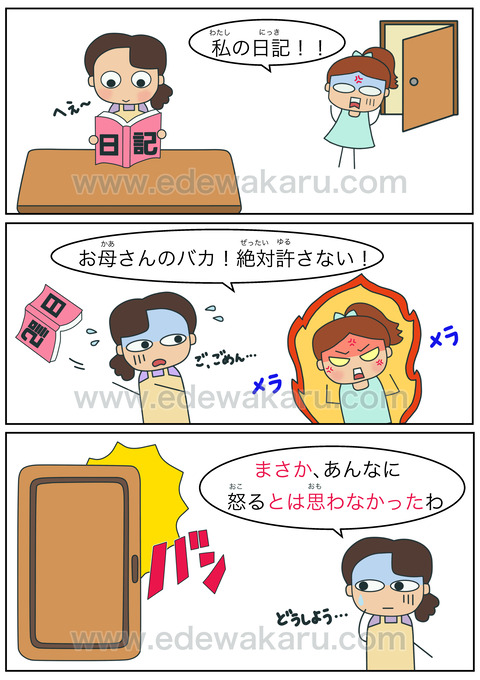
Meaning
まったく〜とは思わなかった
全然〜とは知らなかった
How to use it
まさか+動詞・い形容詞[辞書形]+とは思わなかった
まさか+な形容詞[ーな]+だとは思わなかった
まさか+名詞[辞書形]+だとは思わなかった
Explanation
「まさか〜とは思わなかった」は「〜のような結果になるとは、まったく思わなかった」という意味の文型です。全然予想しなかったことが発生し、とても驚いたと言いたい時に使われます。「まさか〜とは知らなかった」の形で使われる場合は「まったく〜とは知らなかった」という意味になります。「〜とは思わなかった」「〜とは知らなかった」を省略して「まさか」だけで使われることもあります。
「〜とは思わなかった」の「とは」は、感情を表す「なんて」にチェンジすることができます。
[例]
まさか
宝くじが当たる
とは思わなかった!
=
まさか
宝くじが当たる
なんて思わなかった!
「〜はずがない」という意味の「まさか」を一緒に覚えておきましょう😊
【類似文型】
In context 1 examples
日記を読んだくらいで、まさかあんなに怒るとは思わなかった
→あんなに怒るとはまったく思わなかった
日本語文型辞典 英語版
Meaning
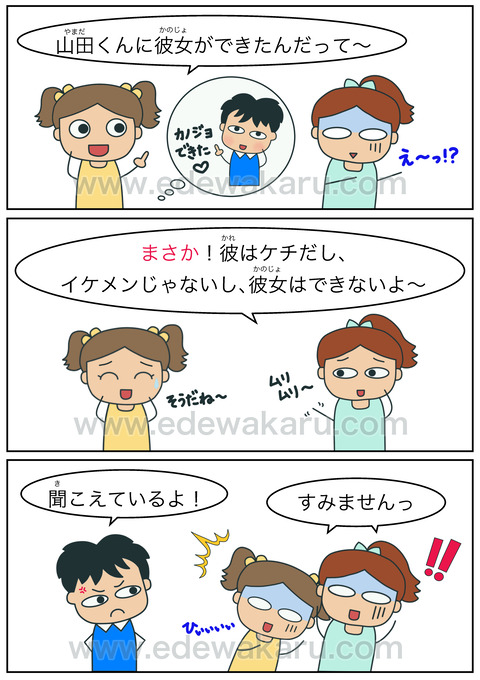
B:まさかそんなはずはない。
That’s impossible!
B:君、まさか僕を疑っているんじゃないだろうね。
Surely you’re not suspecting that it was me!
Negative expressions such as ないだろう, まい, はずはない and わけがない at the ends of sentences express the speaker’s negative thoughts that “something like that cannot happen” or “it cannot be true.” Also, as in the cases of
(6)
and
(7)
, they can express the speaker’s strong doubt when used in the structure まさか...じゃないだろう/でしょうね.
B:まさか。
Impossible!
Accompanying phrases such as とは思わなかった, とは知らなかった express how surprised the speaker is by an unforeseen turn of an event. In spoken language, まさか may be used on its own, as in the case of
(6)
.
B:まさか本人に面と向かって「ばか」とも言えないじゃないか。
I can’t very well tell him to his face that he is an idiot, can I?
By giving an extreme example of an action that the speaker cannot or will not take using the negative potential form V-れる, or other negative expressions such as ともいえない or わけにもいかない, it is used to indicate the speaker’s emotions such as annoyance, irritation, displeasure, frustration, or even despair about the present situation to the extent of contemplating taking such an action.
Means “in case of emergency, should an unlikely event take place.”
How to use it
1. まさか...ないだろう
2. まさか...とはおもわなかった[まさか N だとはおもわなかった][まさか Na だとはおもわなかった][まさか A とはおもわなかった][まさか V とはおもわなかった]
3. まさか+否定表現
4. まさかのN
In context 17 examples
彼には何度も念を押しておいたから、まさか遅れることはないだろう。
Since I reminded him so many times, I don’t think he would dare to be late.
いくら強いといっても、相手はまだ小学生だ。まさか大の大人が負けるようなことはないだろう。
However strong his opponent may be, it’s still just an elementary school child. There’s no way a grown adult could lose to him.
まさかそんなことはないと思うが念のためにもう一度調べてみよう。
I don’t think it is possible, but to be sure, I will check it again.
あんなに何度も練習したのだから、まさか失敗することはあるまい。
Since she practiced so many times, a failure is simply unthinkable.
A:お金が足りませんが...
I’m afraid there isn’t enough money....
A:だれが秘密をもらしたんだろう。
I wonder who leaked the secret.
まさか、あなた、あの人と結婚する気じゃないでしょうね。
Come now, you’re not intending to marry that person, are you?
山田さんが病気で入院しているとは聞いていたが、まさかこんなに悪いとは思わなかった。
I had heard that Yamada-san was in the hospital, but I had no idea it was this serious.
まさか私が優勝できるとは思いませんでした。
I never thought for a moment that I might win first place.
まさか彼があんな冗談を本気にするとは思わなかった。
I didn’t think he would take such a joke seriously.
まさか彼がこんなに早く亡くなるなんて誰も想像していなかった。
Nobody imagined that he might die so soon.
まさかこんな大惨事になるとは誰も予想していなかった。
No one foresaw a disaster of this magnitude.
A:犯人は彼だったよ。
He was the culprit.
A:あんな失敗をするなんて、あいつは馬鹿じゃないか。もっときつく言ったほうがいいんじゃないですか。
He must be an idiot to make such a mistake. Shouldn’t you talk to him more strongly ?
いくら助けてやりたくても、まさかテストの答えを教えるわけにもいかないし、自力で頑張ってもらうしかない。
However much I would like to help her, I certainly cannot tell her the answers to the test, so all I can do is leave her to do his best.
健康には自信があるが、家族のことを考えてまさかの時のために保険に入っている。
I have no worries about my health, but I do have a life insurance policy in consideration of my family in a worst-case scenario.
まさかの場合は、ここに電話してください。
In case anything unforeseen should happen, please call this number.
AIUEO JLPT Grammar
Meaning
「まさか〜」 is used to express surprise or doubt regarding unexpected or unbelievable events. It conveys the speaker’s disbelief or skepticism about an unforeseen possibility.
Explanation · 日本語
「まさか〜」は、予想外のことや信じられないことに対して驚きや疑問を表現するときに使われます。特に、話し手が予期していなかった出来事や、信じたくないことが起こる可能性があるときに用いられ、驚きや疑念を込めたニュアンスを伝えるための表現です。
In context 5 examples
まさか、彼が本当に来るとは思わなかった。
I never thought he would actually come.
まさかそんなことが起きるなんて、想像もしていなかった。
I never imagined something like that could happen.
まさか、彼が会社を辞めるなんて考えもしなかった。
I never thought he would quit the company.
まさか彼が犯人だなんて、信じられない。
I can’t believe he’s the culprit.
まさかあの店が閉店するなんて!
I can't believe that store is closing!
Bunpro Grammar Reference
Meaning
I never dreamed, Never, No way, Don't tell me, You don't say
How to use it
まさか + Phrase
Nuance
A strong word which emphasizes the following phrase as being unbelievable, or shocking.
Explanation
Almost always written purely in hiragana, まさか is a combination of まさ, a noun meaning 'precise', or 'exact', and the adverbial particle か. In modern Japanese, まさか is thought of as a single adverb meaning 'it can't be true', 'no way', or 'don't tell me'.
As it is treated primarily as an adverb, まさか will most often appear at the beginning of a sentence, before some statement about what the speaker is shocked/surprised about.
まさかタナカ君もこのジムに通っているとは思っていなかったよ。
I never would have believed that Tanaka also goes to this gym.
まさか彼がキャプテンなんて。
Don't tell me that he is the captain!
Fun Fact
まさ comes from 正, meaning 'precise' or 'actual'. However, this noun is very rarely used in modern Japanese. まさに is an adverb used to mean 'precisely', while まさか is another adverb used to mean 'no way!'. However, the literal meaning of まさか is closer to 'is it true?', or 'is it actually?', due to か's role in creating questions.
全然待っていないですよ。僕も今まさに着いたところです。
I didn't wait at all. I actually just arrived now.
まさかリアがフランスに帰るって本当なの?
Is it actually true that Lia is going back to France?
Nuance · 日本語
次に来るフレーズが、信じられない又は衝撃的だということを強調する言葉。
Explanation · 日本語
「まさか」は、名詞「まさ」(意味:正しいこと・ぴったり合うこと)と助詞「か」を合わせた表現です。現代では一つの副詞として扱われ、起こるはずがないと思っていたことが起こったときに「そんなはずはない」や「〜とは思わなかった」という気持ちを強調するために使われます。多くの場合、ひらがなで書かれます。
「まさか」は副詞として、文の頭でよく使われます。そのあとに、話し手が驚いたことや、信じられないと思っている内容が続きます。
まさかタナカ君もこのジムに通っているとは思っていなかったよ。
I never would have believed that Tanaka also goes to this gym.
まさか彼がキャプテンなんて。
Don't tell me that he is the captain!
豆知識
「まさ」は漢字では「正」と書き、「本当」や「確か」という意味を持ちますが、この名詞そのものは現代ではほとんど使われません。「まさ」を使った副詞には、「まさか」のほかに「まさに」があります。「まさに」は「本当に」や「間違いなく」のような意味で使われます。一方、「まさか」は疑問や不確かさを表す「か」があるので、もともと「それは本当なのか」と確認するようなニュアンスを持っています。
全然待っていないですよ。僕も今まさに着いたところです。
I didn't wait at all. I actually just arrived now.
まさかリアがフランスに帰るって本当なの?
Is it actually true that Lia is going back to France?
In context 16 examples
- まさかこんなところで君に出会えるなんて!
I never dreamed I would meet you in a place like this!
- まさかタナカ君もこのジムに通っているとは思っていなかったよ。
I never would have believed that Tanaka also goes to this gym.
- まさか彼がキャプテンなんて。
Don't tell me that he is the captain!
- まさかこんな大雪が降るなんて思わなかった。
I never dreamed it would snow this much.
- まさか…あのこと本当に彼に話したの?
Don't tell me... Did you really tell him about that?
- まさか…また財布忘れたわけじゃないよね。
Don't tell me... There's no way you forgot your wallet again... right?
- まさか彼が犯人だなんて… ショックだ。
I never dreamed that he would be the criminal… I'm in shock.
- まさかこの問題が出るなんて予想していませんでした。
I never would have thought that this problem (on a test) would come up.
- まさかこんな賞をいただけるなんて、夢にも思いませんでした。
I never even dreamed that I would receive this prize.
- まさかあの少女が金メダルを取るなんて、驚いたな。
I never dreamed that that little girl would win the gold medal. I'm amazed.
- 昨日すれ違ったの、まさか君じゃないよね?
Hey...don't tell me! It wasn't you who I passed on the street yesterday, was it?
- まさか裁判員の通知が来るとは思っていませんでした。
I never dreamed that I would be summoned to jury duty.
- まさか同じ日に同じ美容室で会うなんて、奇遇だね。
I never imagined that we would meet at the same beauty salon, on the same day. What a coincidence!
- 最近羽振りがいいね。まさか…宝くじでも当たったの?
Recently, things really turned around for you. Hey...You don't say, did you win the lottery or something?
- 全然待っていないですよ。僕も今まさに着いたところです。
I didn't wait at all. I actually just arrived now.
- まさかリアがフランスに帰るって本当なの?
Is it actually true that Lia is going back to France?