くらべてわかる日本語表現文型辞典
Usage 1
Meaning
たとえAをしてもBをしても、結局はC。
How to use it
Explanation
【対比1】
「A₁ようがA₂まいがB」(意味1 P.316)
Aという一つの事柄について、Aをしてもしなくても結果は同じBである。または、私には関係ないという意味であり、「AようがBようがC」とは、A,B二つの事柄を提出するかA一つの是非によるかの違いだけで、意味上の変わりはない。
○あなたが大学へ行こうが、行くまいが、私には関係ないわ。
○あなたが大学へ行こうが、やめようが、私には関係ない。
「疑問詞+AようがB」(意味1 P.75)
「AようがBようがC」は具体的にAやBという例を挙げているが、「疑問詞+AようがB」はAの程度や範囲を限定せず、すべてBだと述べている。
○あなたがどこへ行こうが、私には関係ないわ。
○あなたがフランスへ行こうが、国に帰ろうが私には関係ないわ。
「AなりBなり」(意味1 P.204)
In context 4 examples
高かろうが入手困難だろうが、私はあのバッグがほしいんです。
こんなに道が込んでいるのでは、タクシーに乗ろうが、バスに乗ろうが遅れることは間違いない。
君に貸す金なんかないよ。銀行で借りようが、アルバイトをしようが勝手にしたらいいじゃないか。
有名だろうが、金持ちだろうが、常識のない人は嫌いだ。
Usage 2
Meaning
Aの程度や範囲を限定せず、とにかくB。話し手の述べたいことはB。
How to use it
Explanation
【対比1】
「疑問詞+AてもB」
「疑問詞+AようともB」
「疑問詞+AてもB」と「疑問詞+AようがB」は置き換え可能である。
「疑問詞+AようともB」はさらに強調される感じがある。「疑問詞+AてもB」は会話でよく使われる表現で、文の緊張感が薄れる。
○どんなことが起ころうが、ついてきてください。
○どんなことが起ころうとも、ついてきてください。
○どんなことが起こっても、ついてきてください。
「AようがBようがC」(意味1 P.317)
In context 4 examples
料理がどんなにまずかろうが、夫はおいしいと言ってくれる。
この機械がどんなに便利だろうが、高すぎて私には買えない。
いかに難関校だろうが、あの大学を受けてみたい。
この金で何を買おうと私の自由でしょ。
絵でわかる日本語
Usage 1
Read this source entry ↗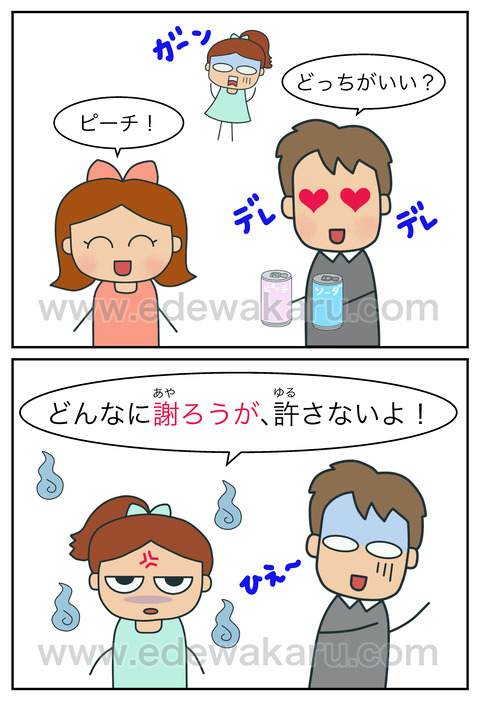
Meaning
〜ても関係なく〜だ
How to use it
動詞[意向形]+が
動詞[意向形]+と
Explanation
「〜ようが・〜ようと」は「〜ても関係なく〜だ」という意味で、前のことに関係なく後ろのことが成立すると言いたい時に使う文型です。「〜ようが」と「〜ようと」は同じ意味で使われます。また、後ろには【意志】や【決意】を表すものや、例文②のように「自由だ」などをよく使います😊
[「〜ようが・〜ようと」とよく使う表現]
・〜ようが+〜つもりだ
・〜ようが+
絶対〜する
・〜ようが+
〜の自由だ
・〜ようが+
〜の勝手だ
・〜ようが+
〜には関係ない
【余裕のある人へ】
この文型は形容詞や名詞にも使うことができます
😮活用が 少し複雑ですのでしっかりと覚えておきましょう😀
い形容詞[ーい]+かろうが
(例:おいしい→おいしかろうが)
な形容詞[ーな]+ だろうが・であろうが
(例:きれいだろうが・きれいであろうが)
名詞[辞書形]+だろうが・であろうが
(例:学生だろうが・学生であろうが)
「〜よう」を使う文型はたくさんありますので、きちんと区別をして覚えておきましょう😉
In context 4 examples
どんなに謝ろうが、許さないよ!
→どんなに謝っても、絶対に許さないよ!誰と結婚しようが、私の自由でしょ!(復習:〜でしょ・〜だろ)
→誰と結婚しても、それは私の自由でしょ!人に何を言われようが、気にしなくていいよ
→人に何を言われても、気にしなくていいよ誰に反対されようが、来月会社を辞めるつもりだ
→誰に反対されても、来月会社を辞めるつもりだ
Usage 2
Read this source entry ↗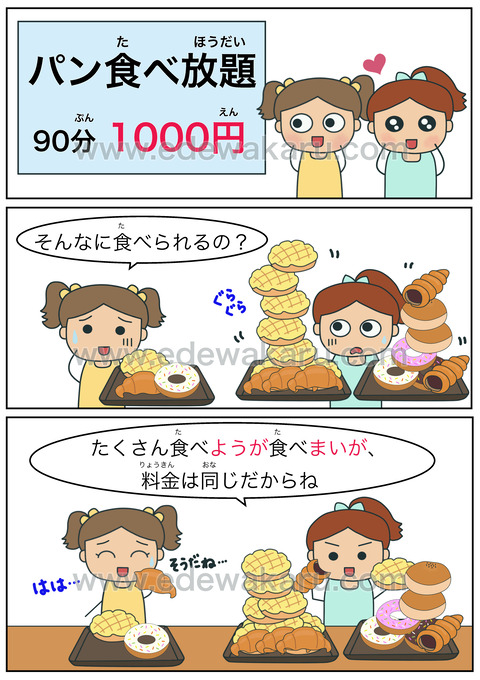
Meaning
〜しても〜しなくても
How to use it
動詞[意向形]+ようが+動詞[辞書形]+まいが
動詞[意向形]+ようと+動詞[辞書形]+まいと
Explanation
「AようがAまいが〜」は「AしてもAしなくても〜」という意味の文型です。「A」には同じ動詞が入り、「AしてもAしなくても、関係なく〜」と言いたい時に使われます。「まい」の復習をしておきましょう。「A」に「する」が入る場合は、
「Aしようが、Aしまいが」「Aしようが、Aするまいが」「Aしようが、Aすまいが」
になります。
[例文]
参加しようが参加
しまいが、会費は払わなきゃいけない
=参加しようが参加
するまいが、会費は払わなきゃいけない
=参加しようが参加
すまいが、会費は払わなきゃいけない
「よう」がつく文型はたくさんありますので、区別して覚えておきましょう😉
【「よう」がつく文型リスト】
In context 5 examples
食べ放題では、たくさん食べようが食べまいが料金は同じだ
→たくさん食べても食べなくても、料金は同じだパーティーに参加しようが参加しまいが、会費を払わなきゃいけない
→参加しても参加しなくても、会費を払わなきゃいけない雨が降ろうが降るまいが、イベントは行われるそうだ
→雨が降っても降らなくても、イベントは行われるそうだ結婚しようがしまいが、私の勝手でしょ!
→結婚してもしなくても、私の勝手でしょ!元カレに新しい彼女がいようがいまいが、私には関係ないわ
→新しい彼女がいてもいなくても、私には関係ないわ
どんなときどう使う 日本語表現文型辞典
Usage 1
Meaning
regardless if or if not
How to use it
Vよう+が+Vる+まいが(動詞Ⅱ・Ⅲは「Vまい+まいが」もある。「する」は「すまいが」もある)
Explanation
ようが~まいが
もし~ても~なくても
1)「Vまい」は「Vよう」の古い否定形。
2)「もし~しても、~しなくても」と仮定して、どちらの場合にも後の文が成立すると言いたいときに使う。「ようと~まいと」とほとんど同じように使う。
1)V-まい is old form of negation of Vよう.
2)Supposes that whether or not something is done, clause following pattern is valid. Used nearly same way as ようと~まいと.
In context 3 examples
雨が降ろうが降るまいが、この行事は毎年必ず同じ日に行われます。
参加しようがするまいが、会費だけは払わなければなりません。
あの人が来ようが来るまいが、予定は変更しません。
Usage 2
Meaning
no matter what
How to use it
Vよう/イAいかろう/ナAだろう/Nだろう+が
Explanation
~ても
1)「~ようが」の形で「もし~してもそれに関係なく」という意味で、後には、「影響されない・自由だ・平気だ」という意味の文が続く。
2)「たとえ~ようが・疑問詞~ようが 」の形をよく使う。
3) ❹ は慣用的表現。
2)Often used in form たとえ~ようが (even if), or interrogative~ようが (no matter who/what, etc.).
1)Even if some event happens, it doesn't matter. Clauses expressing notions of being unaffected, free, or unconcerned follow.
3)Sentence ❹ is idiomatic expression.
In context 5 examples
あの人がどこへ行こうが、わたしには関係ないことです。
彼女はまわりがどんなにうるさかろうが、気にしない人です。
たとえ、だれが何と言おうが、彼は決心を曲げないだろう。
雨が降ろうが槍が降ろうが、わたしは行きます。
たとえ相手が世界チャンピオンだろうが、ぼくは闘うぞ。
日本語NET JLPT文法解説まとめ
Meaning
〜ても関係なく・・・だ。
How to use it
V(意向形)+ が
イAい + かろうが
ナAだろう+ が
Nだろう + が
In context 6 examples
誰と結婚しようが、私の勝手でしょ。
周囲に何を言われようが、僕は気にしない。自分の会社を作って成功して見せる。
上司や同僚に説得されようが、僕は絶対にこの会社を辞める。
電車が遅れたせいで、どんなに急ごうと、飛行機の時間に間に合いそうにない。
どんなに忙しかろうが、明日までにこの製品を完成させる必要がある。
使わないものは、いくら安かろうと買う必要はない。
毎日のんびり日本語教師
How to use it
動意向形+が/と/とも
名詞+だろうが/であろうが/だろうと/であろうと
な形容詞語幹+だろうが/であろうが/だろうと/であろうと
い形容詞語幹+くても/くとも/かろうと/かろうが
動意向形+が+動まい形+が
動意向形+と+動まい形+と
※(ない→あるまい)
意向形
まい形
一段動詞不規則動詞
食べようしよう来よう
食べまいするまい/しまい来るまい/来まい
五段動詞
行こう/書こう
行くまい/書くまい
Explanation
仮定条件の逆接を表します。どのような状況であっても変わらないことを後件で述べます。
「たとえ」「どれだけ」「どんなに」「いくら」などの語が呼応することもあります。
Notes
「よう」シリーズ
In context 12 examples
たくさん本を買おうと、読まないなら無駄だ。
たとえ反対されようが、自分のことは自分で決める。
彼がいようがいまいが、どっちでもいい。
どんなにイケメンだろうがお金持ちだろうが、性格に問題がある人とは付き合えない。
他人の私に対する評価が高かろうと低かろうと、別に気にしたことではない。
今どんなに晴れていようと、登山中はいつ天気が急変するか分からないので注意しなければならない。
一人が寂しかろうが、猫がいれば大丈夫。
雨が降ろうが降るまいが、運動会は決行します。
歴史はめちゃくちゃ得意なので、勉強しようとしまいと問題ない。
犬だろうが、猫だろうが、母はペットを飼うのを許してくれない。
風邪だろうと熱だろうと、明日の会議は休まないでください。
値段が高かろうと何だろうと、欲しいものは欲しい。
文法
Meaning
〜ても関係なく・・・だ。
How to use it
V(意向形)+ が
イAい + かろうが
ナAだろう+ が
Nだろう + が
In context 6 examples
誰と結婚しようが、私の勝手でしょ。
周囲に何を言われようが、僕は気にしない。自分の会社を作って成功して見せる。
上司や同僚に説得されようが、僕は絶対にこの会社を辞める。
電車が遅れたせいで、どんなに急ごうと、飛行機の時間に間に合いそうにない。
どんなに忙しかろうが、明日までにこの製品を完成させる必要がある。
使わないものは、いくら安かろうと買う必要はない。
IMABI
Whether/No Matter… Or…: V1 ~(よ)う{が・と}V1+~まい{が・と}
Read this IMABI lesson ↗Explanation
Whether/No Matter… Or…: V1 ~(よ)う{が・と}V1+~まい{が・と}
Over the past few lessons, we have learned how to conjugate with the auxiliary verbs ~(よ)う and ~まい for their respective predicate types. In these lessons, we learned that they all share two things in common: expressing volition and expressing supposition, with one group doing so in the affirmative (~(よ)う・だろう) and the other group do so in the negative (~まい).
In this lesson, we will learn how these dual volitional/suppositional endings are used to create contrastive conditions in the vein of “whether/no matter… or…” Though analogous to V1 ~ても V1 ~なくても, this pattern is far more emphatic and reflective of the speaker’s conviction.
First, let’s go over how to conjugate with these auxiliaries.
Predicate Type+~(よ)う+~まい
一段動詞見よう見(る)まい
五段動詞言おう言うまい
サ変しようしまい
するまい
すまい
カ変来(こ)よう来(こ)まい
来るまい
形容詞新しかろうX
形容動詞簡単だろう
簡単であろう簡単であるまい
だ・である~だろう
~であろう~であるまい
~ない~なかろうX
Next, there are several commonalities that define this pattern which will be true across all these predicate types:
While the basic pattern juxtaposes the affirmative and negative volitional/suppositional auxiliaries with the same base predicate, the negative element may be swapped out for the antonym of the first.
While “no matter/whether… (or not)” implies more than one element, in practice, only one has to be spoken for the pattern to be valid, with the opposite – however the opposite is formed – implied.
This pattern is not limited to just two elements being juxtaposed, and the chain can keep going so long as there are conditions that the speaker states shall not heed the main clause from coming to pass.
The full of repetition of all complements found for Predicate1 in the second element is rare (Ex. 8) but not impossible.
In addition to these commonalities, there is a slight difference in nuance between using the conjunctive particle が and the conjunctive particle と.
Predicate1 ~(よ)うが (Predicate1 ~まいが): Most often used to describe scenarios which directly concern the mental state/reality of the speaker, while also characterized said scenario as frankly and/or as crudely as possible.
Predicate1 ~(よ)うと (Predicate1 ~まいと): Most often used to describe scenarios which are detached or indirectly related to (one’s) reality, making it most suitable for really letting one’s analogies and hypotheticals go wild; however, this does not take away from how the main predicate remains true.
Out of brevity, the second element is still to be understood as being either Predicate1 ~まい{が・と} or Predicate2 ~(よ)う{が・と}.
V1 ~(よ)う{が・と}(V1+~まい{が・と})
Vi~(よ)う{が・と}(V2+~(よ)う{が・と})
First, let’s investigate how this pattern affects verbal predicates. With verbs, the nature of the volitional/suppositional auxiliaries depends on the verb’s semantics, which we will go into further detail upon having seen some example sentences.
1. 君が行こうと行くまいと俺の勝ちだ。
Whether you go or don’t go, the victory is mine.
2. 人が来ようと来まいと、パーティーを開く予定には変わりはないんだ。
Whether people come or not, I’m still going to throw the party.
3. 信じようと信じまいと真実は変わらない。
Whether you believe it or not, the truth will not change.
4. 実際に謝ろうと謝るまいと、本気で悔いていれば違いはないのですか。
Whether you actually apologize or not, would there not be any difference if you truly regretted (your actions)?
5. 手術をしようがしまいが、間に合わない。
Whether I undergo surgery or not, it won’t make it in time.
6. 肺癌は、たばこを吸おうが吸うまいが、罹るときは罹ってしまう。
Lung cancer, whether you smoke or not, is something you get when you get it.
7. 何をしようと私の知ったことではありません。
Whatever you do, I know nothing about it.
Sometimes, the juxtaposed second element is not the exact antonym of the first, but there must still be a stark contrast between the two, such as, but not excluded to, spears falling from the sky instead of water.
8. 雨が降ろうが槍が降ろうが、決して揺らぐことがない。
Come hell or high water, I shan’t waver.
Literally: Whether it rains water or spears, I shan’t waver.
Partial Ellipsis w/ する Verbs
Ellipsis of the nominal root of a する verb occurs provided that said predicate is repeated. While zero ellipsis in this environment is not ungrammatical, it is unnecessarily verbose and would be subject to being corrected.
9. 不倫しようがしまいがその人の人生なんだし、好きにさせてやればいいと思うし、赤の他人がどうこう言う問題じゃないと思うんです。
Whether someone commits infidelity or not, that’s a matter of that person’s life, and I feel we ought to let (people) do what they please and that it’s not a matter complete strangers ought to fuss about.
10. 結婚しようが結婚しまいがストレスが少ないのが一番大事!
Whether you get married or not, the most important thing is to have as little stress as possible!
~ていよう{が・と}~(て)いまい{が・と}
It turns out that base verb in its て form may be ellipsed in the second element when the forms ~ていよう ~ていまい are being juxtaposed.
11. 自覚していようがしていまいが、誰の心にも差別や偏見は潜んでいる。
Whether we are aware of it or not, discrimination and prejudice lurk in everyone’s heart.
12. 自覚していようがいまいが、それぞれ自分が主人公の物語を紡いでいます。
Whether we realize it or not, each of us is weaving our own story as the protagonist.
13. 口に出そうと出すまいと、意識していようといまいと、観客が恋愛や犯罪や麻薬や戦争や反乱を通して求めているのは、結局、詩的・・・
Whether they say it or not, whether they are aware of it or not, what audiences are looking for through love, crime, drugs, war, and rebellion is ultimately poetry…
14. 意識していようとしていまいと,我々は常に「決断」しています。
Whether we are aware of it or not, we are constantly making “decisions.”
Volition VS Supposition
This grammar point is a great bridging context between the notions of volition and supposition. Determining which is which in the context of verbal predicates requires us to consider whether or not the verbs are non-volitional by nature.
15. 私たちが一緒に行こうが行くまいが、彼女にとっては関係ないのです。
It doesn’t matter to her whether we go with her or not.
16. 次の旅行にあなたが一緒に行こうが行くまいが気にしない。
I don’t care if you come with me on the next trip or not.
17. うまく行こうが行くまいがやってみるしかない。
Whether it works or not, all you can do is try.
These examples show how even with the same verb, volition is not necessarily a constant.
Firstly, for volition to be involved, there must be an agent. While Ex. 15 and Ex. 16 check out with clear agents, the agent is notably not the speaker in Ex. 16, and as for Ex. 17, no agent is present at all, which renders 行く as a non-volitional verb in that context.
With this in mind, there must be a reason for why Japanese utilizes the same auxiliaries in these unique scenarios, and that reason lies in how modality is perceived, and the scale of modality at hand here is the involvement of agents being tied to the perceived certainty of the act/event itself. This allows the same verb to differ in volition depending on the context as well as explain why the same endings can be used with all verbs. This leads us to the following relationships between volition and supposition.
VolitionAgent?Supposition
HighOneself/One’s GroupAbsolute certainty on executing said volition.
MediumOthersSpeculative as to whether said volition will be carried out.
NoneNo AgentLikelihood that the situation will occur.
Granted, these endings are being followed by conjunctive particles, meaning the modality statement is being dismissed as a mute point in the context of the main clause happening regardless. As a result, we actually do not know whether the juxtaposed conditions will even occur, making these three unique environments all that more similar within the context of this pattern.
15. 私たちが一緒に行こうが行くまいが、彼女にとっては関係ないのです。
It doesn’t matter to her whether we go with her or not.
Returning to Ex. 15, 行く was marked as being used in a volitional capacity. In isolation, the forms 行こう and 行くまい would be statements on the agent’s willingness to execute said action or not. With the conjunctive particle が in the picture, the agent carrying out [行こう][行くまい] does not matter for the main clause to be true, which is precisely the nature of the contrastive relationship being made.
The Dialectal ~しようがしよ(う)まいが
In the dialects in and around Nagoya1, you will encounter a variant of this pattern with verbal predicates: ~(よ)うが~よ(う)まいが . While と may still be used instead of が, が is used extensively more, perhaps due to cadence.
18. PCR検査をしようがしよまいが、昨日愛知県で100人以上が新たに感染したことには変わりがない訳です。
Whether you take a COVID PCR test or not, that doesn’t change the fact that over 100 people were newly infected yesterday in Aichi Prefecture.
Adj1 ~かろう{が・と} Adj1 ~なかろう{が・と}
The same can be said regarding the relationship between volition and supposition as it pertains to adjectival predicates. These predicates do not have agents, although subjects may be affected by the conditions set forth by them.
Part of Speech未然形Ex. PredicateEx. of Pattern
形容詞–karo–寒かろう寒かろうが寒くなかろうが※
※Insofar, we have only seen instances of this grammar in which the same word is repeated but in the pattern “Predicate1affirm. ~かろう{が・と}Predicate1neg. ~かろう{が・と}, but perhaps due to how adjectival predicates pertain to states, it is far more common for the second element to be the antonym of the first:
寒かろうが寒くなかろうが (△) → 寒かろうが暑かろうが ◎
This can be extended to the other predicates as well, but we will leave such variation for after we have at least had the chance to see its basic realization with all predicate types. Nonetheless, contexts can be cherrypicked to allow for the repetition of the same adjective.
19. 寒かろうが暑かろうが、試合を中止しないよ。
Whether it’s hot or cold, I won’t postpone the game.
20. 古かろうが新しかろうが、そんなもの買ったとしても、あてにならないよ。
Whether it’s old or new, even if you were to buy something like that, it won’t do you any good.
21. 母さんが夜なべをして、手袋、編んでくれた。木枯らし吹いちゃ、冷たかろうに、せっせと編んだんだよ。
Mother knitted mittens for me on her night ship. Even though it was supposed to be cold with the wintry breeze blowing, she diligently knitted it.
From 『母さんの歌』.
22. 美しかろうが醜かろうが、人間は人間だ。
Whether beautiful or ugly, a human is human.
23. 黒かろうが白かろうが、蝶を俺のトカゲのエサとしか思えない。
Whether they’re white or black, I can only think of butterflies as food for my lizard.
24. 寒かろうが寒くなかろうが、どうせ冬を避けては通れないのでどっちでもいいね。
Whether it’s cold or not cold, since there’s no avoiding winter anyway, it doesn’t matter either way.
N/Adj. N1であろう・だろう}{が・と}+ N/Adj. N1であるまい{が・と}
Due to the use of the copula, there is additional morphological variation with nominal and adjectival noun predicates that does not appear for the other predicate types.
When the copula だ is used, the opposite of だろう is でなかろう.
When the copula である is used, the opposite of であろう is であるまい.
Whether だ-ellipsis occurs, which occurs as follows.
No EllipsisW/ Ellipsis
N/Adj. N1{であろう・だろう}{が・と}N/Adj. N1であるまい{が・と}N/Adj. N1{であろう・だろう}{が・と}(で)なかろう{が・と}
25. 真実であろうが真実であるまいが、関係はない。
Whether it’s true or it’s not true, I have no part in it.
26. 障碍者であろうが(で)なかろうが、店員として働いている以上、責任はあるだろう?
Whether the person was disabled or not, the (employee) is responsible (for his actions) so long as he is working (there) as an employee.
27. 国際結婚であろうと(で)なかろうと、最初の一年はキツい。
Whether you’re in an international marriage or not, the first year is tough.
28. 休日であろうが、なかろうが、その店は営業している。
Holiday or not, that store is open for business.
29. 彼女が実の犯人であろうとなかろうと、中国で有罪の判決が言い渡されたから、もうすぐ処刑されるだろう。
Whether or not she’s the true criminal or not, because she’s been found guilty in China, she will probably be executed soon.
30. 雨天うてんだろうと決行するつもりです。
I plan to carry it out even in rainy weather.
31. 子供だろうが容赦ようしゃはしない。
Even as children, they don’t show mercy.
32. どんな人だろうと、この映画は楽しめます。
No matter what kind of person you are, you can enjoy this movie.
33. 真実であろうが嘘であろうが、まだ関係はない。
Whether it’s true or a lie, I still have no part in it.
The Ungrammaticality of Pred.1 ~(よ)う{が・と}+ Pred.1~なかろう{が・と}
With the opposite of だろう being でなかろう, and with でなかろう involving the auxiliary ~ない, you may wonder if ~なかろう can replace ~まい for verbal predicates.
Firstly, in isolation, as a typical auxiliary form, ~なかろう can be used with verbal predicates just as much as it can with the other predicate types, serving as an intermediary form between ~まい and ~ないだろう.
34. 夢が実現{しまい・しなかろう}が、真剣に取り組んだ確実な実績を周りの人に見て頂くこと、それが大切だと思っています。
Even if my dream doesn’t come true, I think it’s important for the people around me to see the tangible results of my hard work.
35. 理解{できなかろう・できまい}が現に在るものを、見ないようにして振舞っていたら、後々そこでつまづくのは、むしろ当然だろう。
Even if you’re not able to comprehend it, if you act like you do see what actually exists (in front of you), it’s only obvious that you’d suffer setbacks over those things in the long run.
~なかろう only denotes supposition; the control of agency is outside the control of the speaker, and thus, cannot be determined definitively. Consequently, while the actual execution of volition is not pertinent to the main clause ultimately coming to pass with V1 ~(よ)う{が・と}(V1~まい{が・と}) or V1~(よ)う{が・と}(V2~(よ)う{が・と}), juxtaposition of said executions of volition still occurs. This means the use of ~なかろう over ~まい, at the very least, is out of the question for volitional verbs with agents in full control of the execution of the contrastive clauses.
As for mid-tier volitional and non-volitional verbs, or contexts in which a verb is of said vein, we find that parallelism more often that not prevents the juxtaposing of ~(よ)う and ~なかろう, as the opposite of ~なかろう out to be ~だろう.2
36a. 存在していようが存在していなかろうが・・・ X
36b. 存在していようが(して)いまいが ・・・〇
Whether (it) exists or not…
In everyday conversation, however, しよう{が・と}しなかろう{が・と}does in fact appear, which is the natural consequence of sentences like Exs. 34-35 being grammatical: with the suppositional meaning of the pattern employed, volition is not (entirely) in play, thus this morphological variation is valid within such contexts3 and notably distinct nuance-wise.
37. 私は「地球が温暖化しようがしなかろうがどっちでもいい派」です。なんて無責任な、て思われる方もおられるでしょう。(No Volition/Agent)
I’m of the opinion that “whether global warming happens or not, it doesn’t matter.” Now, I’m some of you may think that is irresponsible (of me).
38. 翻訳は誰でも書けますが、注意点は機械翻訳に頼りすぎない事です。 別に翻訳しようがしなかろうが個人の自由だし。(Agent’s Volition/Control Not Emphasized)
Anyone can write up a translation, but be careful not to rely too much on mechanical translations. Anyway, it’s one’s personal choice whether to translate or not.
39. 消毒しようがしなかろうがうつるもんはうつるよなぁー!(Result Of Act Technically Out of Control of Agent)
Whether you disinfect or not, you’re gonna catch what’s contagious!
As for the existential verb ある, because the opposite of ある is ない as opposed to あらない, あろう{が・と}なかろう{が・と}. Following what we learned for ~でない, that also means あろう{が・と}あるまい{が・と}is possible, although not as common due to cadence.
40. 神の力があろうとなかろうと、それは変わりません。
Whether we have the power of the gods or not, that will not change.
41. お金があろうがあるまいが、土地なんか買わない。
Whether I have the money or not, I won’t be buying land (or the like).
This dialect region also exhibits ~まい following the 未然形 of all parts of speech, with /yo/ intervening for 一段, サ変, and カ変 verbs. For 五段 verbs, the 未然形 may end in either /a/ or /o/ when paired with ~まい. ↩︎
~だろう never replaces the use of ~(よ)う in this pattern. Perhaps in a future stage of Japanese, this placement might occur for non-volitional verbs first, but such replacement would be unlikely so long as ~(よ)う maintains its suppositional meaning, and the pattern at large would likely be completely replaced by ~ても~なくても before that were to ever get to happen. ↩︎
The sheer absence of this morphological variation in grammar reference materials, including those for the JLPT, vs the overwhelmingly high number of examples found online is worth further study to see why it is overlooked. ↩︎
In context 42 examples
君が行こうと行くまいと俺の勝ちだ。
Whether you go or don’t go, the victory is mine.
人が来ようと来まいと、パーティーを開く予定には変わりはないんだ。
Whether people come or not, I’m still going to throw the party.
信じようと信じまいと真実は変わらない。
Whether you believe it or not, the truth will not change.
実際に謝ろうと謝るまいと、本気で悔いていれば違いはないのですか。
Whether you actually apologize or not, would there not be any difference if you truly regretted (your actions)?
手術をしようがしまいが、間に合わない。
Whether I undergo surgery or not, it won’t make it in time.
肺癌は、たばこを吸おうが吸うまいが、罹るときは罹ってしまう。
Lung cancer, whether you smoke or not, is something you get when you get it.
何をしようと私の知ったことではありません。
Whatever you do, I know nothing about it.
雨が降ろうが槍が降ろうが、決して揺らぐことがない。
Come hell or high water, I shan’t waver.
不倫しようがしまいがその人の人生なんだし、好きにさせてやればいいと思うし、赤の他人がどうこう言う問題じゃないと思うんです。
Whether someone commits infidelity or not, that’s a matter of that person’s life, and I feel we ought to let (people) do what they please and that it’s not a matter complete strangers ought to fuss about.
結婚しようが結婚しまいがストレスが少ないのが一番大事!
Whether you get married or not, the most important thing is to have as little stress as possible!
自覚していようがしていまいが、誰の心にも差別や偏見は潜んでいる。
Whether we are aware of it or not, discrimination and prejudice lurk in everyone’s heart.
自覚していようがいまいが、それぞれ自分が主人公の物語を紡いでいます。
Whether we realize it or not, each of us is weaving our own story as the protagonist.
口に出そうと出すまいと、意識していようといまいと、観客が恋愛や犯罪や麻薬や戦争や反乱を通して求めているのは、結局、詩的・・・
Whether they say it or not, whether they are aware of it or not, what audiences are looking for through love, crime, drugs, war, and rebellion is ultimately poetry…
意識していようとしていまいと,我々は常に「決断」しています。
Whether we are aware of it or not, we are constantly making “decisions.”
私たちが一緒に行こうが行くまいが、彼女にとっては関係ないのです。
It doesn’t matter to her whether we go with her or not.
次の旅行にあなたが一緒に行こうが行くまいが気にしない。
I don’t care if you come with me on the next trip or not.
うまく行こうが行くまいがやってみるしかない。
Whether it works or not, all you can do is try.
PCR検査をしようがしよまいが、昨日愛知県で100人以上が新たに感染したことには変わりがない訳です。
Whether you take a COVID PCR test or not, that doesn’t change the fact that over 100 people were newly infected yesterday in Aichi Prefecture.
寒かろうが暑かろうが、試合を中止しないよ。
Whether it’s hot or cold, I won’t postpone the game.
古かろうが新しかろうが、そんなもの買ったとしても、あてにならないよ。
Whether it’s old or new, even if you were to buy something like that, it won’t do you any good.
母さんが夜なべをして、手袋、編んでくれた。木枯らし吹いちゃ、冷たかろうに、せっせと編んだんだよ。
Mother knitted mittens for me on her night ship. Even though it was supposed to be cold with the wintry breeze blowing, she diligently knitted it.
美しかろうが醜かろうが、人間は人間だ。
Whether beautiful or ugly, a human is human.
黒かろうが白かろうが、蝶を俺のトカゲのエサとしか思えない。
Whether they’re white or black, I can only think of butterflies as food for my lizard.
寒かろうが寒くなかろうが、どうせ冬を避けては通れないのでどっちでもいいね。
Whether it’s cold or not cold, since there’s no avoiding winter anyway, it doesn’t matter either way.
真実であろうが真実であるまいが、関係はない。
Whether it’s true or it’s not true, I have no part in it.
障碍者であろうが(で)なかろうが、店員として働いている以上、責任はあるだろう?
Whether the person was disabled or not, the (employee) is responsible (for his actions) so long as he is working (there) as an employee.
国際結婚であろうと(で)なかろうと、最初の一年はキツい。
Whether you’re in an international marriage or not, the first year is tough.
休日であろうが、なかろうが、その店は営業している。
Holiday or not, that store is open for business.
彼女が実の犯人であろうとなかろうと、中国で有罪の判決が言い渡されたから、もうすぐ処刑されるだろう。
Whether or not she’s the true criminal or not, because she’s been found guilty in China, she will probably be executed soon.
雨天うてんだろうと決行するつもりです。
I plan to carry it out even in rainy weather.
子供だろうが容赦ようしゃはしない。
Even as children, they don’t show mercy.
どんな人だろうと、この映画は楽しめます。
No matter what kind of person you are, you can enjoy this movie.
真実であろうが嘘であろうが、まだ関係はない。
Whether it’s true or a lie, I still have no part in it.
夢が実現{しまい・しなかろう}が、真剣に取り組んだ確実な実績を周りの人に見て頂くこと、それが大切だと思っています。
Even if my dream doesn’t come true, I think it’s important for the people around me to see the tangible results of my hard work.
理解{できなかろう・できまい}が現に在るものを、見ないようにして振舞っていたら、後々そこでつまづくのは、むしろ当然だろう。
Even if you’re not able to comprehend it, if you act like you do see what actually exists (in front of you), it’s only obvious that you’d suffer setbacks over those things in the long run.
存在していようが存在していなかろうが・・・ X
Whether (it) exists or not…
存在していようが(して)いまいが ・・・〇
Whether (it) exists or not…
私は「地球が温暖化しようがしなかろうがどっちでもいい派」です。なんて無責任な、て思われる方もおられるでしょう。(No Volition/Agent)
I’m of the opinion that “whether global warming happens or not, it doesn’t matter.” Now, I’m some of you may think that is irresponsible (of me).
翻訳は誰でも書けますが、注意点は機械翻訳に頼りすぎない事です。 別に翻訳しようがしなかろうが個人の自由だし。(Agent’s Volition/Control Not Emphasized)
Anyone can write up a translation, but be careful not to rely too much on mechanical translations. Anyway, it’s one’s personal choice whether to translate or not.
消毒しようがしなかろうがうつるもんはうつるよなぁー!(Result Of Act Technically Out of Control of Agent)
Whether you disinfect or not, you’re gonna catch what’s contagious!
神の力があろうとなかろうと、それは変わりません。
Whether we have the power of the gods or not, that will not change.
お金があろうがあるまいが、土地なんか買わない。
Whether I have the money or not, I won’t be buying land (or the like).
The Particles ども, とも, & たりとも
Read this IMABI lesson ↗Explanation
The Particle ども, とも, & たりとも
In this lesson, we will learn about the conjunctive particles ど(も), とも, and たりとも, both of which are contrastive (逆接) in nature. Putting aside their lack of use, we will investigate the uniquely nuanced contrasts that can be made with these particles.
Curriculum Note: Occasional examples from older stages of Japanese will be provided; however, you are not required to study other archaic grammar present in those examples. For the benefit of any who wish to research these topics further, all such examples will be shown in their original orthography, a modern orthography adaptation, along with a Modern Japanese translation.
The Conjunctive Particle ど(も)
Learning of another particle so late into your Japanese studies may come as a surprise, but the conjunctive particle ど(も)is actually already quite familiar to you via its antecessor けれど(も), which is most commonly abbreviated to けど.
Though the exact etymology of けれど(も) is contested, its meaning of “although” is almost identical to that of ど(も). While also translated into English as “even though/although,” the relationship between the dependent clause marked by ど(も)and the main clause that follows is more nuanced.
The conjunctive particle ど(も)is also unique in how it attaches to the 已然形 of verbs. Although this base is typically referred to as the 仮定形 in the context of Modern Japanese grammar, the use of the term 已然形 is still often applied to ど(も)because of the temporal nature of the verb implied in this construction being something already set in motion.
Verb Class已然形例
一段-re– 見れど
五段-e–行けど
サ変sure–すれど
カ変kure–来(く)れど
だde.are–
nare1–であれど(も)
なれど(も)
In Classical Japanese, ど(も) possessed two interrelated nuances that contribute to how it is perceived in Modern Japanese.
逆接確定条件: Translating into Modern Japanese as ~けれども or ~が, a “established contrastive conditional” refers to Situation B, a result contrary to an expectation implied from whatever Situation A is.
Situation A necessitates that tense/aspect be properly defined so as to make clear how Situation A is established, given how ど(も) attaches to the 已然形. In Modern Japanese, however, the array of aspect markers that once existed have been condensed to largely ~た, and although that alone would not necessarily prevent ど(も) from attached to its 已然形 tare-, this nuance has been entirely taken over by けれど(も). This is even the case when the verb of the dependent clause marked by ど(も) is in the non-past tense.
1.
Original Text: 足ずりをして泣けども甲斐なし。
現代日本語: 足をばたつかせて泣くけれどもどうにもならない。
Throwing a tantrum amounts to nothing.
From the 伊勢物語.
2. 去れど、我は追わず。
Though (they) leave, I will not pursue.
逆接恒常条件: Translating into Modern Japanese as ~であっても、やはり…, a “constant contrastive conditional” refers to Situation B ALWAYS being the case even though Situation A is the case.
The meaning of “even though…” lives on in Modern Japanese, albeit largely limited to set phrases and the written language. This is likely due to ど(も)functioning more like ~ても, which limits the aspect of said dependent clause to being “in the moment.”
3. 行けども、行けども、砂ばかりだった。
Though I kept going and going, there was only sand.
4. 行けども行けども、山また山。
(We) went on and on, but there was nothing but mountain after mountain to be seen.
5. しかし、結果は一そう悪く、待てど暮らせど何の返事も無く、自分はその焦燥しょうそうと不安のために、かえって薬の量りょうをふやしてしまった。
But, the result was even worse, and having waited and wanted and not received a response of any sort, I ended up increasing my dosage all the more out of impatience and anxiety.
From 『人間失格』 by 太宰治.
~といえども
The pattern ~といえど(も)is used to acknowledge Situation A, which is a condition (fact) that is presumed established, while introducing Situation B, which contrasts with what would expect from Situation A.
6. たとえ帝王とはいえど、法を犯せば罰せられる。
Even if (they) were the emperor, (they) would still be punished for breaking the law.
This grammar essentially combines aspects of both nuances of ~ど(も), indicating how interrelated they truly are due to their shared utilization of the 已然形. Both nuances rely on Situation A being presumed established, but the exact nature of the contradiction set by Situation B differs – whether Situation B is a one-off, unexpected consequence or always so conversely consequential. In Ex. 5, even if someone were the 帝王, their being the 帝王 would be established and uncontested; nonetheless, their status (situation) as emperor would not exempt them from being punished for violating the law if and when they do, and that established contrastive conditional is always maintained. By unpacking the logical relationship between Situation A and Situation B in this manner, “nonetheless/nevertheless” are often provided as translations, even though doing so would be consequentially longwinded.
7a. さすがのラファエル君といえども、この夏の暑さには参ってるだろう。
Even with Rafael being how he is, he must be exhausted by the heat this summer.
In this example, Situation B is not a constant. Yet, not even Rafael’s presumed ability to withstand the heat is withstanding this summer’s heat. The simplest paraphrasing of といえども out of this example would be でも.
7b. さすがのラファエル君でも、この夏の暑さには参ってるだろう。
Even with Rafael, given how he is, he must be exhausted by the heat this summer.
While this paraphrasing happens to work just fine on account of [さすがのラファエル君] being a simple nominal predicate, for a more faithful, modern representation of といえども in this context, とは言っても serves as a better candidate.
Now, what prompts modern speakers to purposefully revert to using といえども despite being antiquated goes back to how Situation A is perceived. Whether Situation A is presumed to be the case or just a happenstance contrastive hypothetical condition (逆接仮定条件) is not disambiguated via ~ても.
8. いくら暑さに強いとは言っても、この夏の暑さには参ってるだろう。
No matter how heat-resistant you say you are, you’d be overwhelmed by the heat this summer.
From ~ても alone, we do not know the exact nature of Situation A as it pertains to it being established fact or a hypothetical (and a hyperbolized one at that). This brings us full circle back to how ど(も)may translate as ~が・けれど, which at least can present Situation A as a concession made.
9. さすがのラファエル君も、猛暑日でも平気とは言うが、この夏の暑さには参ってるだろう。
Even given how Rafael-kun is, saying how he can handle scorching heat, he must be feeling overwhelmed by the heat this summer.
While ~が・けれど are more suitable for presenting 逆接確定条件 than ~ても, the uncontested nature of Situation A presented via ~ど(も) is unique enough to keep the grammar point from dying out of modern speech entirely.
Another point of contention to consider is nuancing provided by the emphatic adverbial particles は and も.
The inclusion of the particle は into this pattern inherently adds a distinct layer of contrast being made between Situation A and other similar situations that could just as easily result in the same contrary scenario had with Situation B.
6. たとえ帝王とはいえど、法を犯せば罰せられる。
Even if (they) were the emperor, (they) would still be punished for breaking the law.
With this in mind, we see how [帝王] could be swapped out with other similar nouns, and such comparisons are implied by using は, and with Situation A still holding true, the conditional statement is more emphatic as an effect.
Now, as for the inclusion of も in ~ど(も), も plays the role of an intensifier after various types of adverbial expressions, which contrastive dependent clauses may count as. Due to the propensity of using も in similar structures like ~ても, however, も is more likely used than not2.
While it may be tempting to view ~ども as being grammaticalized as one word, its absence does not have a profound change in meaning as is the case for other similar patterns such as ~ても or ~とも.
だ-Ellipsis w/ ~といえど(も)
While anachronistic in practice, the thought of だ coexisting with an archaic dependent clause structure which predates its existence would seem odd, but as is often the case with archaisms, neoclassical applications do result in だ being optional when ~といえど(も) follows nominal and adjectival noun predicates. However, its ellipsis3 is far more common.
10. 同じ秘書経験者(だ)といえども、菅と安倍を分けるものはまさしくそれだった。
Despite both being experienced secretaries, it was that very point of commonality which separated Suga and Abe from each other.
~と雖も
In 漢文, 雖 indicates a contrastive conditional, and because of this, it has been adopted as an alternative means of spelling ~といえども.
11. 自ら顧かえりみて縮なおくんば4千万人と雖いえども我われ往ゆかん。(Famous Quote)
If I reflect upon myself and find myself to be in the right, no matter if ten million people (tell you otherwise), I shall move forward.
By 吉田松陰.
12. 中らずと雖も遠からず。(Set Phrase=Idiom)
Literal Translation: Though not landing (on the mark), (it) is not far off.
Near the mark.
Historical Segue
Since Old Japanese (上代日本語), the stage of the language spoken in the Nara Period (8th century AD), the bare 已然形 could be used to create an established contrastive conditional all on its own, but it just so happened that the particle ど(も) frequently accompanied it.
13.
Traditional Orthography: さこそ言へ、まだ追ひやらず。
Modern Orthography: さこそ言え、まだ追いやらず。
Modern Translation: そうは言うけれど、まだ完全に追い出さない。
English Translation: Easier said than done, though, as I’m still not completely driving (her) away.
From the 伊勢物語5.
14.
Original 万葉仮名: 不聴雖謂話礼〻〻常詔許曽志斐伊波奏強話登言
Traditional Orthography: 否と言へど語れ語れと詔らせこそ志斐い6は奏せ強語といふ。
Modern Orthography: 否と言えど語れ語れと詔らせこそ志斐いは強語という。
Modern Translation: いやだと申し上げても、語れ語れと仰せになるからこそ、志斐は申し上げるのです。それを「強い語り」とおっしゃる。
I’m the one who, despite saying no, am told by you to keep going, which is precisely why I (Shii) keep telling my stories. Here you are calling them “stories I force upon you.”
From Poem 237 of the 万葉集.
吉田金彦 suggests that ど may derive from the particle と and that the voicing occurred due to a morpheme expressing conjecture fusing with it before Japanese’s written history began.
Putting aside whether ど is the fusion of two morphemes or not, the uncanny resemblance between it and the particle とも does indicate an etymological relationship. With that in mind, let’s delve into the conjunctive particle とも.
The Conjunctive Particle とも
The conjunctive particle とも consists of the conjunctive particle と7 used in conditional expressions and the intensifier adverbial particle も, grammaticalized as a single word to indicate a contrastive hypothetical condition (逆接仮定条件).
Unlike ~ど(も), though the relationship between the dependent clause marked by とも and the main clause is contrastive in nature, the outcome itself is fine, if not even “only nature,” as far as the speaker’s attitude toward the relationship is concerned.
Traditionally, the conjunctive particle とも attaches to the 終止形 of affirmative, verbal predicates and to the 連用形 of adjectival predicates and the /zu-/ 連用形 of the negative auxiliary verb ~ず.
15. 去るとも、我は追わず。
Even if (they) are to leave, I shall not pursue.
16. 上手くいけば誰も犠牲にせずとも好いかも知れませぬ。
If all goes well, we might not have to sacrifice anyone.
17. 遅くとも、来月末までに提出してください。
Please submit it by the end of next month at the latest.
In Modern Japanese, in addition to these environments, とも may also be found after the volitional form.
18. いくら困難が立ちはだかろうとも、ただ突き進むだけさ。
No matter how many difficulties stand in my way, I just keep going.
The overall meaning of “even if,” especially in contexts like “no matter what,” has also resulted in とも gaining a final particle function denoting the speaker’s agreeance or consent as something that is only “obvious.”
19. もちろん、行くとも!
Of course, I’m going!
While understanding how とも semantically works is no difficult task, knowing how these various applications are used practically and how they relate to similar patterns will be our next goal, as it would be inappropriate to label all these usages as being merely old-fashioned.
V終止形(肯定)+とも
Instances of the conjunctive particle とも following verbs without intervening morphology are exceedingly rare in Modern Japanese. However, one does not look hard at all in Classical Japanese.
20. 千年を過ぐすとも、一夜の夢の心地こそせめ。
Even if I were to watch ten thousand years go by, it would likely feel like a single night’s dream.
From the 『徒然草』.
Similarly to ~としても, it is also possible to see ~とも after the predecessor of ~た, ~たり. In these scenarios, the conjunctive particle とも does pertain to established concessive contrasts but with the added sensation that the speaker feels the result is to be expected.
21.
Traditional Orthography: たとひ弓を持ちたりとも、矢をはげずはかなひがたし
Modern Orthography: たとい弓を持ちたりとも、矢を矧げずは敵い難し。
Modern Translation: たとえ弓を持ったとしても、矢を番えなければ敵わない。
English Translation: Even if you did have a bow in hand, you are no match unless you nock an arrow.
From the 『平家物語』.
Rare instances of ~とも attaching to the 連用形 do appear in Old Japanese, and in Middle Japanese, especially during the time period when the 終止形・連体形 were merging together, it could also be seen appearing after the 連体形.
22.
Traditional Orthography: 万代に携はり居て相見とも思ひ過ぐべき恋にあらなくに
Modern Orthography: 万代に携わり居て相見とも思い過ぐべき恋にあらなくに
Modern Translation: いつも手を繋ぎ体を交わし合おうとも、それで忘れられるべき恋ではないのだな。
English Translation: Even as we always be holding each other’s hands and intimate with one another, this is by no means a love that we should let fade.
From Poem 2024 of the 万葉集.
23. 死ぬるとも敵に後を見すな。
Even if you are to die, do not show your back to the enemy.
From the 『平家物語』.
~ずとも
Simply put, ~ずとも is the predecessor of ~なくても. In Modern Japanese, the use of ~ずとも is limited to the written (≈poetic) language, and it is largely restricted to verbal predicates, although there are still occasional instances of it with other predicates, especially in more (neo)classical speech.8
Predicate Type例
動詞(一段)
動詞(五段)
動詞(サ変)
動詞(カ変)見ずとも
降らずとも
せずとも
来(こ)ずとも
形容詞高からずとも
名詞・形容動詞:~なり~ならずとも
Out of brevity, the classical copula なり stands for both nominal and adjectival noun predicates.
24. マニアならずとも世界が認めるデザインは、目から鱗なはずだ。
Even without being an enthusiast, a design that is recognized worldwide ought to be eye-opening.
25. 言わずとも、知れたことだよ。
That goes without saying, it’s so obvious.
24. 一石を投ぜず9とも、第一に、「伝統的社会」はすでに自壊作用をはじめたという見方も可能である。
Without even casting the first stone, it is possible to take the view that “traditional society” has already begun the process of disintegrating.
From 『NPO/NGOと国際協力』by 西川潤,佐藤幸男.
26. そんな人物は、長からずとも人生を生きてきていれば、会社でも学校でも、いくらでもいたはずだ。
A person like that will surely have been in our lives, even if one hasn’t been on the block for that long, whether in the workplace, at school, etc.
27. 「息子さえおれば、こんな歳になってこんな情けない目に遭わずともすんだものを。」篠突く雨の中、関ヶ原へと進軍する途中の家康は、馬上幾度もそうぼやいたという。
If only my son were here, I would not have to suffer such a pitiful fate as this at my age,” Ieyasu muttered to himself repeatedly while on horseback in the pouring rain on his way to Sekigahara.
From 『聚楽』by 宇月原晴明.
Why the 連用形?
As can be deduced from the chart above, ~ず itself attaches normally to the 未然形 of all predicate types, albeit to the traditional version if any discrepancies exist between Classical Japanese and Modern Japanese, as is the case for サ変 and predicates involving the copula (なり).
As for why ず is viewed as being in the 連用形 in this construction as opposed to the 終止形 like it does in the affirmative for verbal predicates, the argument for this rests on the acute affinity the bases of ず have with that of adjectives, as both exhibit ラ変型活用, and even their non-ラ変型 conjugates bear uncanny resembles to one another.
Bases~ず
(非ラ変型)~ず
(ラ変型)形容詞
(非ラ変型)形容詞
(ラ変型)
未然形ずざら(く)から
連用形ずざりくかり
終止形ず〇し〇
連体形ぬざるきかる
已然形ねざれけれ〇
命令形〇ざれ〇かれ
~くとも
When combined with adjectival predicates, ~とも follows the 連用形. In this environment, it has been largely replaced by ~ても in modern speech, but more can be said about this transition.
In highly emphatic contrastive conditionals, often accompanied by adverbs such as どんなに・どれだけ・いくら・たとえ, ~とも holds on, albeit still overshadowed by ~ても in the spoken language.
28. どんなに辛くともくじけるな。
No matter how tough (things) are, do not be disheartened.
29. どんなに美しくとも、闇夜に咲く花は誰の目にも映らぬ。
No matter how beautiful they may be, flowers which bloom in the dark of night are seen by no one.
30. 地方の酒屋も、小さくともなんとか職人の意地で酒を造り続けてほしい。
I hope that local brewers, no matter how small, will continue to make sake with the pride one would expect of a craftsman.
As a subset of this environment, ~でなくとも with nominal and adjective noun predicates is also possible. Likewise, ~でなくとも has largely been replaced by ~でなくても in modern speech.
31. 逆に、人間でなくとも、殺すことは許されない。
Conversely, even it is not human, it is not permissible to kill it.
32. 特別な才能を示す少年は、家柄がそれほどでなくとも、入学を許可される場合がある。
There are cases of lads who display exceptional talent being admitted even with a modest family background.
Given that the auxiliary verb ~ない and ない are no different, (~)なくとも is to be expected in formal, written contexts, even preferred over (~)なくても. As for its used in the spoken language, such use is indicative of Early Modern Japanese-style speech, which remains alive in the speech of older generations.
33. 台木を用いなくともよい。
There is no need to use rootstocks.
34. 事前の許可がなくとも、治療用規制物質の投与が認められる。
The administration of controlled substances for medical purposes is allowed even without prior authorization.
35. 理解されなくともまったくかまわない。
I really don’t care if its not understood.
36. 特に英語を勉強しなくとも、楽勝だろうね。
Particularly English, it’s probably a piece of cake for you even if you don’t study.
These instances of ~なくとも should not be confused with its appearance in 少なくとも. It turns out that 少なくとも (at least) along with 遅くとも (at the latest) and 多くとも (at most) have become set instances of ~とも being grammaticalized into adverbial expressions with said definitions.
37. 少なくとも10人は要ります。
We need ten people at the least.
38. 無所属候補は、多くとも何千票(か)しか獲得できないだろう。
Independent candidates will likely receive only a few thousand votes at most.
39. 車だと早くとも5時間はかかる。
By car, the quickest it would take would be at least 5 hours.
Nuance Note: At first glance, 早くとも may seem similar to 早ければ. However, upon further inspection, the impression of 早くとも is quite negative in tone. In Ex. 39, the journey by car is still long, and the likelihood of it taking longer than five hours is quite high.
This adverbial use of とも may even be seen attached to plain adverbs pertaining to amount.
40. そのために多少ともお役に立てばと思って本書を刊行することとした。
That is why I decided to publish this book in the hope that it will be of some help.
It is only when these adjective + とも combinations are used as typical dependent clauses that replacement with ~ても is possible.
41. あまりに本数が少なくても、人は乗るんでしょうか。
Will people still ride (bus/train) lines even when there are so few of them?
42. いくら多くても、絶対に売ってはいけなかったのだ。
No matter how many of (them) there was, (we) were to never sell (them).
形容詞(終止形)+~とも
While the conjunctive particle traditionally attaches to the 連用形 of adjectives, there are rare instances of it following the 終止形, especially in Early Modern Japanese literature. Such instances can be interpreted as ~とも functioning as an abbreviation of ~と言っても.
43. 前列と後列の間はわずか一尺五寸10ぐらいだろう、左右の間隔はそれより短いとも長くはない。
The space between the front and back rows measured about one foot and five inches, and the space between the men, left and right, might have been even less than that, certainly no greater.
From 『坊ちゃん』by 夏目漱石.
~(よ)うと(も)
When ~とも follows the auxiliary verb ~(よ)う, either in it capacity as suppositional markers or as volitional markers, the particle maintains its role of marking a “contrastive conditional,” and with the addition of ~(よ)う , resulting statements are highly emotionally charged, with adverbs such as どんなに (how)・どれだけ (to what extent) ・いくら (how much)・たとえ (even if) frequently accompanying.
Because this pattern may follow all predicate types, below is a recap on how ~(よ)う connects to the 未然形.
Predicate Type未然形+~(よ)う
一段動詞-∅-見よう
五段動詞–o– 言おう
サ変shi–しよう
カ変ko–来(こ)よう
形容詞–karo–新しかろう
形容動詞daro–
de.aro–簡単だろう
簡単であろう
だ・であるdaro–
de.aro–~だろう
~であろう
44. たとえ雨が降ろうとも洗濯物を取り込まない。
I do not bring in the laundry, even if it rains.
45. 誰が何と言おうとも、美味しければそれでいいのだ。
No matter what anyone says, as long as it tastes good, that’s all that matters.
46. 頻発する一揆11は、それがいかに大規模であろうとも、いかに激しかろうとも、階層を横に連帯する論理、すなわち新しい時代への展望とこれを実現する手段とを欠いており、しょせんが一揆にすぎなかった。
The frequent uprisings, no matter how large or violent they were, lacked the logic to unite people across classes, in other words, the vision for a new era and the means to realize it, and were ultimately nothing more than uprisings.
From 『「経済大国」に明日はないか』by 吉田春樹.
Interestingly, も is not grammaticalized to と in this environment. This means its absence does not affect the meaning of the expression. This suggests that と in this construction retains some affinity to its quotative particle iteration. However, a change in tone can still be observed. Without も, the conditional brought forth feels far more punctual.
47. 我らホモ・サピエンスはどれだけ努力しようと、どれだけ達成しようと、生物学的に定められた限界を突破できないというのがこれまで暗黙の了解だった。
Until now, it has been tacitly understood that we, Homo sapiens, could not surpass the limitations imposed on us by our biology, no matter how hard we might try and no no matter the accomplishments we would make.
48. 宇宙の終わりがあろうとなかろうと、我々人類は見ることはできないだろう。
Whether there will be an end to our universe or not, we humans will likely not be there to see it.
Curriculum Note: See also ~ようと~まいと.
~とも~とも
Speaking of the quotative と+も, it is important not to confuse this combination with the conjunctive particle とも when said combination is in the pattern ~とも~とも to indicate inability to draw a conclusion.
49. どれも正しいとも間違っているとも判断できません。
I can’t judge any of it as being right or wrong.
50. きょうのところは、私は明確に右とも左とも申し上げかねますから、少し研究さしていただきたいと思います。
As for today, I would like do some more research (on this matter), as I’m afraid I cannot state one way or another definitively.
From these two examples, it is clear that the clausal relationship between とも and the rest of the sentence is not the same as when とも functions as a conjunctive particle. Whereas the conjunctive particle とも would follow a dependent clause, clearcut instances of “quotative と+も” follow embedded quotes, which are subordinate clauses.
終助詞「とも」
The final particle usage of とも ultimately derives from its conjunctive particle functionality. While the conjunctive particle とも is contrastive in nature, the outcome itself is obvious, unworthy of doubt, as far as the speaker is concerned12. This “only natural” nuance is what gives the final particle とも’s flare in denoting what is only a natural response.
52. 「結論があるんですか」「あるとも。」
“That means you have reached a conclusion?” “That I have!”
53. 食ったとも、食ったとも!あきれちゃったよ。
I sure did eat it! That I did! I was quite fed up!
The final particle とも may follow plain and polite speech variants. As for its relationship with the copula, copula ellipsis is notably possible with そうだ13 but limited to sociolects such as female speech. This is likely due to a conflict of modality, in which the final particle とも matches the affirmative modality of the copula.
54. もちろん、思いましたとも。
Of course, I thought that!
55 ああ、そうです!そうですとも!あれが最後です。
Ah, yes! That is correct! That is the last one.
56. それはそう(だ)とも!
Of course, that’s the case!
Though somewhat dated, the final particle とも may also appear after interjections which indicate affirmation such as ああ and おう.
57. おうとも、さようで!
Why yes, that is so indeed!
Typically, the final particle とも does not attach to modal phrases which indicate supposition, especially if there is a certain level of uncertainty involved. This means ~とも naturally does not pair well with endings like ~らしい・そうだ because of how they indicate hearsay, but it does naturally pair well with endings like ~に違いない for expressing the speaker’s brimming confidence in something being the case. Interestingly, though, ~だろうとも is quite common. In this environment, the speaker is not describing the high factualness of the statement at hand, but rather that the likelihood of it being so high is undeniable.
58.「事件はこの後に起こる。」「そうだろうとも。」
“The incident would occur after this point.” “Of course, it would.”
The Particle たりとも
Next, we will look at the conjunctive particle たりとも, which is a combination of the defunct copula verb たり and the conjunctive particle とも attaching to its /tari-/ 終止形.
The conjunctive particle たりとも is largely limited to counter expressions, translating as “not even…” given how the main clause is always in the negative. Furthermore, the counter expression itself must be a unit that is “minimal” in nature, and the number used is always one or replaced with 何~.
59. なにより、自らの「同志」の一人が政権に参画したのだ。しかも彼は事務方の官房副長官という、過去一度たりとも民間人の就いたことのない重要ポストに座っている。
More than anything else, there was one person who took part in planning in the administration with the same sentiments as [the Prime Minister]. Furthermore, he was sitting in a high-level post, the administrative Deputy Chief Cabinet Secretary, for which no civilian had been appointed to even once in the past.
60. 一瞬たりともおろかにはできぬ。
You can’t even neglect it even for a moment.
61. 2001年、同じ場所で演説をした前首相の小泉純一郎は、街宣車から降りた途端、一歩たりとも動けなくなった。
The moment Former Prime Minister Koizumi Jun’ichiro stepped out from the propaganda vehicle onto the same spot he had given a speech in 2001, he was unable to make even a step.
61. 邪魔する者は何人たりとも咬み殺す!
I will kill any number of men with my bite if he so dares to get in my way!
Similarly to とも is grammaticalized in phrases like 少なくとも as adverbs in their own right, the same can be said of “1 + Counter + たりとも.” While the underlying clausal structure is still present in its etymology, たりとも does not function as a full-fledged dependent clause in these expressions.
The Classical Japanese ancestor of だ is なり, and given ど(も)’s tendency to be used with archaic speech, it may appear after the 已然形 of なり as opposed to だ. ↩︎
Written works from as far back as Old Japanese such as the 万葉集 indicate a high tendency toward using ども, and in Middle Japanese 漢文訓読文-style texts, ども was exclusively used. ↩︎
To be non-anachronistic in our approach, なり ellipsis would also need to be examined. It just so happens that なり was also just as optional and with parallel effects on the mood attributed to its subordinate clause. ↩︎
~くんば is the combination of the /ku-/ 連用形 of adjectives followed by the particle は, which is incidentally etymologically tied to the particle ば, deriving from は being voiced. As voiced consonants were pre-nasalized in older stages of Japanese, this explains the ん in this pattern. ↩︎
The 伊勢物語 itself is not from Old Japanese but from the later period of Middle Japanese. Also, the bare 已然形 is still occasionally utilized in Modern Japanese when paired with the bound particle こそ. ↩︎
The particle い is a fascinating grammatical structure lost to time that was present in Old Japanese. Its purpose was to hone in on nominal expressions as “especially” being the point of contention, exhibiting case-like and adverbial-like properties. ↩︎
There is also the argument to made that と in this construction derives from its case particle usage. While the resultant structure behaves as a conjunctive particle with predicates, the combination of the case particle と (as a comparison (standard) marker≈quotative particle) and も after nouns and nominalized expressions is parallel in meaning. The ultimate difference, however, is that, while と may still function as a comparison marker or a quotative particle without も, も is grammaticalized as one word for its contrastive conjunctive functionality. ↩︎
The predicate types listed are those that pertain to Modern Japanese grammar. In a neoclassical context, it would be anachronist to assume that a speaker, even one versed in any particular older stage of Japanese, would have internalized an archaism pure to its original grammatical environment(s). ↩︎
Included as サ変 are verbs which in Modern Japanese end in ~じる which originally ended in ~ず(る) in earlier stages of Japanese. ↩︎
尺 30.3 cm = 11.92 inches; 寸 = 3 cm = 1.18 inches. ↩︎
The word 一揆 has great historical significance in Japanese history, but the exact nature of the “uprisings” it refers to depends on the time period and sociopolitical circumstances involved. ↩︎
This is not the exact same as definitively stating that something is true. Otherwise, we would expect a typical declarative sentence. At the heart of the final particle ~とも is the mindset of the speaker that the matter at hand is obviously so without giving it any thought=need to verify, and possibly even that the listener could reach the same conclusion just as easily. ↩︎
Examples of copula ellipsis with generic nominal predicates are excessively rare in Modern Japanese. ↩︎
In context 57 examples
去れど、我は追わず。
Though (they) leave, I will not pursue.
行けども、行けども、砂ばかりだった。
Though I kept going and going, there was only sand.
行けども行けども、山また山。
(We) went on and on, but there was nothing but mountain after mountain to be seen.
しかし、結果は一そう悪く、待てど暮らせど何の返事も無く、自分はその焦燥しょうそうと不安のために、かえって薬の量りょうをふやしてしまった。
But, the result was even worse, and having waited and wanted and not received a response of any sort, I ended up increasing my dosage all the more out of impatience and anxiety.
たとえ帝王とはいえど、法を犯せば罰せられる。
Even if (they) were the emperor, (they) would still be punished for breaking the law.
さすがのラファエル君といえども、この夏の暑さには参ってるだろう。
Even with Rafael being how he is, he must be exhausted by the heat this summer.
さすがのラファエル君でも、この夏の暑さには参ってるだろう。
Even with Rafael, given how he is, he must be exhausted by the heat this summer.
いくら暑さに強いとは言っても、この夏の暑さには参ってるだろう。
No matter how heat-resistant you say you are, you’d be overwhelmed by the heat this summer.
さすがのラファエル君も、猛暑日でも平気とは言うが、この夏の暑さには参ってるだろう。
Even given how Rafael-kun is, saying how he can handle scorching heat, he must be feeling overwhelmed by the heat this summer.
同じ秘書経験者(だ)といえども、菅と安倍を分けるものはまさしくそれだった。
Despite both being experienced secretaries, it was that very point of commonality which separated Suga and Abe from each other.
自ら顧かえりみて縮なおくんば4千万人と雖いえども我われ往ゆかん。(Famous Quote)
If I reflect upon myself and find myself to be in the right, no matter if ten million people (tell you otherwise), I shall move forward.
中らずと雖も遠からず。(Set Phrase=Idiom)
Literal Translation: Though not landing (on the mark), (it) is not far off.
去るとも、我は追わず。
Even if (they) are to leave, I shall not pursue.
上手くいけば誰も犠牲にせずとも好いかも知れませぬ。
If all goes well, we might not have to sacrifice anyone.
遅くとも、来月末までに提出してください。
Please submit it by the end of next month at the latest.
いくら困難が立ちはだかろうとも、ただ突き進むだけさ。
No matter how many difficulties stand in my way, I just keep going.
もちろん、行くとも!
Of course, I’m going!
千年を過ぐすとも、一夜の夢の心地こそせめ。
Even if I were to watch ten thousand years go by, it would likely feel like a single night’s dream.
死ぬるとも敵に後を見すな。
Even if you are to die, do not show your back to the enemy.
マニアならずとも世界が認めるデザインは、目から鱗なはずだ。
Even without being an enthusiast, a design that is recognized worldwide ought to be eye-opening.
言わずとも、知れたことだよ。
That goes without saying, it’s so obvious.
一石を投ぜず9とも、第一に、「伝統的社会」はすでに自壊作用をはじめたという見方も可能である。
Without even casting the first stone, it is possible to take the view that “traditional society” has already begun the process of disintegrating.
そんな人物は、長からずとも人生を生きてきていれば、会社でも学校でも、いくらでもいたはずだ。
A person like that will surely have been in our lives, even if one hasn’t been on the block for that long, whether in the workplace, at school, etc.
「息子さえおれば、こんな歳になってこんな情けない目に遭わずともすんだものを。」篠突く雨の中、関ヶ原へと進軍する途中の家康は、馬上幾度もそうぼやいたという。
If only my son were here, I would not have to suffer such a pitiful fate as this at my age,” Ieyasu muttered to himself repeatedly while on horseback in the pouring rain on his way to Sekigahara.
どんなに辛くともくじけるな。
No matter how tough (things) are, do not be disheartened.
どんなに美しくとも、闇夜に咲く花は誰の目にも映らぬ。
No matter how beautiful they may be, flowers which bloom in the dark of night are seen by no one.
地方の酒屋も、小さくともなんとか職人の意地で酒を造り続けてほしい。
I hope that local brewers, no matter how small, will continue to make sake with the pride one would expect of a craftsman.
逆に、人間でなくとも、殺すことは許されない。
Conversely, even it is not human, it is not permissible to kill it.
特別な才能を示す少年は、家柄がそれほどでなくとも、入学を許可される場合がある。
There are cases of lads who display exceptional talent being admitted even with a modest family background.
台木を用いなくともよい。
There is no need to use rootstocks.
事前の許可がなくとも、治療用規制物質の投与が認められる。
The administration of controlled substances for medical purposes is allowed even without prior authorization.
理解されなくともまったくかまわない。
I really don’t care if its not understood.
特に英語を勉強しなくとも、楽勝だろうね。
Particularly English, it’s probably a piece of cake for you even if you don’t study.
少なくとも10人は要ります。
We need ten people at the least.
無所属候補は、多くとも何千票(か)しか獲得できないだろう。
Independent candidates will likely receive only a few thousand votes at most.
車だと早くとも5時間はかかる。
By car, the quickest it would take would be at least 5 hours.
そのために多少ともお役に立てばと思って本書を刊行することとした。
That is why I decided to publish this book in the hope that it will be of some help.
あまりに本数が少なくても、人は乗るんでしょうか。
Will people still ride (bus/train) lines even when there are so few of them?
いくら多くても、絶対に売ってはいけなかったのだ。
No matter how many of (them) there was, (we) were to never sell (them).
前列と後列の間はわずか一尺五寸10ぐらいだろう、左右の間隔はそれより短いとも長くはない。
The space between the front and back rows measured about one foot and five inches, and the space between the men, left and right, might have been even less than that, certainly no greater.
たとえ雨が降ろうとも洗濯物を取り込まない。
I do not bring in the laundry, even if it rains.
誰が何と言おうとも、美味しければそれでいいのだ。
No matter what anyone says, as long as it tastes good, that’s all that matters.
頻発する一揆11は、それがいかに大規模であろうとも、いかに激しかろうとも、階層を横に連帯する論理、すなわち新しい時代への展望とこれを実現する手段とを欠いており、しょせんが一揆にすぎなかった。
The frequent uprisings, no matter how large or violent they were, lacked the logic to unite people across classes, in other words, the vision for a new era and the means to realize it, and were ultimately nothing more than uprisings.
我らホモ・サピエンスはどれだけ努力しようと、どれだけ達成しようと、生物学的に定められた限界を突破できないというのがこれまで暗黙の了解だった。
Until now, it has been tacitly understood that we, Homo sapiens, could not surpass the limitations imposed on us by our biology, no matter how hard we might try and no no matter the accomplishments we would make.
宇宙の終わりがあろうとなかろうと、我々人類は見ることはできないだろう。
Whether there will be an end to our universe or not, we humans will likely not be there to see it.
どれも正しいとも間違っているとも判断できません。
I can’t judge any of it as being right or wrong.
きょうのところは、私は明確に右とも左とも申し上げかねますから、少し研究さしていただきたいと思います。
As for today, I would like do some more research (on this matter), as I’m afraid I cannot state one way or another definitively.
「結論があるんですか」「あるとも。」
“That means you have reached a conclusion?” “That I have!”
食ったとも、食ったとも!あきれちゃったよ。
I sure did eat it! That I did! I was quite fed up!
もちろん、思いましたとも。
Of course, I thought that!
それはそう(だ)とも!
Of course, that’s the case!
おうとも、さようで!
Why yes, that is so indeed!
「事件はこの後に起こる。」「そうだろうとも。」
“The incident would occur after this point.” “Of course, it would.”
なにより、自らの「同志」の一人が政権に参画したのだ。しかも彼は事務方の官房副長官という、過去一度たりとも民間人の就いたことのない重要ポストに座っている。
More than anything else, there was one person who took part in planning in the administration with the same sentiments as [the Prime Minister]. Furthermore, he was sitting in a high-level post, the administrative Deputy Chief Cabinet Secretary, for which no civilian had been appointed to even once in the past.
一瞬たりともおろかにはできぬ。
You can’t even neglect it even for a moment.
2001年、同じ場所で演説をした前首相の小泉純一郎は、街宣車から降りた途端、一歩たりとも動けなくなった。
The moment Former Prime Minister Koizumi Jun’ichiro stepped out from the propaganda vehicle onto the same spot he had given a speech in 2001, he was unable to make even a step.
邪魔する者は何人たりとも咬み殺す!
I will kill any number of men with my bite if he so dares to get in my way!
AIUEO JLPT Grammar
Usage 1
Meaning
This sentence pattern expresses that multiple situations or conditions do not influence one’s will or situation. It is used when contrasting elements or extreme examples are presented to show that will or circumstances do not change.
How to use it
意向形が+意向形が意向形と+意向形と
Explanation · 日本語
この文型は、複数の状況や条件を列挙し、それらのどれにも影響されないことを強調する表現で、対照的な要素や極端な例を並べて、意志や状況が変わらないことを示すときに使われます。
In context 5 examples
株価が上がろうが下がろうが、私は気にしない。
Whether the stock prices go up or down, I don’t care.
彼が賛成しようが反対しようが、この計画は実行する。
Whether he agrees or opposes, this plan will be executed.
雨が降ろうが雪が降ろうが、試合は行われます。
Whether it rains or snows, the match will go on.
彼は成功しようと失敗しようと、この挑戦をやめるつもりはないだろう。
Whether he succeeds or fails, he has no intention of giving up on the challenge.
仕事が忙しかろうと暇だろうと、私は毎日運動を欠かさない。
Whether work is busy or not, I never miss my daily exercise.
Usage 2
Meaning
This sentence pattern emphasizes that, regardless of a situation or action, the result or will does not change. It is used to indicate that a certain action or situation does not affect the outcome.
How to use it
動詞意向形が+動詞辞書形+まいが動詞意向形と+動詞辞書形+まいと
Explanation · 日本語
この文型は、ある行動や状況に対して、その行動をするかしないか、状況がそうであるかそうでないかに関わらず、結果や意志が変わらないことを強調する表現です。
In context 5 examples
彼が賛成しようとするまいと、私はこの計画を進めるつもりです。
Whether he agrees or not, I intend to move forward with this plan.
雨が降ろうが降るまいが、ピクニックに行きます。
Whether it rains or not, I will go on the picnic.
彼らが努力しようとするまいと、成功するかどうかは運次第だ。
Whether they try or not, whether they succeed depends on luck.
私が行こうが行くまいが、彼らは予定通りに始めるだろう。
Whether I go or not, they will probably start as planned.
彼が信じようが信じまいが、これは真実だ。
Whether he believes it or not, this is the truth.
Usage 3
Meaning
This sentence pattern expresses that, regardless of any condition or difficulty, the will or situation does not change. It carries a sense of contrast and is mostly used in written form.
How to use it
動詞意向形+とも形容詞く形+とも
Explanation · 日本語
この文型は、どんな条件や困難においても、意志や状況が変わらないことを表す表現で、逆接的な意味を持ち、主に書き言葉として使用されます。
In context 5 examples
どんなに苦しくとも、私は最後まで諦めない。
No matter how hard it is, I will not give up until the end.
彼がどれだけ反対しようとも、私はこの計画を進める。
No matter how much he opposes, I will proceed with this plan.
どんなに大きな困難があろうとも、目標に向かって進んでいく。
No matter what obstacles lie ahead, I will move towards my goal.
たとえ誰が何と言おうとも、私は自分の信念を貫く。
No matter what anyone says, I will stick to my beliefs.
どんなに厳しくとも、このトレーニングを終える覚悟だ。
No matter how tough it is, I am determined to finish this training.
Bunpro Grammar Reference
Meaning
Even if, No matter what, Whether or not, [Emphatic], Volitional + が
How to use it
Even if / No matter what
Verb [おう] + が(1)
Verb[まい] + が(1)
Noun + だろう.(2) + が(1)
[な]Adjective + だろう(2) + が(1)
[い]Adjective[い̶]+ かろう + が(1)
Whether or not
Verb [おう] + が(1) + Verb[まい] + が(1)
Noun (A) + だろう(2) + が(1) + Noun (B) だろう(2) + が(1)
[な]Adjective1 + だろう(2) + が(1) + [な]Adjective2 + だろう(2) + が(1)
[い]Adjective[い̶]+ かろう + が(1) + [い]Adjective[い̶]+ かろう + が(1)
(1) と
(2) であろう
Nuance
A slightly formal construction which highlights the speaker's strong will to disregard (A). No matter what (A), (B).
Explanation
When both the positive and negative volitional auxiliary verbs are combined with a verb in Japanese, it has the nuance of 'whether or not (A)', the result will be (B)'. This is quite emphatic, and has a literal meaning similar to 'say it does (A) or say it doesn't (A), it will still be (B)'.
As a reminder, the positive auxiliary verbs of volition are either う or よう, depending on what they are being connected to, while the negative auxiliary verb of volition is まい. Either the case marking particle が or と will appear after both the positive and the negative, with が being slightly more common.
忘年会に出席しようが出席するまいが、会費はみんなからもらっています。
Whether you attend the year-end party or not, we will collect the admissions fee from everyone.
雨が降ろうが降るまいが、明日は絶対に釣りに行くと決めた。
Whether it rains or not, I have decided to go fishing tomorrow.
While this structure is primarily seen after verbs, it is important to remember that other auxiliary verbs such as だ can be conjugated in the same way, as can い-Adjectives with the less common かろう structure. This means that nouns, な-Adjectives and い-Adjectives can also appear using a similar grammar pattern. However, because the negative volitional まい cannot pair with these structures, an antonym will usually appear with them instead, with both words using the う or よう positive volitional.
楽しかろうが楽しくなかろうが、学校は子供の仕事だから学校には行かなくてはだめだ。
Whether it is fun or not, school is a child's job, so you must go to school.
安全だろうが安全でなかろうが、2メートル以上の場所に上がる場合は安全帯を必ず装着してください。
Whether it is safe or not, always wear a safety belt when you climb to a place higher than 2 meters.
犬であろうが猫であろうが、どちらにしても動物なので軽い気持ちで買ってはいけない。
Whether it is a dog or a cat, they are both animals, so they must not be bought on a whim.
Based primarily on the use of volitionals, this grammar pattern will often indicate the speaker's strong will or opinion that will not change regardless of (A).
Nuance · 日本語
話し手が(A)を無視する意思が強いということを強調する少し丁寧な文法。(A)であっても、(B)。
Explanation · 日本語
動詞に、肯定と否定の意志を表す助動詞を両方付けると、「(A) にかかわらず、結果は (B) に なる」という意味合いを表します。これはとても強調的な表現で、文字通りに解釈すると「(A) だとしても (A) でないとしても、(B) に なることは変わらない」といった意味になります。
これまでに学んだ通り、肯定の意志の助動詞は接続する語によって「う」または「よう」になり、否定の意志の助動詞は「まい」になります。また、肯定・否定どちらの場合でも、これらの意志の助動詞の後ろには格助詞の「が」または「と」が置かれますが、「が」が使われることの方が多いです。
忘年会に出席しようが出席するまいが、会費はみんなからもらっています。
Whether you attend the year-end party or not, we will collect the admissions fee from everyone.
雨が降ろうが降るまいが、明日は絶対に釣りに行くと決めた。
Whether it rains or not, I have decided to go fishing tomorrow.
この表現は主に動詞に使われますが、助動詞「だ」や、イ形容詞+「かろう」(少し古風な形)もこの表現に使うことができます。つまり、「だ」や「かろう」を伴えば、この表現は動詞だけでなく、名詞、ナ形容詞、イ形容詞にも使うことができるということです。ただし、否定の助動詞「まい」は、これら(名詞、ナ形容詞、イ形容詞)と組み合わせることができないので、このような場合、(A) と (B) の両方に肯定の助動詞「う」や「よう」が使われます。また、肯定形と否定形の組み合わせだけでなく、対義語や「犬」や「猫」のように一般に対照的とされる言葉を並べることもあります。
楽しかろうが楽しくなかろうが、学校は子供の仕事だから学校には行かなくてはだめだ。
Whether it is fun or not, school is a child's job, so you must go to school.
安全だろうが安全でなかろうが、2メートル以上の場所に上がる場合は安全帯を必ず装着してください。
Whether it is safe or not, always wear a safety belt when you climb to a place higher than 2 meters.
犬であろうが猫であろうが、どちらにしても動物なので軽い気持ちで買ってはいけない。
Whether it is a dog or a cat, they are both animals, so they must not be bought on a whim.
意志の助動詞が使われていることからもわかるように、この表現は、(A) に関係なく変わらない話し手の強い意志や意見を表す場面でよく使われます。
In context 17 examples
- 何年がかかろうと、ドラゴンボールを見つけるつもりだ!
Even if it takes many years, I intend to find the dragon balls!
- 忘年会に出席しようが出席するまいが、会費はみんなからもらっています。
Whether you attend the year-end party or not, we will collect the admissions fee from everyone.
- 安全だろうが安全でなかろうが、2メートル以上の場所に上がる場合は安全帯を必ず装着してください。
Whether it is safe or not, always wear a safety belt when you climb to a place higher than 2 meters.
- 犬であろうが猫であろうが、どちらにしても動物なので軽い気持ちで買ってはいけない。
Whether it is a dog or a cat, they are both animals, so they must not be bought on a whim.
- 雨が降ろうが降るまいが、明日は絶対に釣りに行くと決めた。
Whether it rains or not, I have decided to go fishing tomorrow.
- 楽しかろうが楽しくなかろうが、学校は子供の仕事だから学校には行かなくてはだめだ。
Whether it is fun or not, school is a child's job, so you must go to school.
- 人が何と言おうが、ずっとあなたを愛しています!
No matter what people say, I will always love you!
- 商品は上質であろうが悪質であろうが、よく売れるものはよく売れる。
Whether the product is of good quality or low quality, if it sells well, it sells well.
- 友達が生きていようが生きていまいが、私は彼らのために歌い続ける。
Whether my friends are alive or not, I will still sing songs for them.
- 生徒が授業に出席しようが出席するまいが、私はきちんと授業を進めていく。
Whether or not students attend, I will proceed with my lecture as planned.
- 日本語の勉強が難しかろうが易しかろうが、流暢に話せるようになるまで勉強する。
Whether learning Japanese is difficult or easy, I will learn until I become fluent.
- 誰に反対されようが、僕は同性婚を支持する気持ちを変えないつもりだ。
No matter who I am opposed by, I intend to not change my feelings of endorsing same-sex marriage.
- 出発時にどんなに晴れていようがいまいが、夏の沖縄へ行くなら台風への対策もするべきです。
No matter how clear it is when you depart, if you're going to Okinawa in summer, you ought to take measures against typhoons.
- 私のルームメイトは動物が大嫌いだ。犬だろうが猫だろうが、動物を飼うのに猛反対してくる。
My roommate hates animals. No matter whether it is a dog or a cat, she will fiercely oppose owning one.
- 僕が幼い頃に蒸発してしまった父が今再婚していようが再婚していまいが、僕には関係ない。
Regardless of whether my father, who disappeared without a trace in my youth, is now getting remarried or not, it is none of my business.
- 娘が離婚しようが離婚しまいが、私は娘が幸せならそれ以上は何も求めません。
Whether or not my daughter gets a divorce, as long as she is happy, I do not wish for anything more than that.
- 日本語能力試験のために沢山の参考書を買おうと、それを実際に使いこなさないなら意味が無い。
Even if you buy heaps of reference books for the JLPT, if you don't actually use them until you get the knack of it, there is no meaning.
NINJAL 日本語文型データベース
Usage 1
Meaning
どちらの〜が成立する場合も、それに全く影響されないと強く言いたいときに使います。
How to use it
Notes
2つの「〜」には、意味的に関連がある別の動詞や、「勝つ・負ける」「つける・消す」など、対立する意味の動詞がきます。また、同じ言葉の肯定形・否定形(「ある・ない」「食べる・食べない」など)もきます。「〜うが〜うが」の後には、話し手の判断や意志などを表す文がくることが多いですが、すでに成立した事実を表す文でもいいです。
In context 6 examples
「テレビを見ようがゲームをしようが、私の自由でしょう。私の好きにさせてよ」
自分で作ろうが途中の店で買おうがかまわないが、とにかく弁当だけは持っていかないと。山には店がないんだから。
子どもたちは、雨が降ろうが雪が降ろうが外で遊びたがる。
応援しているチームが勝とうが負けようが、ラグビーはわくわく興奮するスポーツだと思う。
お金があろうがなかろうが、何も食べないわけにはいかないでしょう。
マスクをしようがしなかろうが、風邪をひくときにはひく。
Usage 2
Meaning
〜が成立する場合もしない場合も、それに全く影響されないと強く言いたいときに使います。
How to use it
Notes
2つの「〜」には、同じ動詞がきます。「〜うが〜まいが」の後には、話し手の判断や意志などを表す文がくることが多いですが、すでに成立した事実を表す文でもいいです。
In context 4 examples
大雪が降ろうが降るまいが、バスの運転手は仕事を休めない。
あなたが神を信じようが信じるまいが、私には関係ないことです。
離職しようがするまいが、僕の自由意志じゃないか。僕は自分で決める。
私は自分の好きな絵を描きたいだけだ。それが世間に受け入れられようが受け入れられまいが構わない。