絵でわかる日本語
日本語文型辞典
Meaning
Used in forms such as “まるで-ようだ/みたいだ” and “まるで…かのように/かのごとく.” This expression compares one state to another example, or compares two things to say that they are “actually different, but very similar.” It cannot be used together with “らしい.”
Used with a negative form or an expression with a negative meaning to mean “ぜんぜん…ない” or “まったく…ない.” ④ means “completely hopeless.”
How to use it
まるで
まるで…ない
In context 12 examples
今日は風が強くて、まるで台風みたいだ。
It’s so windy today, it’s just like a typhoon.
あんなつまらないことで怒りだすなんて、まるで子供みたいだ。
Getting angry over something that trivial is just like a child.
彼は、入学試験を受ける友人のことを、まるで自分のことのように心配している。
He is worried about his friend taking the entrance exam as if it were his own.
きのうあんなに大きな事件があったのに、街はまるで何事もなかったかのように平静を取り戻していた。
Even though there was such a big incident yesterday, the city had regained its calm as if nothing had happened.
大事件にもかかわらず、人々はまるで何事もなかったかのごとく振舞っている。
Despite the major incident, people are behaving as though nothing had happened.
(誤) あの人は、まるで女らしい人です。
(Incorrect) That person is just like a feminine person.
(正) あの人は{たいへん/とても}女らしい人です。
(Correct) That person is {very/extremely} feminine.
私は外国語はまるでだめなんです。
I’m completely hopeless at foreign languages.
うちの兄弟はまるで似ていない。
My siblings don’t look alike at all.
いくら仕事ができても、自分の身の回りのことがまるでできないようでは、一人前のおとなとは言えない。
No matter how capable you are at work, if you can’t manage your own everyday needs at all, you can’t be called a fully grown adult.
あいつのやり方はまるでなってない。
His way of doing things is completely unacceptable.
みんなの講では、ずいぶん嫌な男のように思えたが、実際に会ってみると、聞いていたのとはまるで違っていた。
From what everyone said, he seemed like a very unpleasant man, but when I actually met him, he was completely different from what I’d heard.
Read the original source text
Meaning
「まるで-ようだ/みたいだ」、「まるで…かのように/かのごとく」という形で使う。ある状態を他の例にたとえたり、二つを比べて「実際には違うが、たいへん近い」ことを表す表現。「らしい」といっしょに使うことは出来ない。
否定形や否定的な意味を表す表現を伴って、「ぜんぜん…ない」「まったく…ない」という意味を表す。④は「ぜんぜんだめだ」という意味。
How to use it
まるで
まるで…ない
日本語文型辞典 英語版
Meaning
Used in the forms まるで...ようだ/みたいだ and まるで...かのように/かのごとく. Figuratively compares another example with an existing condition or state and demonstrates that although in reality the two are different, they are very close. It cannot be used together with らしい.
(×)あの人は、まるで女らしい人です。
That person is just as if she were very ladylike.
(○)あの人は{たいへん/とても}女らしい人です。
That person is (very) ladylike.
When accompanied by a negative form or an expression with negative meaning, this conveys the meaning “completely not” or “absolutely not.” In example
(4)
the meaning is “completely hopeless,” “no good at all.”
How to use it
1. まるで
2. まるで...ない
In context 10 examples
今日は風が強くて、まるで台風みたいだ。
Today the wind is strong. It seems just like a typhoon.
あんなつまらないことで怒りだすなんて、まるで子供みたいだ。
When you lose your temper over a little thing like that you seem just like a child.
彼は、入学試験を受ける友人のことを、まるで自分のことのように心配している。
He worries about his friend taking the entrance examination as if it were he himself taking it.
きのうあんなに大きな事件があったのに、街はまるで何事もなかったかのように平静を取り戻していた。
Despite that big incident yesterday, the town has regained its calm again just as if nothing had happened.
大事件にもかかわらず、人々はまるで何事もなかったかのごとく振舞っている。
In spite of the major incident, people are behaving as if nothing has happened.
私は外国語はまるでだめなんです。
I am absolutely hopeless at foreign languages.
うちの兄弟はまるで似ていない。
My siblings look completely different.
いくら仕事ができても、自分の身の回りのことがまるでできないようでは、一人前のおとなとは言えない。
However professional you may be, you can’t say you are properly an adult if you can’t take care of your own personal needs.
あいつのやり方はまるでなってない。
That guy’s way of doing things just doesn’t work.
みんなの話では、ずいぶん嫌な男のように思えたが、実際に会ってみると、聞いていたのとはまるで違っていた。
According to what everyone said, I’d had the impression he was a truly horrible man, but when I actually met him he was completely different from what I had heard.
Read the original source text
Meaning
Used in the forms まるで...ようだ/みたいだ and まるで...かのように/かのごとく. Figuratively compares another example with an existing condition or state and demonstrates that although in reality the two are different, they are very close. It cannot be used together with らしい.
(×)あの人は、まるで女らしい人です。
That person is just as if she were very ladylike.
(○)あの人は{たいへん/とても}女らしい人です。
That person is (very) ladylike.
When accompanied by a negative form or an expression with negative meaning, this conveys the meaning “completely not” or “absolutely not.” In example
(4)
the meaning is “completely hopeless,” “no good at all.”
How to use it
1. まるで
2. まるで...ない
AIUEO JLPT Grammar
Meaning
This sentence pattern is a metaphorical expression used to show that something is very similar to something else in terms of characteristics or appearance.
How to use it
まるで + noun + の + よう
In context 5 examples
この景色はまるで夢のようだ。
This scenery is just like a dream.
彼女はまるで天使のように優しい。
She is as kind as an angel.
彼はまるで子供のように無邪気だ。
He is as innocent as a child.
その技術はまるで魔法のように見える。
That technology looks just like magic.
その話はまるで嘘のようで信じられない。
This story is as unbelievable as if it were a lie.
Read the original source text
Meaning
This sentence pattern is a metaphorical expression used to show that something is very similar to something else in terms of characteristics or appearance.
How to use it
まるで+名詞の+よう
Explanation · 日本語
この文型は、ある物や状態が別の物や状態と非常によく似ていることを表す比喩表現です。
文法
Meaning
A figurative expression that compares something to another thing.
How to use it
まるで + N + のようだ
まるで + N1 + のような + N2
まるで + N + のように + V / イA
Notes
「まるで」 can also be omitted.
You can also say 「まるで〜みたい」, but that is conversational.
In context 14 examples
ジェームスさんはまるで日本人のように日本語を話す。
James speaks Japanese as if he were Japanese.
トムさんとのデートはまるで夢のような時間だった。
My date with Tom was like a dream.
うちの夫は一人で何もできないし、まるで赤ちゃんのようだ。
My husband can't do anything by himself; he's just like a baby.
ジェシカさんは背が高くて、スタイルもいいし、まるでモデルのようだ。
Jessica is tall and has a great figure; she's just like a model.
先生はちょっと間違えただけで怒るし、まるで鬼のようだ。
The teacher gets angry over the slightest mistake; he's just like a demon.
明日から夏休みなので、山のような宿題が出た。
Since summer vacation starts tomorrow, we got a mountain of homework.
彼女が買いた犬の絵は本当に素晴らしい。まるで生きているようだ。
The picture of the dog she bought is truly wonderful. It looks just like it's alive.
ジェームスさんは歌がすごく上手だし、歌手のようだ。
James sings really well; he's like a professional singer.
ひどい風。まるで嵐のようですね。
What awful wind. It's like a storm, isn't it?
娘は天使のように可愛い。
My daughter is as cute as an angel.
彼は魚のように泳ぐのが上手だ
He swims as well as a fish.
彼はビールを水のようにガブガブと飲んだ。
He gulped down beer as if it were water.
母は怒ると鬼のように怖い。
When my mother gets angry, she's as scary as a demon.
まだまだ仕事が山のように残っている。
There's still a mountain of work left.
Read the original source text
Meaning
他の物に例える表現(比喩)。
How to use it
まるで + N + のようだ
まるで + N1 + のような + N2
まるで + N + のように + V / イA
Notes
「まるで」は省略して使うこともできる。
「まるで〜みたい」と言うこともできるが、こちらは口語的。
Bunpro Grammar Reference
Meaning
It is entirely as if, It is just as though
How to use it
まるで + Verb + みたい(1) + だ
まるで + [い]Adjective + みたい(1) + だ
まるで + [な]Adjective + みたい(2) + だ
まるで + Noun + みたい(3) + だ
(1) よう
(2) なよう
(3) のよう
まるで + Verb + みたい(1) + です
まるで + [い]Adjective + みたい(1) + です
まるで + [な]Adjective + みたい(2) + です
まるで + Noun + みたい(3) + です
(1) よう
(2) なよう
(3) のよう
Nuance
A structure that expresses something as being completely the manner of (A).
Explanation
まるで~ようだ is an expression in Japanese that combines the adverb まるで (sometimes written as 丸で), and combines it with a description of (A) followed by the auxiliary verb よう (with or without either だ or です after it). 丸で can be translated as 'entirely', or 'completely', while the whole expression may be understood as 'it seems entirely as though (A)'.
まるで will be used at the beginning of a sentence, before the description of what (A) seems to be like.
このゲームはものすごくリアルだ。まるで映画を見ているようだ。
This game is very realistic. It is as if I am watching a movie.
あの人は私の母親と同じ年だけど運動神経がいい。まるで20代のようだ。
That person is the same age as my mother, but is very athletic. It is as though she's in her twenties.
Instead of ようだ, other expressions of conjecture may also be used, such as みたい.
あの人の仕事の仕方はまるで楽みたいだ。
How that person works looks as if it is super easy.
彼は弟にそっくりだ。まるで兄弟みたいだ。
He looks very similar to my younger brother. It is as if they are siblings.
Caution
The 'as if' or 'as though' nuance of まるで~ようだ comes primarily from either ようだ, or みたいだ, with まるで simply meaning 'entirely', or 'completely' in almost all situations.
お客さんと話すときにはちゃんと目を見て話せ!目を見ていないとまるでお客さんの話を聞いていないみたいじゃないか。
Look at the customers eyes when you talk to them! If you don't make eye contact, it is as though you are not listening to what they are saying.
なんだそのフォームは?まるでなってないぞ!
What is that form? That is completely unacceptable. (Natural, but different meaning)
In context 18 examples
- あなたの顔はまるで幽霊を見たようだ。
Your face totally looks as though you saw a ghost.
- 彼は弟にそっくりだ。まるで兄弟みたいだ。
He looks very similar to my younger brother. It is as if they are siblings.
- このゲームはものすごくリアルだ。まるで映画を見ているようだ。
This game is very realistic. It is as if I am watching a movie.
- あの人は私の母親と同じ年だけど運動神経がいい。まるで20代のようだ。
That person is the same age as my mother, but is very athletic. It is as though she's in her twenties.
- あの人の仕事の仕方はまるで楽みたいだ。
How that person works looks as if it is super easy.
- 全部の家事をしてくれたの?まるで天使のようだ!
You did all the housework? You are just like an angel.
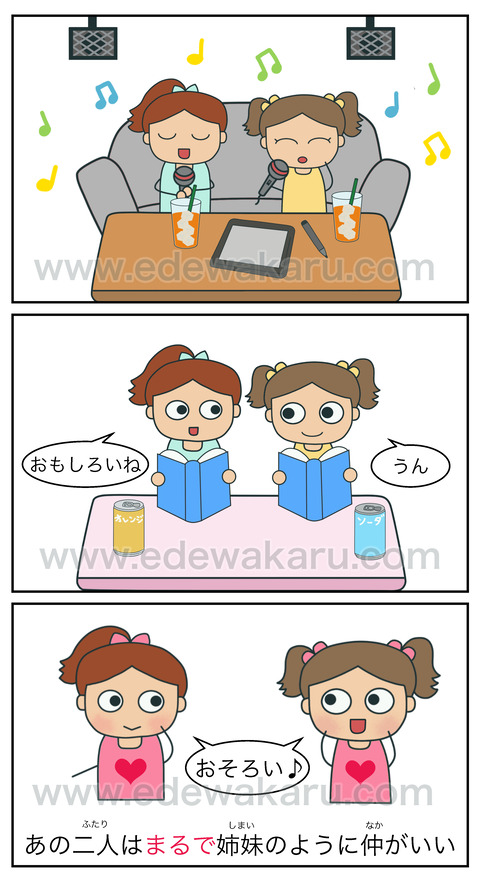
- あの二人は仲がいい。まるで兄弟のようだ。
Those two really get along well. It is just as though they are siblings. (entirely)
- 彼は、まるで山のように積まれた本を見て驚いた。
He was surprised to see books stacked just as if they were a mountain. (entirely)
- こんな日がくるなんて、まるで夢のようだ。
To think such a day would come, It is just as though I am in a dream. (entirely)
- 今日の風はまるで台風のようだ。
The wind today is entirely as if there is a typhoon. (totally)
- 彼女の瞳はまるで 夜空の星のように煌めいていた。
Her eyes sparkled just as if they were stars in the night sky. (completely)
- あいつ!あたしの家、まるでホテルみたいに扱うのよ。彼を追い出したい、どうすればいいかな?
That son of a gun! He treats my house just as though it is a hotel! I want to kick him out, but how? (entirely)
- この問題はまるで東京大学の入学試験のようだ。
This question is entirely as if it were from the Tokyo university entrance exam.
- 冬なのにこんなに暖かくて、蝶々まで飛んでいる。まるで春がきたみたいだ!
Although it is winter, it is so warm that even butterflies are flying. It is entirely as if spring has come. (completely)
- あの家には子供が4人いるので、まるで動物園のようだ。
Since there are four kids living in that house, it is entirely as if it were a zoo.
- ひとみはほんの高校生だけど、まるで経験豊富な大人のように演説した。
私ばかりでなく彼女のご両親を含めてみんな彼女の能力にびっくりした。Although Hitomi is just a high school student, she talked just as though she was a person with a lot of experience. (entirely) Not just me, but everyone, including her parents, were surprised at her ability.
- お客さんと話すときにはちゃんと目を見て話せ!目を見ていないとまるでお客さんの話を聞いていないみたいじゃないか。
Look at the customers eyes when you talk to them! If you don't make eye contact, it is as though you are not listening to what they are saying.
- なんだそのフォームは?まるでなってないぞ!
What is that form? That is completely unacceptable. (Natural, but different meaning)
日本語NET JLPT文法解説まとめ
Meaning
A figurative expression that compares something to another thing.
How to use it
まるで + N + のようだ
まるで + N1 + のような + N2
まるで + N + のように + V / イA
Explanation
as if it were like / as if it were similar to
Used to like one thing to something else.
「まるで」 can also be omitted.
You can also say 「まるで〜みたい」, but that is colloquial.
In context 14 examples
ジェームスさんはまるで日本人のように日本語を話す。
James speaks Japanese as if he were Japanese.
トムさんとのデートはまるで夢のような時間だった。
My date with Tom was like a dream.
うちの夫は一人で何もできないし、まるで赤ちゃんのようだ。
My husband can't do anything by himself; he's just like a baby.
ジェシカさんは背が高くて、スタイルもいいし、まるでモデルのようだ。
Jessica is tall and has a great figure; she's just like a model.
先生はちょっと間違えただけで怒るし、まるで鬼のようだ。
The teacher gets angry over the slightest mistake; he's just like a demon.
明日から夏休みなので、山のような宿題が出た。
Since summer vacation starts tomorrow, we got a mountain of homework.
彼女が買いた犬の絵は本当に素晴らしい。まるで生きているようだ。
The picture of the dog she bought is truly wonderful. It looks just like it's alive.
ジェームスさんは歌がすごく上手だし、歌手のようだ。
James sings really well; he's like a professional singer.
ひどい風。まるで嵐のようですね。
What awful wind. It's like a storm, isn't it?
娘は天使のように可愛い。
My daughter is as cute as an angel.
彼は魚のように泳ぐのが上手だ。
He's as good at swimming as a fish.
彼はビールを水のようにガブガブと飲んだ。
He gulped down beer as if it were water.
母は怒ると鬼のように怖い。
When my mother gets angry, she's as scary as a demon.
まだまだ仕事が山のように残っている。
There's still a mountain of work left.
Read the original source text
Meaning
他の物に例える表現(比喩)。
How to use it
まるで + N + のようだ
まるで + N1 + のような + N2
まるで + N + のように + V / イA
Explanation
as if it were like / as if it were similar to
Used to like one thing to something else.
「まるで」は省略して使うこともできる。
「まるで〜みたい」と言うこともできるが、こちらは口語的。